
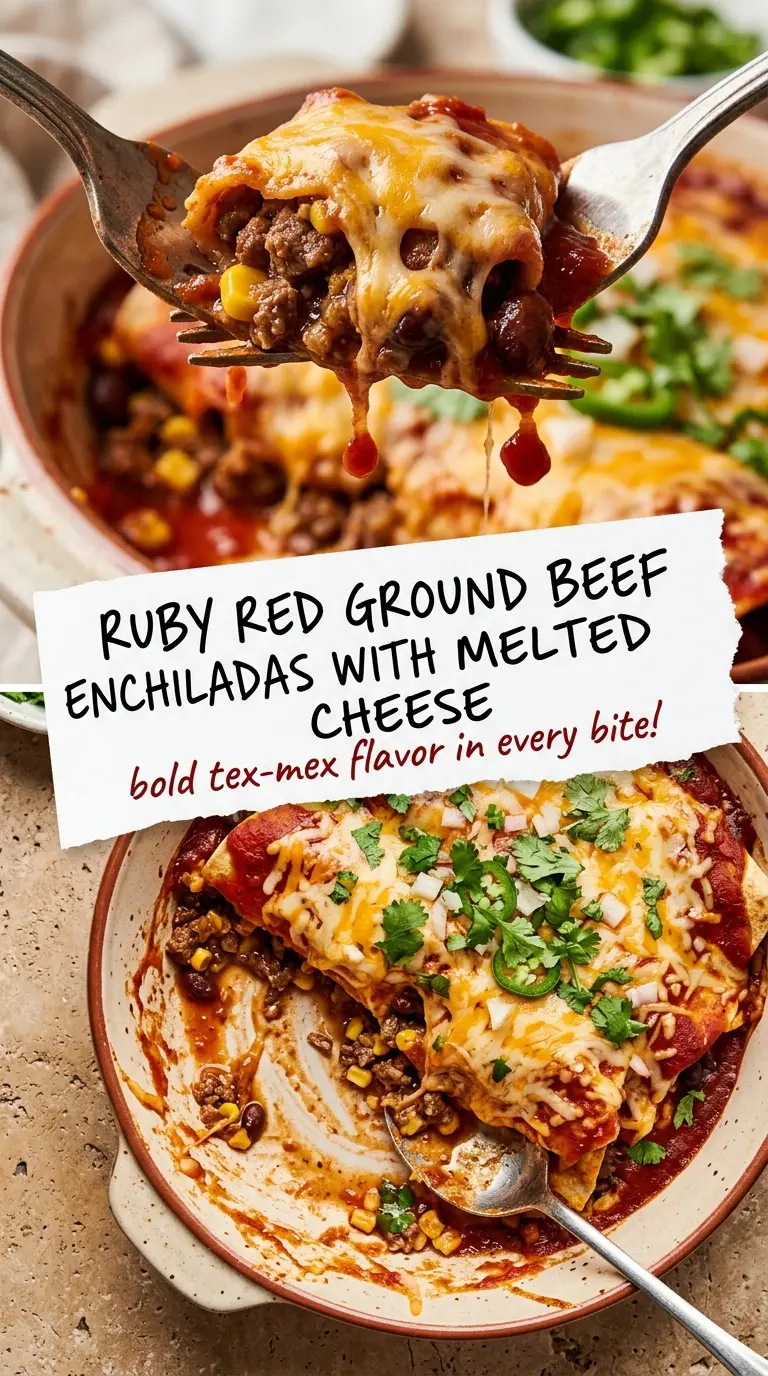
Warm tortillas wrapped around seasoned ground beef and baked under red enchilada sauce is the kind of dinner that disappears fast. The filling stays savory and spiced, the sauce bubbles into the edges, and the cheese on top turns into that stretchy, bronzed layer everyone goes straight for. It’s satisfying without being fussy, and it lands right in the sweet spot between pantry meal and proper comfort food.
What makes this version work is the way the beef is seasoned before it ever hits the tortilla. Cumin and chili powder bloom in the skillet with the onion, so the filling tastes cooked-through and rounded instead of flat. A thin layer of sauce under the enchiladas keeps them from sticking and gives the bottoms enough moisture to soften without turning soggy. Slightly warming the tortillas before rolling also matters more than people think; cold flour tortillas crack, and once that happens the filling starts escaping into the pan.
Below, I’ve included the little details that keep the cheese from getting greasy, plus a few smart swaps if you want to change the meat, the tortillas, or the heat level.
The sauce bubbled up around the edges and the tortillas stayed soft without falling apart. I warmed them first like you said, and not one split while rolling.
Save these ground beef enchiladas for the nights when you want saucy, cheesy comfort with a skillet-made filling and no complicated steps.
The Reason These Enchiladas Don’t Turn Soggy
The difference between enchiladas that hold together and enchiladas that collapse into the pan comes down to moisture control. The filling should be juicy, but not wet. If the beef mixture is left loose in the skillet, that excess liquid keeps migrating into the tortillas and makes the bottom layer soft in the wrong way.
That’s why the onion goes in with the beef at the start and cooks until it’s softened and the pan is mostly dry. You want the spices to cling to the meat, not float in grease or broth. The sauce belongs in the baking dish and over the top, where it can work as both flavor and steam. If the tortillas are warmed first, they roll tight, seal better, and bake into a tender layer instead of cracking open halfway through dinner.
What Each Ingredient Is Actually Doing in This Dish
- Ground beef — Use an 85/15 or 80/20 blend if you can. It has enough fat to stay flavorful after baking without turning greasy. If you use something leaner, add a spoonful of oil in the skillet so the spices don’t fry onto a dry pan.
- Onion — The onion softens into the beef and gives the filling a little sweetness and moisture. Dice it small so it disappears into the roll instead of poking holes in the tortilla. A yellow or white onion both work here.
- Cumin and chili powder — These do the heavy lifting for the Tex-Mex flavor. Blooming them with the beef and onion wakes them up, and that step matters more than dumping them in at the end. If your chili powder is old, the filling will taste dull no matter how much cheese you add.
- Flour tortillas — Flour tortillas are softer and easier to roll than corn for this version. Warm them briefly in the microwave or a dry skillet so they bend instead of splitting. Corn tortillas can work, but they’ll give you a firmer, more traditional texture and need a quick pass through warm oil or sauce so they don’t tear.
- Red enchilada sauce — This is where the dish gets its body and baked-in flavor. A good canned sauce is perfectly fine, but choose one that tastes tomato-rich and chile-forward rather than overly sweet. Thin, watery sauce will leave the enchiladas bland.
- Cheddar cheese — Sharp cheddar gives the top its salty bite and helps the filling taste richer. Monterey Jack is a smart addition if you want better melt and a smoother pull. Pre-shredded cheese works, but freshly grated melts cleaner if you have the minute.
- Cilantro — Add it at the end so it stays bright. It cuts through the cheese and sauce after baking and keeps the dish from tasting heavy.
Getting the Filling Rolled and the Top Baked Just Right
Cooking Out the Beef Mixture
Start by browning the beef with the onion in a skillet over medium heat. Break the meat up into small crumbles and keep cooking until the onion is soft and the pan has little to no liquid left. That dry skillet stage is what keeps the enchiladas from turning muddy inside the tortillas. Stir in the cumin and chili powder while the beef is still hot so they coat every bite.
Rolling Without Cracking the Tortillas
Warm the tortillas just until they’re flexible. Stack them under a damp paper towel in the microwave for a short burst, or heat them one by one in a dry pan. Spoon the filling down the center, add a little cheese, and roll them snugly so the seam rests underneath. If the tortillas fight you, they’re still too cold.
Baking Until Bubbling at the Edges
Spread a thin layer of sauce in the dish first, then nestle the rolls seam-side down. Pour the rest of the sauce over the top and cover with cheese, leaving a few spots where the sauce peeks through. Bake at 375°F until the cheese is melted and the edges are bubbling hard, about 20 to 25 minutes. If you pull them too early, the center stays pale and the tortillas taste underdone.
Letting Them Set Before Serving
Give the pan a short rest after it comes out of the oven. That pause lets the sauce settle and keeps the enchiladas from sliding apart the second they hit the plate. Finish with cilantro right before serving so it stays fresh and doesn’t wilt into the cheese.
How to Adapt These Enchiladas for the Ingredients You Have
Make It Gluten-Free with Corn Tortillas
Swap the flour tortillas for corn tortillas and warm them well before rolling. Corn brings a more authentic texture and a deeper corn flavor, but it’s less flexible, so a quick pass in a warm skillet or sauce helps prevent tearing. The rolls will be a little more rustic and less soft than the flour version.
Use Ground Turkey or Chicken
Lean ground turkey or chicken works if you want a lighter pan, but it needs a little help. Add a splash of oil when browning and don’t skip the onion, because the extra moisture keeps the filling from tasting dry. The result is milder, so taste the meat before rolling and season a touch more boldly if needed.
Make Them Spicier Without Breaking the Balance
Add a pinch of cayenne or a spoonful of diced green chiles to the beef mixture. That gives you a cleaner heat than just piling on more chili powder, which can tip bitter if you overdo it. You can also use a hotter enchilada sauce if you want the spice to show up in every bite.
Storage and Reheating
- Refrigerator: Store leftovers covered for up to 4 days. The tortillas soften a little more overnight, but the flavor gets even better.
- Freezer: These freeze well. Cool completely, wrap the pan tightly or portion into airtight containers, and freeze for up to 2 months. Thaw in the fridge before reheating for the most even texture.
- Reheating: Cover and reheat in a 350°F oven until hot in the center. The biggest mistake is blasting them uncovered in the microwave, which dries out the sauce and makes the cheese tough before the middle heats through.
Answers to the Questions Worth Asking
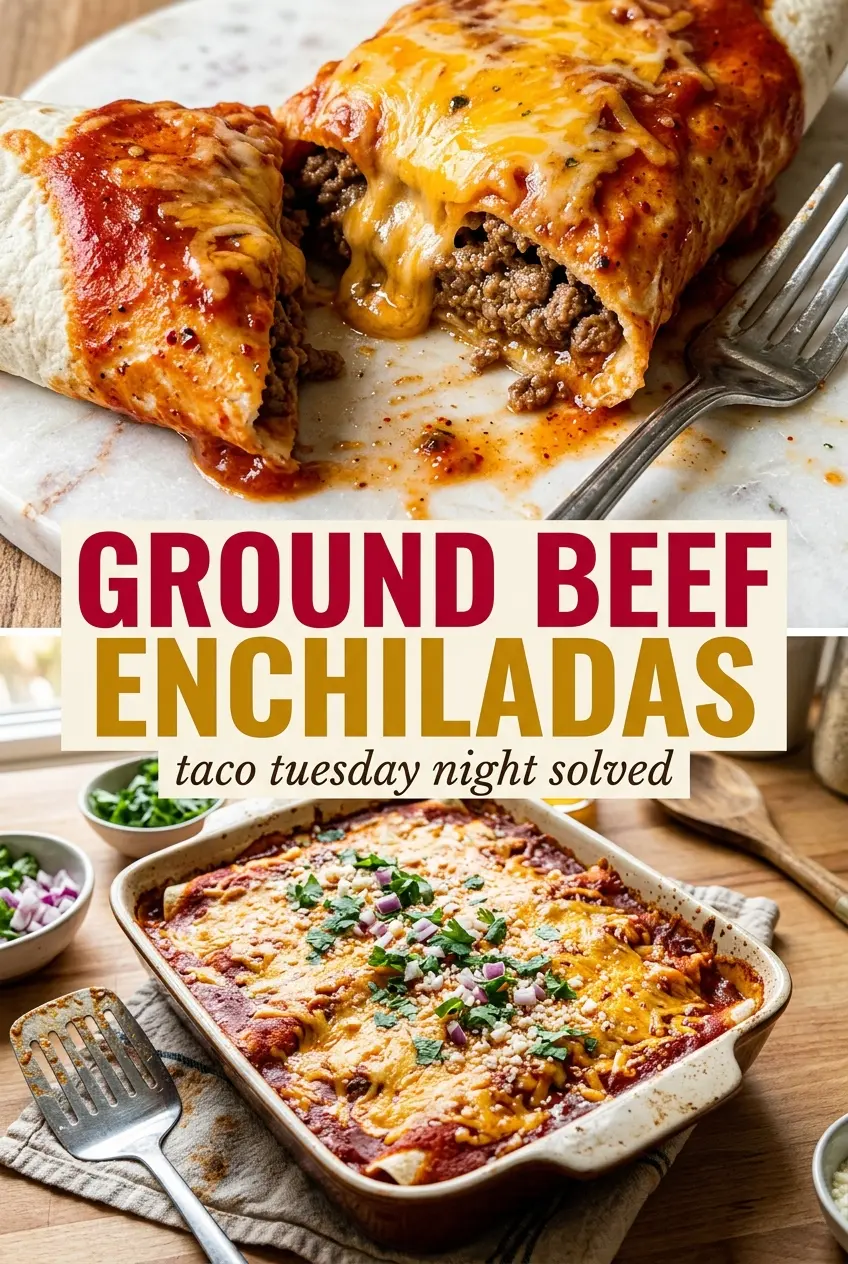
Ground Beef Enchiladas
Ingredients
Equipment
Method
- Preheat the oven to 375°F (190°C).
- Brown the ground beef with the diced onion, cumin, and chili powder in a skillet until the beef is cooked through and fragrant.
- Spread a thin layer of red enchilada sauce in a baking dish.
- Fill each flour tortilla with the beef mixture and a little shredded cheddar cheese, roll, and place seam-side down in the dish.
- Pour the remaining red enchilada sauce over the top and sprinkle with the remaining shredded cheddar cheese.
- Bake at 375°F for 20–25 minutes until the sauce is bubbly and the cheese is golden.
- Garnish with chopped cilantro before serving.