
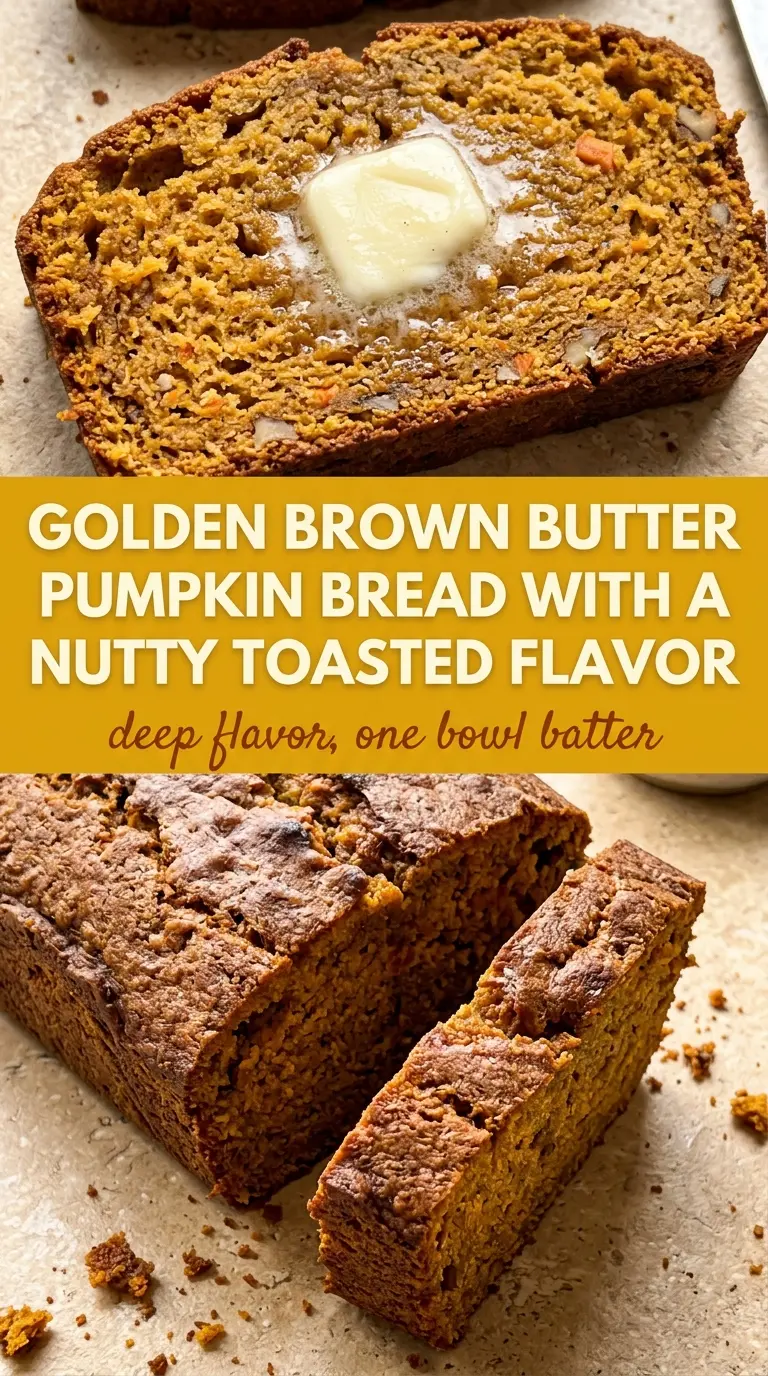
Brown butter pumpkin bread has the kind of crumb that stays moist for days, with a toasted, nutty depth that makes the usual pumpkin loaf taste flat by comparison. The browned butter doesn’t just add flavor on top; it changes the whole loaf, giving every slice a warm, almost caramel-like edge without making it heavy.
The key is treating the butter like an ingredient with a job to do, not just fat to keep the loaf tender. Browning it first concentrates the milk solids, which is where that hazelnut aroma comes from, and letting it cool slightly keeps the eggs from turning streaky when you whisk everything together. Pumpkin puree brings moisture, but it also needs enough structure from the flour and eggs to bake up into a slice that holds together cleanly instead of sinking in the middle.
Below, I’ll walk through the part that matters most: watching the butter so it browns, not burns, and knowing exactly when the loaf is done even if the top looks finished before the center is set.
The browned butter gave the loaf this deep, nutty edge I’ve never gotten from regular pumpkin bread, and the center stayed moist without being gummy. I baked it on a Sunday afternoon and it sliced beautifully the next morning.
Brown butter pumpkin bread with a deep toasted flavor and a moist, tender crumb
The Brown Butter Stage Is Where This Loaf Gets Its Depth
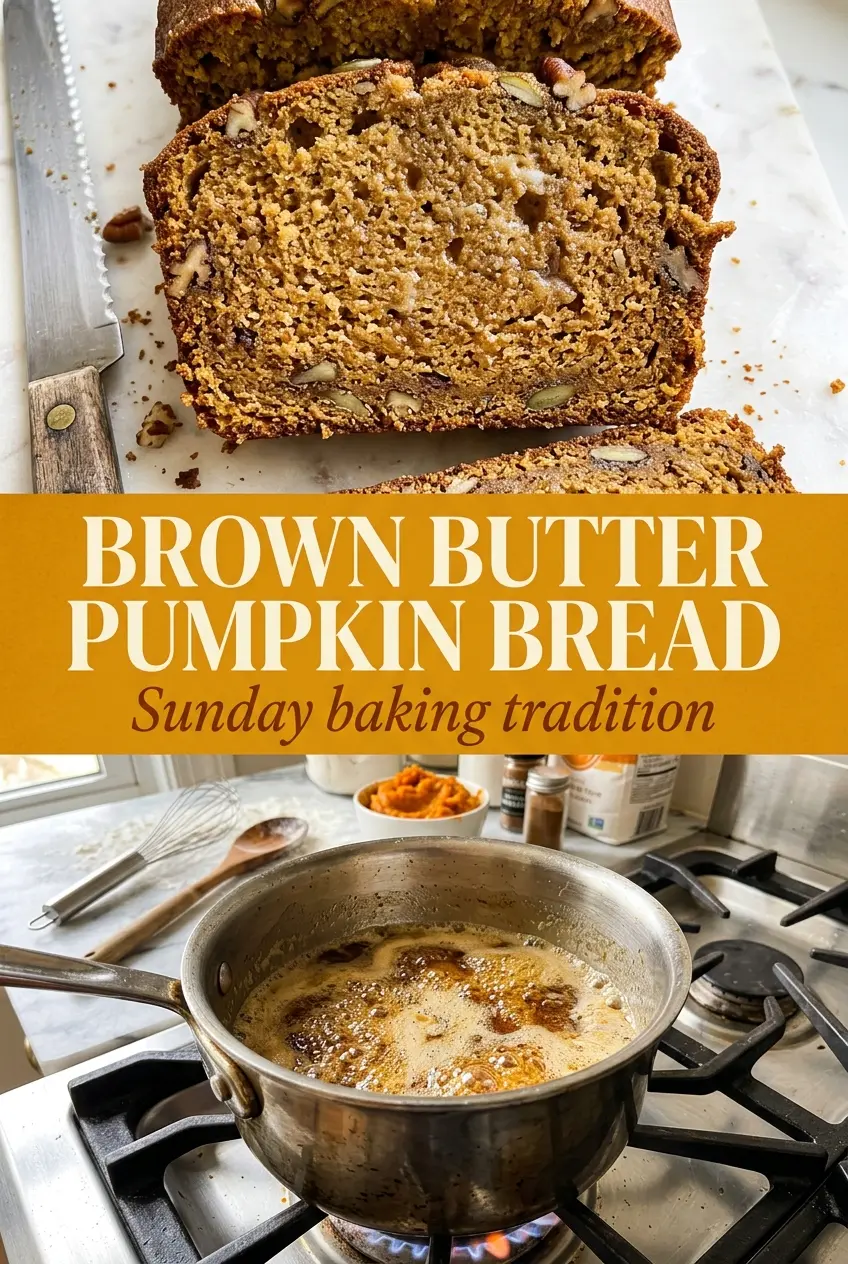
Most pumpkin breads rely on cinnamon and sugar alone to carry the flavor, which is why they can taste one-note. Brown butter changes that before the batter even comes together. You’re not just melting fat; you’re cooking the milk solids until they smell nutty and the pan bottom is dotted with amber bits that taste like toasted nuts once baked into the loaf.
The failure point here is burning the butter or rushing it into the batter while it’s still hot. Burned butter turns bitter, and hot butter can scramble the eggs or make the sugar clump instead of dissolving smoothly. Let it cool until it’s warm, not steaming, and the rest of the batter will mix into a glossy, even base.
What Each Ingredient Is Actually Doing in This Bread
- Butter — Browning it is the whole point of the recipe. You can use salted or unsalted, but unsalted gives you better control over the final balance. If you only have salted butter, keep the added salt in the batter as written.
- Pumpkin puree — Use plain pumpkin puree, not pumpkin pie filling. The puree brings moisture and that familiar pumpkin flavor, but it won’t make the bread taste spiced on its own. The spices and brown butter do the flavor work here.
- Flour — This is the structure that keeps the loaf from collapsing under all that moisture. Spoon it into the measuring cup and level it off so you don’t pack in too much, or the bread turns dry and tight.
- Sugar — It sweetens the loaf, but it also helps with tenderness and browning. This batter doesn’t use a lot of extra fat beyond the butter, so the sugar matters for keeping the crumb soft.
- Eggs — They bind the batter and help the loaf rise evenly. Whisk them into the cooled butter and sugar until the mixture looks smooth before adding the pumpkin, or you can end up with a slightly curdled base.
- Baking soda — This gives the bread lift and helps the loaf open up instead of baking into a dense brick. If yours is old, the bread won’t rise well, and the center can stay gummy even after the top looks done.
Building the Batter Without Losing the Texture
Brown the butter until it smells toasted
Melt the butter over medium heat and keep the pan moving as the milk solids settle to the bottom. At first it foams, then the foam clears and the bits underneath turn golden brown with a nutty smell. Pull it off the heat when the color deepens to amber; if you wait for it to look dark brown in the pan, it’s already on the edge of burning.
Mix the wet ingredients in the right order
Whisk the sugar into the cooled brown butter with the eggs until the mixture looks smooth and thickened. That step helps dissolve the sugar and keeps the batter from feeling grainy later. Stir in the pumpkin puree after the eggs are incorporated, not before, so the mixture stays emulsified and even.
Fold the dry ingredients just until the flour disappears
Add the flour, baking soda, cinnamon, and salt together, then fold until you stop seeing streaks of dry flour. Overmixing builds too much structure and gives you a tough loaf with a tunneled crumb. A few small lumps are fine; they bake out, and the bread will be softer because of it.
Bake until the center springs back
Scrape the batter into a greased 9×5-inch loaf pan and bake until the top is set and a toothpick comes out clean from the center. If the top browns too fast while the middle is still soft, tent it loosely with foil for the last part of the bake. Let it cool in the pan for 10 minutes before turning it out, or it can break while it’s still fragile.
Three Ways to Make This Loaf Fit What You Need
Dairy-Free Brown Butter Style
Use a plant-based butter that browns well, but expect a milder toasted flavor than real dairy butter. Some substitutes don’t brown in the same way, so the loaf will still work, but the flavor will be flatter. If you want the closest result, choose a vegan butter with a higher fat content and cook it slowly until you see the milk solids-style specks.
Gluten-Free Pumpkin Bread
Swap the all-purpose flour for a 1:1 gluten-free baking blend that includes xanthan gum. The texture will be a little more tender and less springy, but it still slices well if you let it cool completely before cutting. Avoid almond flour here on its own; it won’t give the loaf enough structure to rise properly.
A Little More Spice, or Less Sweet
If you want a stronger spice note, add a pinch of nutmeg or cloves without changing the texture of the loaf. For a less sweet slice, reduce the sugar slightly, but don’t cut it aggressively or the bread will bake up drier and less tender. The brown butter flavor stands out better when the loaf isn’t overly sweet.
Storage and Reheating
- Refrigerator: Store tightly wrapped for up to 5 days. The crumb stays moist, though the spice flavor gets deeper by day two.
- Freezer: This loaf freezes well. Wrap individual slices or the whole cooled loaf in plastic, then foil, and freeze for up to 3 months.
- Reheating: Warm slices in a 300°F oven for about 8 minutes or toast them lightly. The common mistake is microwaving too long, which makes the crumb rubbery instead of soft.
Questions I Get Asked About This Recipe
Brown Butter Pumpkin Bread
Ingredients
Equipment
Method
- Melt the butter in a saucepan over medium heat, swirling until golden brown and fragrant, about 5 minutes, then cool slightly.
- Preheat the oven to 350°F and grease a 9x5-inch loaf pan.
- Whisk together the flour, baking soda, cinnamon, and salt in a bowl.
- Whisk the sugar, cooled brown butter, and eggs in a separate bowl until smooth.
- Stir in the pumpkin puree, then fold in the dry ingredients until just combined.
- Pour the batter into the prepared pan and bake for 55-65 minutes until a toothpick inserted in the center comes out clean.
- Cool in the pan for 10 minutes before transferring to a wire rack to cool completely.