
Grilled chicken, crunchy cabbage, and a spoon-coating peanut sauce turn these wraps into the kind of lunch that doesn’t sag halfway through eating. The filling stays crisp, the sauce brings a salty-sweet tang, and the tortillas hold everything together without turning heavy or gummy. It’s the balance that makes these worth repeating.
The peanut sauce is built to be drizzly, not stiff, so it coats the chicken and vegetables without clumping up in the wrap. Warm water loosens the peanut butter just enough to make it silky, while rice vinegar keeps the whole thing from tasting flat. That little bit of acid matters here because it cuts through the richness and wakes up the herbs and cabbage.
Below you’ll find the exact texture to look for in the sauce, the best way to keep the wraps from going soggy, and a few practical swaps that still keep the recipe on track.
The peanut sauce turned out smooth and clingy, and the wraps stayed crisp in the fridge until lunch the next day. I added crushed peanuts like you suggested, and that extra crunch made them taste fresh instead of packed ahead.
Pin these Thai Peanut Chicken Wraps for a crisp, make-ahead lunch with creamy peanut sauce that actually stays smooth.
The Reason These Wraps Stay Crisp Instead of Turning Wet
The soggy-wrap problem usually starts with two things: too much sauce and warm filling meeting soft tortillas too early. Here, the cabbage and carrots act like a built-in moisture buffer, and the chicken gets cooled slightly before assembly so it doesn’t steam the tortilla from the inside. That little pause matters more than people think.
The other trick is texture. A sauce that’s thick enough to coat but thin enough to drizzle spreads in a controlled layer instead of puddling at the bottom. If you’ve ever had a wrap leak out the sides after two bites, the sauce was probably too loose or the vegetables were too wet.
What Each Ingredient Is Actually Doing in This Dish
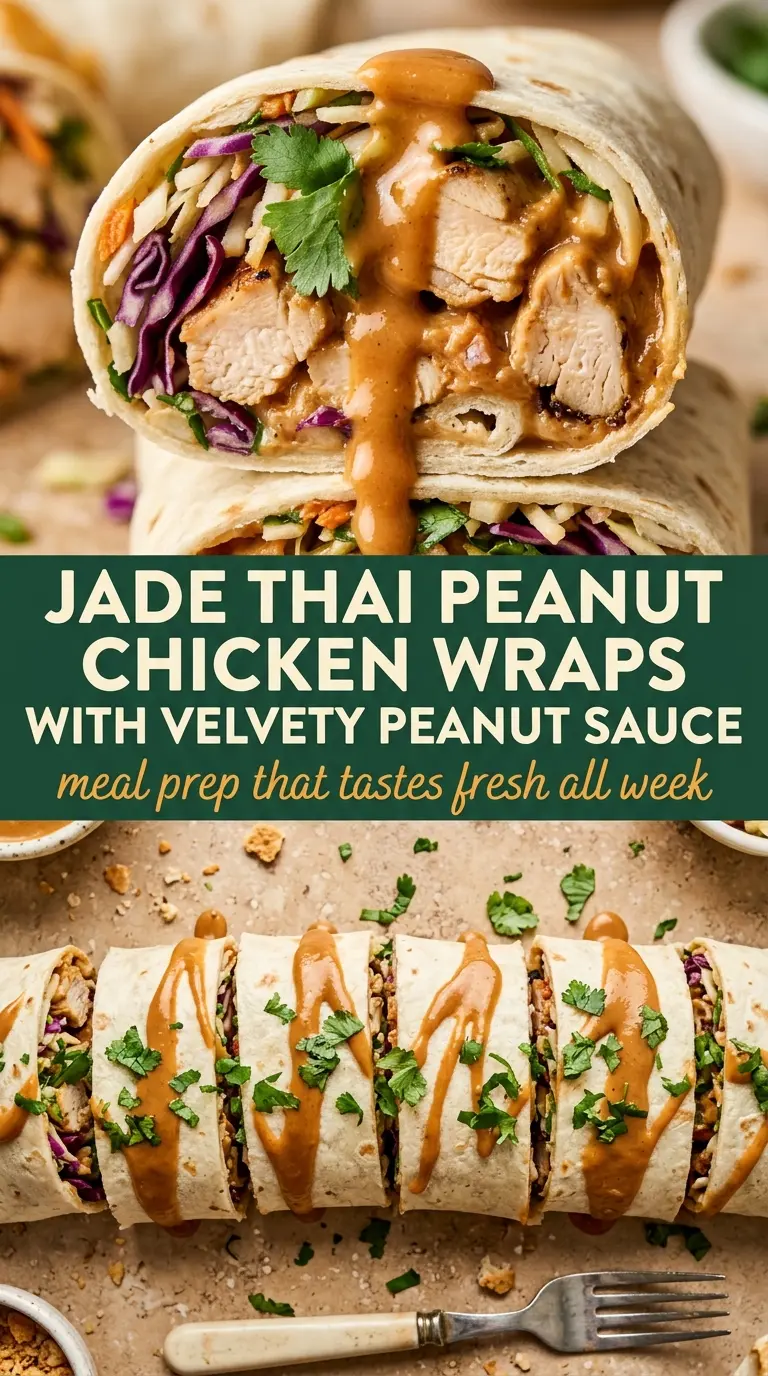
- Chicken breast — Grilled chicken gives the wraps substance without making them heavy. Slice it thinly so it layers instead of bulking up in the center. Rotisserie chicken works in a pinch, but it won’t have the same grilled flavor.
- Peanut butter — This is the base of the sauce, so a natural creamy peanut butter gives you the best texture. Stir it well before measuring if the oil has separated. Crunchy peanut butter can work, but it makes the sauce less silky.
- Soy sauce — It brings salt and depth, not just seasoning. Use low-sodium if you want a little more control, especially if your chicken is already well salted. Tamari is the cleanest gluten-free swap.
- Rice vinegar and honey — These two keep the sauce from tasting flat. The vinegar sharpens the peanut butter, and the honey smooths the edges without making it sugary. If you need a substitute, lime juice can stand in for the vinegar, but the flavor will turn brighter and less rounded.
- Cabbage and carrots — These are not filler. They’re the crunch that keeps each bite lively and helps protect the tortilla from excess moisture. Shred them finely so they tuck into the wrap instead of poking out and unrolling it.
- Flour tortillas — Large tortillas are worth using here because they roll more tightly than smaller ones. Warm them for a few seconds so they flex instead of cracking. If yours are dry, cover them with a damp towel after warming.
Building the Wrap So the Sauce Stays Where It Belongs
Whisk the Sauce Until It Turns Silky
Start with the peanut butter, soy sauce, rice vinegar, honey, and garlic in a bowl. The mixture will look thick and stubborn at first, and that’s normal. Add warm water a tablespoon at a time and whisk until the sauce turns glossy and pourable. If it goes from thick to watery too fast, it won’t cling to the filling, so stop as soon as it drizzles in a ribbon.
Warm the Tortillas Before You Fill Them
Cold tortillas crack when you roll them, especially once they’re stuffed. A few seconds in a dry skillet or a quick microwave wrap makes them flexible enough to fold cleanly. Work with them while they’re warm, because they tighten up again as they cool.
Layer the Crunch Before the Sauce
Chicken goes down first, then cabbage, carrots, and cilantro. That order helps the sturdier ingredients sit closest to the tortilla, which keeps the sauce from soaking straight through. Drizzle the peanut sauce over the filling rather than dumping it in one spot, or you’ll end up with one wet section and one dry section.
Roll Tight, Then Slice at the End
Fold in the sides and roll the tortilla snugly from the bottom up. If the seam won’t stay closed, the wrap is overfilled. Let it rest seam-side down for a minute before slicing, and use a sharp knife so the filling doesn’t drag out as you cut.
How to Adapt These Wraps for Meal Prep, Gluten-Free Eating, or Extra Crunch
Meal Prep Without Soggy Tortillas
Pack the sauce separately and assemble the wraps right before eating if you want the best texture. If you need them fully built ahead, use a lighter hand with the sauce and keep the cabbage dry after washing. The vegetables hold up well, but the tortilla starts to soften once the sauce sits against it for hours.
Gluten-Free Version
Use tamari instead of soy sauce and swap in certified gluten-free tortillas. The rest of the recipe stays the same. The sauce still comes out creamy and balanced, and you won’t lose any of the peanut-cabbage contrast that makes the wrap work.
Add Crunch If You Like a Little More Bite
A handful of crushed peanuts inside the wrap gives you a better texture contrast and keeps the filling from feeling too soft. Add them just before rolling so they stay crisp. Toasted sesame seeds work too, but peanuts echo the sauce and taste more natural here.
Storage and Reheating
- Refrigerator: Store assembled wraps for up to 2 days, though the tortilla softens a bit by day two. For best texture, keep the sauce separate and build as needed.
- Freezer: These don’t freeze well once assembled because the vegetables lose their crunch and the sauce can separate after thawing.
- Reheating: If the chicken is chilled, warm it separately before assembling. Reheat the tortilla only long enough to make it pliable; overheating it makes it tough and more likely to tear.
Questions I Get Asked About This Recipe
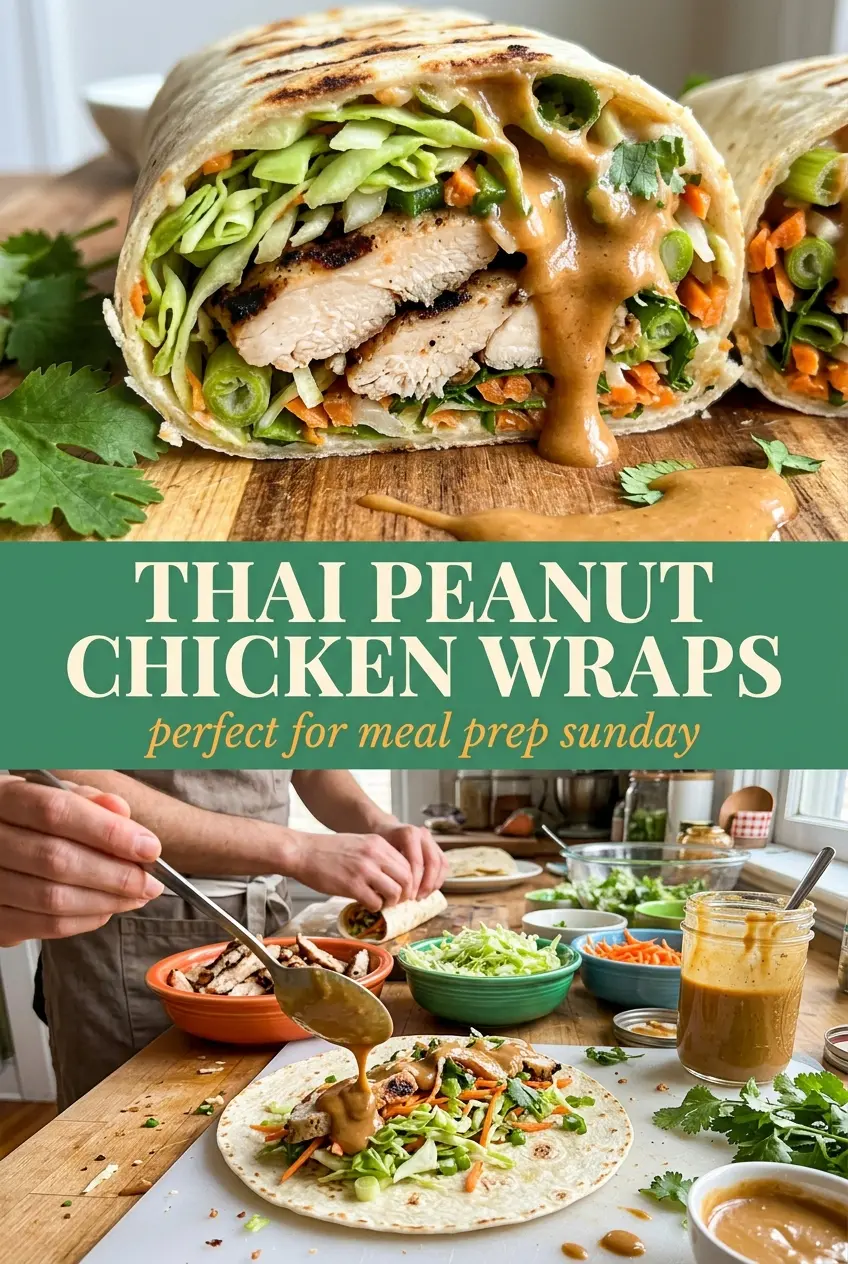
Thai Peanut Chicken Wraps With Creamy Peanut Sauce
Ingredients
Equipment
Method
- Whisk together peanut butter, soy sauce, rice vinegar, honey, and minced garlic until smooth.
- Whisk in warm water, 1 tablespoon at a time, until the sauce becomes smooth and drizzly.
- Warm the flour tortillas in a skillet over medium heat for 10–20 seconds per side until pliable.
- Layer sliced grilled chicken, shredded cabbage, shredded carrots, and chopped cilantro down the center of each tortilla.
- Drizzle each wrap generously with the peanut sauce.
- Fold in the sides and roll tightly to enclose the filling.
- Slice each wrap in half and serve, or wrap tightly for meal prep storage.