
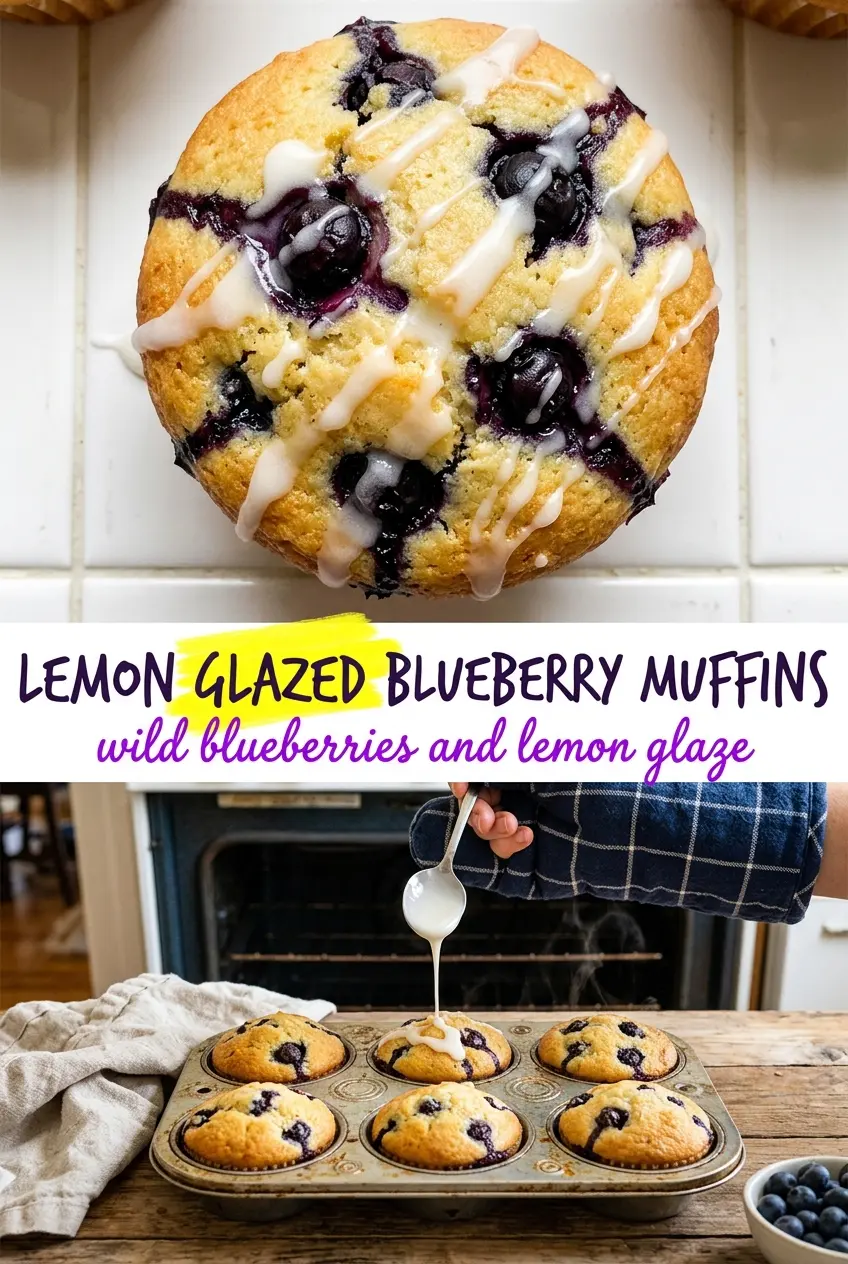
Golden-domed blueberry muffins should come out tender, moist, and packed with little pockets of jammy berry flavor instead of collapsing into a wet, streaky batter. The best ones have a soft crumb that stays that way by the next day, with juicy wild blueberries scattered all the way through and a thin lemon glaze that sets just enough to add a little shine without turning sticky.
The trick here is using oil instead of butter and keeping the blueberries frozen until the last minute. Oil gives the crumb a lighter, more even texture, and it doesn’t firm up the way butter does as the muffins cool. Frozen wild blueberries hold their shape better in the batter, so you get fewer purple swirls and more distinct bursts of berry in each bite. Tossing them with a spoonful of flour keeps them from sinking to the bottom of the pan.
Below, you’ll find the exact mixing order that keeps these muffins tender, plus the small detail that helps the tops bake up high instead of flat. The lemon glaze is optional in theory, but it’s the part that makes these taste finished.
The muffins were tall, soft, and the blueberries stayed whole instead of bleeding through the batter. I loved that the lemon glaze set on top without soaking in, and they were still tender the next morning.
These wild blueberry muffins stay tender for days, and the lemon glaze gives them that bakery-style finish.
The Trick to Tall Blueberry Muffins Is Not Overmixing the Batter
Once flour goes into the bowl, the batter stops needing help. Stirring too much at that point develops gluten, and that’s what gives you dense muffins with tunnels instead of a soft, even crumb. The batter should look a little rough and uneven, with a few dry streaks still visible when you stop mixing. That’s the right moment.
The other thing that changes the result is oven temperature. These start at 400°F so the tops lift fast and set into domes before the centers have time to spread out. If your muffins always bake flat, the oven is usually too cool or the batter sat around too long before it went in. Move fast once the wet and dry ingredients come together.
- Blueberries tossed in flour — That thin flour coating keeps the berries suspended in the batter instead of sliding to the bottom. It’s a small step, but it matters, especially with frozen berries that can leak juice as they bake.
- Buttermilk — The acidity softens the crumb and gives the muffins a little tang that plays well with the lemon glaze. If you don’t have it, use plain yogurt thinned with a splash of milk until it pours like buttermilk.
- Neutral oil — Use canola, avocado, grapeseed, or another neutral oil. Butter can work, but it changes the texture and firms up more as the muffins cool, which is why this version stays softer the next day.
- Frozen wild blueberries — Wild berries are smaller, so they distribute more evenly and give you more berry flavor in every bite. Keep them frozen until they go into the batter; thawed berries will bleed and muddy the crumb.
What Each Ingredient Is Doing in These Muffins

All-purpose flour gives these muffins enough structure to rise without turning bready. Cake flour makes them a little too fragile here, and bread flour would tighten the crumb more than you want.
Sugar sweetens the batter and helps the tops brown. The amount here is enough to support the blueberries without making the muffins taste like cake.
Baking powder gives the lift. If yours has been open for a while, test it first; stale baking powder is one of the fastest ways to end up with flat muffins.
Eggs bind the batter and help the muffins hold their shape. Large eggs are the standard size for this ratio, so don’t downsize them.
Neutral oil is the reason the crumb stays soft after cooling. Melted butter can be swapped in, but the muffins will bake up a little firmer and won’t keep that same plush texture as long.
Buttermilk adds tenderness and helps the muffins bake with a fine crumb. If you need a substitute, mix 3/4 cup milk with 2 teaspoons lemon juice or vinegar and let it sit for 5 minutes.
Frozen wild blueberries bring the best flavor here. They’re smaller than cultivated blueberries, so they spread out better and give you a deeper berry hit without flooding the batter.
Lemon glaze finishes the muffins with a bright edge that keeps them from tasting heavy. You want it thin enough to drizzle but thick enough to sit on top and set as the muffins cool.
Mixing the Batter Fast Enough to Stay Tender
Start With the Dry Bowl
Whisk the flour, sugar, baking powder, and salt together until the mixture looks even and sandy. That step keeps the leavening and sugar from clumping in one spot, which matters more than people think. A quick whisk now gives you a more even rise later.
Bring the Wet Ingredients Together First
Whisk the eggs, oil, buttermilk, and vanilla in a separate bowl until they look fully combined and glossy. The oil should disappear into the mixture instead of floating in slick pools. If you rush this and add the wet ingredients half mixed, the batter can look curdled before it even hits the flour.
Fold, Don’t Beat
Pour the wet ingredients into the dry and fold just until the flour disappears. A few small lumps are fine. Overmixing is what makes muffins tough, and once that gluten starts developing, you can’t reverse it.
Add the Blueberries at the End
Toss the frozen blueberries with the flour, then fold them in with as few strokes as possible. The batter will look thick and a little uneven, and that’s exactly right. Divide it among the cups and fill them about three-quarters full so they have room to rise into domes instead of spilling over.
Bake Until the Tops Spring Back
Bake until the tops are golden and the muffins spring back when you touch them lightly in the center. If you pull them too early, the middle will sink as they cool. Let them sit in the pan for about 10 minutes, then move them out so the bottoms don’t steam.
How to Adapt These Muffins Without Losing What Makes Them Good
Dairy-Free Version
Swap the buttermilk for unsweetened almond milk or oat milk mixed with 2 teaspoons lemon juice. The texture stays tender, though the flavor will be a touch less rich than with real buttermilk.
Fresh Blueberries Instead of Frozen
Fresh berries work, but they’re more likely to burst and streak the batter. Toss them in flour the same way and fold them in gently; the muffins will still be good, just a little less dramatic in color and a little softer around the fruit pockets.
Skip the Glaze
Leave the glaze off if you want a more classic muffin. The tops will taste less sweet, which is nice if you’re serving them warm with butter or want the blueberry flavor to stand on its own.
Storage and Reheating
- Refrigerator: Store in an airtight container for up to 4 days. The crumb stays soft, but the glaze may lose a little shine after the first day.
- Freezer: These freeze well. Wrap individually and freeze for up to 2 months, then thaw at room temperature.
- Reheating: Warm unglazed muffins in a 300°F oven for about 6 to 8 minutes, or microwave for 10 to 15 seconds. Don’t overheat them or the crumb dries out fast.
Answers to the Questions Worth Asking
Blueberry Muffins
Ingredients
Equipment
Method
- Preheat the oven to 400°F and line a 12-cup muffin tin.
- Whisk all-purpose flour, sugar, baking powder, and salt together in one bowl.
- Whisk eggs, neutral oil, buttermilk, and vanilla until smooth.
- Fold the wet mixture into the dry mixture just until no dry flour remains.
- Toss the frozen wild blueberries with the additional flour, then fold them into the batter gently.
- Divide batter into the muffin cups, filling each about ¾ full.
- Bake for 18–22 minutes at 400°F, until the tops are domed and golden.
- Cool the muffins for 10 minutes in the pan.
- Drizzle the lemon glaze over the warm muffins so it can set slightly at the edges.