
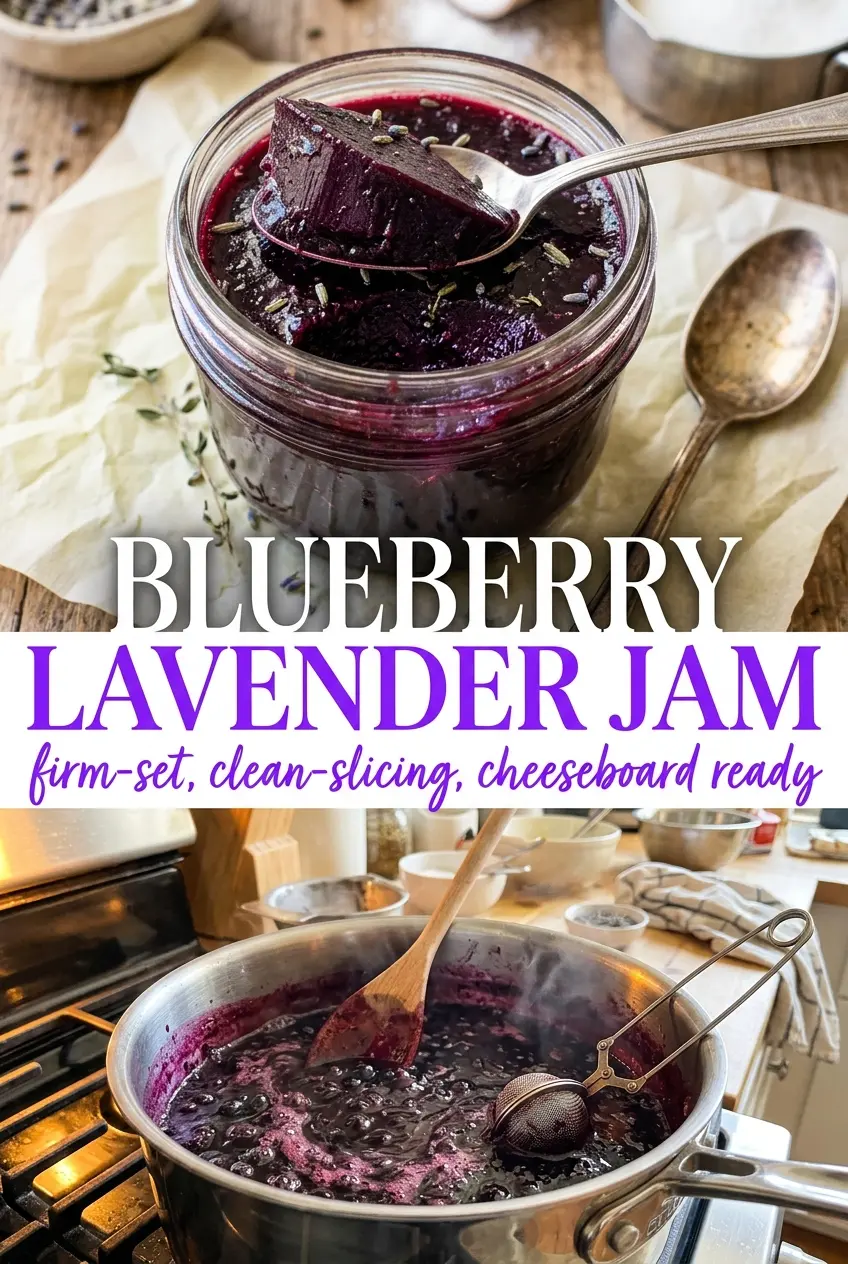
Deep violet blueberry jam with a clean, firm set earns its place on the table fast. It spreads smoothly on toast, but it also holds its shape on crackers and crostini instead of sliding into a puddle. That difference matters when you want something you can spoon onto a cheeseboard or tuck into a cookie without it running everywhere.
The trick here is using pectin and a full rolling boil, then adding the thyme at the very end so it stays bright and aromatic. Lavender can turn harsh if it simmers too long, which is why it goes into the pot in a tea ball and comes out before the final herbs go in. The result tastes floral, but not perfumey, with blueberry doing the heavy lifting and lemon keeping the sweetness from feeling flat.
Below you’ll find the exact timing that gets you that glossy, sliceable set, plus the one change that keeps the thyme from disappearing into the jam. If you’ve only made looser, spoonable preserves before, this version is worth learning.
The set was perfect after the one-minute hard boil, and the thyme stayed fresh and green because I stirred it in at the end. It came out glossy and sliceable, just like the photos showed.
Like this blueberry lavender jam? Save it to Pinterest for croissants, cheeseboards, and thumbprint cookies.
The Set That Makes Blueberry Jam Slice Cleanly Instead of Running
Most berry jams fail in one of two ways: they never set, or they cook down too long and taste dull and sticky. This version leans on liquid pectin, which gives you a firmer finish without having to boil the fruit into oblivion. That means you get a jam that still tastes like blueberries, with the floral edge of lavender sitting in the background instead of taking over.
The other thing that matters here is timing. The lavender steeped in the hot fruit mixture gives you the fragrance, but removing it before the thyme goes in keeps the herbs from turning muddy. Add the thyme after the boil, not before, because its color and freshness fade fast under hard heat.
- Fresh blueberries — Fresh berries give the cleanest flavor and the brightest color. Frozen blueberries work in a pinch, but they release more liquid, so expect a slightly longer cook time before the boil comes back up.
- Liquid pectin — This is what gives the jam that firm, jammy slice instead of a loose spoonful. If you swap in a different pectin type, follow the package directions exactly, because the set changes with the form of pectin.
- Dried culinary lavender — Use culinary lavender only, and keep it contained in a tea ball so you can remove it cleanly. Too much lavender or too long a steep can make the jam taste like soap, which is the fastest way to ruin a beautiful batch.
- Fresh thyme — Thyme brings a savory note that makes this jam work on cheese and crackers, not just toast. Add it at the end so the leaves stay green and fragrant instead of turning dull and bitter.
- Lemon juice and zest — The juice helps the pectin do its job, and the zest adds a sharper citrus lift. Bottled lemon juice will work if that’s what you have, but fresh zest is worth the extra minute because it brightens the whole jar.
Getting the Boil, the Steep, and the Set in the Right Order
Building the Fruit Base
Combine the blueberries, sugar, lemon juice, lemon zest, and lavender tea ball in a heavy saucepan. As the berries warm, they should start releasing juice and turning the sugar into a glossy syrup. Keep the heat high enough to get movement in the pot, because a timid simmer just stretches out the process and can leave you with soft fruit floating in thin liquid.
Hitting the Full Rolling Boil
Once the mixture comes to a full rolling boil, stir in the liquid pectin and keep it boiling hard for one minute. A real rolling boil doesn’t stop when you stir it; the bubbles keep rising across the whole surface. If the boil drops to a lazy simmer, the pectin won’t activate the way it should and the set can come out weak.
Finishing With the Herbs
Pull out the lavender tea ball after that hard boil, then stir in the fresh thyme leaves. The jam should look glossy and a little thick already, with bubbles that pop slowly instead of snapping away instantly. The thyme goes in now so it stays visible and aromatic, not cooked into a brown blur.
Testing the Set and Jarring
Spoon a little jam onto a cold plate and let it sit for a minute. If you drag your finger through it, the line should hold instead of flooding back together. Ladle the jam into sterilized jars while it’s still hot, then process the jars for ten minutes if you’re preserving them for shelf storage.
How to Adapt This Jam for Jars, Gifts, or a Different Herb
Make It More Floral
Use a little less thyme and let the lavender stay in the pot for the full steep, but don’t push the lavender higher unless you like a stronger perfume note. The result is softer and more dessert-like, which works well for scones, biscuits, and plain yogurt.
Skip the Thyme for a Classic Berry Jam
Leave out the thyme entirely and you’ll get a cleaner blueberry-lavender jam with a softer, more traditional finish. You’ll lose the savory edge that makes it stand out on cheese boards, but the jam will still set beautifully and taste bright.
Make It Gluten-Free and Vegetarian-Friendly
The recipe already fits both of those needs as written, which is handy if you’re serving a mixed crowd. Just check that your pectin and dried lavender are labeled clean and food-safe, since herbal products can vary more than the fruit does.
Storage and Reheating
- Refrigerator: Once opened, keep the jars refrigerated for up to 3 weeks. The set may tighten a little more after chilling.
- Freezer: This jam freezes well in freezer-safe containers with headspace left at the top. Thaw in the refrigerator, not on the counter, so the texture stays even.
- Reheating: Jam doesn’t need reheating, but if it firms up too much from the cold, let the jar sit at room temperature for 10 to 15 minutes before serving. Microwaving can make the edges watery and break the texture.
Questions I Get Asked About This Jam
Blueberry & Lavender Jam Recipe
Ingredients
Equipment
Method
- Combine fresh blueberries, sugar, lemon juice, lemon zest, and dried culinary lavender (in a tea ball) in a saucepan and stir to distribute evenly. Bring the mixture to a full rolling boil over high heat, then add liquid pectin while stirring.
- Boil hard for 1 min at a full rolling boil without stirring, watching for rapid bubbling and increased thickness. Remove the lavender tea ball, then stir in fresh thyme leaves to keep them vibrant.
- Test set by placing a small drop on a cold plate and return it to a quiet spot for 1 min, then check for a gel that wrinkles when pushed. If it is not thick enough, continue boiling briefly until it passes the set test.
- Ladle the hot jam into sterilized jars and process for 10 min so the jars seal properly. Let cool completely before moving, and store for later slicing and serving.