
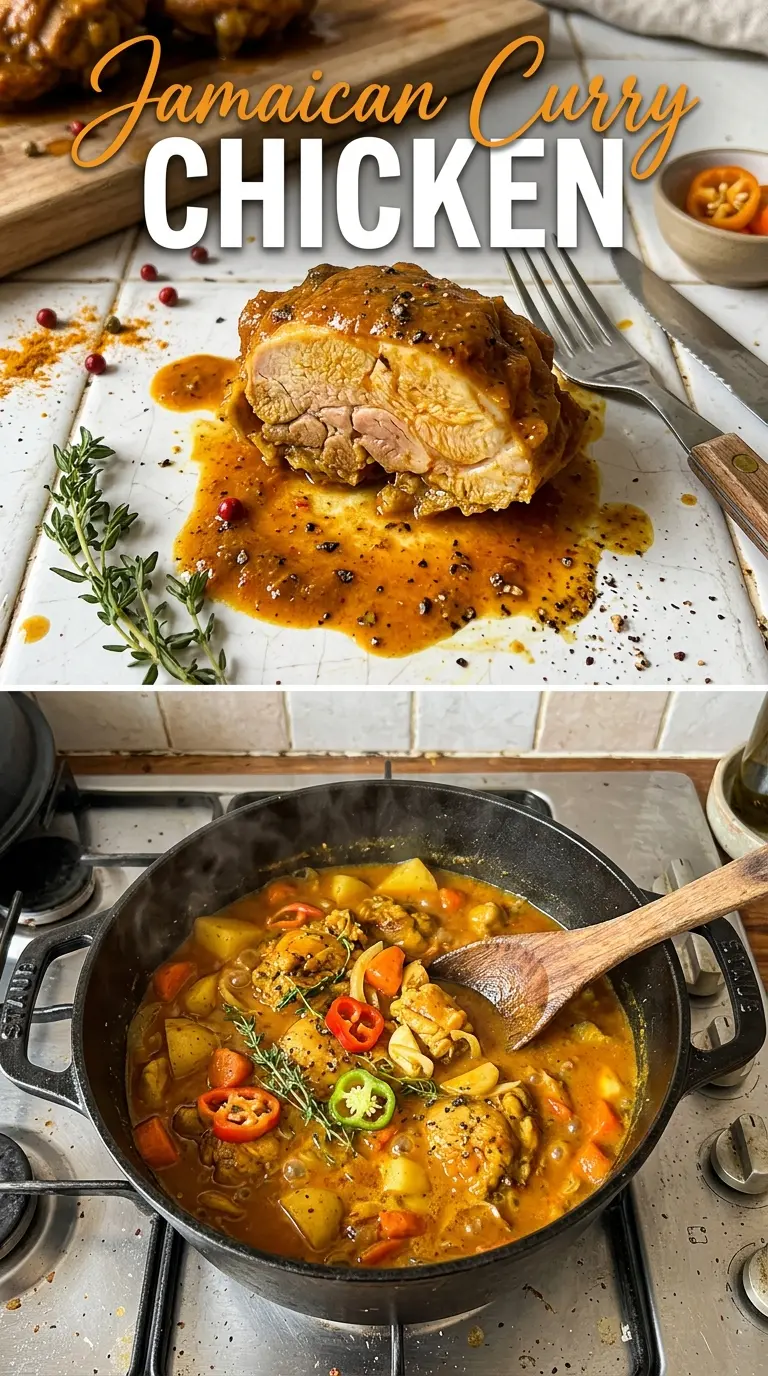
Deep golden-orange curry chicken like this earns a permanent place in the rotation because the sauce tastes cooked, not rushed. The chicken turns tender enough to pull from the bone with a spoon, and the curry clings in a way that makes plain rice feel like the right answer. What sets this version apart is the balance: earthy Jamaican curry powder, warm allspice, thyme, and the fruity heat of a whole Scotch bonnet building into one steady, fragrant pot.
The key is letting the chicken brown before the liquid goes in. That first sear gives the sauce depth, and the curry powder gets a chance to bloom in the oil instead of tasting flat or dusty. Keeping the Scotch bonnet whole gives you its flavor without turning the pot into a heat challenge, and the potatoes, if you use them, help thicken the sauce just enough to coat everything.
Below, you’ll find the timing that keeps the chicken from going stringy, plus a few smart swaps if you need to adjust the heat or stretch the dish for more people. The process is straightforward, but a couple of small details make all the difference.
The sauce turned out thick and golden instead of watery, and the whole Scotch bonnet gave it just the right warmth without making it too spicy for my kids.
Love the deep curry color and allspice warmth in this Jamaican Curry Chicken? Save it to Pinterest for the nights when you want a fragrant one-pot dinner that tastes like it simmered all afternoon.
The Curry Powder Needs Heat Before It Meets the Broth
Jamaican curry chicken can taste flat when the spices go straight into liquid. Curry powder opens up in oil, and that brief contact with heat pulls out its color and aroma before anything gets diluted. If you skip the browning step, the sauce still works, but it won’t have that deep, rounded flavor that makes the dish memorable.
The other mistake is adding the Scotch bonnet directly to the sauce after slicing it open. That turns the whole pot into a fire test. Leaving it whole gives the curry pepper flavor and fragrance without dumping all the heat into the liquid at once. If you want more heat, pierce the pepper once with the tip of a knife. That’s enough.
What Each Ingredient Is Actually Doing in This Dish
- Jamaican curry powder — This is the backbone of the dish, and it shouldn’t be swapped with generic curry powder if you want the right flavor and color. Jamaican blends tend to be brighter and more earthy at the same time. If you’re using a mild store version, toast it in the oil for a few extra seconds so it blooms fully.
- Allspice — This brings the warm, peppery note that makes the curry taste distinctly Jamaican instead of simply spiced. Ground allspice works fine, but don’t skip it. It gives the sauce its depth.
- Scotch bonnet pepper — Keep it whole for a gentler heat and a more aromatic sauce. Habanero is the closest substitute if that’s what you can find. Use it the same way: whole, not cut open, unless you want much more fire.
- Bone-in chicken pieces — Bone-in thighs and drumsticks stay juicier during the simmer and give the sauce more body. Boneless chicken cooks faster, but it can go soft or dry in the time it takes the sauce to develop. If you use boneless pieces, cut the simmer time down and watch closely.
- Thyme and ginger — These aren’t background players. Thyme brings the savory, herbal note, and ginger keeps the curry from feeling heavy. Fresh thyme is worth using here; dried thyme works in a pinch, but use less and crush it between your fingers first.
- Potatoes — Optional, but useful if you want a thicker sauce and a more filling pot. They also soak up the curry flavor as they cook. Use waxy potatoes if you can, since they hold their shape better than mealy ones.
The Simmer That Turns Spices Into Dinner
Season and let the chicken sit
Coat the chicken with curry powder, allspice, salt, onion, garlic, and ginger, then let it sit for at least an hour. That rest time gives the seasoning a chance to stick and start working into the meat, so the curry doesn’t taste like it was added at the end. If the chicken looks wet and slippery after marinating, that’s fine — the surface moisture helps the first browning happen.
Brown the chicken hard enough to leave color behind
Heat the oil until it shimmers, then add the chicken in a single layer and let it sit long enough to develop a deep golden crust. The pan should sizzle the second the meat lands. If it steams instead of browns, the heat is too low or the pan is crowded, and you’ll miss the savory base that carries the sauce.
Build the sauce around the fond
Once the chicken is browned, add the aromatics and stir them through the oil and browned bits on the bottom of the pan. That fond is where the flavor lives, so don’t scrub the pan clean or pour in the broth too quickly. After the broth, thyme, and whole Scotch bonnet go in, bring everything to a gentle simmer and keep it there until the chicken is tender and the sauce has turned glossy.
Finish when the meat gives up cleanly
After 35 to 40 minutes, the chicken should feel tender when pierced and the sauce should coat a spoon without looking greasy or thin. If you’re adding potatoes, they should be soft but still intact, not crumbling apart. Taste the sauce at the end and adjust the salt only after the simmer, since the liquid reduces and the seasoning concentrates as it cooks.
How to Adapt This for Different Heat Levels and Pantry Situations
Mild Version Without Losing the Jamaican Character
Keep the Scotch bonnet whole and leave it in for just part of the simmer, or use half a pepper if you’re comfortable with a little heat but want less of a burn. The curry will still taste layered and aromatic because the pepper is there for fragrance as much as spice.
Gluten-Free and Naturally Dairy-Free
This dish already fits both without any special changes, as long as your broth is gluten-free. That makes it a good one to cook for a mixed group, since the sauce stays rich without relying on flour or cream.
Using Boneless Chicken Instead of Bone-In Pieces
Boneless thighs will work better than breasts because they stay juicy during the simmer. Start checking them around 20 to 25 minutes so they don’t overcook, and expect a slightly lighter sauce since the bones aren’t contributing as much body.
Storage and Reheating
- Refrigerator: Store in an airtight container for up to 4 days. The flavor deepens overnight, and the sauce will thicken as it chills.
- Freezer: It freezes well for up to 3 months. Cool it completely first, then freeze in portions so the chicken and sauce reheat evenly.
- Reheating: Warm it gently on the stove over low heat with a splash of broth or water if needed. High heat can make the chicken dry and can separate the sauce, especially if it has thickened a lot in the fridge.
Answers to the Questions Worth Asking

Authentic Jamaican Curry Chicken
Ingredients
Equipment
Method
- In a bowl, mix Jamaican curry powder, allspice, salt, diced onion, minced garlic, and grated ginger, then rub over the bone-in chicken pieces. Cover and refrigerate for 1 hour.
- Heat vegetable oil in a Dutch oven over high heat. Brown the marinated chicken until well browned, then add the remaining aromatics and cook for 2 minutes.
- Add chicken broth, fresh thyme, and the whole Scotch bonnet pepper to the pot. Simmer for 35-40 minutes, until the chicken is tender and the sauce turns deep golden-orange.
- Remove the thyme sprigs and keep the Scotch bonnet whole or discard, then serve the curry chicken over rice. If using potatoes, simmer them along with the curry until tender during the 35-40 minute simmer.