
Prosciutto, creamy brie, and jewel-bright figs turn a charcuterie board into something people gather around before they even take a first bite. The best boards don’t look crowded in a random way; they look layered, intentional, and easy to graze from. This one leans into that balance with salty meats, nutty cheese, briny olives, and sweet fruit that keeps each bite moving in a new direction.
What makes this version work is the mix of textures and the order you build it in. A soft cheese like brie gives you a focal point, while manchego and cheddar add structure and a little bite. Castelvetrano olives stay mild and buttery instead of overpowering the board, and the fig jam ties the meats and cheeses together without making the whole spread feel dessert-like.
The trick is to think in clusters, not rows. You’ll find a simple way to anchor the board, how to keep the fruit from looking scattered, and a few swaps that still give you a board with good contrast and plenty of visual drama.
The figs and blackberries made the whole board look elegant, but what I loved most was how the brie and fig jam softened the salty meats. I set it out for a small dinner and the crackers were gone before I even finished pouring drinks.
Save this fig-and-brie charcuterie board for the next time you want an effortless centerpiece with salty, sweet, and briny bites.
The Mistake That Makes a Charcuterie Board Look Random Instead of Thoughtful
A good charcuterie board looks full, but it never looks scattered. The mistake most people make is laying every ingredient out in separate piles with no anchor points, which leaves the board feeling flat and awkward no matter how expensive the ingredients are. Once you give the eye a few places to land first, the rest falls into place naturally.
That’s why the brie, fig jam, and honey go down first here. They create soft focal points that help the meats, cheese, and fruit feel organized around them. Then you build in sections with repeating shapes and colors so the board reads as a whole instead of a shopping list.
- Anchor points matter. Brie, jam, and honey give the board height and round shapes, which keeps the surface from looking too linear.
- Fold the meats instead of laying them flat. Prosciutto looks better draped and ruffled, while salami and soppressata gain volume when folded into loose fans.
- Fill gaps with purpose. Blackberries, olives, and almonds work as visual connectors between larger items, so the board looks abundant without needing more food.
What Each Ingredient Is Actually Doing on the Board
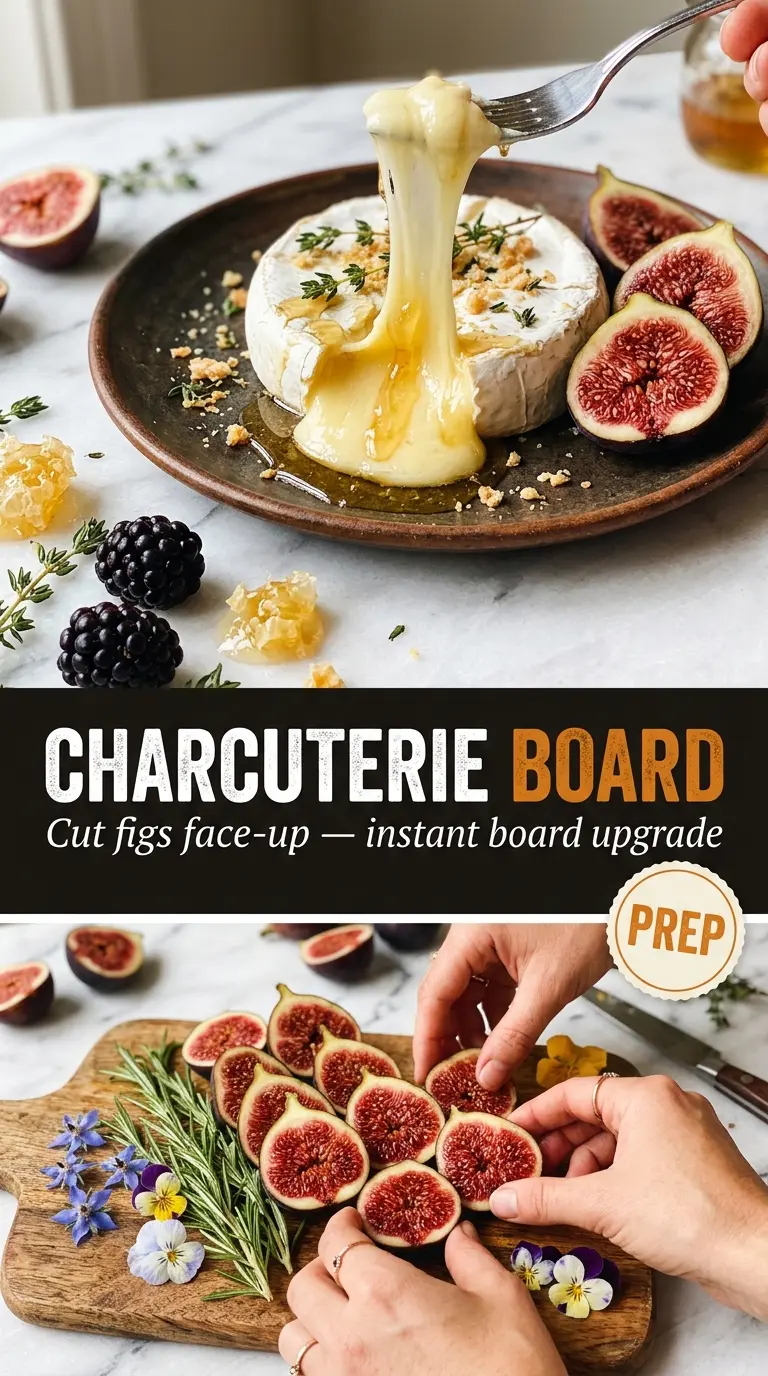
Prosciutto brings delicate saltiness and a soft texture that melts on the tongue. If you swap it, choose another thin, pliable cured meat; thick-cut slices won’t drape the same way and the board loses some of its movement.
Salami and soppressata add sturdier, spicier notes that keep the board from leaning too soft. Soppressata especially gives you a little more bite, which helps balance the sweet fruit and jam.
Brie, manchego, and aged cheddar cover three different jobs. Brie gives you creaminess, manchego adds a nutty, savory edge, and cheddar brings sharper flavor and a firmer texture. If you need a substitute, aged gouda or pecorino can stand in for manchego, but the board will shift sweeter or saltier depending on what you choose.
Castelvetrano olives, Marcona almonds, figs, blackberries, honey, and fig jam supply the color and contrast. Castelvetranos are worth using because they’re buttery and mild, not harsh or overly briny. Fresh figs are the visual centerpiece, especially when halved, and the jam acts like glue for bites that need a little sweetness. If you can’t find Marcona almonds, use roasted almonds, but expect a firmer crunch and a less buttery finish.
Building the Board So the Last Crackers Still Look Intentional
Set the anchors first
Place the brie wheel, honey, and fig jam on the board before anything else. Those elements define the shape of the spread and keep you from filling the surface evenly from edge to edge, which is what makes boards look boring. Leave a little room around each one so they can breathe.
Arrange the meats with movement
Fan the salami and soppressata into loose arcs, then fold the prosciutto into ripples or small ribbons. The goal is height and texture, not perfect symmetry. If the meat sits flat, it disappears into the board and you lose the sense of abundance.
Build contrast around the cheese
Set the sliced cheddar and cubed manchego near the softer brie so each cheese has a different job on the board. The sharper cheeses work best in compact stacks or little rows, because that shape makes them easy to grab. If the cubes are too small, they get lost; if they’re too large, the board starts to feel heavy.
Fill the gaps last
Add the figs, blackberries, olives, and almonds once the larger pieces are in place. Those smaller items should land in the open spaces, not in neat lines, because they’re what make the board look finished. Tuck in rosemary and edible flowers at the end so they stay fresh and don’t get buried under the heavier items.
How to Adapt This Board for Different Guests and Different Tables
Make It Gluten-Free Without Losing the Spread
The board itself is naturally gluten-free as long as you skip regular crackers and serve it with gluten-free crackers or sliced vegetables. The meats, cheeses, fruit, nuts, and condiments don’t need changing, so the flavor balance stays intact.
Make It Fully Alcohol-Free and Dinner-Friendly
If you’re serving this as the first course for a mixed crowd, lean harder on the fruit and nuts and keep the cheeses a little more generous. That gives the board enough substance to feel like a starter rather than just a nibble tray.
Swap the Meat for a Vegetarian Board
Skip the cured meats and add more cheese, roasted nuts, olives, and a second jam or preserve. You lose the salty chew of the charcuterie, so the board needs extra contrast from briny or sharp elements to stay interesting.
Storage and Reheating
- Refrigerator: Store leftover meats, cheeses, and fruit separately in airtight containers for up to 3 days. The cheese holds well, but the figs and blackberries soften quickly once cut.
- Freezer: This board doesn’t freeze well assembled. The texture of the cheese, fruit, and olives changes too much, so only freeze extra sliced bread if you need to.
- Reheating: No reheating needed. Let chilled cheese sit at room temperature for 20 to 30 minutes before serving again so the flavors open up and the brie regains its creamy texture.
Answers to the Questions Worth Asking
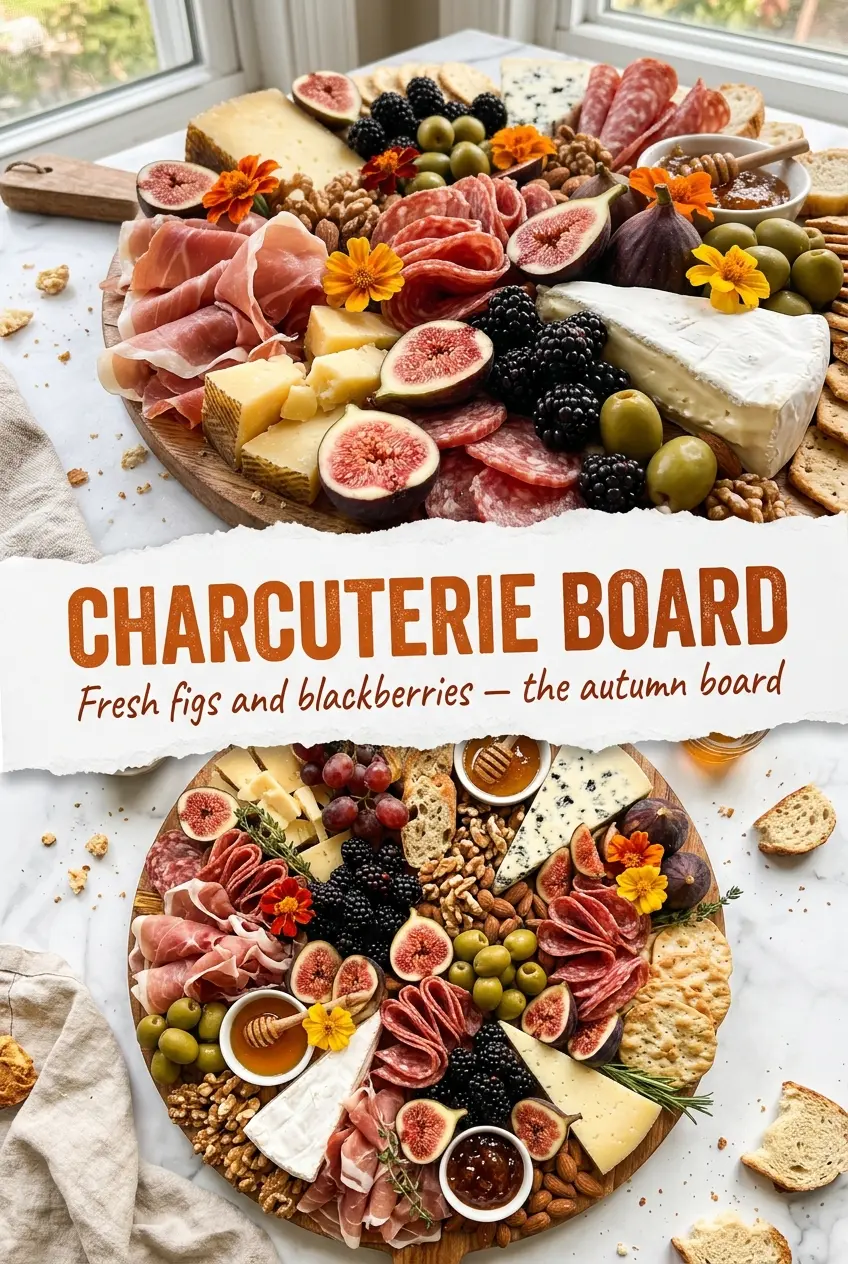
Charcuterie Board
Ingredients
Method
- Place brie, honey bowl, and fig jam as anchor points on the board so they frame the center of the spread.
- Fan prosciutto, salami, and soppressata in separate sections to create clear visual stripes across the board.
- Place cheese slices and cubes around the meats so the board has both soft and firm textures in every quadrant.
- Fill gaps with Castelvetrano olives, Marcona almonds, fresh figs, and blackberries to add jewel tones and crunchy bite.
- Tuck rosemary sprigs and edible flowers for color, then add crackers and sliced sourdough last so they stay crisp at the table.