
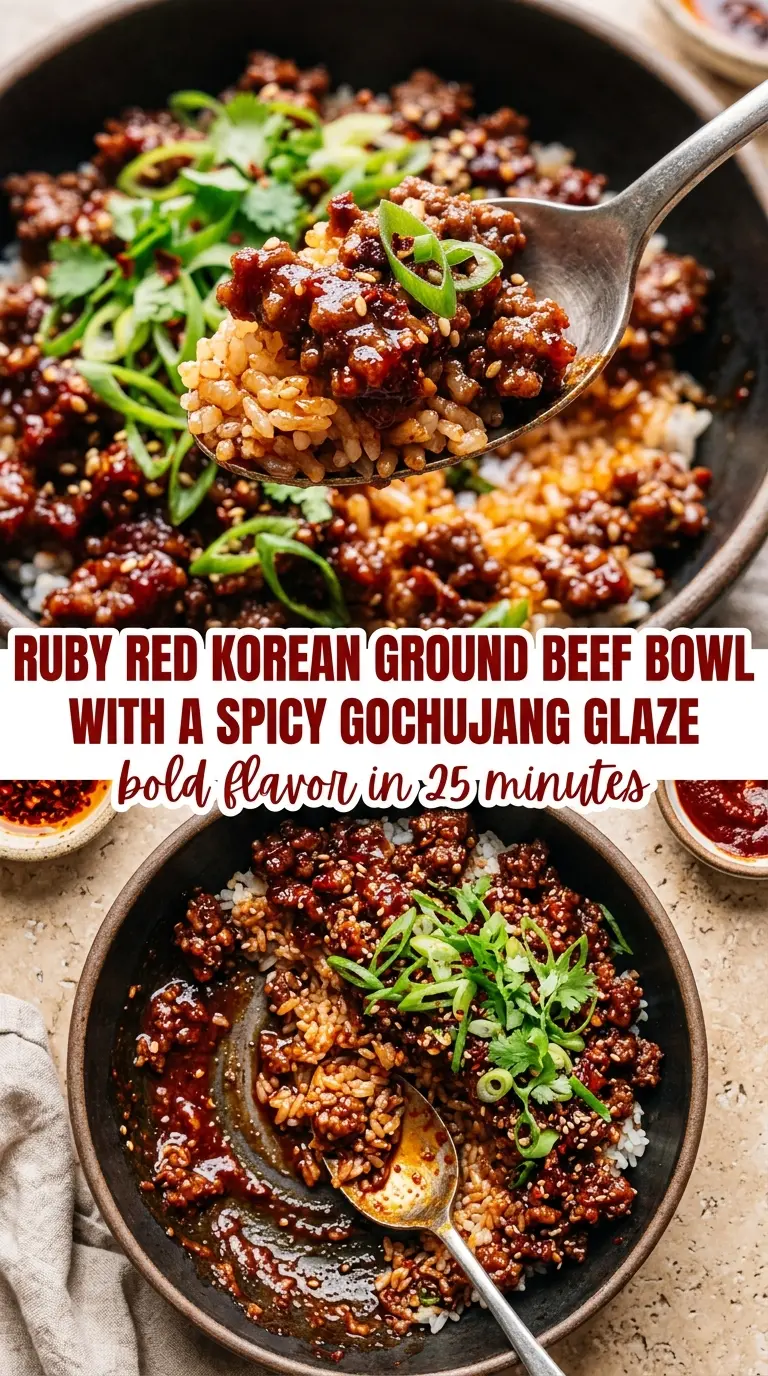
Savory ground beef turns glossy and deeply seasoned in this Korean-inspired bowl, and the whole thing lands on the table fast without tasting rushed. The sauce clings to every crumble of beef, hitting that sweet-spicy-salty balance that keeps you going back for one more bite. Piled over hot rice with scallions and sesame seeds, it eats like a full dinner, not a shortcut.
What makes this version work is the way the sauce is built. Gochujang brings heat and depth, soy sauce handles the salt, brown sugar rounds out the edges, and sesame oil gives the finished dish that nutty finish you can smell the second it hits the pan. Let the beef brown first so it can pick up flavor before the glaze goes in; if you stir in the sauce too early, you end up steaming the meat instead of coating it.
Below you’ll find the small timing details that keep the sauce glossy instead of dry, plus a couple of smart variations for when you want to stretch it, tame the heat, or make it work with what you’ve got on hand.
The sauce thickened up perfectly and coated the beef instead of pooling at the bottom. I used the full 3 tablespoons of gochujang and the rice soaked up every bit of it.
Save this Korean Ground Beef Bowl for those nights when you want bold gochujang flavor, glossy beef, and dinner on the table in 25 minutes.
The Secret to Keeping the Beef Glossy Instead of Dry
The biggest mistake with a quick beef bowl is rushing the sauce in before the meat has a chance to brown. Ground beef needs a few undisturbed minutes in the pan so it can develop those savory browned edges. Once you stir in the sauce, the goal changes from searing to glazing.
Gochujang is thick and concentrated, which is exactly why it works here. It brings body as well as heat, so the sauce tightens in just a few minutes instead of turning watery. If your pan is crowded or the heat is too low, the beef will release liquid and the sauce will never cling the way it should.
- Brown the beef first — Let it sit long enough to get a little color before breaking it up completely. That browned surface gives the bowl depth that plain steamed meat can’t match.
- Use just enough heat for the glaze — Once the sauce goes in, keep the simmer gentle. A hard boil can make the glaze reduce too fast and turn salty.
- Drain excess fat only if needed — If your beef is especially fatty, spoon off some of the grease before adding the sauce. Leave a little behind for flavor.
What Each Ingredient Is Actually Doing in This Bowl
- Ground beef — An 80/20 blend gives you the best balance of flavor and moisture. Leaner beef works too, but it can taste drier, so don’t skip the sauce reduction.
- Gochujang — This is the key flavor here. It adds heat, fermenty depth, and enough thickness to help the sauce cling. There isn’t a true stand-in for it, but a mix of chili paste and a little miso gets you partway there in a pinch.
- Soy sauce — It seasons the beef from the inside out and keeps the sauce from tasting flat. Low-sodium soy sauce works well if you’re watching salt, though the glaze may need an extra minute to taste balanced.
- Brown sugar — This softens the heat and helps the sauce caramelize lightly in the pan. Honey can work, but it changes the flavor a bit and can make the glaze a touch stickier.
- Sesame oil — Use the real thing here. A little goes a long way, and it gives the bowl that toasted finish that reads as Korean the second you smell it.
- Garlic and ginger — Fresh is worth it. They bloom in the hot pan and wake up the whole dish, while powdered versions tend to taste dull in a recipe this fast.
- Rice — Hot, slightly sticky rice is what catches the sauce. Leftover rice works fine if you reheat it with a splash of water so it doesn’t go hard and dry under the beef.
The 10-Minute Finish That Makes Dinner Work
Brown the Beef for Real
Heat a large skillet over medium-high and add the ground beef. Let it cook long enough to get some browned bits before you break it apart completely. If you keep stirring nonstop, the meat steams and you lose the savory base that makes the bowl taste finished.
Wake Up the Garlic and Ginger
Add the garlic and ginger and stir for about a minute, just until fragrant. The smell should shift from raw and sharp to warm and toasty. If the garlic starts browning hard, the pan is too hot and the next sauce will taste bitter.
Glaze and Simmer
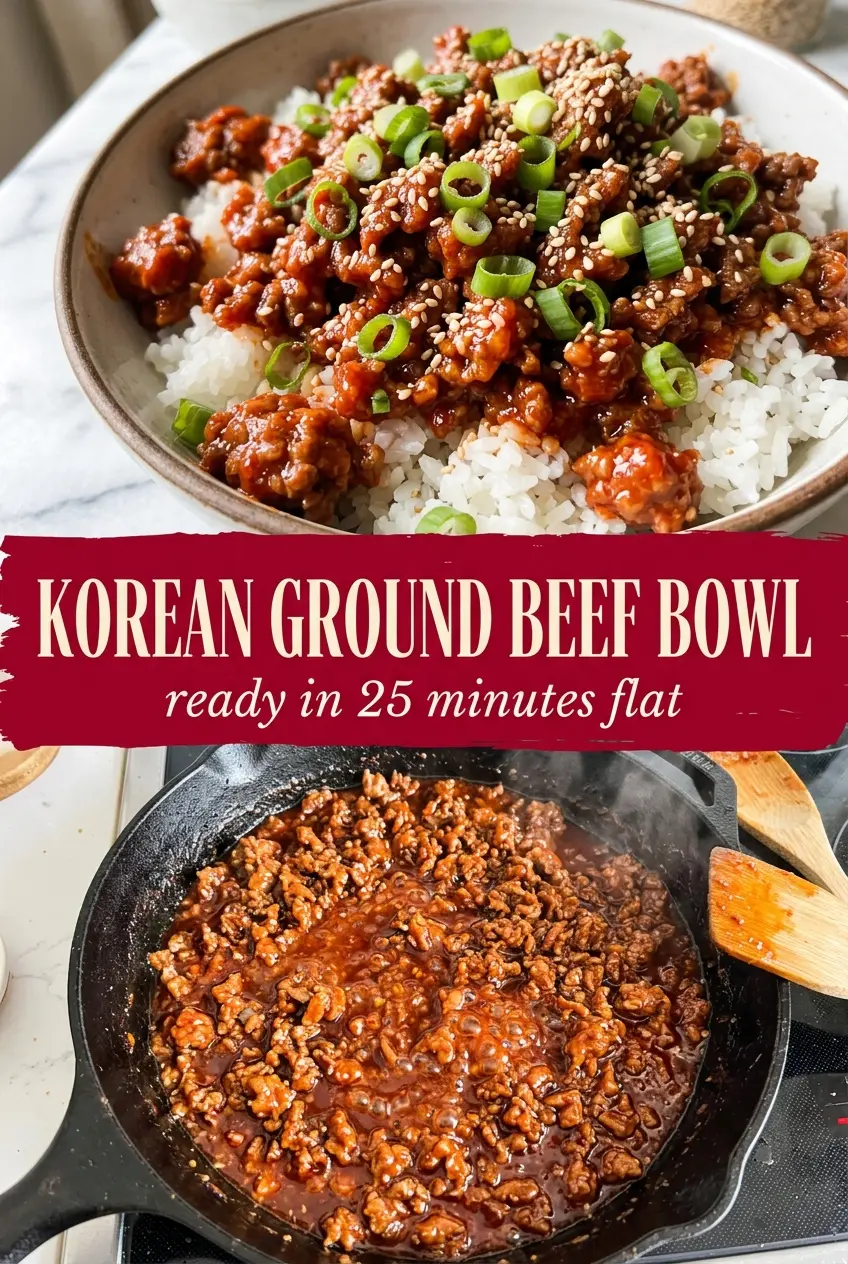
Whisk the gochujang, soy sauce, brown sugar, and sesame oil, then pour it over the beef. Stir until every piece looks coated, then let it simmer until the sauce turns glossy and lightly thickened, usually 3 to 4 minutes. If it still looks loose, give it another minute; the sauce should cling to the meat instead of sliding off like broth.
Build the Bowl
Spoon the beef over hot rice and finish with scallions and sesame seeds. The rice should steam when the beef hits it, because that heat helps the sauce spread into the bowl instead of sitting on top in one heavy layer. A fried egg on top turns the whole thing into a richer meal without changing the method at all.
What to Change When You Want a Different Bowl
Milder Bowl for Sensitive Heat Levels
Cut the gochujang back to 1 or 2 tablespoons and add a little extra brown sugar to keep the sauce balanced. You still get the deep, savory flavor, but the heat stays in the background instead of taking over.
Dairy-Free and Gluten-Free Bowl
Use a certified gluten-free gochujang and swap in tamari for the soy sauce. The flavor stays bold and the texture doesn’t change, so this is an easy adjustment with no real downside.
Stretch It with Vegetables
Stir in finely chopped mushrooms, shredded carrots, or diced zucchini after the beef browns. They soak up the sauce and make the bowl feel bigger, though you’ll want to cook off any extra moisture before the glaze goes in.
Storage and Reheating
- Refrigerator: Store the beef and rice separately for up to 4 days. The beef stays flavorful, though the sauce thickens as it chills.
- Freezer: The beef freezes well for up to 2 months. Cool it completely first, then pack it flat so it thaws quickly and evenly.
- Reheating: Reheat the beef gently in a skillet with a splash of water to loosen the glaze, then warm the rice separately. Microwaving everything together can dry out the beef and make the rice tough.
Answers to the Questions Worth Asking
25-Minute Korean Ground Beef Bowl
Ingredients
Equipment
Method
- Brown ground beef in a large cast iron skillet over medium-high heat, breaking it into crumbles until browned, about 8–10 minutes, and stir frequently so the bits stay in contact with the pan.
- Add garlic and ginger, cooking 1 minute until fragrant, and keep the heat at medium-high so the aroma releases quickly without burning.
- Whisk gochujang, soy sauce, brown sugar, and sesame oil; pour the mixture over the beef, then stir until evenly coated, and the sauce should look dark and sticky as it starts to heat.
- Simmer 3–4 minutes until glossy and slightly thickened, stirring occasionally, until the glaze clings to the beef.
- Serve the glossy beef over cooked rice so the sauce coats the top layer and you can see the red-brown glaze against the white rice.
- Top with scallions and sesame seeds, finishing with a fresh green and nutty sprinkle that sits on top rather than mixing in.