
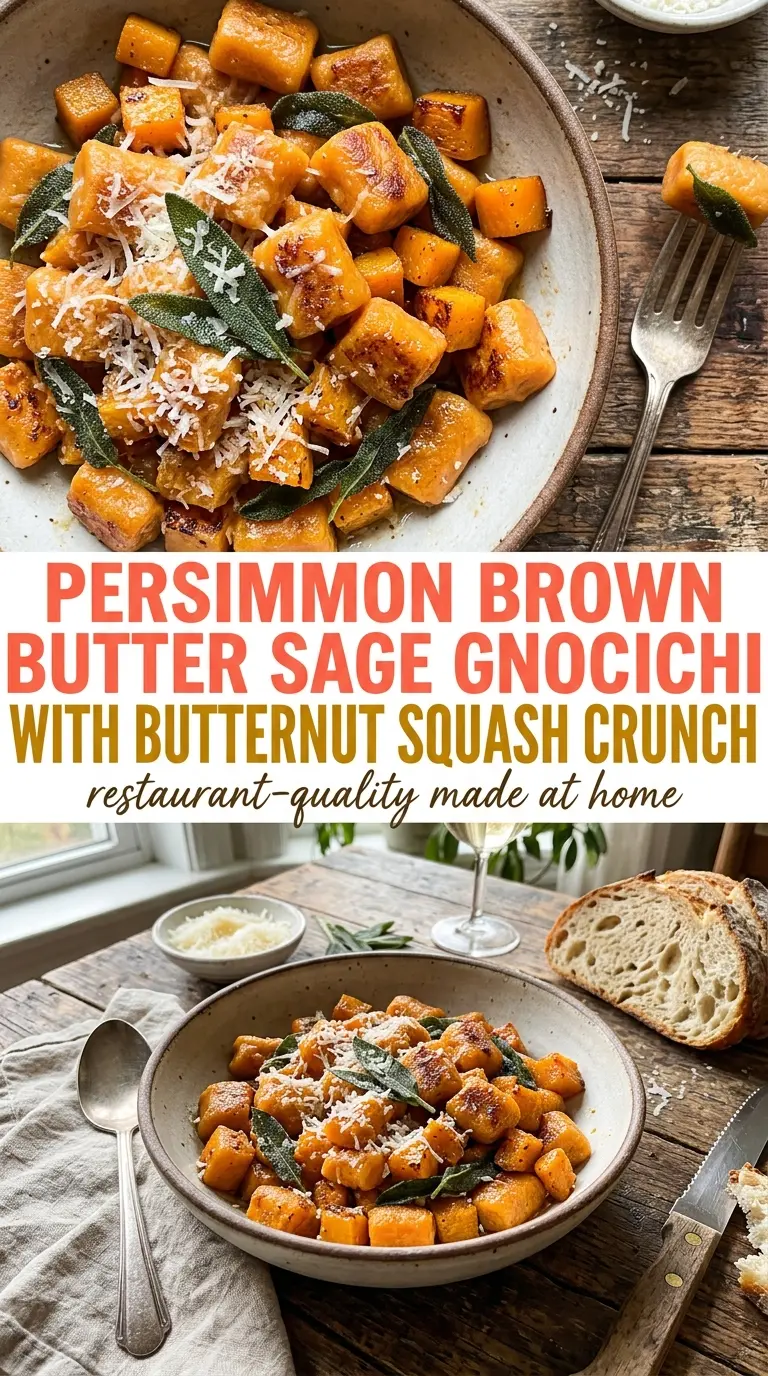
Golden gnocchi, tender roasted squash, and nutty brown butter land in the skillet together and turn into the kind of dinner that disappears fast. The edges of the gnocchi pick up a little crispness, the squash softens just enough to break apart at the fork, and the sage gives every bite a sharp, savory lift. It tastes polished without asking for much more than one pan and a few careful minutes.
What makes this version work is restraint. The butter needs time to brown before the garlic goes in, because garlic burns fast and turns the whole pan bitter if it hits the heat too early. The gnocchi also needs a minute or two untouched in the skillet so it can take on color instead of steaming in its own moisture. That small pause is what gives you those bronzed edges everyone wants but rarely gets.
Below, I’ve laid out the exact cues I watch for when the butter is ready, how to keep the sage crisp, and what to do if your gnocchi starts sticking before it browns.
The butter browned beautifully and the sage went crisp in seconds. I followed the trick of leaving the gnocchi alone in the pan, and the edges turned out golden instead of mushy.
Save this brown butter sage gnocchi with butternut squash for a one-pan dinner with crispy edges, nutty butter, and just enough cozy richness.
The Trick to Browned Gnocchi, Not Soft Little Dumplings
The biggest mistake with skillet gnocchi is crowding it and stirring too soon. When that happens, the gnocchi just warms through and stays pale and soft. What you want is direct contact with the pan so the starches on the outside dry out and turn golden before you move them.
Roasted butternut squash brings its own timing lesson. Since it’s already cooked, it goes in near the end just long enough to warm and glaze in the butter. If you add it too early, it breaks down and starts to smear into the sauce instead of giving you those sweet, distinct cubes against the gnocchi.
- Potato gnocchi — Shelf-stable gnocchi works well here, and it’s actually the easiest version for getting those crisp edges. Fresh refrigerated gnocchi can work too, but it tends to be softer, so give it a little more time in the pan before tossing.
- Butternut squash — Roast it until the cubes are tender with browned corners. That caramelization matters because it keeps the squash from tasting flat next to the brown butter. If you use pre-cut squash, pat it dry before roasting so it doesn’t steam.
- Butter — Unsalted butter gives you control, and this is one place where quality matters because the flavor has nowhere to hide. It needs to move from melted to foamy to nutty brown, and that color change is the whole sauce.
- Sage — Fresh sage is worth it here. Dried sage won’t crisp in the same way and it reads dusty instead of fragrant. Fry the leaves in the butter, then pull them out before they darken too far.
- Parmesan — Use finely grated parmesan so it melts into the hot gnocchi instead of clumping. The cheese adds salt and a little sharpness, so taste before adding extra seasoning at the end.
How to Build the Pan so the Gnocchi Stays Crisp
Frying the Sage First
Start with the butter in a wide skillet over medium heat and add the sage once it’s fully melted and foaming. The leaves will darken, curl, and crisp in under a minute. Pull them out as soon as they stop looking glossy, because they keep cooking in the hot butter even after they leave the pan.
Letting the Butter Brown, Not Burn
Keep the butter moving gently as it cooks. You’re waiting for the milk solids to turn amber and for the pan to smell nutty, almost like toasted hazelnuts. If you see black specks and smell bitterness, the heat was too high and the butter went past the point of use. In that case, start over; there’s no fixing burned butter.
Giving the Gnocchi Time to Color
Add the cooked gnocchi in a single layer and leave it alone for a minute or so before tossing. That pause is what lets the outside dry out and form a crust. If you stir immediately, the gnocchi slides around in butter and stays pale. Once one side is golden, toss it and let another side touch the pan.
Finishing with Squash and Cheese
Add the roasted squash after the gnocchi has picked up some color, then toss just until warmed through. The squash should hold its shape and pick up a little gloss from the butter, not collapse into a mash. Turn off the heat before adding parmesan so it melts into the pan without seizing into clumps.
How to Adapt It When You Need a Different Version
Make It Gluten-Free
Use gluten-free gnocchi and check the parmesan label if you’re cooking for someone sensitive. The texture will still work, but gluten-free gnocchi can soften faster, so brown it in a slightly hotter pan and avoid over-tossing once it’s in the butter.
Make It Dairy-Free
Swap the butter for a high-quality plant butter that browns well, or use olive oil if that’s what you have. You’ll lose some of the nutty depth from real brown butter, but the sage, squash, and garlic still carry the dish.
Add Protein Without Changing the Flavor Balance
Browned Italian sausage or shredded rotisserie chicken both fit cleanly here. Stir them in after the garlic so they coat in the butter before the gnocchi goes back in. Keep the portion modest or the dish loses the contrast between the sweet squash and the sage.
Storage and Reheating
- Refrigerator: Store leftovers in an airtight container for up to 3 days. The gnocchi softens a bit as it sits, but the flavor holds well.
- Freezer: This dish doesn’t freeze well. The squash turns watery and the gnocchi loses its texture after thawing.
- Reheating: Warm it in a skillet over medium-low heat with a small splash of water or butter. Don’t microwave it straight from the fridge if you want to keep any crispness; the pan brings back the texture much better.
Answers to the Questions Worth Asking
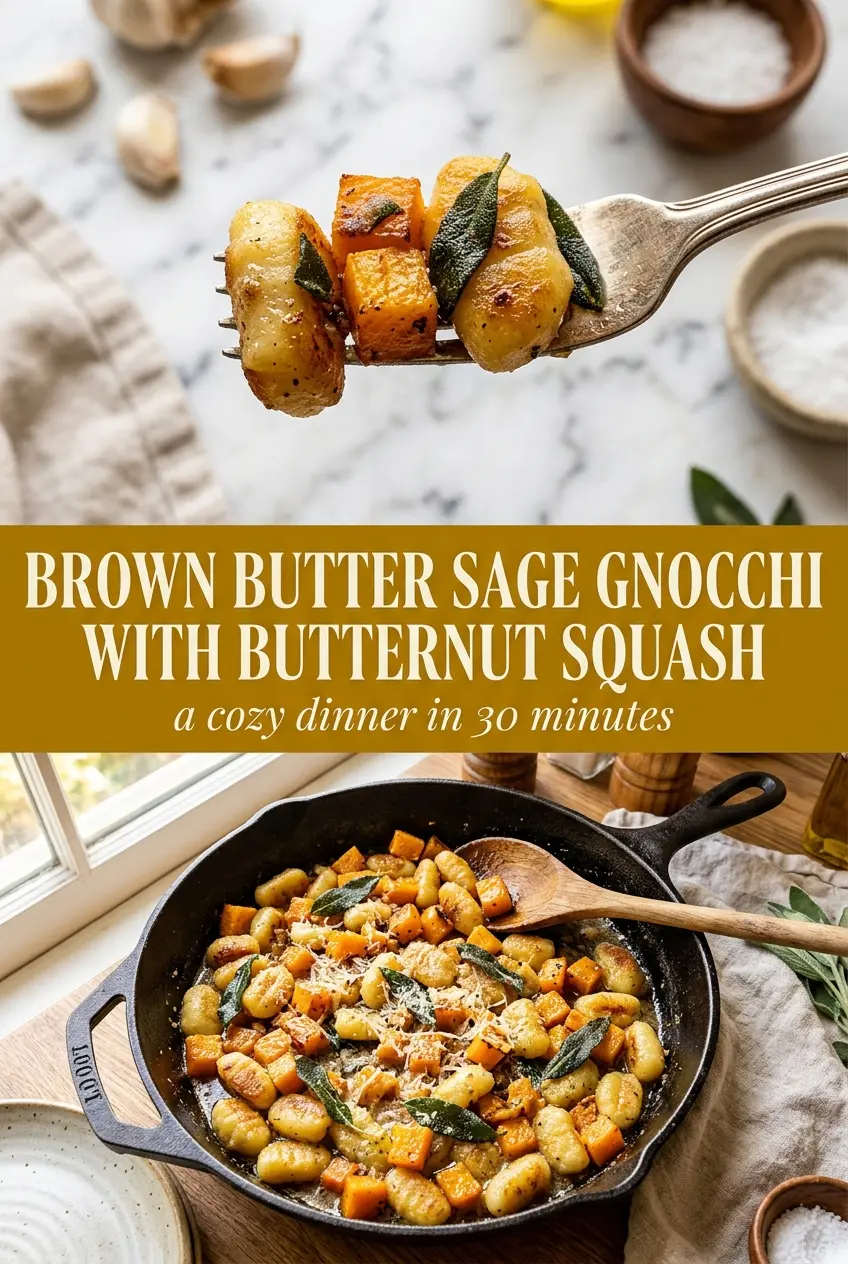
Brown Butter Sage Gnocchi With Butternut Squash
Ingredients
Equipment
Method
- Bring a pot of salted water to a boil and cook potato gnocchi according to package instructions, then drain.
- Transfer the drained gnocchi to a colander and let excess water steam off for 1 minute.
- In a cast iron skillet over medium heat, melt unsalted butter until foaming, then add fresh sage leaves and fry until crispy.
- Remove the crispy sage leaves to a plate and keep warm.
- Continue heating the butter until it turns golden brown and smells nutty, watching closely to avoid scorching.
- Add minced garlic to the brown butter and sauté until fragrant, about 30 to 60 seconds.
- Add cooked potato gnocchi and roasted butternut squash, tossing to coat and lightly crisp the gnocchi.
- Let the gnocchi sit undisturbed in the pan for about 1 minute at a time, repeating once, to build golden crispy edges.
- Season with salt and pepper to taste, then top with grated parmesan cheese.
- Finish with the crispy fried sage leaves and serve immediately.