
Chilled watermelon turns a grazing board into something people stop talking about for a second just to look at it. The sweet, juicy base gives you a fresh contrast under salty prosciutto, creamy burrata, bresaola, and ripe fruit, so every bite lands with a mix of cool, rich, sharp, and sweet. It eats like a special-occasion spread, but it comes together in minutes and doesn’t ask for any cooking beyond slicing baguette.
The trick is keeping the watermelon as dry as possible and building the board in layers that hold their shape. Burrata goes down torn and centered so the balsamic glaze can pool into it instead of running everywhere. Prosciutto looks best when it’s folded into loose rosettes, and the peaches and berries should be clustered, not scattered randomly, so the board feels abundant without getting messy.
Below, I’ll walk through the one prep step that keeps the board from slipping, the ingredients that matter most, and a few smart swaps if you need to work with what’s on hand. This is the kind of appetizer that looks extravagant because the components are good, not because it takes all afternoon.
The watermelon stayed put because I dried it well, and the burrata with balsamic glaze was the first thing gone. Everyone kept coming back for the sweet-salty bites with the peaches and prosciutto.
Watermelon charcuterie board with burrata, prosciutto, and balsamic glaze — save this one for the party spread that disappears first.
The Watermelon Has to Be Dry Before Anything Tastes Right
The biggest mistake with a watermelon board is treating the fruit like a platter and not a surface. Watermelon sweats as it sits, and that moisture loosens the burrata, turns basil limp, and makes the prosciutto slide around. Patting the round completely dry gives you a stable base and keeps the board looking composed long enough for guests to admire it before they dig in.
Placement matters just as much as dryness. Burrata belongs in the center because it anchors the board and catches the balsamic glaze. The wetter fruit — watermelon, peaches, berries — should be grouped so their juices stay in their own zones instead of migrating across the whole platter.
What Each Ingredient Is Actually Doing in This Board
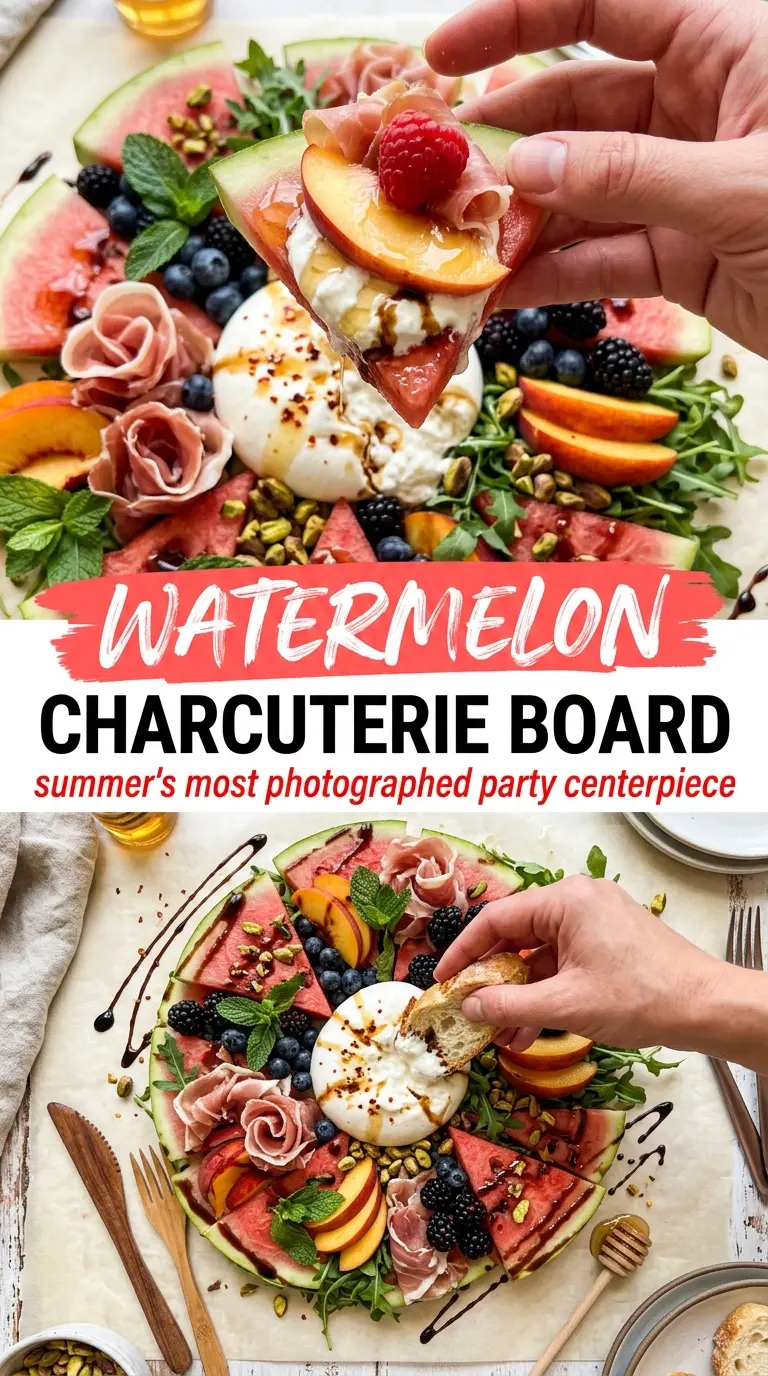
- Watermelon round — This is the base and the visual trick that makes the whole board memorable. It needs to be thick enough to hold toppings without collapsing, and chilling it first keeps everything crisp. A wedge or thick melon slab can work in a pinch, but the round gives you the cleanest presentation.
- Burrata — Burrata brings the creamy center that balances the salt in the cured meats. Tear it rather than slicing it so the glaze can seep into the soft curds. If you can’t find burrata, fresh mozzarella will hold the board together, but you’ll lose that rich, milky spill.
- Prosciutto and bresaola — These give you the savory backbone. Prosciutto stays soft and lush, while bresaola adds a leaner, beefier note that keeps the board from tasting one-dimensional. Good deli meat matters here; thin, folded slices look and eat better than thick-cut pieces.
- Peaches, berries, and herbs — The fruit should taste ripe and fragrant, not just look pretty. Peaches add floral sweetness, berries bring acidity, and basil or mint cuts through the richness. If your peaches are firm, slice them thin so they don’t feel awkward next to the softer cheeses.
- Honey and balsamic glaze — These are the finishing notes. Honey leans into the watermelon’s sweetness, while balsamic glaze gives the board its sharp edge. Don’t skip the glaze on the burrata; that contrast is what makes the board taste intentional instead of just assorted.
Building the Board So It Stays Put and Eats Well
Start with the watermelon foundation
Set the chilled watermelon round on your largest board or platter and blot it dry one more time right before topping it. If the surface is damp, the cheese will slide and the meat will lose its shape. Keep the cut side flat and level so the toppings sit evenly instead of leaning toward one side.
Anchor the center first
Place the torn burrata in the middle and let it relax into a rough mound. That soft center gives the board structure, and it also creates a place for the glaze to collect. If you drizzle the glaze before the cheese is in position, it runs off the fruit and onto the board where nobody can taste it.
Build clusters instead of sprinkling
Arrange the prosciutto in loose rosettes and tuck the bresaola into folds around the edge. Add peach fans and berry clusters in distinct pockets so each scoop gets a mix of textures instead of a random jumble. Finish with basil, mint, honey, honeycomb, flaky salt, and a light balsamic drizzle. If the board starts looking crowded, stop before it feels packed — empty space makes the colors stand out.
How to Adapt This Board for Different Guests and Pantry Gaps
Make It Dairy-Free Without Losing the Creamy Bite
Swap the burrata for a dairy-free cashew cheese or a thick coconut-based spread with a clean, mild flavor. You lose the milky richness, so lean harder on the honey, peaches, and balsamic glaze to keep the board balanced. A spoonable texture works best here because it still gives you that soft center effect.
Skip the Pork and Keep the Board Full
Use smoked salmon ribbons, marinated artichokes, olives, or extra toasted nuts in place of prosciutto and bresaola. You’ll lose some of the salty, cured-meat contrast, so add a little more flaky salt and a sharper cheese or more balsamic glaze to compensate. The board still reads as abundant, just in a different direction.
Turn It Into a Smaller Appetizer for Two or Three
Use a half watermelon or a large platter with a smaller fruit base, then cut the rest of the ingredients in half. The texture and flavor stay the same, but the board looks intentional instead of sparse. This works well when you want the same idea without committing to a big party spread.
Storage and Reheating
- Refrigerator: Best assembled right before serving. Leftovers can be stored for up to 1 day, but the watermelon releases juice and the herbs wilt.
- Freezer: Don’t freeze this board. The watermelon and burrata will turn watery and grainy once thawed.
- Reheating: No reheating needed. If you prep ahead, keep the sliced fruit, meats, and cheese separate, then assemble just before serving so the board stays crisp and tidy.
Answers to the Questions Worth Asking
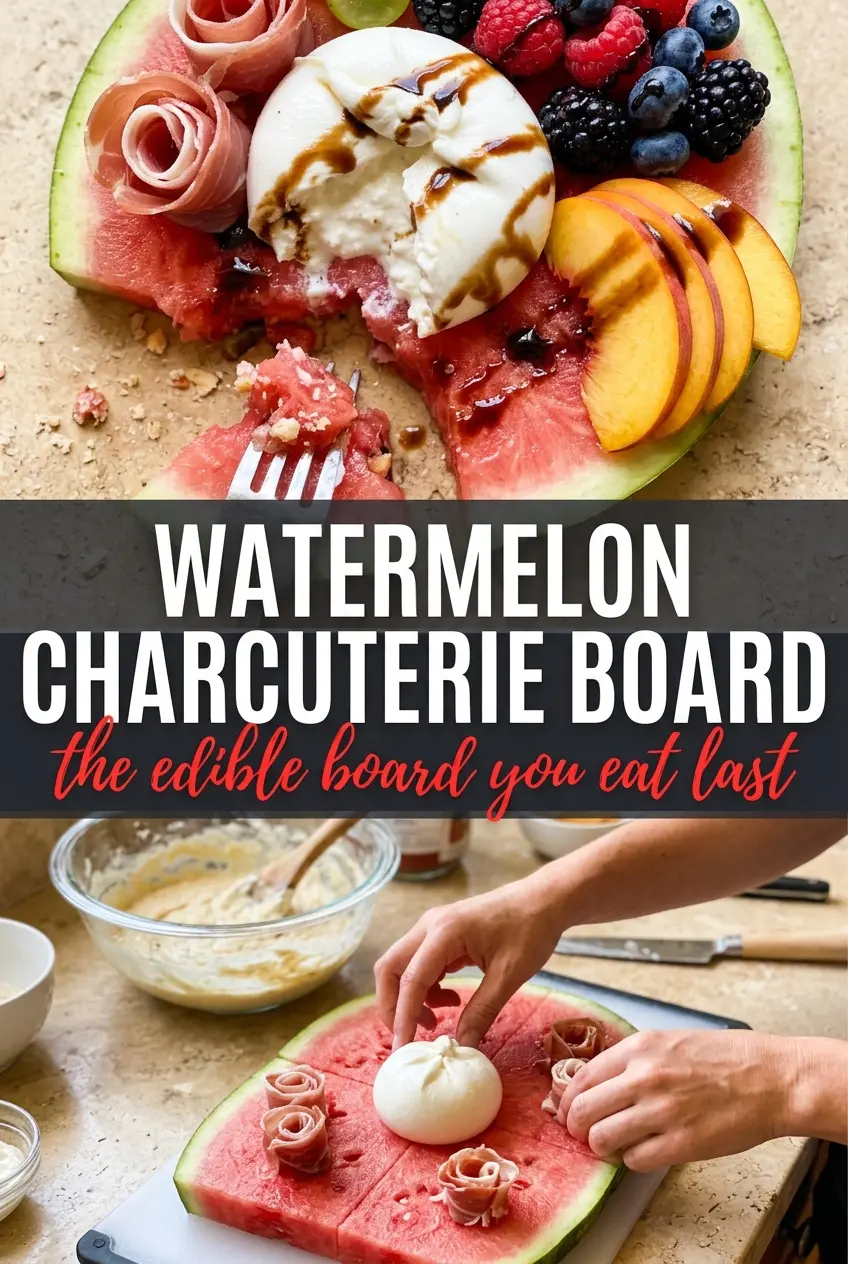
Charcuterie Board
Ingredients
Method
- Place the chilled watermelon round on a large board or platter, then pat it completely dry before topping. The surface should look matte with no visible moisture.
- Arrange torn burrata at the center of the watermelon round. Add it in pools so the creamy edges spread naturally.
- Place prosciutto rosettes around the burrata in a ring. Keep the rosettes spaced so their swirls stay visible.
- Fan peach slices along one edge of the board. Arrange them in overlapping lines for a clean “fan” look.
- Scatter mixed berries in clusters across the board. Vary the berry placement so multiple pops of color appear.
- Add bresaola folds around the center and place the honey with a honeycomb piece nearby. Keep folds loose so they look artisanal rather than stacked.
- Drizzle balsamic glaze over the burrata. Use a light, even drizzle so it soaks into the creamy surface without pooling.
- Scatter fresh basil and mint leaves over the burrata and fruit. Add them at the end for the freshest green color.
- Finish with flaky sea salt over the whole board. Use a pinch or two so you get salty crunch on bites from different areas.
- Serve with toasted baguette slices placed on the side. Arrange them so guests can grab without reaching across the board.