
Pale golden fig jam has a different kind of magic than the dark, brooding versions most people expect. This one turns glossy and amber in the pot, with tiny seeds suspended through the set like flecks of fruit candy. It tastes bright and honeyed first, then the orange zest and cardamom come through at the end and keep the sweetness from flattening out.
Green figs or Calimyrna figs are the reason this jam looks and tastes the way it does. They cook down into a lighter color and a softer, floral sweetness than black figs, which means you get a jam that feels a little more elegant and a lot less heavy. The macerating step matters too: letting the sugar draw out the figs’ juices before you turn on the heat gives you a head start on a smooth, concentrated jam instead of a watery one that takes forever to reduce.
Below you’ll find the trick for testing the set without overcooking it, plus a few useful ways to use it once the jars are filled. It’s one of those small-batch preserves that earns its place on the counter because it’s just as good on toast as it is with cheese, yogurt, or roasted meat.
The jam set up beautifully and stayed spreadable, not runny, and the cardamom with orange zest made the whole kitchen smell amazing. I used it on toast and with brie, and the jar disappeared faster than I expected.
Keep this pale amber fig jam handy for toast, cheese boards, and spoonfuls over yogurt when you want something bright, floral, and a little unexpected.
The Reason This Fig Jam Stays Bright Instead of Turning Dull and Thick
Fig jam can go one of two ways: glossy and concentrated, or muddy and overcooked. The difference usually comes down to heat control and when you add the finishing flavors. If the jam boils hard the whole time, the sugars darken too fast and the fruit loses that fresh fig character. A gentler simmer keeps the texture soft and gives the mixture time to reduce without tasting burned at the edges.
The other detail that matters is the set. Fig jam has enough natural pectin in the seeds and skins to thicken, but it still needs the right amount of reduction. Stop at the point where the bubbles look slower and heavier, then test it instead of chasing a jam that looks overly tight in the pan. It will firm up more as it cools in the jar.
- Green or Calimyrna figs — These give the jam its pale amber color and floral sweetness. Black figs work, but the result will be darker and deeper in flavor.
- Lemon juice — This keeps the jam tasting lively and helps the set. Bottled lemon juice will work in a pinch, but fresh juice tastes cleaner here.
- Orange zest — This is not just perfume. It lifts the fruit and gives the jam a bright top note that keeps the sweetness from feeling flat.
- Cardamom — A small amount adds warmth without taking over. Add it near the end so it stays fragrant instead of tasting dusty.
- Vanilla extract — Vanilla smooths the edges and makes the jam taste rounder. Use the real stuff if you have it; imitation vanilla can taste sharp in a preserve like this.
What Happens in the Pot From Maceration to Set
Letting the Sugar Pull Out the Juice
Combine the figs, sugar, lemon juice, zests, and water in a saucepan, then let it sit for 30 minutes. The fruit should start looking glossy and syrupy as the sugar draws out liquid. That step shortens the cooking time and helps the jam reduce evenly instead of scorching on the bottom. If you skip the rest, you’ll need more heat to get the same result, and that’s where the texture starts going grainy.
Cooking Down Without Burning the Fruit
Bring the pot to a boil, then lower the heat to a steady simmer and stir often. The jam should bubble lazily, not spit aggressively. Scrape the bottom and corners of the pan each time you stir because fig jam thickens fast once it starts reducing. If the heat is too high, the sugar can catch before the figs collapse fully, and you’ll taste that in the final jar.
Adding the Warm Spices at the End
Stir in the vanilla and cardamom during the last 5 minutes. This keeps both flavors aromatic instead of cooked out. The jam should be visibly thicker now, with fruit pieces soft enough to mash against the side of the pan. If it still looks loose, keep simmering in short bursts and test often; overcooking by even a few minutes can turn it past the point of a clean spoonable set.
Testing the Set and Filling the Jars
Spoon a little jam onto a chilled plate and run your finger through it after a minute. If the line holds and the surface wrinkles slightly, it’s ready. Ladle the jam into sterilized jars while it’s hot, leaving the proper headspace if you’re water-bath canning. The jam should move slowly off the spoon at this stage, not pour like sauce.
How to Change This Fig Jam Without Losing What Makes It Good
Make it dairy-free, naturally
This recipe is already dairy-free, which is part of why it works so well as a pantry jam. The fruit, citrus, and spice combination carries all the flavor on its own, so there’s nothing to replace. That makes it an easy preserve to serve with vegan cheese, oat yogurt, or toast topped with nut butter.
Swap the spices for a different warm note
If you don’t have cardamom, use a pinch of cinnamon or a tiny bit of ground ginger. Cinnamon makes the jam taste cozier and more familiar, while ginger adds a brighter bite. Keep the amount small so the spice supports the figs instead of pushing them into pie filling territory.
Use dark figs for a deeper jam
Black Mission figs or other dark varieties will give you a richer, deeper-colored jam with a more jammy, almost winey flavor. The texture will still set the same way, but the final jar won’t have that pale amber glow. If you want a more traditional fig jam, this is the direction to go.
Storage and Reheating
- Refrigerator: Store opened jars in the fridge for up to 3 weeks. The jam may thicken a little more as it chills, but the texture should stay spreadable.
- Freezer: This jam freezes well in freezer-safe containers with headspace. Thaw it in the refrigerator overnight; the texture may loosen slightly after thawing, but the flavor stays excellent.
- Reheating: Reheat only if you want to loosen it for glazing or serving warm. Warm it gently over low heat, stirring often, because high heat can make the sugars stick and darken the jam too fast.
Answers to the Questions Worth Asking
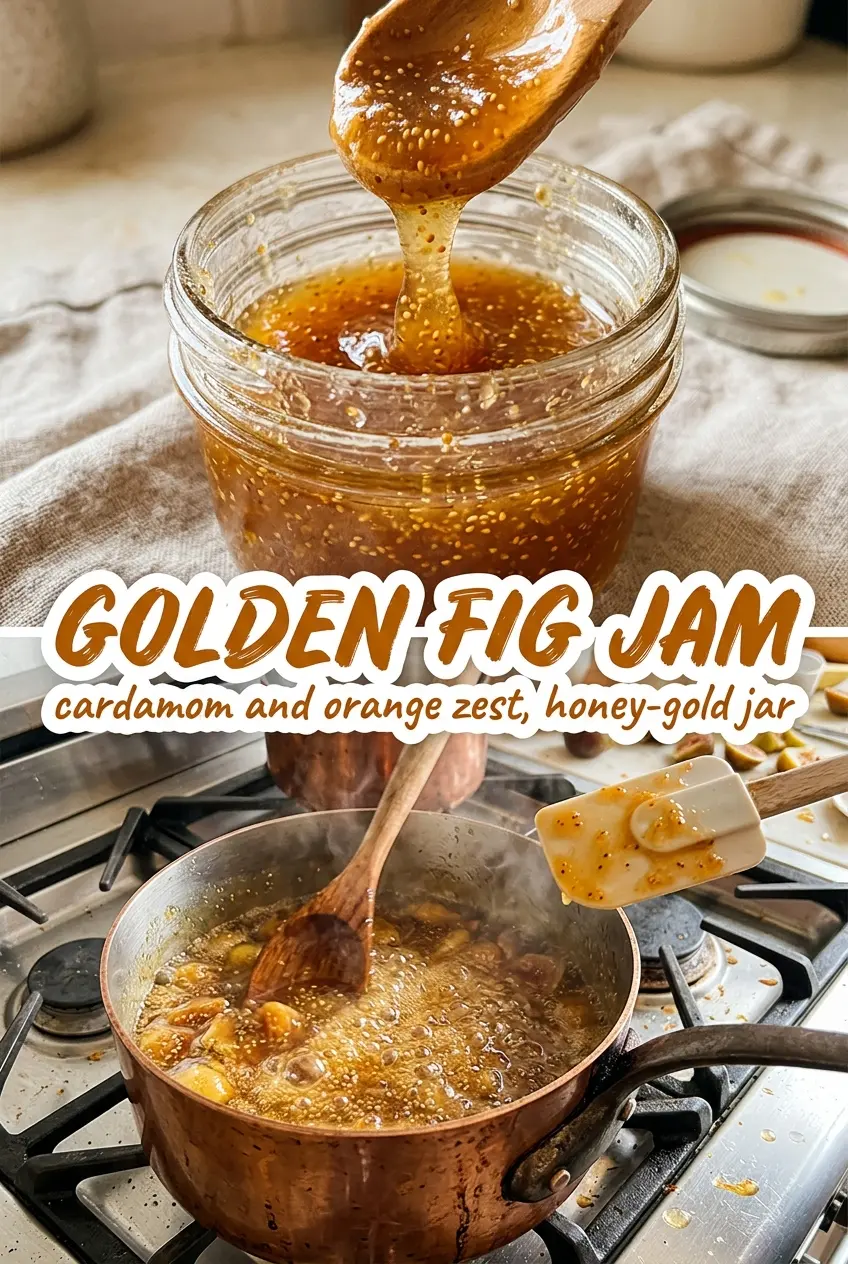
Fig Jam Recipe
Ingredients
Equipment
Method
- Combine the figs, sugar, lemon juice, lemon zest, orange zest, and water in a saucepan, then stir until well coated and glossy. Let stand at room temperature for 30 min to macerate.
- Bring the mixture to a boil over medium-high heat, then reduce to a simmer and maintain it for 30–35 min, stirring often so it doesn’t scorch. Cook until the jam looks thick and coats a spoon.
- Add the vanilla extract and cardamom in the last 5 min of simmering, then stir to distribute evenly and keep the aroma fragrant.
- Test set by placing a small spoonful on a cool plate and watching for it to gel as it cools. When it’s ready, ladle into sterilized jars.
- Process in a water bath for 10 min, then cool completely. Alternatively, refrigerate for up to 3 weeks and use within that time.