
Sharp cheddar, creamy brie, and nutty manchego give this Thanksgiving charcuterie board the kind of contrast that keeps people circling back for “just one more” bite. The sweet pears, tart cranberry jam, and juicy pomegranate seeds cut through the richness, while the prosciutto and salami add enough salt to keep every cracker interesting. It looks abundant without asking you to cook anything beyond a little slicing and arranging.
The trick is balance, not perfection. Put the soft elements down first so they anchor the board, then work outward with the firmer cheeses, folded meats, and crunchy crackers. That order keeps the board from looking cluttered, and it gives every ingredient a place instead of a pile. The rosemary isn’t just garnish either; it adds that piney, holiday smell that makes the whole board feel finished.
Below you’ll find a simple way to build the board so it feels full and generous, plus a few smart swaps if you need to change the cheese, fruit, or nuts. The layout matters here more than any exact measuring, and once you see the rhythm of it, you can make a board like this without second-guessing every placement.
The cheeses stayed creamy, the pears didn’t brown on me right away, and the cranberry jam tied everything together. I brought this to Thanksgiving and people kept picking at it until dinner was ready.
This Thanksgiving charcuterie board is all about the creamy brie, jewel-like pomegranate, and easy make-ahead grazing.
The Board Falls Apart When You Start with the Wrong Anchor
A good charcuterie board looks effortless because the structure is doing quiet work underneath. If you scatter everything across the board at once, you end up with gaps, repetition, and a few lonely crackers hanging off the edge. Start with the bowl of cranberry jam and the brie, then place the other cheeses around them so the board has weight in more than one spot.
From there, fold the meats instead of laying them flat. Ribbons and loose folds create height, which makes the board look fuller without adding more food. The final mistake people make is saving the small ingredients for the end and tossing them into the empty spaces at random. Those small bits are what knit the board together, so they should be used intentionally to soften the edges and fill every gap.
What Each Ingredient Is Actually Doing on This Board
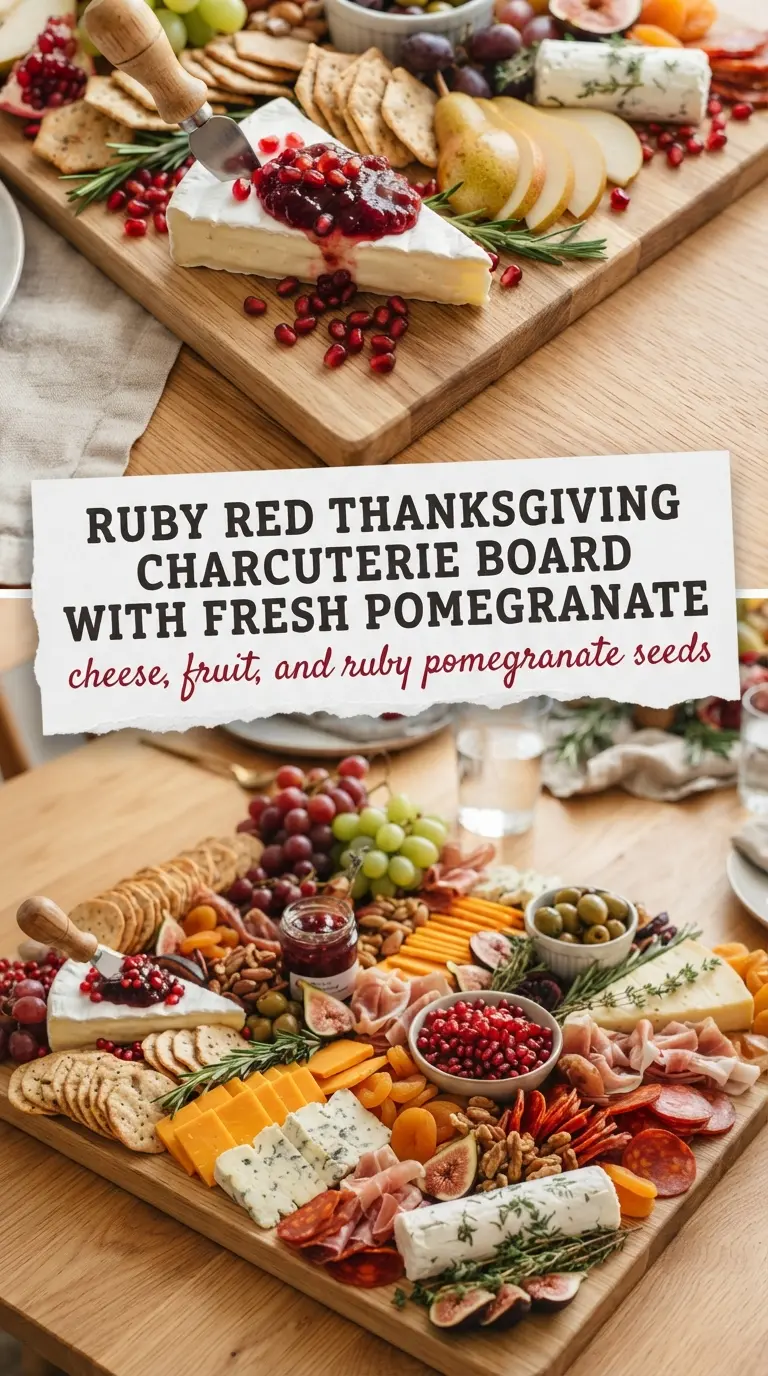
- Brie — This is your creamy centerpiece. A ripe brie spreads easily and gives the board a soft, rich bite that balances the sharper cheeses. If you can, let it sit at room temperature for 20 to 30 minutes before serving so it tastes supple instead of cold and firm.
- Aged cheddar — Use a cheddar with enough sharpness to stand up to the sweet fruit and jam. Mild cheddar gets lost here. Pre-cut it into wedges or cubes so guests can grab it without dragging a knife through the board.
- Manchego — This adds a nutty, slightly salty note that bridges the gap between the brie and the cured meats. If you can’t find manchego, a good pecorino or a firm sheep’s milk cheese works, though the flavor will be a little more assertive.
- Prosciutto and salami — Folding the meats is worth the extra minute. The folds trap air and make the board look abundant, and they also keep the slices from sticking together in one flat sheet. Use good-quality sliced meat here; texture matters more than fancy add-ins.
- Pomegranate seeds, pears, and grapes — These are doing the freshness work. The fruit keeps the board from feeling heavy and gives you juicy, sweet-tart bites between the cheese and meat. Slice the pears just before serving, or brush them lightly with lemon juice if they need to sit for a bit.
- Candied pecans and crackers — The pecans add crunch plus a little sweetness, while the crackers give everyone a neutral base to build a bite. Choose sturdy crackers, not delicate ones that will snap under the weight of cheese and jam.
- Cranberry jam and rosemary — The jam acts like a sauce, which keeps the board from feeling dry, and the rosemary adds a fresh, piney aroma that makes the whole thing read as holiday food the second it hits the table.
Building the Board in a Way That Looks Full, Not Crowded
Start with the largest shapes
Set the brie and the bowl of cranberry jam on the board first, then tuck the cheddar and manchego into different areas around them. These bigger items create the visual map for everything else. If they sit too close together, the board turns into one dense cluster and loses the generous, scattered look that makes charcuterie feel inviting.
Fold the meats instead of laying them flat
Prosciutto should be loosely folded into ribbons, and salami should be arranged in little overlapping stacks or soft rosettes if you want a fancier look. Flat slices look sparse, even when there is plenty of meat on the board. Folded meats also create pockets where fruit and crackers can sit, which helps the board look balanced.
Fill the open spaces with color and crunch
Use the grapes, pomegranate seeds, pears, and pecans to fill the gaps between the larger items. The goal is to make the board look naturally full, not packed tight. If you run out of a particular ingredient, use more of the others rather than leaving blank spaces; those gaps are what make a board look unfinished.
Finish with the small details
Tuck rosemary sprigs along the edges and in any last empty pockets. Scatter the crackers in clusters so people can reach them from more than one side of the board. The best boards invite grazing from every angle, and the last detail should make it easy for someone to build a bite without dismantling the whole arrangement.
Three Smart Ways to Adjust This for Your Table
Make it vegetarian without losing the holiday feel
Skip the prosciutto and salami, then add more cheese, extra grapes, and a handful of olives or marinated artichokes if you want another savory element. The board still feels complete because the fruit, nuts, and jam carry enough contrast to replace the cured meat.
Swap the cheeses for what you already have
Any mix of one soft cheese, one sharp cheese, and one firm cheese will still work. Camembert can stand in for brie, gouda can replace the cheddar, and a firm sheep’s milk cheese can take the place of manchego. What changes is the balance: milder cheeses make the board sweeter, while stronger cheeses push it in a more savory direction.
Use what stays freshest if you need to assemble ahead
You can prep the cheeses, meats, and nuts several hours ahead, but slice the pears at the last minute so they don’t brown or dry out. If you’re working ahead, keep the crackers separate until serving so they stay crisp. The board holds together best when the wettest ingredients are added last.
Storage and Reheating
- Refrigerator: Store leftover cheese, meat, and fruit separately in airtight containers for up to 3 days. Crackers soften once they sit on the board, so keep them out of the container if you want them crisp.
- Freezer: This doesn’t freeze well as a finished board. The fruit turns watery and the cheeses lose their texture, so only freeze extra sliced meat or cheese if you bought them in sealed packages and haven’t assembled the board yet.
- Reheating: No reheating is needed. For the best texture, bring the cheeses back to room temperature before serving leftovers so the brie and cheddar don’t taste dull and stiff.
Questions I Get Asked About This Recipe
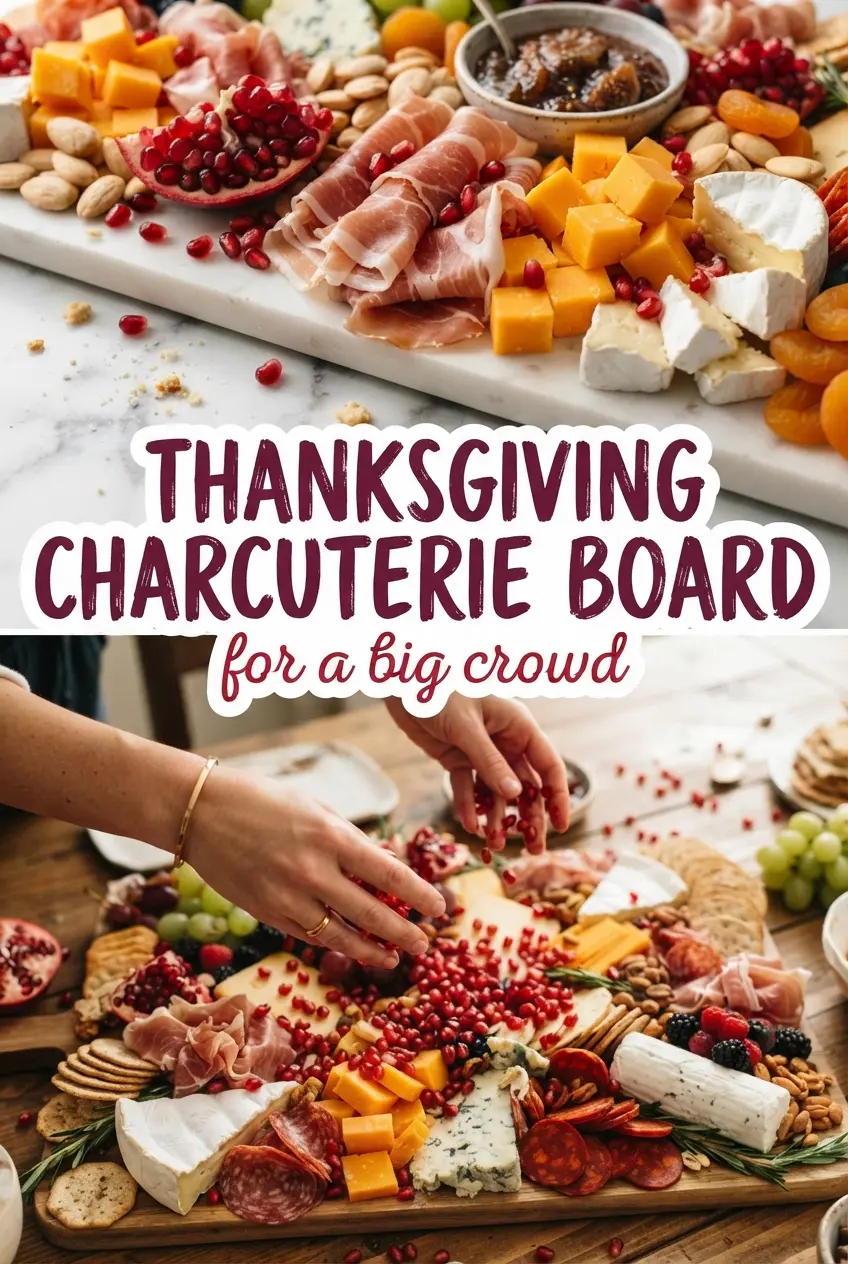
Thanksgiving Charcuterie Board
Ingredients
Equipment
Method
- Place the brie and a bowl of cranberry jam on a large board. Keep everything at cool room temperature for the easiest serving.
- Arrange the cheeses around them and fold the meats into ribbons. Position cheddar, brie, and manchego so each cheese gets visible edges.
- Fan the crackers and pears in clusters. Spread them with gaps so toppings can be tucked in without getting buried.
- Fill the gaps with grapes, pecans, and pomegranate seeds. Distribute pomegranate seeds over the board so they pop in multiple spots.
- Tuck in rosemary and serve. Add rosemary sprigs last so their color stays fresh against the cheeses.