
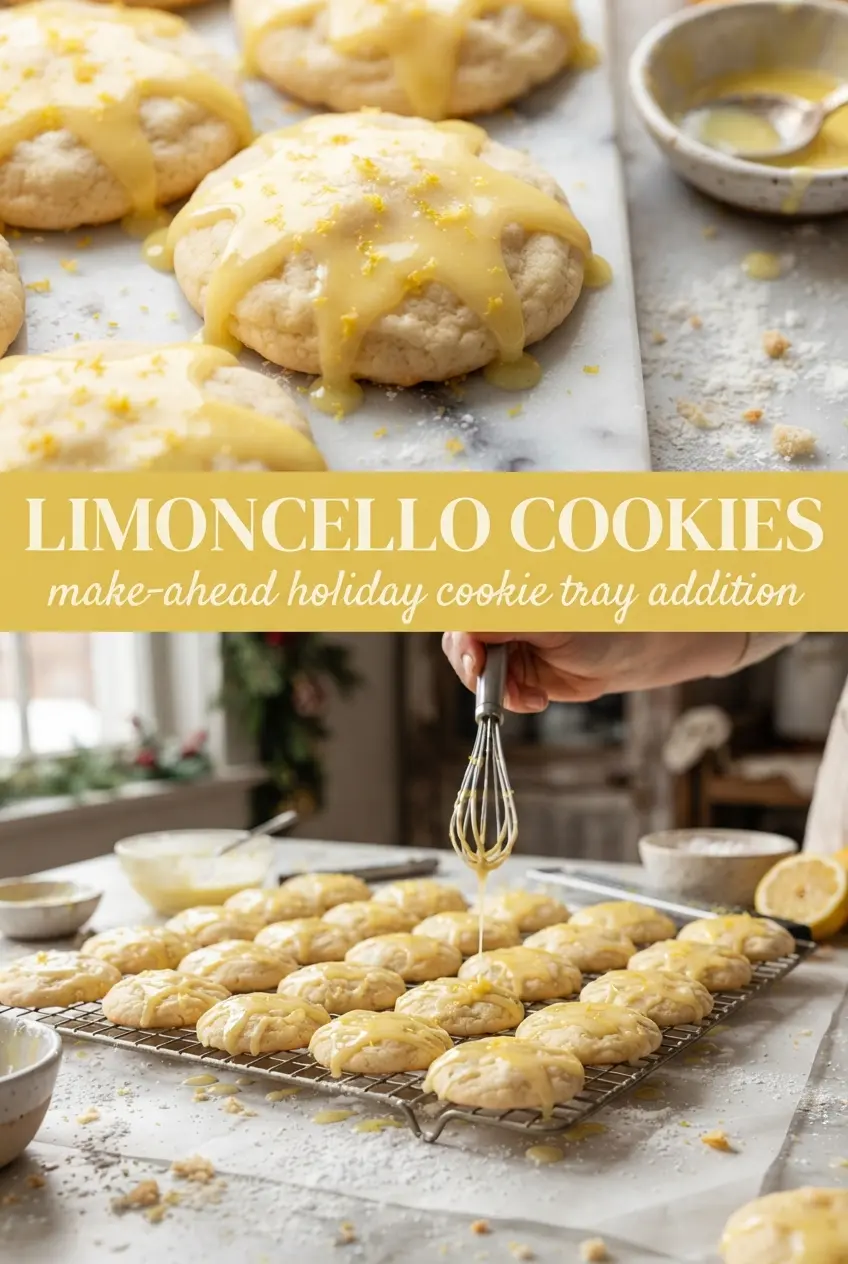
Soft limoncello cookies bake up with a tender crumb, a pale ivory center, and a bright citrus finish that hits before the sweetness settles in. The glaze dries to a delicate shell on top, so you get that clean snap when you bite in, then a pillowy cookie underneath. They stand out because the lemon flavor isn’t just sitting in the glaze — it runs through the dough too, which keeps every bite balanced instead of sugary.
The trick here is keeping the dough soft but not slack. Creaming the butter and sugar until light gives the cookies their lift, while the lemon zest carries the sharpest citrus note without watering anything down. The limoncello goes into both the dough and the glaze, but in different ways: inside the cookie it adds warmth and perfume, and in the glaze it gives you that glossy, tart finish that sets as it dries.
Below, you’ll find the small details that matter most, including why these cookies stay pale in the oven and how to glaze them without turning the tops sticky. If you want a cookie that tastes polished without being fussy, this is the one to keep in rotation.
The glaze set up exactly like you said, and the cookies stayed soft even the next day. I baked them for 11 minutes and they came out pale, fluffy, and full of lemon flavor without tasting boozy.
These limoncello cookies stay soft, and the glaze dries into that pretty sweet-tart finish that makes them perfect for cookie trays.
Save these soft limoncello cookies for your next cookie tray
The Secret to Keeping Limoncello Cookies Pale, Soft, and Tender
The biggest mistake with cookies like these is baking them until they look done. Limocello cookies should come out while they still look a little underbaked in the center and only just set at the edges. If you wait for color, you’ve already gone too far, and the bright lemon flavor gets buried under a dry crumb.
The second trap is overmixing after the flour goes in. Once the dry ingredients are added, the dough only needs to come together. Stirring past that point tightens the gluten and turns a tender cookie into something bready. You want a soft dough that scoops cleanly, not a stiff one that fights the spoon.
- Color is not the cue here. These cookies should stay pale with maybe the faintest hint of gold underneath.
- Texture tells the truth. The centers should look slightly puffy and soft when they leave the oven.
- Cooling finishes the bake. The cookies firm up as they sit on the sheet, so moving them too soon can make them break.
What Each Ingredient Is Actually Doing in These Cookies

- All-purpose flour gives the cookies their structure without making them heavy. Cake flour would make them softer but too fragile for the glaze, while bread flour would make them chewy in the wrong way.
- Butter brings flavor and tenderness. It needs to be softened, not melted, so it can trap air during creaming and give the cookies their lift.
- Sugar sweetens the dough and helps create that soft, fine crumb. Creaming it with the butter is what keeps the texture light.
- Eggs bind everything and add body. Room-temperature eggs blend more smoothly into the butter mixture, which helps prevent a curdled look.
- Limoncello and lemon zest are the flavor anchors. The zest carries the sharp citrus oils, while the limoncello adds a softer, floral lemon note that reads clearly once baked.
- Powdered sugar makes the glaze smooth and opaque instead of grainy. Don’t swap in granulated sugar here; it won’t dissolve properly.
How to Mix, Scoop, Bake, and Glaze Without Losing the Texture
Building the Butter Base
Start by creaming the softened butter and sugar until the mixture looks lighter in color and a little fluffy around the edges. That step matters more than it sounds like it should, because it’s where the cookies get their tender lift. Add the eggs one at a time, then mix in the limoncello and zest. If the mixture looks slightly broken after the liquid goes in, keep going; it usually comes back together once the flour is added.
Bringing the Dough Together
Whisk the flour, baking powder, and salt separately before adding them to the bowl. That keeps the leavening even, which means the cookies rise in a uniform way instead of baking up lopsided. Mix on low just until the flour disappears and the dough looks soft and scoopable. If you keep beating it after that, the cookies can bake up dense and lose that pillowy center.
Baking for a Pale, Soft Center
Scoop the dough into tablespoon-sized portions and space them with enough room to spread a little. Bake at 350°F until the tops look set and the bottoms are just starting to turn golden, usually 10 to 12 minutes. The cookies should not brown much on top. If they come out looking fully colored in the oven, they’ll be dry by the time they cool.
Glazing After the Cookies Cool
Let the cookies cool completely before you whisk the glaze, or the warmth from the cookies will make it run thin and sticky instead of glossy. Add the limoncello to the powdered sugar slowly until the glaze drips in a thick ribbon from the whisk. Drizzle it over the cooled cookies and let it sit undisturbed until the surface sets. Rushing this part is how you end up with fingerprints in the glaze.
Three Ways to Adjust These Cookies Without Losing What Makes Them Good
For a stronger lemon edge
Add a little more zest to the dough instead of more limoncello. Extra liquid can loosen the dough and make the cookies spread too much, but zest gives you a sharper citrus flavor without changing the texture.
For a non-alcoholic version
Replace the limoncello with lemon juice mixed into the glaze and use a little extra zest in the dough. The flavor will be brighter and less rounded, but the cookies will still taste clean and citrusy.
For a dairy-free batch
Use a good-quality plant-based butter stick that bakes like real butter, not a tub spread. The texture will be a touch less rich, but the cookies will still hold their shape and glaze well.
For making ahead
Shape the dough into scoops, freeze them on a tray, then bag them once firm. Bake from frozen with an extra minute or two added to the baking time. That keeps the cookies tall and soft instead of spreading early.
Storage and Reheating
- Refrigerator: Store in an airtight container for up to 5 days. The glaze may soften slightly, but the cookies stay tender.
- Freezer: Freeze the unglazed cookies for up to 2 months. Glaze after thawing for the best finish, since the glaze can turn tacky after freezing.
- Reheating: These are best served at room temperature. If you want to warm an unglazed cookie, give it 5 to 7 seconds in the microwave, then glaze once it’s cool again. Heat will melt the glaze and make it sticky.
Answers to the Questions Worth Asking
Limoncello Cookies
Ingredients
Equipment
Method
- Preheat the oven to 350°F and line baking sheets with parchment paper.
- Whisk together the all-purpose flour, baking powder, and salt.
- Cream the butter and sugar until light and fluffy.
- Beat in the eggs, limoncello liqueur, and lemon zest until combined.
- Gradually mix in the dry ingredients until a soft dough forms.
- Scoop tablespoon-sized balls of dough onto the baking sheets, leaving space between them.
- Bake for 10-12 minutes until just set but not browned.
- Whisk the powdered sugar with limoncello, for glaze to make a glaze.
- Drizzle the glaze over the cooled cookies.