
Silky coconut broth, tender chicken, and that bright hit of lemongrass turn this Thai coconut chicken soup into the kind of bowl you start craving before the pot even hits the table. The broth stays light enough to sip but still tastes full and round, with lime and fish sauce cutting through the richness so it never feels heavy. It’s the balance that makes tom kha style soup so satisfying: creamy, sharp, fragrant, and clean all at once.
What makes this version work is the order. Lemongrass and ginger go in first so the broth has time to pick up their perfume, then the chicken simmers gently until just cooked through. The lime juice and fish sauce go in at the end, after the heat has dropped a little, which keeps the flavor bright instead of dulling it down. If you’ve ever had coconut soup taste flat, it usually needed that final acid and salt adjustment.
Below, you’ll find the small technique details that keep the broth smooth, plus a few swaps that still preserve the character of the soup when you don’t have every ingredient on hand.
The broth was silky and the lemongrass came through without tasting grassy. I liked that the chicken stayed tender and the lime at the end kept the coconut milk from feeling too heavy.
Save this Thai coconut chicken soup for the nights when you want a fragrant coconut broth with almost no cleanup.
The Reason the Broth Stays Fragrant Instead of Flat
The broth in this soup needs gentle heat, not a hard boil. Coconut milk can separate if it gets hammered, and chicken breast turns dry fast when it cooks too aggressively. A slow simmer keeps the broth smooth and gives the lemongrass and ginger time to infuse without turning the soup bitter or dull.
There’s another small detail that matters: the lime juice goes in at the end. Acid is what wakes up the coconut milk and makes the broth taste complete, but if it cooks too long, the brightness disappears. The fish sauce does the same work on the savory side, giving the soup depth without making it taste fishy.
What Each Ingredient Is Actually Doing in This Dish

- Coconut milk — This is the body of the soup, so use full-fat canned coconut milk if you can. Light coconut milk makes the broth thinner and less satisfying.
- Chicken broth — This stretches the coconut milk and keeps the soup from tasting heavy. A good boxed broth works fine here, but avoid anything overly salty because the fish sauce adds salt later.
- Lemongrass — Bruising the stalks before they go in is non-negotiable. That’s what releases the citrusy oils into the broth. If you can’t find fresh lemongrass, a lemongrass paste is the best backup, though it won’t taste quite as sharp.
- Fresh ginger — Ginger gives the soup warmth and a little bite. Slice it rather than grate it so it perfumes the broth without disappearing into fibers.
- Fish sauce — This is where the savory depth comes from. It doesn’t make the soup taste fishy when used in a small amount; it just rounds everything out. There isn’t a perfect substitute, but a little soy sauce can stand in if that’s what you have.
Building the Coconut Broth Without Breaking It
Start With the Aromatics
Combine the coconut milk, chicken broth, bruised lemongrass, and ginger in a pot over medium heat, then bring it up to a gentle simmer. You want small bubbles around the edges, not a rolling boil. If the broth boils hard, the coconut milk can look greasy instead of silky and the ginger can take on a harsh edge.
Cook the Chicken Gently
Add the thinly sliced chicken breast and keep the heat low enough that the broth barely moves. Thin slices cook fast, so eight to ten minutes is usually enough. If the chicken is cut too thick, it’ll take longer and the broth will over-reduce before the meat is done.
Finish With Lime and Fish Sauce
Stir in the fish sauce, lime juice, and chili paste once the chicken is cooked through. Give it another couple of minutes so the flavors settle together, then taste the broth before serving. If it needs more brightness, add a little more lime; if it tastes thin, it usually needs another splash of fish sauce rather than more salt.
Strain the Hard Bits Before Serving
Remove the lemongrass stalks and ginger slices before ladling the soup into bowls. Lemongrass is too fibrous to eat, and leaving it in the bowl makes every spoonful awkward. Finish with fresh cilantro right before serving so it stays vivid and green instead of collapsing into the broth.
What to Change When You Don’t Have Everything on Hand
Make It Dairy-Free Without Compromising Texture
This soup is naturally dairy-free as written, which is one reason the coconut milk works so well. Stick with full-fat canned coconut milk so the broth keeps that lush, spoon-coating texture. Carton coconut milk is too thin here.
Use Chicken Thighs for a Richer Bowl
Boneless chicken thighs stay a little juicier than breast meat and bring a deeper savory note to the soup. Cut them thin so they cook in the same time. If you like a more delicate broth, breast is still the better choice.
Swap the Heat to Match Your Pantry
Chili paste gives the soup warmth and color, but a sliced fresh red chili or a pinch of red pepper flakes will work too. The soup should taste fragrant first and spicy second, so add the heat gradually and stop before it takes over the coconut broth.
What to Do if You Need a Gluten-Free Version
This recipe is already gluten-free if your fish sauce is certified gluten-free, which is worth checking since brands vary. The rest of the ingredients are naturally in the clear.
Storage and Reheating
- Refrigerator: Store in an airtight container for up to 3 days. The broth may thicken a little as it chills.
- Freezer: It freezes well for up to 2 months, though coconut milk can separate slightly after thawing. Stir it well while reheating and it usually comes back together.
- Reheating: Warm it over low heat on the stove until just hot. Don’t boil it again, or the coconut milk can split and the chicken can turn dry.
Questions I Get Asked About This Recipe
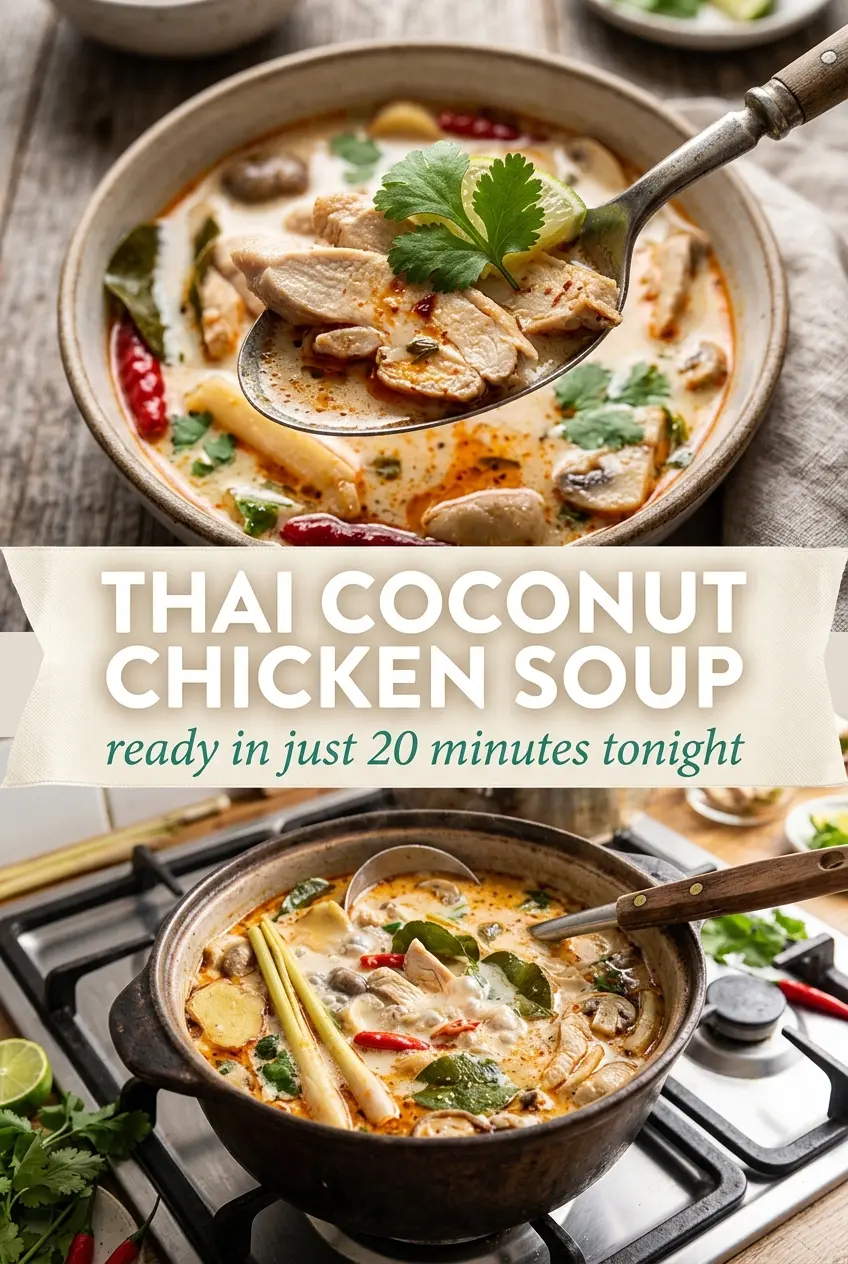
Thai Coconut Chicken Soup
Ingredients
Equipment
Method
- In a Dutch oven, combine the coconut milk, chicken broth, bruised lemongrass, and ginger slices, then bring to a simmer over medium heat with small bubbles forming around the edges.
- Maintain a gentle simmer and cook the broth for 2 minutes so the lemongrass and ginger aroma infuses the liquid.
- Add the thinly sliced chicken breast to the simmering broth, then cook for 8 to 10 minutes, stirring occasionally, until the chicken is cooked through and no longer pink in the center.
- Stir in the fish sauce, lime juice, and chili paste, then taste and adjust seasoning as needed while the broth stays hot and lightly bubbling.
- Simmer for another 2 minutes to let the flavors meld, keeping the surface at a steady, gentle simmer.
- Remove the lemongrass stalks and ginger slices from the pot before serving.
- Ladle the soup into bowls and garnish with chopped cilantro for a fresh green finish.