
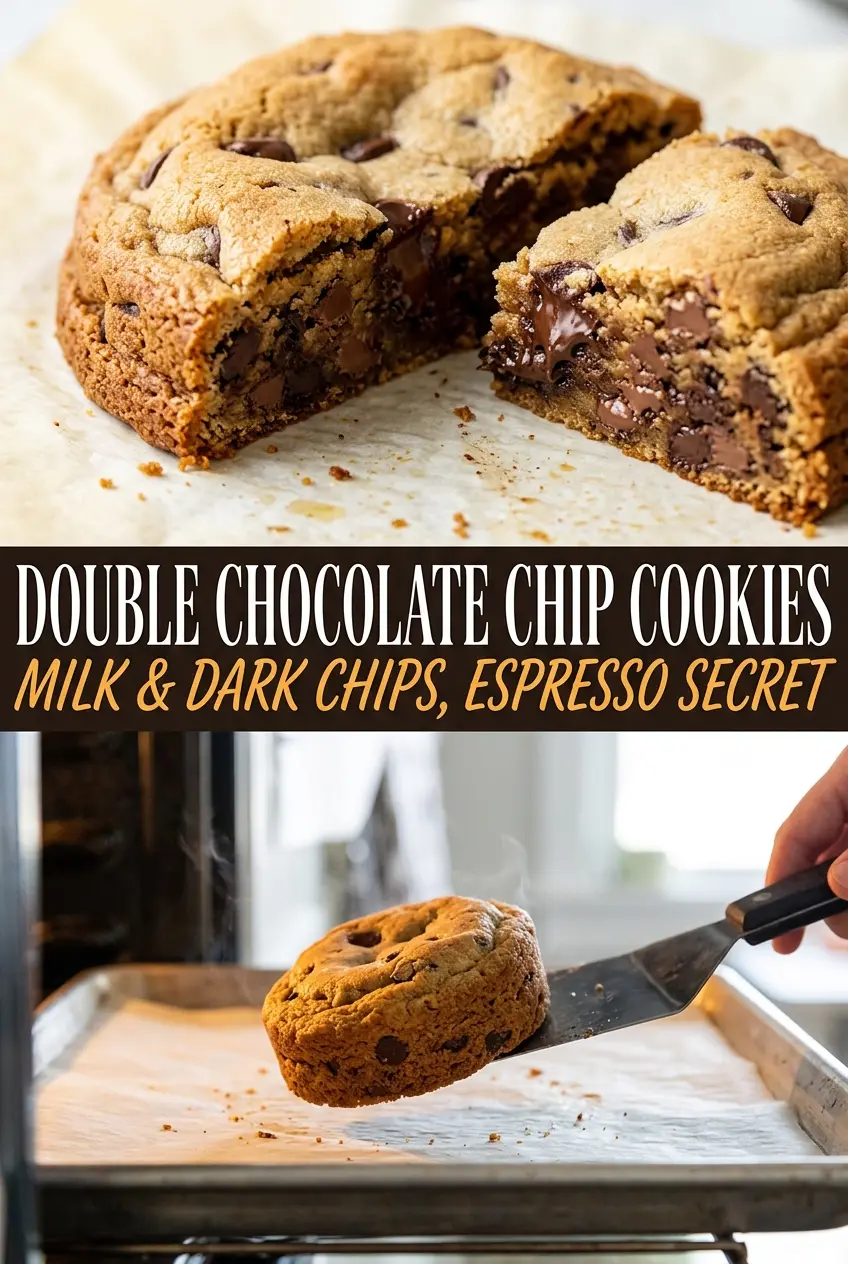
Tall chocolate chip cookies with crisp edges and soft, domed centers earn a permanent place in the baking rotation because they deliver the exact contrast people want: a little crackle when you bite in, then a rich, tender middle that stays slightly underbaked in the best way. The double-chip mix makes them look generous before anyone even takes a bite, and the espresso powder keeps the chocolate flavor deep without turning the cookies into coffee cookies.
The part that changes everything here is the creaming method. Butter and sugar need the full four minutes on high until the mixture turns pale and fluffy; that’s what traps air and gives these cookies height instead of flat puddles. Melted butter can make a good cookie, but it won’t give you this same lift. Chilling the dough for an hour matters too, because it gives the flour time to hydrate and keeps the cookies from spreading too fast in the oven.
Below, I’m walking through the details that actually affect the bake: how to tell when the butter is creamed enough, why the cookies should come out while the centers still look a little undone, and how to swap the chips without changing the structure of the dough.
The cookies came out tall with those slightly underdone centers just like you said, and the mix of milk and dark chocolate made every bite taste richer. I chilled the dough for an hour and they barely spread, which was exactly what I wanted.
Save these tall chocolate chip cookies for the next time you want crisp edges, soft centers, and that two-chocolate chip look that always disappears fast.
The Reason These Cookies Stay Tall Instead of Spreading Flat
The difference between a cookie that rises and one that runs is usually in the butter. When the butter is soft enough to cream but not greasy or melted, it can hold air with the sugars, and that air gives the dough structure in the oven. If the butter is too warm, the dough loosens before the flour has a chance to set it, and you get thinner cookies with less definition.
Overmixing after the flour goes in is the other place people lose height. Once the flour is added, the dough only needs to come together. Stir until the last streaks disappear, then stop. The dough should look thick and a little rough, not shiny and stretchy. That texture bakes up into a cookie with edges that set cleanly and centers that stay soft.
- Butter — Use real butter here, not a spread. You need the fat content and the way it aerates when creamed. If it’s melted, the dough will bake denser and spread more.
- Brown sugar — This brings moisture and a deeper caramel note. Packed brown sugar helps the centers stay soft after baking, which matters in a cookie meant to stay thick.
- Espresso powder — It doesn’t make the cookies taste like coffee. It sharpens the chocolate so the milk and dark chips taste fuller and more layered.
- Chocolate chips — The mix of milk and dark chocolate is part of what makes these look and taste richer. You can swap one type for the other, but keeping both gives you better contrast and a more interesting bite.
How to Build the Dough So the Centers Stay Soft
Creaming the Butter and Sugars
Beat the softened butter with both sugars for the full four minutes until the mixture turns pale, fluffy, and almost whipped. It should look lighter in color and noticeably larger in volume. If you stop early, the cookies will still taste fine, but they’ll bake up flatter and less tender. Scrape the bowl once or twice so the butter from the bottom gets worked in evenly.
Adding the Eggs and Flavor
Add the eggs one at a time and let each one disappear before the next goes in. That keeps the dough smooth instead of looking curdled or broken. Stir in the vanilla and espresso powder after the eggs so the liquid ingredients are fully emulsified first. If the mixture looks slightly glossy and cohesive, you’re on the right track.
Bringing in the Flour Without Toughening the Dough
Add the flour, baking soda, and salt and mix only until the dry streaks are gone. This dough is meant to stay thick, not elastic. Overmixing develops too much gluten, which makes cookies bready instead of tender. Fold in the chocolate chips at the end so they stay intact and don’t get chopped up by the mixer.
Chilling, Scooping, and Baking
Chill the dough for one hour before baking. That rest firms the butter and keeps the cookies from spreading too fast in the oven. Scoop onto a lined baking sheet and bake at 375°F for 9 to 11 minutes, pulling them when the edges are set but the centers still look soft and a little underdone. They finish setting on the pan as they cool, which is how you keep the centers domed and tender.
What to Change When You Want a Different Chocolate Chip Cookie
For a Gluten-Free Version
Use a cup-for-cup gluten-free flour blend that includes xanthan gum. The cookies will still spread a little, but the texture will be slightly more delicate and less chewy than the original. Chill the dough for the full hour so the blend has time to hydrate.
For a Nutty, Bakery-Style Cookie
Swap half of the chocolate chips for chopped toasted walnuts or pecans. You’ll lose a little of the sweet chocolate density, but the toasted nuts add crunch and make the cookie taste more complex. Toast them first or they’ll taste flat.
For a Dairy-Free Batch
Use a high-quality plant butter that comes in stick form and behaves like real butter in baking. Softened vegan spreads that come in tubs often contain more water and can make the cookies spread too much. The texture will be a little less rich, but the structure can still hold if the substitute is firm enough to cream properly.
Storage and Reheating
- Refrigerator: Store baked cookies in an airtight container for up to 5 days. The centers stay soft, though the edges lose a little crispness.
- Freezer: Freeze baked cookies for up to 2 months, or freeze scooped dough balls and bake from frozen with 1 to 2 extra minutes. Dough freezes better than baked cookies if you want the freshest texture later.
- Reheating: Warm a baked cookie in a 300°F oven for 3 to 4 minutes or microwave for 8 to 10 seconds. Don’t overheat them or the chocolate chips will go greasy and the centers will turn dry.
Answers to the Questions Worth Asking
Chocolate Chips Cookie Recipe
Ingredients
Equipment
Method
- Cream the softened butter with the granulated sugar and packed brown sugar on high for 4 minutes, until very pale and fluffy, with the mixture noticeably lighter in color and texture.
- Add the eggs one at a time, then mix in the vanilla and espresso powder until fully incorporated, scraping the sides as needed.
- Stir in the all-purpose flour, baking soda, and salt until just combined, stopping when no dry streaks remain.
- Fold in the milk chocolate chips and dark chocolate chips until evenly distributed, with chips visible throughout the dough.
- Refrigerate the dough for 1 hour to firm it up, until scoopable and slightly set.
- Preheat the oven to 375°F while the dough chills, so it’s ready when the dough is firm.
- Scoop the dough onto a sheet pan and bake for 9–11 minutes at 375°F, until edges are set but centers still look underdone.