
Golden, crisp-edged ravioli bake up with frilled corners, bronzed ricotta, and little bursts of lemon in every bite. The trick here is that the pasta doesn’t get cooked all the way on the stove. It goes into the oven just short of done, so the exposed edges can dry out and turn crisp while the centers stay tender and pillowy. That contrast is what makes this dish feel special instead of merely rich.
Brown butter gives the sauce a nutty base, but the lemon keeps it from tasting heavy. Garlic goes in briefly, just long enough to take the raw edge off, then cream and parmesan turn everything into a coating that clings to the ravioli without flooding the pan. If you’ve ever had baked pasta that came out soft all over, the problem is usually too much liquid or too much covered surface. Here, the open top matters.
Below, I’ve laid out the exact reason the ravioli get those crisp frills, how to keep the sauce from turning dull or greasy, and the small finishing details that make this dish look as good as it tastes.
The ravioli edges got that crisp, frilled look in the oven just like you said, and the lemon butter soaked into every bite without making it watery. My husband kept going back for the pieces with the browned ricotta on top.
Save these lemon parmesan butter ravioli for the night you want crispy pasta edges, creamy sauce, and a dish that looks like it came from a restaurant.
The Reason the Ravioli Crisp Instead of Turning Soft
The whole dish lives or dies on one decision: par-cooking the ravioli instead of boiling them until tender. That little bit of undercooking matters because the oven finishes the job while the exposed edges dry out and brown. If you fully cook the pasta first, the ravioli go from delicate to mushy once they sit in the butter and cream.
The second piece is surface space. A single layer in the baking dish lets hot air hit the frilled edges, and that’s what gives you the dramatic crisping on top. Covering the dish traps steam, which softens everything and hides the texture this recipe is built around.
- Fresh cheese ravioli — Fresh pasta is the right choice here because it bakes fast and keeps that tender center. Dried ravioli won’t give you the same pillowy texture, and they usually need longer boiling than this method allows.
- Brown butter — This gives the dish its nutty depth. If you rush it, you’ll miss the toasted flavor that carries the lemon and parmesan. Let it turn amber and smell like toasted hazelnuts before anything else goes in.
- Ricotta — Dolloping it on top creates creamy pockets that brown in spots instead of disappearing into the sauce. Whole-milk ricotta gives the best texture; part-skim tends to bake up a little dry and grainy.
- Lemon — Use both zest and juice. The zest perfumes the butter, while the juice cuts through the cream. Skip bottled juice here; it tastes flat against the browned butter.
Building the Sauce Without Breaking It
Par-Cooking the Ravioli
Boil the ravioli for about two minutes less than the package says. They should still have a firm center and hold their shape when you lift them out. That short boil keeps them from collapsing in the oven, where they’ll finish cooking in the sauce. If they’re soft before they go in, they’ll absorb too much liquid and lose their edges.
Waking Up the Butter and Garlic
Brown the butter first, then stir in the garlic just until fragrant. Garlic burns fast in hot butter, and once it goes bitter, the whole dish suffers. You want the butter to carry a toasty aroma and the garlic to soften, not darken. Add the lemon zest next so it can bloom in the fat and spread through the pan.
Coating Before Baking
Toss the ravioli with the butter mixture and cream before they go into the baking dish. That gives every piece a thin coating that bakes into a glossy shell instead of a puddle at the bottom. Arrange them in a single layer, then scatter the parmesan over the top so some melts into the sauce and some browns on the surface. If the dish looks crowded, use a larger baking dish.
The Oven Finish
Lay the lemon slices between the ravioli and spoon ricotta across the top in rough dollops. Bake until the exposed pasta edges are golden and frilled and the ricotta has bronzed in spots. The filling should still be creamy, and the sauce should look slightly thickened, not greasy. If you bake it too long, the pasta turns tough at the edges and the lemon can taste harsh.
Three Small Changes That Still Keep the Dish Intact
Make It Dairy-Free Without Losing the Brightness
Use a good plant-based butter and a creamy oat or cashew cooking cream in place of the butter and heavy cream. The dish will lose some of the parmesan sharpness, so add a little extra lemon zest and a pinch more salt to keep it lively. Skip the ricotta or use a dairy-free ricotta-style substitute that holds its shape in the oven.
Use Spinach or Mushroom Ravioli Instead
Spinach ravioli works beautifully because the filling stays mild and lets the lemon butter stay in charge. Mushroom ravioli shifts the dish toward earthy and savory, which tastes deeper but less bright. Both need the same par-cook and bake time, so don’t adjust the oven method unless the package instructions are dramatically different.
Make It Gluten-Free
Use gluten-free fresh ravioli if you can find it, because the texture will stay closest to the original. Many gluten-free pasta wrappers are a little more fragile, so handle them gently and shorten the boil by another minute if they seem soft. The topping and sauce stay the same.
Storage and Reheating
- Refrigerator: Store leftovers for up to 3 days. The ravioli soften a bit, and the crisp edges won’t stay crisp, but the flavor holds up well.
- Freezer: I don’t recommend freezing the finished dish. The ricotta and cream sauce can separate, and the pasta texture turns soft after thawing.
- Reheating: Reheat covered at 325°F until warmed through, then uncover for the last few minutes to dry the top a little. The common mistake is blasting it in the microwave, which makes the sauce greasy and the pasta gummy.
Answers to the Questions Worth Asking
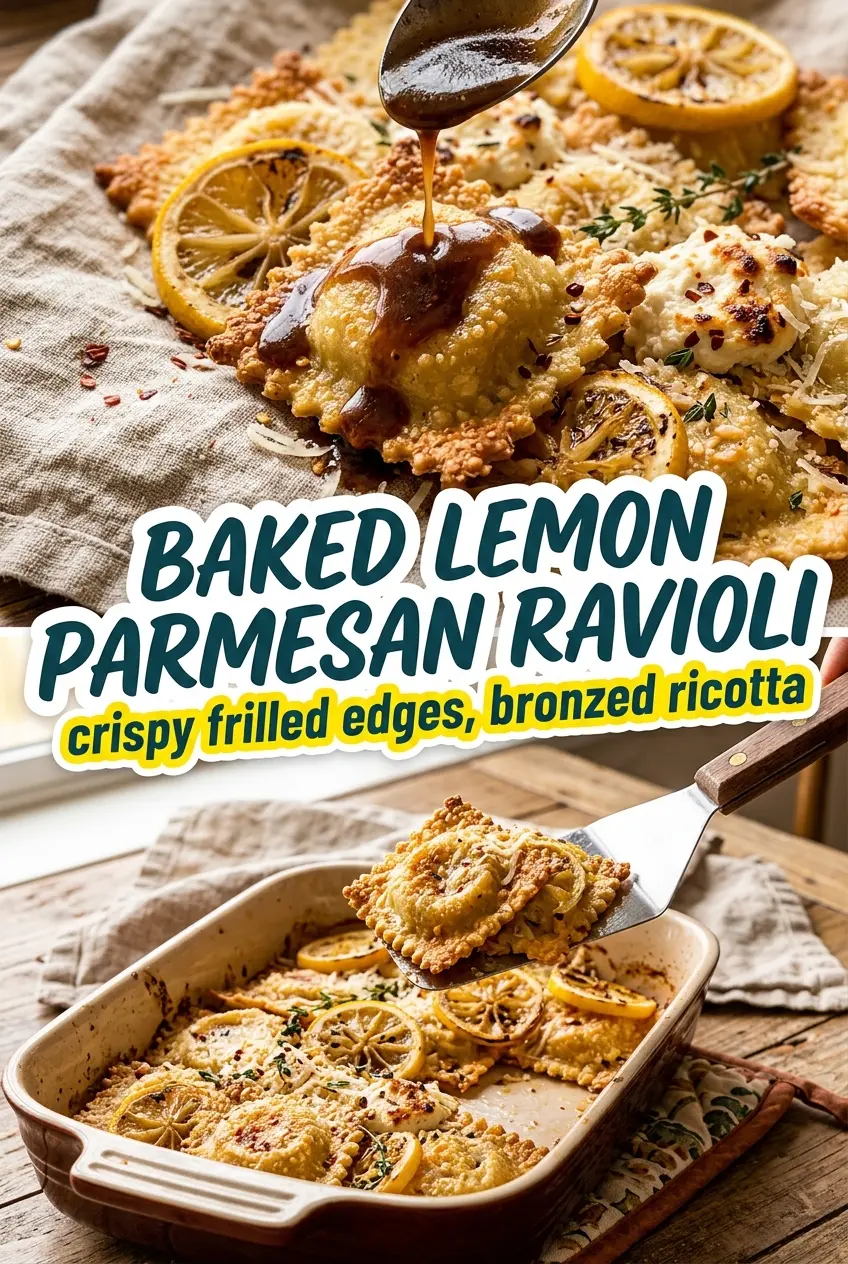
Ravioli in Lemon Parmesan Butter
Ingredients
Equipment
Method
- Preheat oven to 400°F. Boil fresh cheese ravioli 2 min less than package directions (par-cook) so the centers stay pillowy after baking.
- In a large skillet, toss par-cooked ravioli with brown butter, minced garlic, lemon zest, and heavy cream until coated. Cook just long enough to warm through, then remove from heat to keep edges from overcooking.
- Arrange the ravioli in a single layer in a baking dish. Scatter half the grated parmesan evenly over the top.
- Arrange thin lemon slices between ravioli and add ricotta dollops over the surface. Keep the ravioli in one layer so the exposed edges can crisp and frill.
- Top with the remaining grated parmesan, red pepper flakes, and flaky salt. Bake at 400°F for 15–18 min, until the edges of the ravioli are golden and frilled and the ricotta is slightly bronzed.
- Finish with fresh basil leaves immediately after baking. Serve while the crisp edges are at their peak.