
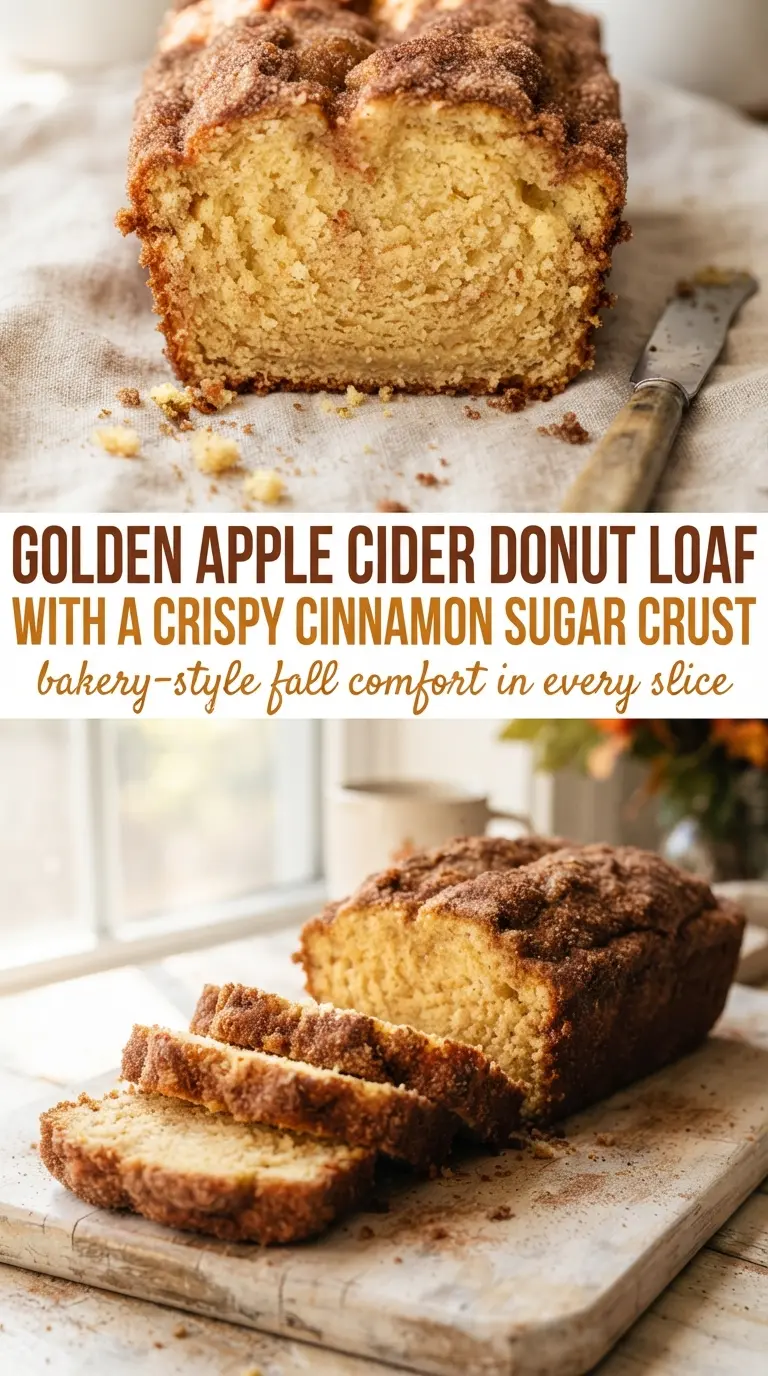
Tender, cinnamon-kissed crumb and a crackly sugar crust make this apple cider donut loaf disappear fast. It tastes like the best part of a bakery apple cider donut, but in a sliceable loaf you can serve with coffee, tuck into lunchboxes, or leave on the counter for people to sneak pieces from all afternoon.
The part that gives this loaf its real apple flavor is the reduced cider. Boiling it down concentrates the fruit and spice notes before it ever hits the batter, so the loaf doesn’t taste flat or watered down. Brown sugar keeps the crumb soft and gives it that caramel warmth that works so well with apple pie spice. The topping matters too: brushing the loaf while it’s still warm helps the cinnamon sugar cling in a thin, crunchy shell instead of sliding off in patches.
Below, I’ll walk through the one step that makes the biggest difference, plus a few swaps and storage notes that help this loaf hold up after day one.
The cider reduction made all the difference — the loaf came out moist, the cinnamon sugar crust stayed crisp, and the apple flavor was there in every slice instead of just at the edges.
Save this spiced apple cider donut loaf for the day you want bakery-style apple flavor and a cinnamon sugar crust without frying anything.
The Step That Turns Apple Cider Into Real Flavor
The mistake with a lot of apple cider bakes is simple: they pour in the cider straight from the jug and expect a strong apple taste. That gives you moisture, not depth. Reducing the cider first drives off water and leaves behind a more concentrated apple base, so the loaf tastes like apples instead of sweet bread with a vague cider note.
That reduced cider also changes the texture in a good way. Because the batter isn’t overloaded with extra liquid, the crumb stays tender but still slices cleanly. If you skip this step, the loaf can bake up softer and a little dull. If you reduce the cider too far, it can taste harsh, so stop when you’ve got one cup left and let it cool before mixing it in.
What Each Ingredient Is Actually Doing in This Loaf
- Apple cider — This is the flavor engine of the loaf, and reducing it is non-negotiable if you want a strong apple taste. Use the best cider you can find, since whatever goes into the pot gets concentrated in the oven.
- Unsalted butter — Butter gives the crumb richness and a soft, even texture. Room-temperature butter creams properly with the brown sugar, which traps air and helps the loaf rise without becoming dense.
- Brown sugar — Packed brown sugar adds moisture and molasses depth, which works beautifully with the spice. Light or dark both work; dark brown sugar gives you a deeper caramel note.
- Apple pie spice — This brings the warm spice backbone, so the loaf tastes like a donut shop version of apple cake. If you don’t have it, use cinnamon with a pinch of nutmeg and allspice.
- Cinnamon sugar topping — The melted butter helps the sugar stick while the loaf is warm, and the granulated sugar gives that classic crunchy donut finish. Don’t wait until the loaf is cold or the topping won’t cling the same way.
Building the Loaf Without Overmixing the Batter
Reducing the Cider
Pour the cider into a small saucepan and simmer it until it measures 1 cup. You want a steady bubble, not a hard boil that cooks it down too fast and leaves the flavor too sharp. Let it cool before it goes into the batter, because hot cider can start melting the butter and flatten the texture.
Creaming the Butter and Sugar
Beat the butter and brown sugar until the mixture looks fluffy and a little lighter in color. This step matters because it builds structure before the flour ever enters the bowl. If the mixture still looks grainy and heavy, keep mixing a bit longer; if you rush it, the loaf can bake up tight instead of soft.
Bringing the Batter Together
Add the dry ingredients and reduced cider alternately, and stop as soon as the flour disappears. The batter should look thick and smooth, not whipped and airy. Overmixing here is what gives you tunneling and a chewy loaf, so use a light hand and trust the oven to finish the job.
Finishing With the Cinnamon Sugar Crust
Bake until a toothpick comes out clean from the center and the top springs back when you touch it lightly. Brush the warm loaf with melted butter while it’s still in the pan or just after it comes out; that’s what gives the sugar something to grab. Coat it generously with cinnamon sugar, then let it cool before slicing so the crust sets instead of smearing.
How to Adapt This for Different Kitchens and Different Eaters
Dairy-Free Version
Swap the butter for a solid plant-based butter that’s meant for baking. You’ll still get a tender loaf and a proper sugar crust, though the flavor will be slightly less rich than the original.
Gluten-Free Swap
Use a cup-for-cup gluten-free flour blend that includes xanthan gum. The loaf will still hold together, but it may be a little more delicate when sliced, so let it cool fully before cutting.
Extra-Spiced Version
Add another ½ teaspoon of cinnamon or a pinch of nutmeg if you want the loaf to lean harder into that donut-shop spice flavor. Keep the apple pie spice in place, because the balance of apple and spice is what makes this taste complete.
Storage and Reheating
- Refrigerator: Store tightly wrapped for up to 4 days. The crust softens a bit in the fridge, but the loaf stays moist.
- Freezer: Freeze slices or the whole loaf without the sugar topping for best results. Wrap well, freeze for up to 2 months, and add the butter and cinnamon sugar after thawing.
- Reheating: Warm slices in the microwave for a few seconds or in a low oven. Don’t blast it on high heat or the crumb can turn dry before the center warms through.
Answers to the Questions Worth Asking

Spiced Apple Cider Donut Loaf
Ingredients
Equipment
Method
- Simmer the apple cider in a small saucepan until reduced to 1 cup, then let it cool to room temperature. Watch for a thicker syrupy look and measure carefully so it stays to 1 cup.
- Preheat the oven to 350°F and grease a 9x5-inch loaf pan. Make sure the pan is well coated so the loaf releases cleanly.
- Beat the room-temperature butter and packed brown sugar until fluffy, then mix in the egg. Stop and scrape the bowl as needed until the mixture looks lighter in color.
- Stir in the flour, apple pie spice, baking powder, baking soda, and salt alternately with the reduced cider until just combined. Stop mixing when you no longer see dry flour for a tender crumb.
- Spread the batter in the pan and bake for 50 minutes, until a toothpick comes out clean. The loaf should be golden and spring back lightly when touched.
- Brush the warm loaf with melted butter, making sure the entire top is coated. Use a light, even layer so the sugar crust forms.
- Coat the loaf in cinnamon sugar by mixing granulated sugar with ground cinnamon, then rolling or sprinkling to cover. Let it cool before slicing so the crust sets.