
Roasted butternut squash and Brussels sprouts give this pasta salad a deep, savory edge that keeps it from tasting like a cold bowl of leftovers. The sweet apple, tart cranberries, and maple-Dijon dressing pick up all the browned, caramelized bits from the vegetables, while the rotini catches the dressing in every twist. It ends up bright, hearty, and sturdy enough to sit on a potluck table without turning mushy.
The key is roasting the vegetables until they pick up some color instead of just softening. That caramelization gives the salad a backbone. Rinsing the pasta under cool water stops the cooking fast and keeps the dressing from disappearing into hot noodles. I also like to add the feta at the end so it stays in distinct salty crumbles instead of melting into the bowl.
Below you’ll find the little details that matter here: how to keep the apple from browning too fast, when to dress the salad, and the one step that keeps the whole thing tasting fresh even after it has chilled a bit.
The roasted squash stayed tender without falling apart, and the maple-Dijon dressing coated everything instead of pooling at the bottom. I brought it to a fall lunch and the bowl was scraped clean.
Save this Fall Harvest Pasta Salad for potlucks, lunches, and the kind of make-ahead meal that still tastes crisp and balanced at room temperature.
The Reason Roasted Vegetables Make This Pasta Salad Taste Finished, Not Flat
The vegetables need actual color. If you roast butternut squash and Brussels sprouts until they’re just tender, the salad stays soft but one-note. What you want is browned edges and a little collapse at the cut surfaces, because that is where the savory flavor comes from. The maple-Dijon dressing needs that roasted depth to play against, otherwise it tastes like a sweet vinaigrette with pasta in it.
Timing matters too. Let the vegetables cool enough that they don’t steam the pasta, but don’t chill them completely before tossing. Slightly warm vegetables absorb the dressing better, and the whole bowl tastes more connected. If everything is ice-cold when you mix it, the dressing can cling unevenly and the herbs or fruit, if you add them, end up floating on top instead of settling through the salad.
What Each Ingredient Is Doing in This Fall Harvest Pasta Salad
- Rotini pasta — The spirals hold onto the dressing better than long noodles or smooth shapes. Penne works in a pinch, but rotini gives you more of that coated, tossed-salad feel.
- Butternut squash — This brings sweetness and body. Buy it pre-cut if you want to save time, but cut the cubes evenly so they roast at the same pace and don’t turn to mash on one side of the pan.
- Brussels sprouts — These add a nutty, slightly bitter note that keeps the salad from leaning too sweet. Halving them exposes the cut sides to the pan, which is what gets you those browned edges.
- Apple cider vinegar and Dijon mustard — These are the sharp, bright base of the dressing. The mustard helps emulsify everything, so the oil doesn’t slide right off the pasta. Don’t skip it unless you replace it with another emulsifier, like a spoonful of mayonnaise or tahini, which will change the flavor.
- Maple syrup — Just enough to round out the vinegar and echo the squash without making the dressing taste like dessert. Honey works, but it lands a little heavier and less autumn-leaning.
- Pecans — They bring crunch and a toasty note. If you have time, toast them briefly in a dry skillet; that extra step makes them taste much more intentional in the finished salad.
- Feta — The salt and creaminess balance the sweet vegetables and fruit. Goat cheese can stand in if you want something softer, but it will melt into the salad more.
How to Roast, Toss, and Finish It So Every Bite Stays Balanced
Roasting the vegetables first
Spread the squash and Brussels sprouts in a single layer with space between the pieces. Crowding the pan makes them steam, and steamed vegetables taste flat in a pasta salad. Roast them at 425°F until the squash is fork-tender and the sprouts have browned cut sides, usually around 25 minutes. If the pan looks wet halfway through, the vegetables were packed too tightly.
Cooling the pasta the right way
Cook the rotini until just al dente, then drain it and rinse it under cool water until the steam stops rising. That does two things: it stops the cooking and keeps the pasta from absorbing all the dressing later. Shake off as much water as you can, because extra water dilutes the vinaigrette and leaves the bowl tasting thin.
Whisking a dressing that actually clings
Whisk the olive oil, cider vinegar, maple syrup, and Dijon until the mixture looks slightly thickened and no longer separated. If it breaks after sitting, whisk again before tossing it with the salad. The mustard is doing the heavy lifting here, so if you swap it out, expect a looser dressing that slides more than it coats.
Adding the fresh pieces at the end
Toss the pasta with the roasted vegetables first so everything gets evenly coated. Add the apple, cranberries, and pecans next, then finish with the feta right before serving. That keeps the apple crisp, the pecans crunchy, and the cheese from disappearing into the dressing. If you assemble it too early, the apple softens and the salad loses its contrast.
Three Ways to Adjust This Salad Without Losing What Makes It Good
Dairy-Free Version
Leave out the feta and add a handful of extra pecans or pumpkin seeds for richness and crunch. The salad still works because the dressing and roasted vegetables carry the flavor, but you’ll lose that salty finish the cheese brings. If you want a creamy note, a small spoonful of tahini whisked into the dressing works better than a dairy-free cheese substitute here.
Gluten-Free Swap
Use your favorite gluten-free short pasta and cook it just until tender, since many gluten-free shapes turn gummy if they go past the line. Rinsing matters even more here because it helps wash off excess starch and keeps the salad from turning sticky as it sits.
Make It More Filling
Add chickpeas or shredded rotisserie chicken if you want this to eat like a full lunch. Chickpeas keep the vegetarian structure intact and pick up the dressing well, while chicken makes the salad more savory and less sweet. Either way, fold the extra ingredient in after the pasta is dressed so it doesn’t get buried by the vegetables.
Swap the Fruit
Pear works if you want something softer and a little more floral than apple. Use a firm pear and dice it just before tossing so it keeps its shape. The salad will taste gentler and a touch less crisp, but the maple-Dijon dressing still ties everything together.
Storage and Reheating
- Refrigerator: Keeps for 3 to 4 days. The pasta softens a little and the apple loses some snap, but the flavor holds up well.
- Freezer: I don’t recommend freezing it. The roasted vegetables and pasta both go soft and watery after thawing, and the apple won’t keep its texture at all.
- Reheating: Serve it cold or at room temperature. If it has been chilled overnight, let it sit out for 20 to 30 minutes and toss in a small splash of olive oil or vinegar to wake the dressing back up. Microwaving turns the pasta mushy and makes the apple and feta fall apart.
Answers to the Questions Worth Asking
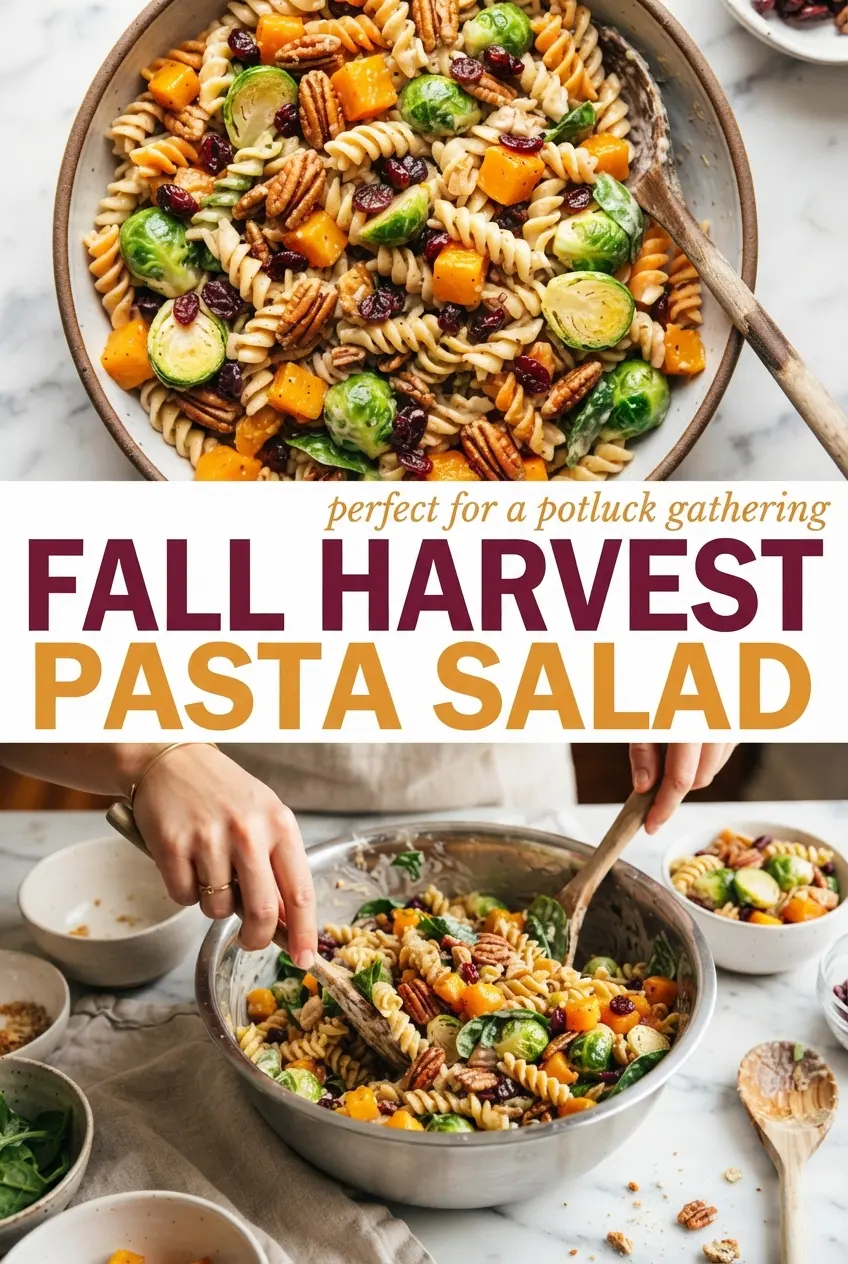
Fall Harvest Pasta Salad
Ingredients
Equipment
Method
- Heat the oven to 425°F. Toss the cubed butternut squash and halved Brussels sprouts with 2 tablespoons olive oil, salt, and pepper, then spread on a sheet pan in a single layer.
- Roast at 425°F for 25 minutes, stirring once halfway through for even browning and tender edges.
- Bring a pot of water to a boil, add the rotini pasta, and cook until tender according to package directions.
- Drain the rotini and rinse under cool water to stop cooking and keep the pasta from sticking.
- Whisk the dressing ingredients together—olive oil, apple cider vinegar, maple syrup, and Dijon mustard—until emulsified and smooth.
- In a large mixing bowl, toss the pasta, roasted butternut squash, roasted Brussels sprouts, diced red apple, dried cranberries, and chopped pecans with the dressing until evenly coated.
- Top with crumbled feta and serve at room temperature.