
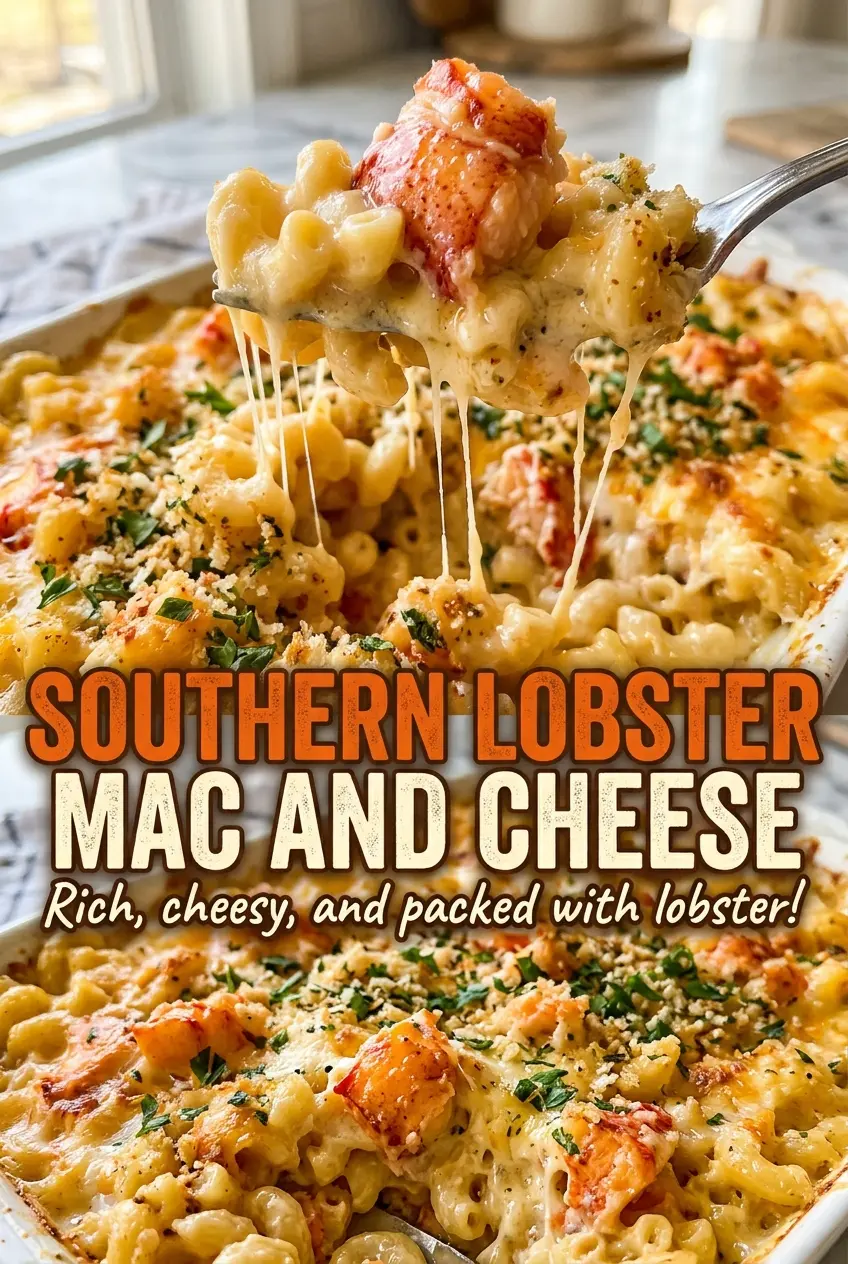
The cracker topping starts to turn golden before the center of the casserole is bubbling, and that’s the moment I watch most closely. Southern lobster mac and cheese has a lot going on beneath that crisp top: tender pasta, a creamy cheddar sauce, and pieces of lobster that need just enough oven time to warm through without getting lost in the bake.
I build the sauce on the stovetop, then fold in pasta that’s cooked just shy of al dente. That matters because the macaroni keeps softening in the oven as it takes up some of the sauce. A buttery cracker topping adds crunch against the creamy middle, and a short rest after baking gives the casserole time to settle into neat, generous portions.
Kitchen Note
Fold the lobster in gently once the macaroni is coated. Those 1-inch pieces are the star of each serving, and a light hand keeps them intact instead of breaking them up through the casserole.
Save this Southern lobster mac and cheese for its creamy cheddar middle and buttery, golden cracker topping.
Why This Lobster Mac Needs Pasta Pulled Before It Tastes Done
Macaroni that feels perfectly tender in the colander is likely to be too soft by the time this casserole comes out of the oven. The pasta spends another 20 to 25 minutes surrounded by hot sauce, so it keeps cooking while the top browns. Taking it off the heat just shy of al dente gives it room to finish without turning mushy.
The sauce has a job to do, too. It should be thick enough to coat the back of a spoon, but it still needs to cling to the noodles and move easily around the lobster. During baking, the pasta absorbs some of that sauce, while the casserole settles as it rests. If the sauce is reduced until it’s stiff before assembly, the finished center can feel heavy rather than creamy. Think of the stovetop as the start of the sauce, not the last chance to thicken it.
That balance is what keeps each forkful cohesive: the macaroni holds its shape, the cheddar stays creamy, and the lobster remains distinct instead of disappearing into a dense block.
What the Cheddar, Lobster, and Cracker Crumbs Each Bring
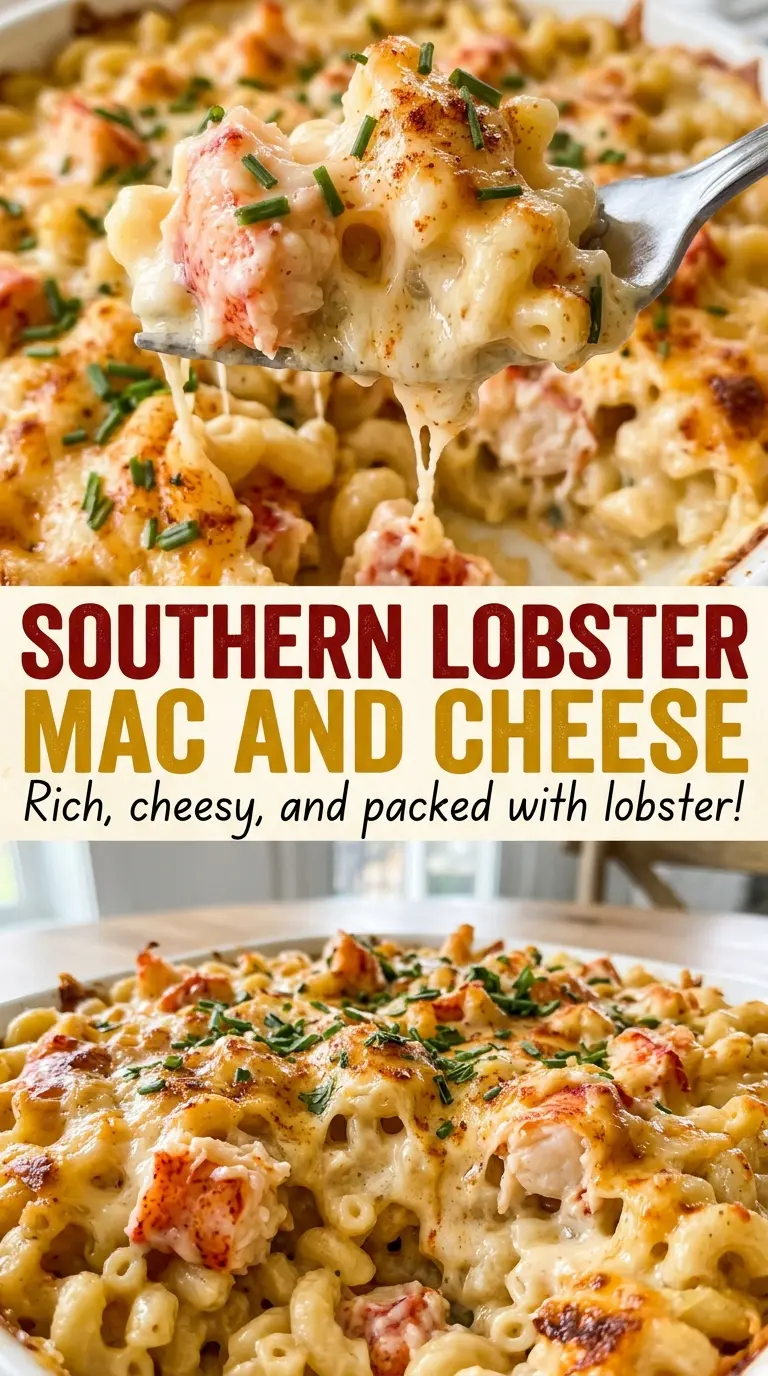
- Sharp cheddar — Its tang cuts through the buttery sauce and gives the casserole its familiar savory bite. A block you shred yourself melts smoothly; pre-shredded cheddar works, though its coating can leave the sauce a little less silky.
- Cooked lobster meat — The lobster brings a sweet, delicate flavor that stands apart from the cheddar. Use cooked meat cut into even pieces so it warms through alongside the pasta. Fresh or frozen cooked lobster works; the most important quality check is that it smells clean and mildly briny, not fishy.
- Elbow macaroni — The curved tubes catch plenty of cheese sauce, and their small shape makes the lobster easy to distribute through the casserole. Another short pasta can work, but long noodles won’t give quite the same even bites.
- Whole milk, butter, and flour — Together, these make the béchamel-style base that carries the cheese. Whole milk gives the sauce a fuller body than a lower-fat option, while whisking the flour into melted butter first helps it thicken evenly instead of leaving raw flour pockets.
- Buttery round crackers — Crushed crackers make a crisp, rich topping without needing a separate crumb mixture. Crush them into small, uneven bits rather than powder; the larger crumbs catch the melted butter and brown with more texture.
- Dry mustard, garlic powder, paprika, and Worcestershire sauce — These season the sauce so the cheddar tastes rounded rather than one-note. Dry mustard adds a quiet tang, and Worcestershire brings savory depth; keep the black pepper in the mix for a gentle warmth.
Build the Sauce and Bake Without Overcooking the Lobster
Cook the macaroni just shy of tender
Bring the water to a boil in a 6-quart pot, add 2 teaspoons of the kosher salt and the elbow macaroni, and cook according to the package directions until just shy of al dente, usually 6–8 minutes. Taste a piece near the end; it should have a little firmness in the center rather than a fully soft bite. Drain it well so extra water doesn’t thin the cheese sauce. Set it aside while you make the sauce.
Whisk a smooth flour-and-butter base
Melt 6 tablespoons of butter in a 3-quart saucepan over medium heat, whisk in the flour, and cook for 1 minute. The mixture should look smooth and pale, with no dry flour showing. Gradually whisk in the milk so it blends into the roux instead of forming lumps. Bring it to a gentle simmer and cook for 5–7 minutes, whisking often, until it coats the back of a spoon.
Melt the cheddar off the heat
Take the saucepan off the burner before adding the remaining salt, dry mustard, garlic powder, paprika, black pepper, and Worcestershire sauce. Stir in 3 cups of cheddar until it melts into the sauce. Then fold in the drained macaroni and lobster gently, stopping once everything is coated. Stirring hard at this point breaks up the lobster and can make the pasta feel compact.
Top, bake, and let the casserole settle
Heat the oven to 350°F and coat a 9×13-inch baking dish with nonstick cooking spray. Transfer in the macaroni mixture and scatter the remaining cheddar over it. Melt the remaining butter, mix it with the crushed crackers, and distribute the topping evenly across the surface. Bake uncovered for 20–25 minutes, until the edges bubble and the top is golden, then rest the casserole for 10 minutes before serving.
Three Practical Ways to Adapt This Lobster Mac
Make the casserole gluten-free
Use gluten-free elbow pasta, a 1:1 gluten-free flour blend intended for thickening, and gluten-free buttery crackers in place of their wheat-based counterparts. Cook the pasta by its package directions and stop just shy of al dente; the sauce and topping otherwise follow the same method. The cracker crust may have a slightly different crunch, but you’ll still get the creamy cheddar center.
Use extra-sharp cheddar for a bolder bite
Swap extra-sharp cheddar for the sharp cheddar in both the sauce and the casserole. The flavor will be more pronounced and tangy, which stands up nicely to the lobster. Shred it from a block if you can; extra-sharp cheese can be a little slower to melt smoothly, so keep it off the heat while stirring it into the sauce.
Leave out the lobster for a cheddar macaroni bake
Omit the lobster and keep the rest of the casserole the same for a straightforward baked macaroni and cheese. The result is less sweet and seafood-rich, with the cheddar and buttery cracker crust taking the lead. Fold the pasta into the sauce as usual and bake until the edges are bubbling.
Storage and Reheating
- Refrigerator: Store leftovers in an airtight container for 3–4 days, refrigerating within 2 hours. The pasta will continue to absorb sauce, so it won’t be quite as loose after chilling.
- Freezer: Freeze individual portions in airtight containers for up to 2 months for the best texture. Thaw overnight in the refrigerator; the sauce may be a little less smooth after freezing.
- Reheating: Cover a portion and warm it in a 325°F oven until the center reaches 165°F. A small splash of milk helps loosen the sauce; uncovered reheating can dry out the pasta and lobster before the center is hot.
Questions That Come Up When Making Lobster Mac and Cheese
Southern Lobster Mac and Cheese
Ingredients
Equipment
Method
- Heat the oven to 350°F.
- Coat a 9x13-inch baking dish with nonstick cooking spray.
- Bring the water to a boil in a 6-quart pot.
- Add 2 teaspoons of the salt and the macaroni, and cook according to the package directions until just shy of al dente, usually 6–8 minutes; drain well.
- Melt 6 tablespoons of the butter in a 3-quart saucepan over medium heat.
- Whisk in the flour and cook for 1 minute.
- Gradually whisk in the milk and bring to a gentle simmer.
- Cook for 5–7 minutes, whisking often, until thick enough to coat the back of a spoon.
- Remove the saucepan from the heat and whisk in the remaining 1 teaspoon salt, dry mustard, garlic powder, paprika, black pepper, and Worcestershire sauce.
- Stir in 3 cups of the cheddar until melted.
- Gently fold the drained macaroni and lobster into the cheese sauce.
- Transfer the mixture to the prepared baking dish and sprinkle the remaining 1 cup cheddar evenly over the top.
- Melt the remaining 3 tablespoons butter and mix it with the crushed crackers.
- Scatter the topping evenly over the casserole.
- Bake uncovered for 20–25 minutes, until bubbling around the edges and golden on top.
- Rest for 10 minutes before serving.