
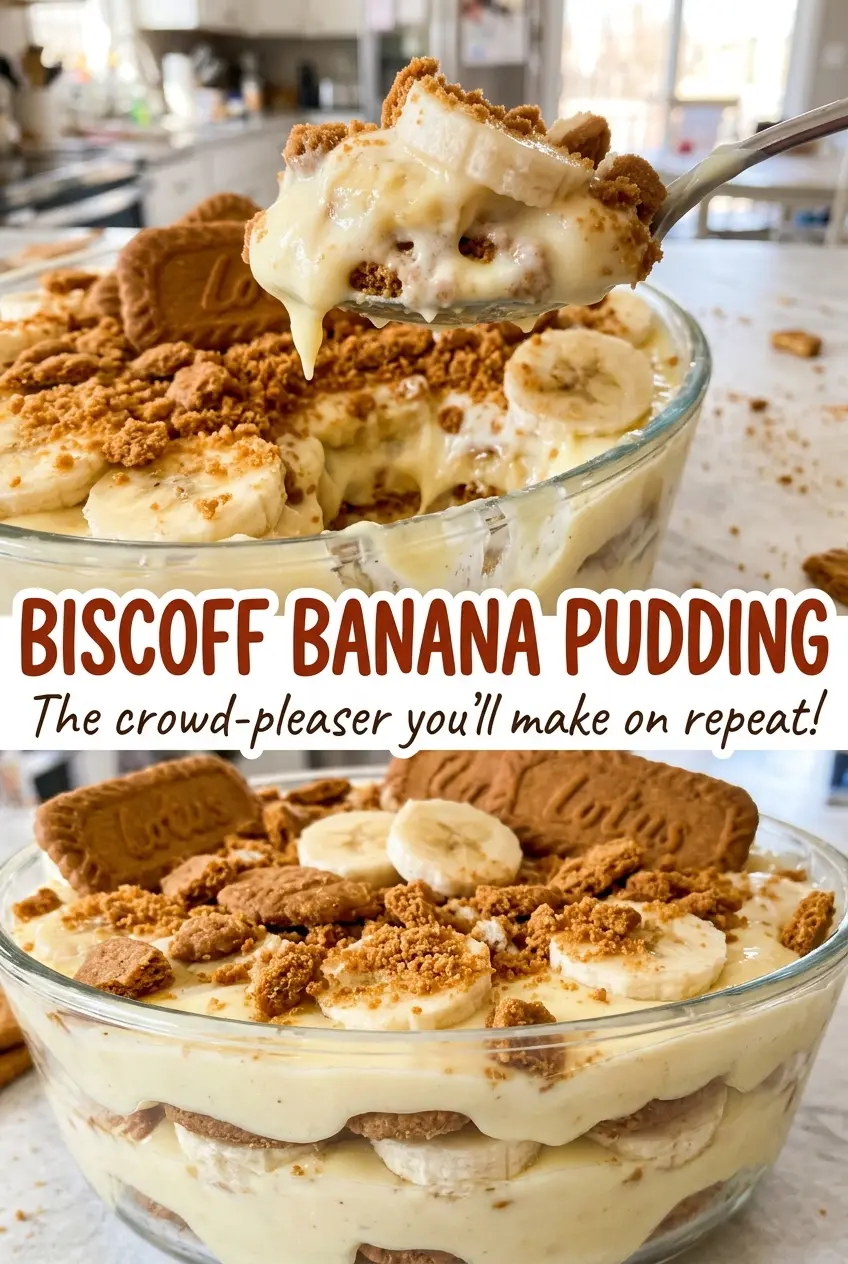
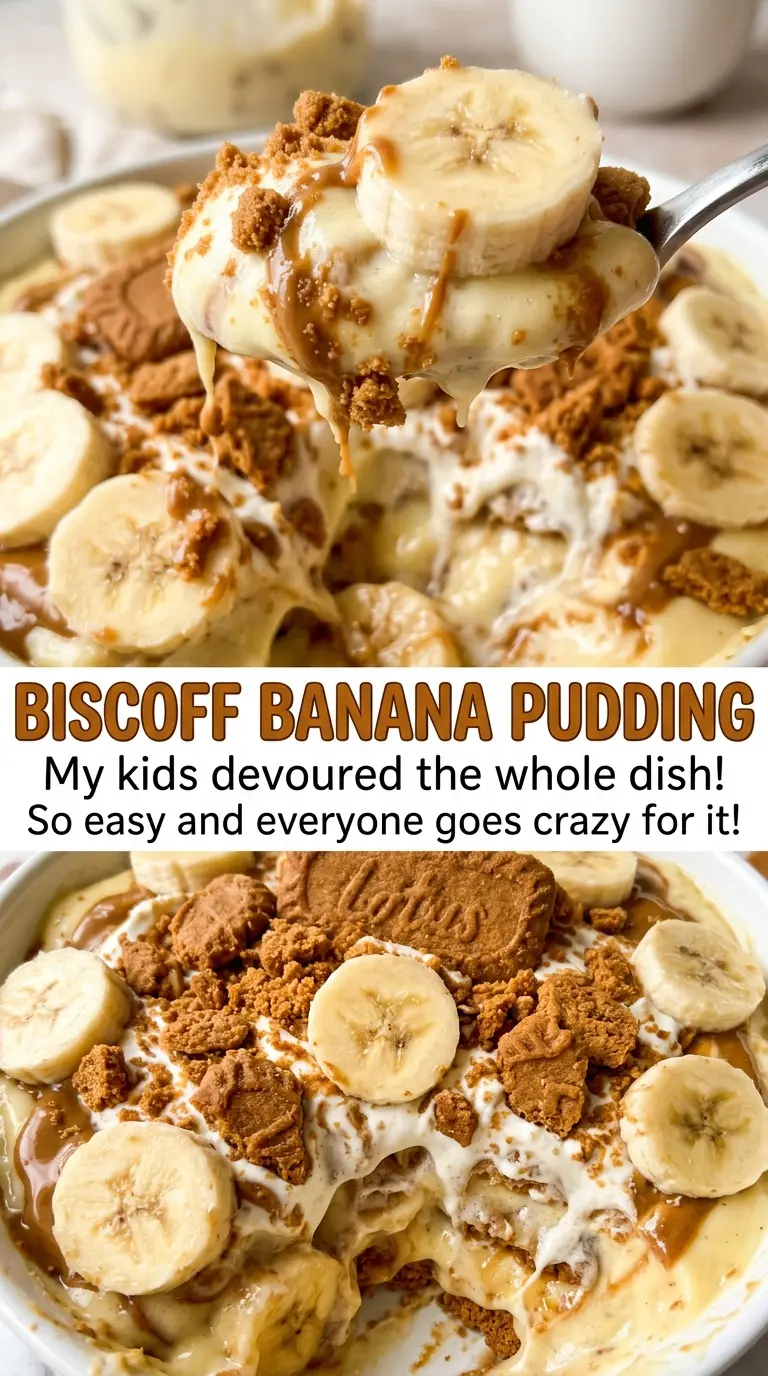
The cookies are crisp when they go into the dish, but after a proper chill they turn tender enough to scoop cleanly with the creamy filling. That change is what makes Biscoff banana pudding feel like one dessert instead of cookies stacked with pudding. The caramelized spice in the cookies gives each bite more depth than a plain wafer, while the banana keeps the sweetness from feeling one-note.
I whisk the pudding base until it just starts to thicken, then give it a short rest in the refrigerator while I whip the cream. That little pause helps the filling come together without rushing the cream. Once everything is layered in a 9×13-inch dish, the refrigerator does the quiet work: the cookies soften, the filling settles around the fruit, and each scoop holds its layers. The finished pudding is cool, creamy, and full of soft Biscoff cookie pieces.
Kitchen Note
I stop folding as soon as the last streak of whipped cream disappears. Keeping that mixture light gives the filling a soft, spoonable texture instead of a dense one.
Save this Biscoff banana pudding for its soft cookie layers, fresh banana slices, and creamy vanilla filling.
Why the Banana Slices Need a Pudding Blanket
Bananas bring a mellow, fruity note to a dessert built around sweet cookies and filling, but the cut surfaces are quick to darken when they’re exposed to air. That’s why I spread the pudding all the way over the banana layer rather than leaving fruit peeking through. It limits direct exposure and gives each layer a smooth, creamy top.
Think of the pudding as part of the assembly, not just a filling between cookies. Gaps at the edges or uncovered banana slices won’t ruin the dish, but they can look darker by serving time and make the layers feel less finished. A thin, even blanket is enough; there’s no need to press down on the fruit or mash it into the cookies. The slices should stay distinct in each spoonful, with the pudding surrounding them.
What Each Ingredient Is Actually Doing in This Biscoff Pudding
- Whole milk and instant vanilla pudding mix — The milk hydrates the instant mix, which provides the structure that lets the filling hold between the layers. Whole milk gives it a fuller texture than a lower-fat option; stick with instant mix rather than cook-and-serve, which needs a different preparation.
- Sweetened condensed milk — This brings concentrated sweetness and body to the pudding base. Evaporated milk isn’t a like-for-like swap: it isn’t sweetened or thick in the same way, so it changes both the taste and texture.
- Heavy cream, powdered sugar, and vanilla — Cold heavy cream is what whips into the airy layer that lightens the pudding. Powdered sugar sweetens it, and vanilla rounds out the flavor. Half-and-half won’t whip into the same stable cream, so use heavy cream here.
- Lotus Biscoff cookies — Their caramelized, spiced flavor is the signature of this version, and they soften into tender layers as the pudding chills. Use cookies that are still crisp from a fresh package; stale cookies won’t give you the same contrast as they soften.
- Bananas — Choose bananas that are ripe but still firm enough to slice cleanly. Very soft fruit can collapse as you build the layers, leaving less distinct pieces in the finished pudding.
Build the Layers Without Deflating the Filling
Give the vanilla base a short head start
In a large bowl, whisk the cold milk, sweetened condensed milk, and instant vanilla pudding mix for 2 minutes, until smooth and beginning to thicken. Scrape around the bowl as you whisk so dry mix doesn’t cling to the sides. Refrigerate the base for 5 minutes while you prepare the cream. It should look a little thicker when you return to it.
Whip the cream until it holds its shape
In a separate bowl, beat the cold heavy cream with the powdered sugar and vanilla using an electric mixer on medium-high speed. It takes 2 to 3 minutes to reach stiff peaks. The cream should hold a peak when you lift the beaters, rather than flowing back into the bowl. Stop once it reaches that point so it stays smooth enough to fold.
Fold the filling together gently
Add the whipped cream to the pudding in three additions, folding between each one. Use a broad, gentle motion rather than stirring quickly; that helps combine the two mixtures without knocking out all the air. Check the bottom and sides of the bowl for any streaks of pudding or cream. Stop when the filling looks even.
Layer the cookies, bananas, and pudding
Arrange half of the Biscoff cookies in a 9×13-inch dish, breaking cookies to fill gaps. Slice the bananas 1/4 inch thick just before layering, then arrange half over the cookies and spread half of the pudding mixture across the top. Repeat with the remaining cookies, bananas, and filling. Spread that final layer of pudding to cover the banana slices completely.
Chill until the cookies soften
Cover the dish and refrigerate for at least 6 hours and up to 24 hours. The cookies should feel softened rather than crisp when you scoop through a layer. Just before serving, crush the 8 reserved cookies and scatter the crumbs over the top. Adding them at the end keeps the topping distinct from the softened cookies inside.
Three Simple Ways to Adapt Biscoff Banana Pudding
Use vanilla wafers for a milder cookie layer
Replace the Biscoff cookies with vanilla wafers and layer them the same way. The dessert will taste more like classic banana pudding, with less caramelized spice; use enough wafers to cover each layer across the dish.
Make a gluten-free version
Replace the Biscoff cookies with gluten-free speculoos-style cookies and use gluten-free instant vanilla pudding mix. Keep the rest of the ingredients and the same layering approach; the cookies may soften to a slightly different texture depending on the brand.
Assemble individual portions
Layer the same cookies, banana slices, and pudding mixture in individual serving cups, breaking the cookies to fit. The smaller portions are easy to serve, though you’ll have more edges and fewer long, continuous cookie layers in each bite.
Keeping It Chilled
- Refrigerator: Keep the dish covered and enjoy leftovers within 3 days. The bananas may darken and the cookies will continue to soften.
- Freezer: Freezing isn’t recommended; thawed bananas can turn mushy, and the whipped filling may lose its smooth texture.
- Reheating: No reheating needed—serve it cold. Warming loosens the pudding and whipped cream.
Questions I Get Asked About Biscoff Banana Pudding
Biscoff Banana Pudding
Ingredients
Equipment
Method
- Whisk the milk, sweetened condensed milk, and pudding mix for 2 minutes, until smooth and beginning to thicken.
- Refrigerate for 5 minutes.
- Beat the heavy cream, powdered sugar, and vanilla with an electric mixer on medium-high speed for 2 to 3 minutes, until stiff peaks form.
- Fold the whipped cream into the pudding in three additions until no streaks remain.
- Arrange half of the cookies in a 9x13-inch dish, breaking them as needed to fill gaps.
- Layer on half of the banana slices.
- Spread half of the pudding mixture over the bananas.
- Repeat the layers with the remaining cookies and banana slices.
- Spread the remaining pudding mixture over the layers, covering the bananas completely.
- Cover and refrigerate for at least 6 hours and up to 24 hours, until the cookies have softened.
- Crush the reserved cookies and scatter them over the pudding just before serving.