
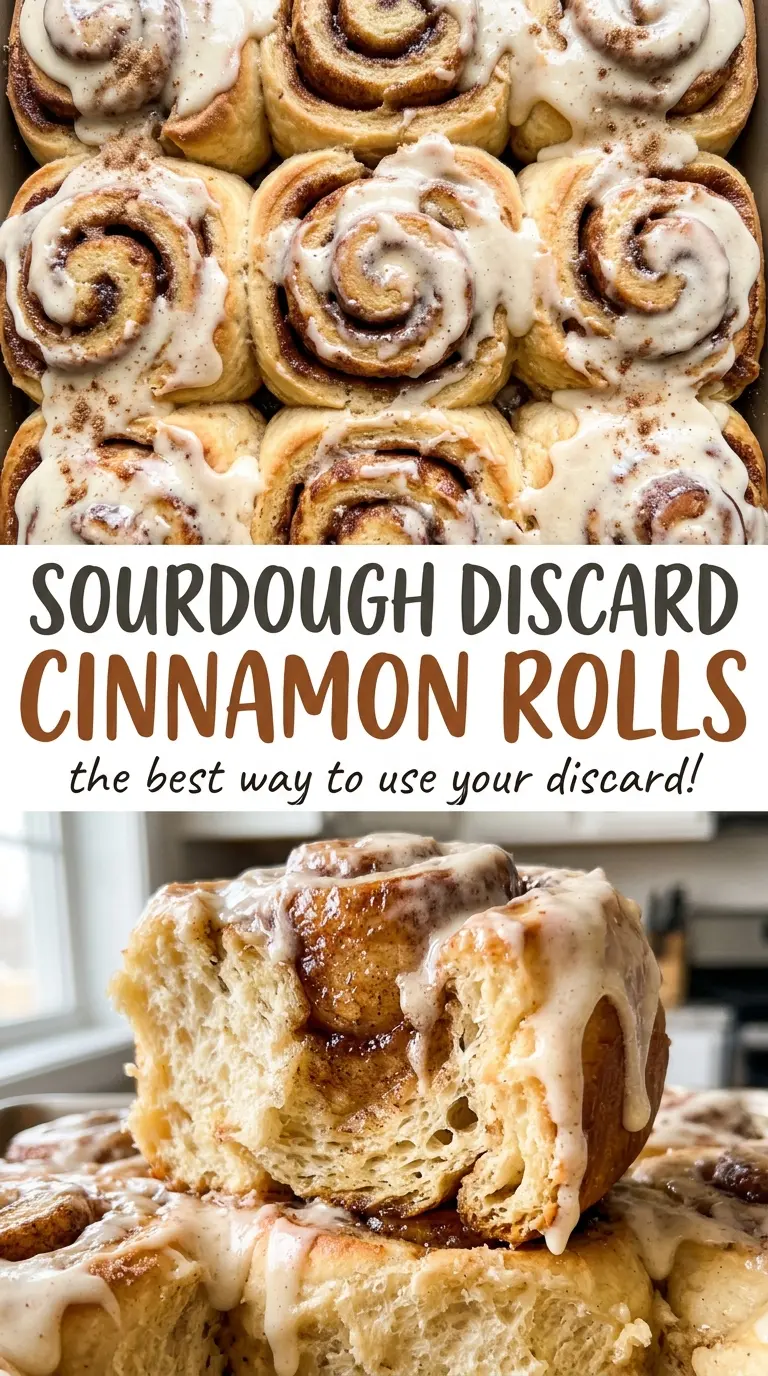
The yeast gets foamy in the warm milk, then the dough comes together shaggy and a little sticky before it turns smooth under your hands. That change is a good sign: this dough has butter and egg in it, so it needs a few minutes of kneading before it feels elastic. These sourdough discard cinnamon rolls bake up tender, with a cinnamon-brown sugar swirl and cream cheese icing that softens over the warm tops.
Unfed discard brings a gentle tang, but it isn’t the only thing responsible for the rise. Active dry yeast gives the dough a reliable lift, while the discard adds flavor and makes good use of what’s left in the jar. I use room-temperature discard so it blends into the dough without chilling the milk mixture.
The dough rises twice: first until doubled, then again after it’s rolled, cut, and tucked into the baking dish. Give the second rise time to make the rolls puffy before they go into the oven. The centers stay soft under the cream cheese icing, and the edges turn golden where the cinnamon sugar meets the pan.

Kitchen Note
Wait the full 5 minutes after baking before spreading the icing. The rolls are still warm enough to soften it, but the icing won’t disappear into a piping-hot surface.
Save these sourdough discard cinnamon rolls for a soft, cinnamon-swirled bake topped with cream cheese icing.
Discard Adds Tang, but Active Dry Yeast Gives These Rolls Their Lift
Unfed sourdough discard and active dry yeast have different jobs here. The discard brings a mild sourdough note, but the dough doesn’t depend on it alone to rise. The yeast supplies a steady lift, which is especially helpful in a rich dough made with milk, egg, and butter. That combination gives you sourdough character without asking a sluggish jar of discard to do all the work.
It also means these rolls don’t need a long sourdough fermentation schedule. Once the dough is kneaded, you’re watching for it to double, then for the shaped rolls to look puffy. Those visual cues matter more than expecting discard to behave exactly like a lively starter. If your discard is cold, it can cool the dough and slow those rises, which is why room-temperature discard fits this method best.
The flavor stays balanced rather than sharply sour. Brown sugar and cinnamon bring warmth to the filling, while cream cheese icing adds a tangy finish of its own. Each part has a clear role, so the discard doesn’t have to overpower the cinnamon or make the dough dense.
Why the Milk, Discard, and Filling Ingredients Matter
- Whole milk — It gives the dough tenderness and a richer taste than water. If whole milk isn’t on hand, 2% milk works, though the rolls will be a little less rich. Warm it only to the temperature listed in the method; hotter milk can interfere with the yeast.
- Unfed sourdough discard — Use discard with a mild, clean tang and let it come to room temperature before mixing. Its acidity adds flavor, but it isn’t a one-for-one stand-in for flour and liquid in another dough formula.
- All-purpose flour — It gives these rolls enough structure to hold their spiral without making them tough. Add the extra flour sparingly while kneading; too much can leave the finished dough firm instead of soft.
- Unsalted butter — Softened butter kneads into the dough and spreads over the rolled rectangle without tearing it. It also helps the filling cling to the surface. Let it soften until it yields to a fingertip, rather than melting it.
- Light brown sugar and cinnamon — Packed brown sugar gives the filling a moist, slightly caramel-like quality that plain granulated sugar doesn’t quite match. Fresh cinnamon has a clearer aroma, but an everyday grocery-store jar works well here.
- Cream cheese — This is what gives the icing its gentle tang and body. Use softened cream cheese so it beats smooth with the butter; cold pieces can leave little lumps in the finished icing.
- Egg — The egg contributes richness and helps the dough hold together. Bring it to room temperature so it mixes evenly into the discard and milk instead of cooling the mixture.
How to Build the Dough and Keep the Rolls Tender
Wake the yeast and bring the dough together
Warm the milk to 105–110°F, then stir in the active dry yeast and a teaspoon of the granulated sugar. Let it stand for 5–10 minutes, until a foamy cap forms on the surface. Whisk in the discard, egg, and remaining sugar, then stir in the flour and salt until no dry pockets remain. The dough will look shaggy at this point; that’s normal.
Knead until elastic, then let the dough double
Knead in the softened butter, then work the dough by hand for 8–10 minutes. It should become smooth and elastic, not stiff or heavily floured; dust with a little of the extra flour only if it sticks so much that you can’t knead it. Put it in a large bowl lightly greased with half the oil and cover it. Let it rise at room temperature for 1–1 1/2 hours, until doubled.
Spread the filling and shape twelve rolls
Grease a 9×13-inch baking dish with the remaining oil, and mix the brown sugar and cinnamon in a small bowl. Roll the dough on a lightly floured surface into a 12×16-inch rectangle, then spread the softened butter evenly over it. Sprinkle the cinnamon-sugar mixture across the butter so the filling reaches the edges. Starting at a 16-inch edge, roll the dough into a log, cut it into 12 equal pieces, and arrange them cut side up in the dish.
Give the rolls their second rise and bake
Cover the dish and let the rolls rise at room temperature for 30–45 minutes, until they look puffy. Heat the oven to 350°F after this rise, then bake the rolls for 25–30 minutes. The tops should be golden, and the center rolls should reach about 190°F. While they bake, beat the softened cream cheese and butter until smooth, then beat in the powdered sugar, vanilla, and milk until creamy; spread the icing over the warm rolls after their short rest.
Two Simple Ways to Adapt These Cinnamon Rolls
Make the rolls dairy-free
Replace the whole milk with unsweetened soy milk, use plant-based butter in place of the butter in both dough and filling, and use dairy-free cream cheese for the icing. Keep the egg; this makes the rolls dairy-free, not vegan. The flavor will be a little less buttery, and the icing texture depends on the dairy-free cream cheese you choose.
Leave off the cream cheese icing
For a less rich finish, skip the icing ingredients and spread the cinnamon rolls plain after baking. The brown sugar filling still makes them sweet, but you’ll lose the creamy tang that balances it. This is a handy option if you want the rolls to be easier to pack and serve.
Storage and Reheating
- Refrigerator: Store the iced rolls in an airtight container for up to 4 days. The icing firms up when cold, and the rolls won’t be as soft straight from the fridge.
- Freezer: Freeze the baked rolls before icing for the best texture. Wrap them individually and freeze for up to 2 months; thaw in the refrigerator, then add freshly made icing. Already-iced rolls can be frozen, but the icing may look less smooth after thawing.
- Reheating: Warm an uniced roll briefly in the microwave, or warm several in a covered baking dish until soft. If reheating an iced roll, expect the cream cheese icing to soften and melt a little; heating too long can dry the edges.
Questions That Come Up While Making These Rolls
Sourdough Discard Cinnamon Rolls
Ingredients
Equipment
Method
- Warm the milk to 105–110°F.
- Stir in the yeast and 1 teaspoon of the granulated sugar, then let stand for 5–10 minutes until foamy.
- Whisk in the sourdough discard, egg, and remaining granulated sugar.
- Stir in the flour and salt until a shaggy dough forms.
- Knead in the softened butter, then knead by hand for 8–10 minutes until the dough is smooth and elastic, dusting with a little of the extra flour only if needed.
- Lightly grease a large bowl with half the oil and add the dough.
- Cover and let rise at room temperature for 1–1 1/2 hours until doubled.
- Grease a 9x13-inch baking dish with the remaining oil.
- Mix the brown sugar and cinnamon in a small bowl.
- Roll the dough into a 12x16-inch rectangle on a lightly floured surface.
- Spread the softened butter over the dough.
- Sprinkle evenly with the cinnamon-sugar mixture.
- Starting at a 16-inch edge, roll the dough into a log.
- Cut the log into 12 equal rolls and arrange them cut side up in the prepared dish.
- Cover and let rise at room temperature for 30–45 minutes until puffy.
- Heat the oven to 350°F.
- Bake for 25–30 minutes until golden and the center rolls reach about 190°F.
- Beat the cream cheese and softened butter until smooth.
- Beat in the powdered sugar, vanilla, and milk until creamy.
- Let the rolls rest for 5 minutes.
- Spread the icing over the warm rolls.