
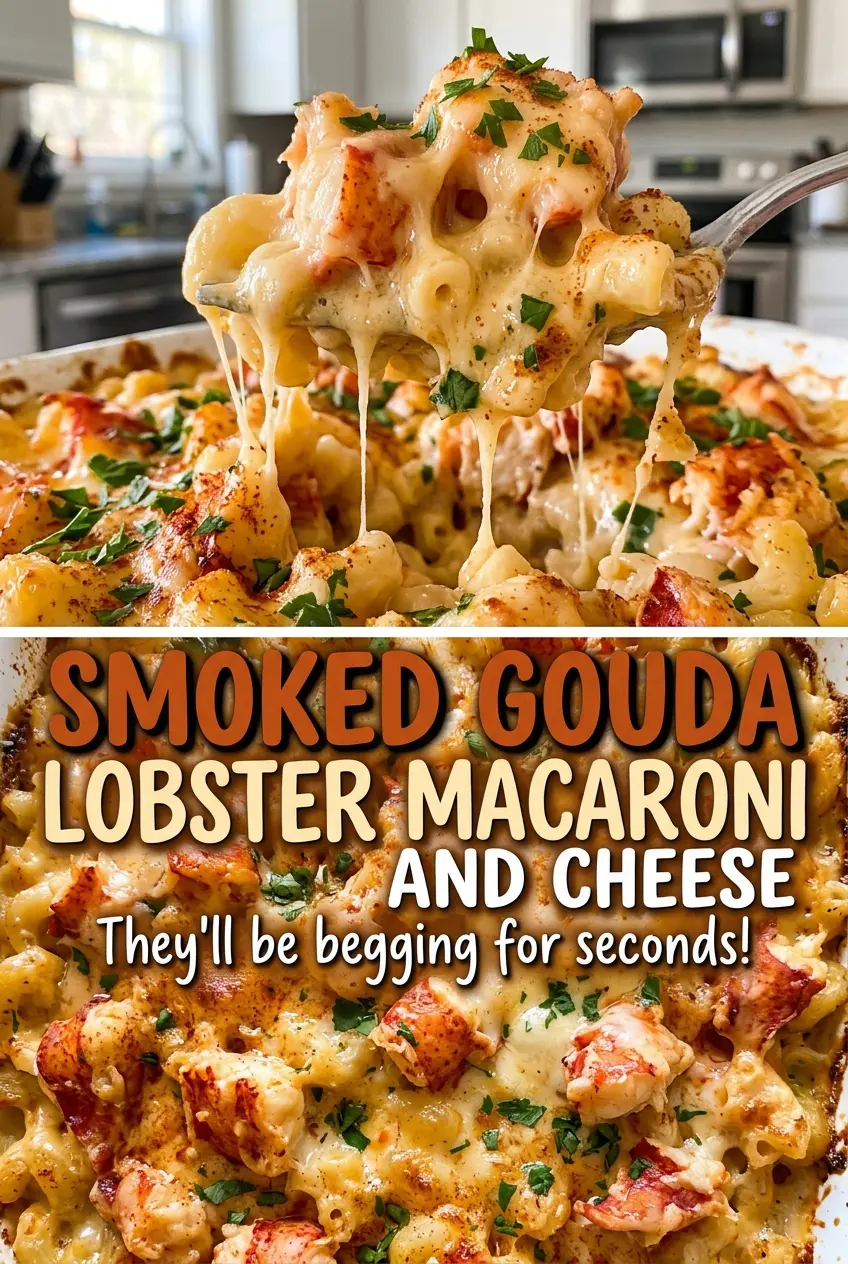
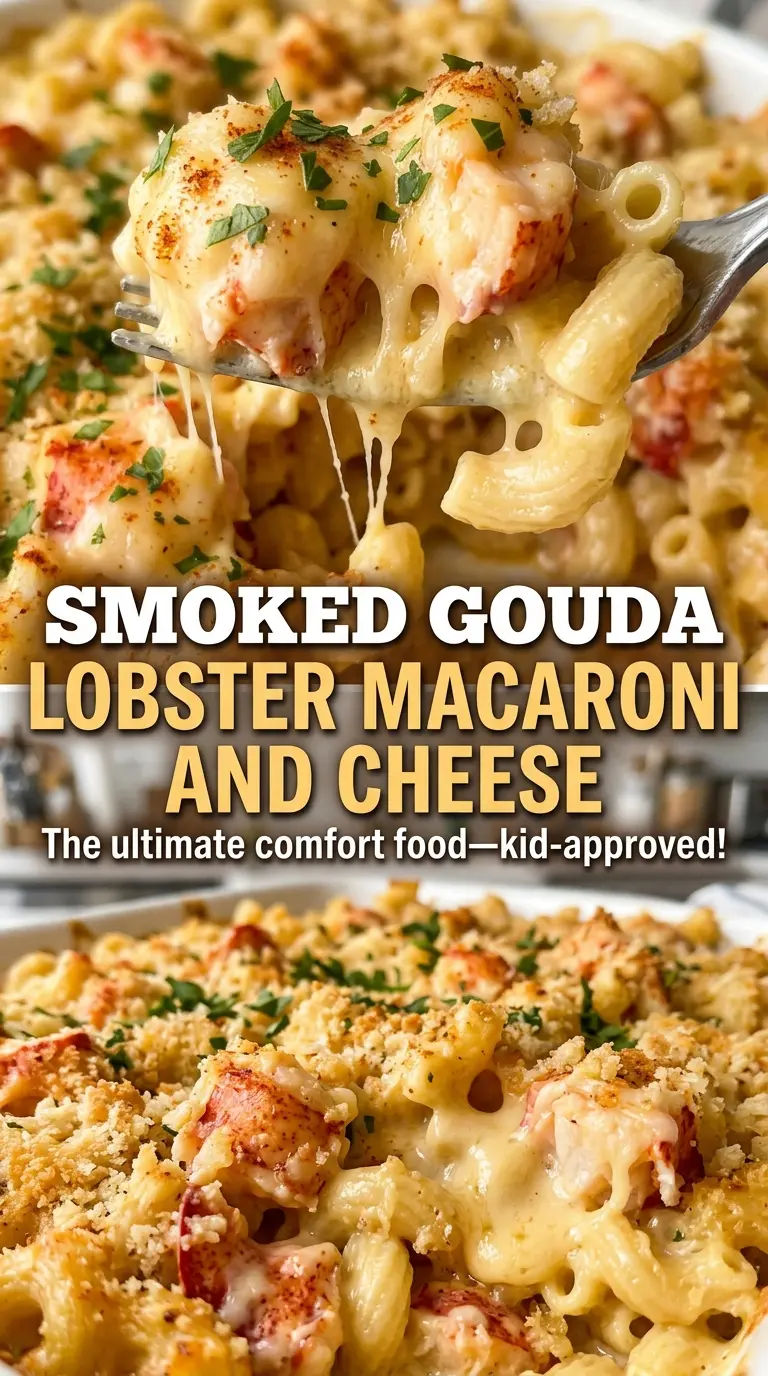
When the panko turns golden and the edges of the macaroni start bubbling, the whole pan smells smoky and buttery. That’s the moment I look for with this Smoked Gouda Lobster Macaroni and Cheese: a crisp top over pasta coated in a smooth, savory cheese sauce.
The sauce starts with a simple butter-and-flour base, then whole milk goes in gradually. I take the pan off the heat before adding the cheeses, which helps them melt into the sauce instead of turning grainy. Smoked Gouda brings the unmistakable smoke, while sharp cheddar gives it a bright, familiar bite.
Cooked lobster gets folded in with the macaroni, so there’s a tender piece in plenty of creamy bites without a lot of extra fuss. After baking in a 9×13-inch dish, the panko is crisp, the edges are bubbling, and the center settles into a rich, scoopable macaroni and cheese.
Kitchen Note
Give the baked macaroni its full 10-minute rest before serving. The sauce settles during that time, so each scoop holds together instead of running across the plate.
Save this Smoked Gouda Lobster Macaroni and Cheese for a special dinner, with its crisp panko top and smoky, creamy sauce.
Why the Lobster Goes In After the Sauce Is Smooth
The lobster in this dish is already cooked, so the oven isn’t being asked to cook raw seafood. It brings the assembled macaroni up to temperature and gives the panko time to brown. That distinction matters: cooked lobster can turn firm and stringy if it gets handled aggressively or spends too long under heat.
I wait until the cheese sauce is finished before folding in the lobster. That way, it needs only a gentle stir with the macaroni, and its bite-size pieces stay recognizable in the finished dish. If you stir hard while combining everything, the lobster can break apart and disappear into the sauce. Fold just until the pasta and lobster are coated, then transfer the mixture to the baking dish.
This also makes the sauce the first texture cue to pay attention to. Once the cheeses have melted smoothly into it, there’s no need to keep cooking the sauce on the stovetop. The bake finishes the dish, and the lobster warms alongside the macaroni rather than getting cooked from raw.
What the Smoked Gouda, Cheddar, and Panko Each Bring
- Smoked Gouda — This is where the sauce gets its smoky character and its mellow, creamy quality. Regular Gouda works as a one-for-one swap if you don’t want the smoke, but the finished dish will taste gentler and less distinctive. A block you shred yourself melts smoothly; the smoking style matters more than choosing an expensive brand.
- Sharp cheddar — Cheddar gives the sauce a sharper, tangier counterpoint to the Gouda. Mild cheddar can replace it one-for-one, though the cheese flavor will be softer. Use a cheddar you enjoy eating on its own; this is one of the main flavors in the sauce.
- Cooked lobster meat — Lobster adds sweet, tender bites that make this more than a standard baked macaroni and cheese. Use cooked meat cut into bite-size pieces so it folds through the pasta evenly. Cooked shrimp is the most practical seafood substitute; use bite-size pieces and expect a slightly different, less lobster-forward flavor.
- Panko breadcrumbs — The coarse flakes make a light, crisp topping. Regular breadcrumbs can replace panko one-for-one, but they form a finer, denser crust. There’s no need for a specialty brand; choose plain breadcrumbs so they don’t compete with the smoky cheese.
- Whole milk and all-purpose flour — Together they make the base that gives the cheese something to cling to. Whole milk makes a fuller sauce than 2% milk, which works as a swap but gives a lighter result. For the gluten-free variation, use a one-to-one gluten-free flour blend in place of the all-purpose flour.
Build the Sauce Smoothly, Then Let the Oven Brown the Top
Cook the Elbows Just Short of Tender
Bring a large pot of water to a boil, stir in the kosher salt, then add the elbow macaroni. Cook it for 2 minutes less than the package directions and drain it. The pasta should still have a little firmness when you bite it; it will spend more time in the oven once it’s coated in sauce. Don’t cook it all the way soft in the pot, or it can lose its shape in the bake.
Thicken the Milk Before Melting in the Cheese
Melt 4 tablespoons of the butter in a medium saucepan over medium heat, whisk in the flour, and cook for 1 minute. Gradually whisk in the milk, dry mustard, and black pepper, then bring the mixture to a simmer. Cook for 4 to 6 minutes, whisking often, until the sauce coats the back of a spoon. Take the pan off the heat and whisk in the smoked Gouda and sharp cheddar a handful at a time until the sauce is smooth.
Top and Bake Until the Edges Bubble
Preheat the oven to 375°F and grease a 9×13-inch baking dish. Return the drained macaroni to its pot, add the cooked lobster and cheese sauce, and stir gently until combined; transfer everything to the dish. Melt the remaining 2 tablespoons of butter, stir in the panko, and sprinkle it evenly over the top. Bake for 20 to 25 minutes, until the edges are bubbling and the top is golden, then rest the dish for 10 minutes before serving.
Three Practical Ways to Adapt This Lobster Mac
Make It Gluten-Free
Use gluten-free elbow macaroni, a one-to-one gluten-free flour blend, and gluten-free panko in place of their wheat-based counterparts. Keep the same measured amounts and follow the pasta package timing, still stopping 2 minutes short. The sauce and topping may have a slightly different texture, but the smoked Gouda and lobster remain the focus.
Serve It Stovetop-Style
For a softer, creamier finish without a crisp top, skip the buttered panko and the baking step. Fold the cooked macaroni and lobster into the smooth cheese sauce and serve it from the pot. You’ll lose the golden crust, but the sauce stays front and center.
Make Smoked Gouda Mac Without the Lobster
Leave out the lobster and keep the macaroni, sauce, and panko topping. The result is a smoky baked Gouda-and-cheddar macaroni and cheese with a crisp top and no seafood. The cheese has more room to stand out, so this is a useful option when lobster isn’t on the menu.
Storage and Reheating
- Refrigerator: Store leftovers in an airtight container for 3 to 4 days. The panko topping softens as it sits.
- Freezer: Freeze cooled portions in airtight containers for up to 2 months for the best quality. Thaw them in the refrigerator; the cheese sauce may be a little less smooth after freezing.
- Reheating: Reheat a portion in the microwave in short bursts, stirring between each, or warm a larger portion in a covered baking dish in a 325°F oven. Heat leftovers to 165°F throughout; high microwave heat can make the cheese sauce oily before the center is hot.
Questions That Come Up With Lobster Mac and Cheese
Smoked Gouda Lobster Macaroni and Cheese
Ingredients
Equipment
Method
- Bring a large pot of water to a boil, stir in the kosher salt and macaroni, and cook 2 minutes less than the package directions; drain.
- Melt 4 tablespoons of the butter in a medium saucepan over medium heat.
- Whisk in the flour and cook for 1 minute.
- Gradually whisk in the milk, dry mustard, and black pepper.
- Bring to a simmer and cook for 4 to 6 minutes, whisking often, until thick enough to coat the back of a spoon.
- Remove the pan from the heat and whisk in the Gouda and cheddar a handful at a time until melted and smooth.
- Preheat the oven to 375°F.
- Grease a 9x13-inch baking dish.
- Return the drained macaroni to its pot, add the lobster and cheese sauce, and stir gently to combine.
- Transfer the macaroni mixture to the prepared baking dish.
- Melt the remaining 2 tablespoons of butter and stir in the panko.
- Sprinkle the panko evenly over the macaroni.
- Bake for 20 to 25 minutes, until bubbling around the edges and golden on top.
- Rest for 10 minutes before serving.