
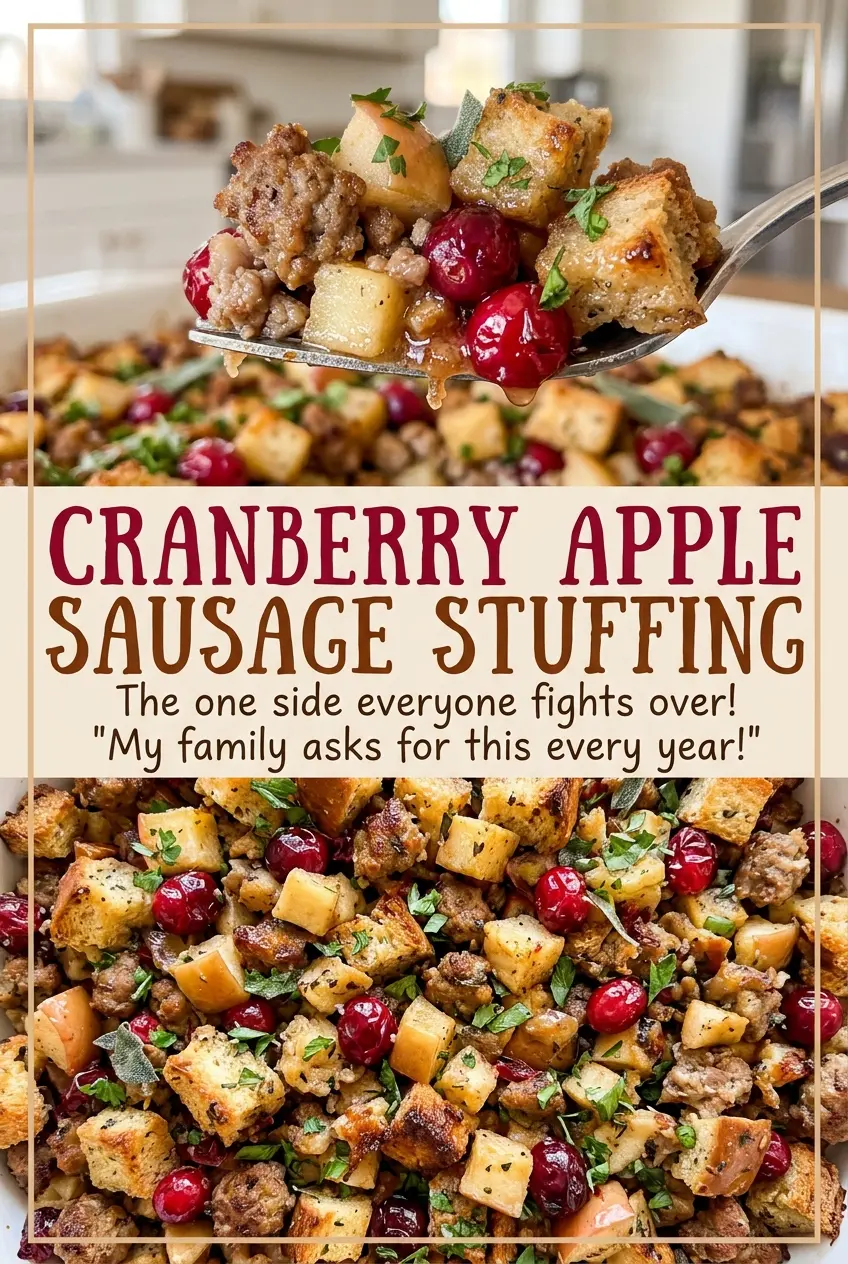
When the foil comes off, the top is soft from the steam underneath it, while the edges have started to catch and turn golden. That contrast is what I want in Cranberry Apple Sausage Stuffing: tender bread through the middle, browned bits on top, and little pockets of tart cranberry and apple in each scoop.
The bread cubes need to be dry and unseasoned so they can take in the broth without bringing extra moisture or competing flavors. I toss the sausage and softened vegetables through the bread first, then add the broth and eggs so everything gets coated evenly. The result is hearty without feeling heavy, with sage and thyme in the background and just enough fruit to brighten the savory sausage.
Kitchen Note
Give the stuffing its full 10-minute rest before scooping. That pause lets the center settle, so the first serving holds together instead of slumping onto the plate.
Save Cranberry Apple Sausage Stuffing for a holiday table or a cozy dinner, with its golden top and tart cranberry bites.
Why This Stuffing Starts Covered and Finishes Open
Stuffing has two jobs in the oven: the center needs enough time to absorb the broth and set around the eggs, and the top needs a chance to dry out and brown. Baking covered first helps the bread soften without letting the surface turn dark before the middle is hot. Removing the foil for the finish lets moisture escape and gives the top its color.
That sequence matters because the bread cubes are doing more than filling the dish. Dry cubes absorb liquid gradually; cubes that are already soft can take on broth unevenly and leave you with a heavy, damp texture. Once the mixture is moistened, spread it into the baking dish without packing it down. A loose layer gives heat room to move through the center and leaves plenty of edges exposed to brown. Watch the center as well as the top: color alone can’t tell you whether the egg-bound middle is ready.
The Bread and Sausage Set the Texture Before It Hits the Oven
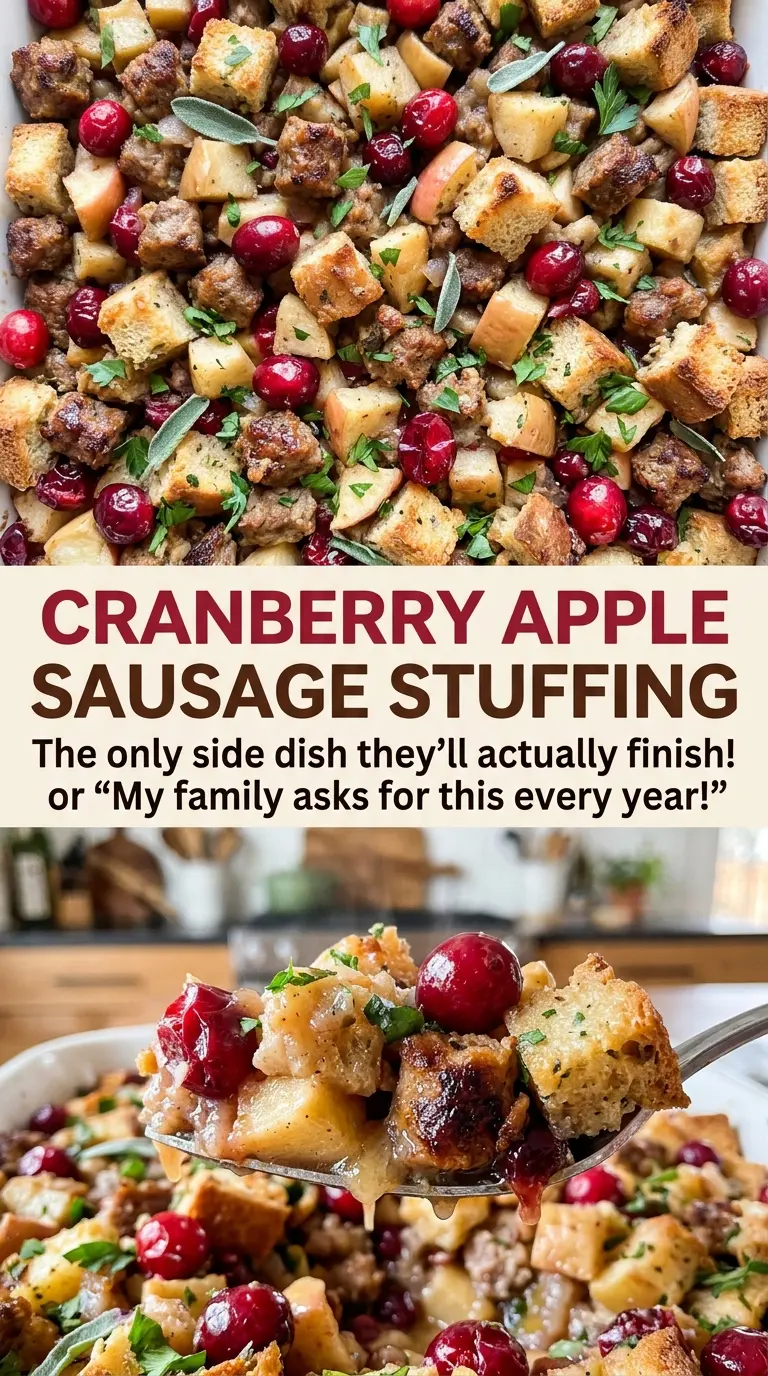
- Bulk pork sausage — It brings savory seasoning and rendered drippings that carry flavor into the onion, celery, and apple. A standard grocery-store bulk sausage works well; there’s no need to seek out a specialty brand. Choose one with a seasoning level you like, since sage and other seasonings in the sausage will shape the finished dish.
- Dried unseasoned bread cubes — Their dry surface gives the broth somewhere to go, while the neutral flavor lets the fruit and herbs come through. Sourdough cubes are a useful swap if you want a mild tang, but keep them dried and unseasoned. Fresh, soft bread cubes don’t absorb the liquid in the same steady way.
- Apple — A crisp apple holds its shape better than a soft, mealy one after cooking. Choose a tart variety for a brighter contrast with the sausage, or a sweeter apple for a gentler fruit note. Either way, dice it evenly so the pieces soften at the same pace as the onion and celery.
- Dried cranberries — They add concentrated tart-sweet flavor and a chewy bite that fresh fruit wouldn’t provide here. A basic bag is fine; check that the berries are still pliable rather than dried hard into clumps, and separate any stuck-together pieces before tossing them through.
- Chicken broth and eggs — The broth moistens the bread, and the beaten eggs help the center set as it bakes. Chicken broth is the right savory base for this combination; lower-sodium chicken broth is a sensible choice if you want more control over saltiness. Whisk the eggs thoroughly into the broth before pouring, so they don’t collect in one part of the dish.
- Dried sage and thyme — These dried herbs spread their flavor evenly through the vegetables and sausage. Fresh herbs aren’t a direct swap by the same measure, so stick with dried rubbed sage and dried thyme for the intended balance and texture.
Build the Stuffing in the Skillet, Then Let the Oven Finish It
Brown the Sausage into Small Crumbles
Heat the oven to 350°F and grease a 9×13-inch baking dish with 1 tablespoon of butter. In a 12-inch skillet over medium heat, cook the bulk sausage for 8–10 minutes, breaking it into small pieces as it browns. Look for no pink remaining and browned edges on the crumbles. Transfer the sausage to a large mixing bowl, leaving the drippings in the skillet.
Soften the Vegetables in the Sausage Drippings
Add the remaining 2 tablespoons of butter to the skillet, followed by the onion, celery, and apple. Cook for 5–7 minutes, stirring occasionally, until the vegetables have softened and the apple is beginning to yield. Stir in the sage, thyme, salt, and pepper so the herbs warm in the buttery mixture. If the skillet looks crowded, keep stirring gently rather than rushing the vegetables over higher heat.
Coat the Bread Before Adding the Liquid
Add the cooked vegetables, dried bread cubes, and cranberries to the bowl with the sausage. Toss until the sausage and fruit are spread through the cubes, then whisk the broth and lightly beaten eggs together. Pour the liquid over the bread mixture and toss again until the cubes look evenly moistened. If you see a dry pocket, turn the mixture from the bottom of the bowl rather than adding extra broth.
Bake Until the Center Sets and the Top Browns
Transfer the mixture to the prepared baking dish and cover it with foil. Bake for 30 minutes, then uncover and bake for 15–25 minutes more, until the top is golden and the center reaches 160°F. The top should look browned rather than pale, and the middle should feel set instead of sloshy when the dish is gently moved. If the surface is golden before the center is ready, loosely cover it again while it finishes baking.
Three Simple Ways to Adjust the Flavor or Make It Vegetarian
Choose a Tart Apple for More Contrast
Use a crisp, tart apple in place of a sweeter variety. It keeps the same fruit-and-sausage balance but makes each bite brighter, especially against the dried cranberries.
Use Dried Sourdough Bread Cubes
Swap in dried, unseasoned sourdough cubes for a subtle tang beneath the sage and sausage. The texture stays close to the original; seasoned cubes are a poor fit because their added herbs and salt can throw off the balance.
Make a Vegetarian Version with Plant-Based Bulk Sausage
Replace the pork sausage with the same amount of plant-based bulk sausage and brown it according to its package directions. It may leave fewer drippings in the skillet, but the butter still gives the vegetables enough fat to soften. Check the seasoning before mixing, since plant-based options vary in salt and spice.
Storage and Reheating
- Refrigerator: Refrigerate leftovers within 2 hours in a covered, shallow container and use within 3–4 days. The bread softens more as it sits.
- Freezer: Freeze cooled portions in airtight containers for up to 3 months for best quality. Thaw in the refrigerator before reheating; the top won’t be quite as crisp after freezing.
- Reheating: Cover a portion and warm it in a 325°F oven until the center reaches 165°F, uncovering near the end if you want to refresh the top. Avoid reheating uncovered from the start, which can dry the bread before the middle is hot.
Questions That Come Up When Making Sausage Stuffing
Cranberry Apple Sausage Stuffing
Ingredients
Equipment
Method
- Heat the oven to 350°F.
- Grease a 9x13-inch baking dish with 1 tablespoon of the butter.
- Cook the sausage in a 12-inch skillet over medium heat for 8–10 minutes, breaking it into small pieces, until browned and cooked through; transfer it to a large mixing bowl, leaving the drippings in the skillet.
- Add the remaining 2 tablespoons butter to the skillet, then add the onion, celery, and apple; cook for 5–7 minutes, stirring occasionally, until softened.
- Stir the sage, thyme, salt, and pepper into the vegetables.
- Add the cooked vegetables, bread cubes, and cranberries to the bowl with the sausage and toss to combine.
- Whisk the broth and eggs together, pour over the bread mixture, and toss until evenly moistened.
- Transfer the mixture to the prepared baking dish.
- Cover the dish with foil and bake for 30 minutes.
- Uncover and bake for 15–25 minutes, until the top is golden and the center reaches 160°F.
- Rest the stuffing for 10 minutes before serving.