
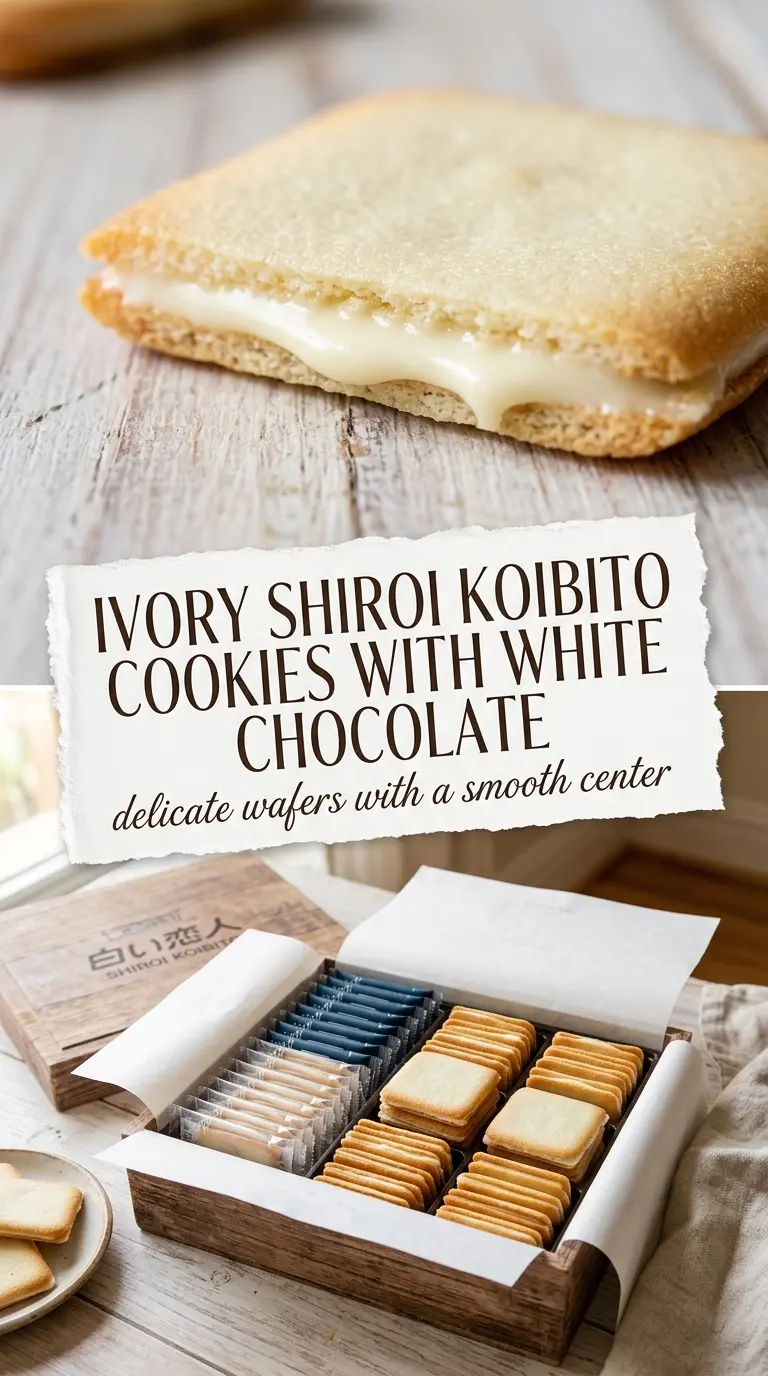
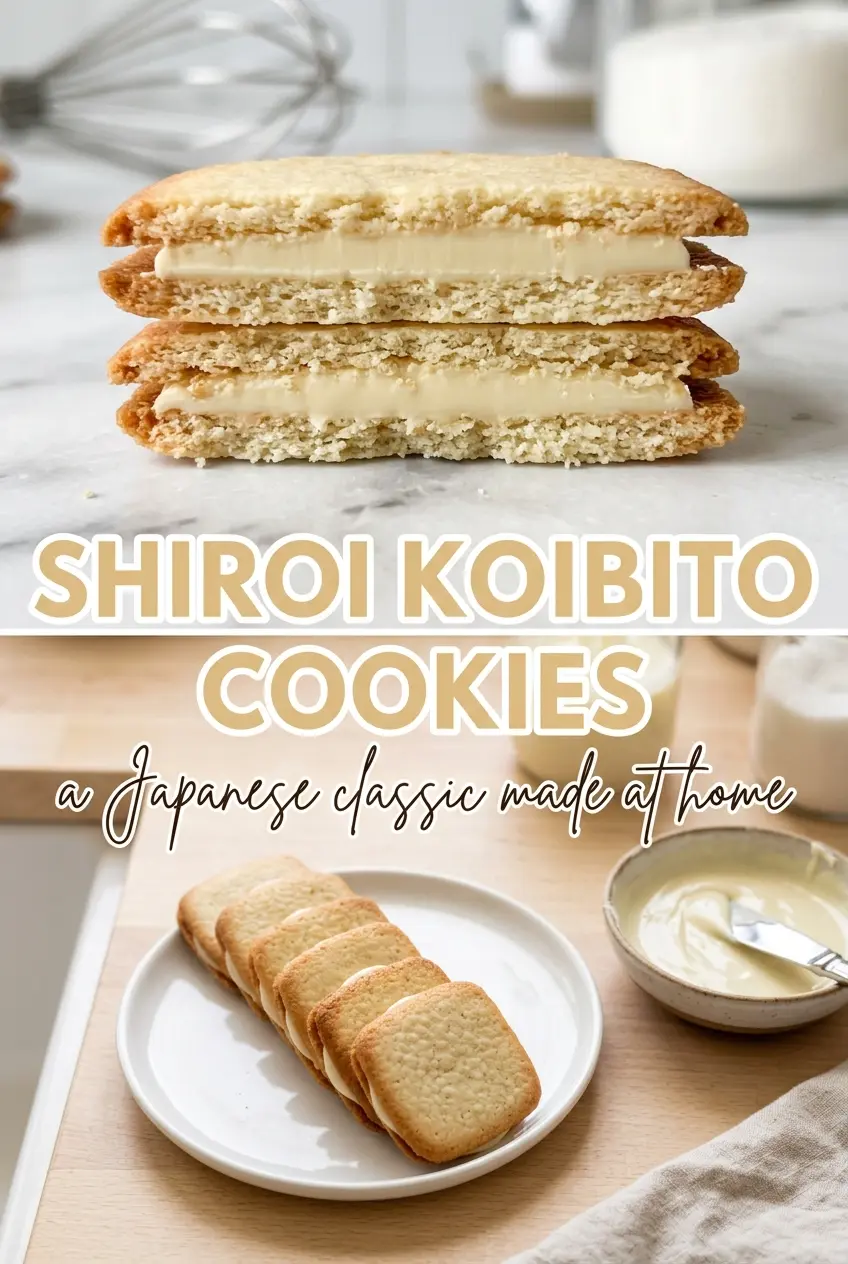
Shiroi Koibito cookies bake up as thin, pale wafers with crisp edges, a tender center, and that clean white chocolate finish that makes each bite feel delicate instead of heavy. The cookies should be light enough to snap cleanly, but not so brittle that they crumble the moment you lift them. That balance is what makes them special, and it comes from a batter that’s spread thin and baked just until the edges turn the faintest gold.
The batter here is closer to a soft piping mixture than a standard cookie dough, which is why mixing technique matters. Air beaten into the butter and sugar gives the cookies their lift, while the egg whites keep the texture supple and help the wafers bake into those signature smooth rounds. White chocolate isn’t just the filling; it’s the flavor anchor, so using a good-quality bar instead of chips makes the center taste cleaner and melt more evenly.
Below, I’ll walk through the small details that matter most: how thin the batter should be, what the cookies look like when they’re done, and how to sandwich them without cracking the shells.
The cookies baked up thin and crisp with those delicate edges I was hoping for, and the white chocolate set perfectly without oozing out when I sandwiched them. My daughter said they tasted just like the ones from the gift shop in Hokkaido.
Save these delicate Shiroi Koibito cookies for when you want crisp vanilla wafers and a smooth white chocolate center.
The Thin Batter Trick That Keeps These Cookies Delicate
These cookies don’t behave like drop cookies, and that’s the first thing to understand. The batter should be spread thin enough that it looks almost too light to hold its shape, because that’s what gives you the crisp, lacy texture instead of a thick sandwich cookie. If the batter is heavy or overmixed, the cookies puff unevenly and lose that refined snap.
The other trap is baking them too long. You want the edges to turn just barely golden while the centers stay pale. Once they cool, they firm up fast, so pulling them when they still look a little soft is what keeps them from drying out. If you wait for full color in the oven, they’ll taste more like shortbread than Shiroi Koibito.
What Each Ingredient Is Actually Doing in This Dish
- All-purpose flour — This gives the wafers their structure without making them tough. Cake flour can work if that’s what you have, but the cookies will be a little more fragile and less crisp.
- Unsalted butter — Butter is where the flavor lives, so use one you’d happily eat on toast. Softened butter creams properly with the sugar and helps the batter spread into those thin, even ovals.
- Powdered sugar — The fine texture keeps the batter smooth and helps the cookies bake up tender. Granulated sugar won’t dissolve the same way and can leave the wafers grainy.
- Egg whites — These loosen the batter and give the cookies their delicate lift. Let them come to room temperature if you can, because cold egg whites can seize the butter mixture and make the batter look broken before the flour goes in.
- White chocolate — Use a good bar and melt it gently. Chocolate chips are thicker and often contain stabilizers, which makes the filling less silky and harder to spread in a thin, even layer.
Getting the Wafers Thin Enough to Taste Like the Original
Cream the Butter and Sugar Until It Looks Pale
Beat the softened butter and powdered sugar until the mixture lightens in color and looks fluffy, not greasy. That change in color tells you air is moving into the base, which is what helps the cookies bake up with a tender bite. If the butter is too cold, the mixture stays clumpy; if it’s melted, the batter won’t hold the delicate shape you need.
Bring in the Egg Whites Without Breaking the Emulsion
Whisk in the egg whites and vanilla until the mixture looks smooth again. It may look a little loose at first, and that’s normal. The key is to stop as soon as it comes together, because beating too long here can make the batter foamy and uneven, which shows up as bumpy cookies instead of smooth wafers.
Fold in the Flour Just Until the Batter Comes Together
Add the flour and mix only until you no longer see dry streaks. The batter should be soft and spreadable, not stiff like a traditional cookie dough. Overmixing builds gluten, and gluten is what turns these from light, crisp wafers into something chewy and flat in the wrong way.
Spread, Bake, and Cool Before Filling
Spoon or pipe the batter onto a lined baking sheet, then spread each portion into a thin oval with an offset spatula. Thin edges matter here, so keep the layer even instead of leaving a thick center. Bake just until the edges are barely golden, then cool the cookies completely before adding the white chocolate; if you rush the filling step, the warm cookies can melt the chocolate into a mess.
How to Adapt These Cookies Without Losing the Delicate Texture
Gluten-Free Version With a Fine Crumb
Swap in a good 1:1 gluten-free flour blend that includes xanthan gum. The cookies will still be delicate, but they may spread a little less evenly, so spread the batter carefully and watch the bake time closely. The texture lands slightly more fragile than the original, but it still gives you that crisp, pale shell.
Dairy-Free Adjustment
Use a plant-based butter that behaves like real butter and choose dairy-free white chocolate for the filling. You’ll lose a little of the classic butter flavor, but the structure and sandwiching process stay the same. Avoid soft tub spreads, which are too watery and can make the batter spread too far.
Vanilla Bean or Citrus Finish
Add a little vanilla bean paste or a small amount of finely grated lemon zest to the batter. The cookies stay true to the original style, but the extra aromatic note gives the white chocolate filling more contrast. Keep the add-ins restrained so the batter doesn’t get heavy or wet.
Storage and Reheating
- Refrigerator: Store in an airtight container for up to 5 days. The wafers stay crisp, though the filling may firm up a bit.
- Freezer: These freeze well. Layer them with parchment in an airtight container and thaw in the fridge so the chocolate doesn’t sweat.
- Reheating: There’s no reheating needed. Let frozen cookies come back to room temperature before serving, because heat will soften the chocolate and dull the crisp texture.
The Questions That Come Up Before the First Batch
Shiroi Koibito Cookies
Ingredients
Equipment
Method
- Beat softened butter and powdered sugar until pale and fluffy, about 2-3 minutes, for a light batter.
- Whisk in egg whites and vanilla extract until smooth and fully combined, scraping the sides as needed.
- Fold in all-purpose flour until just combined, then stop as soon as no dry streaks remain to keep the batter thin.
- Spread the batter into thin ovals on a lined sheet pan using an offset spatula so they bake evenly.
- Bake at 325°F for 8-10 minutes, until the edges are barely golden and the centers look set but not browned.
- Cool completely so the wafers firm up and don’t crack when you add the chocolate.
- Spread melted white chocolate on one cookie in a thin, even layer, then top with a second cookie.
- Let the sandwich cookies rest until the chocolate sets, leaving a glossy center when sliced or bitten.