
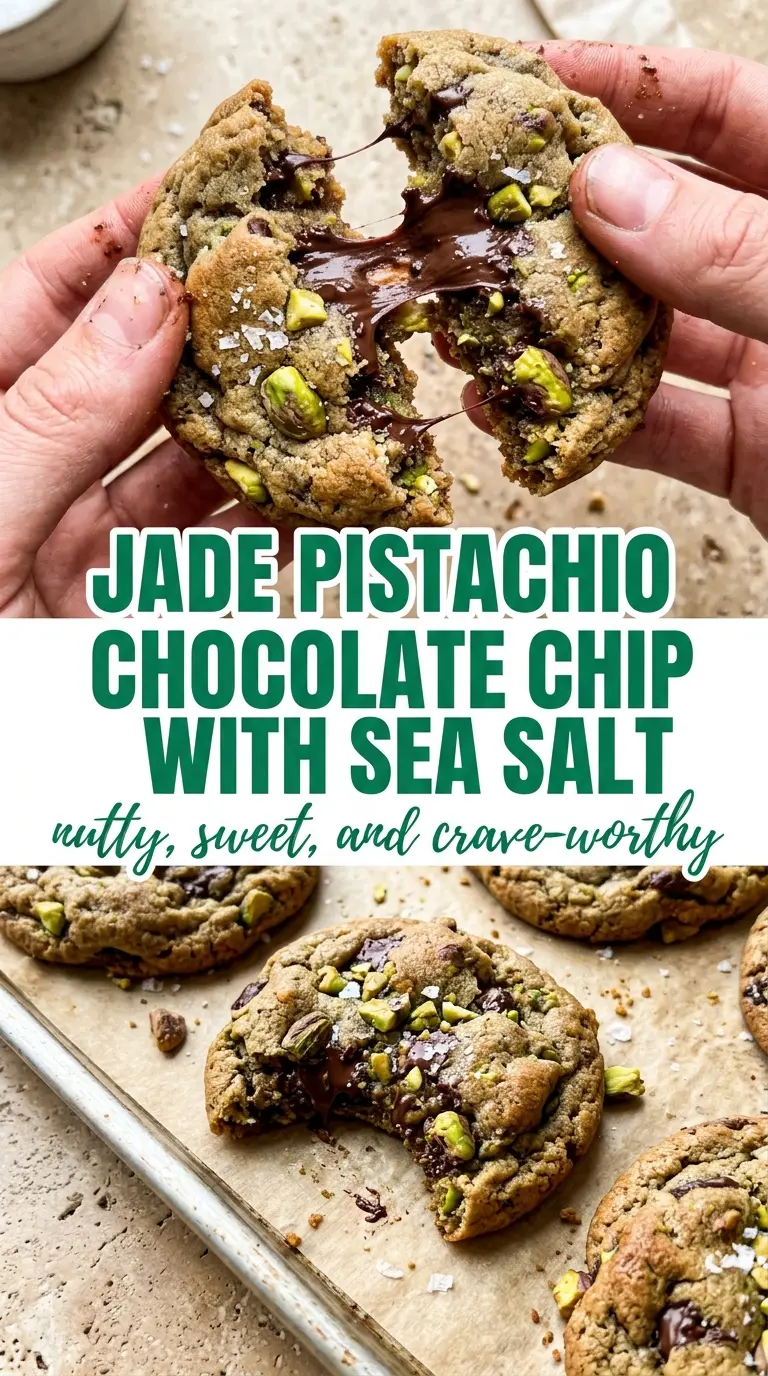
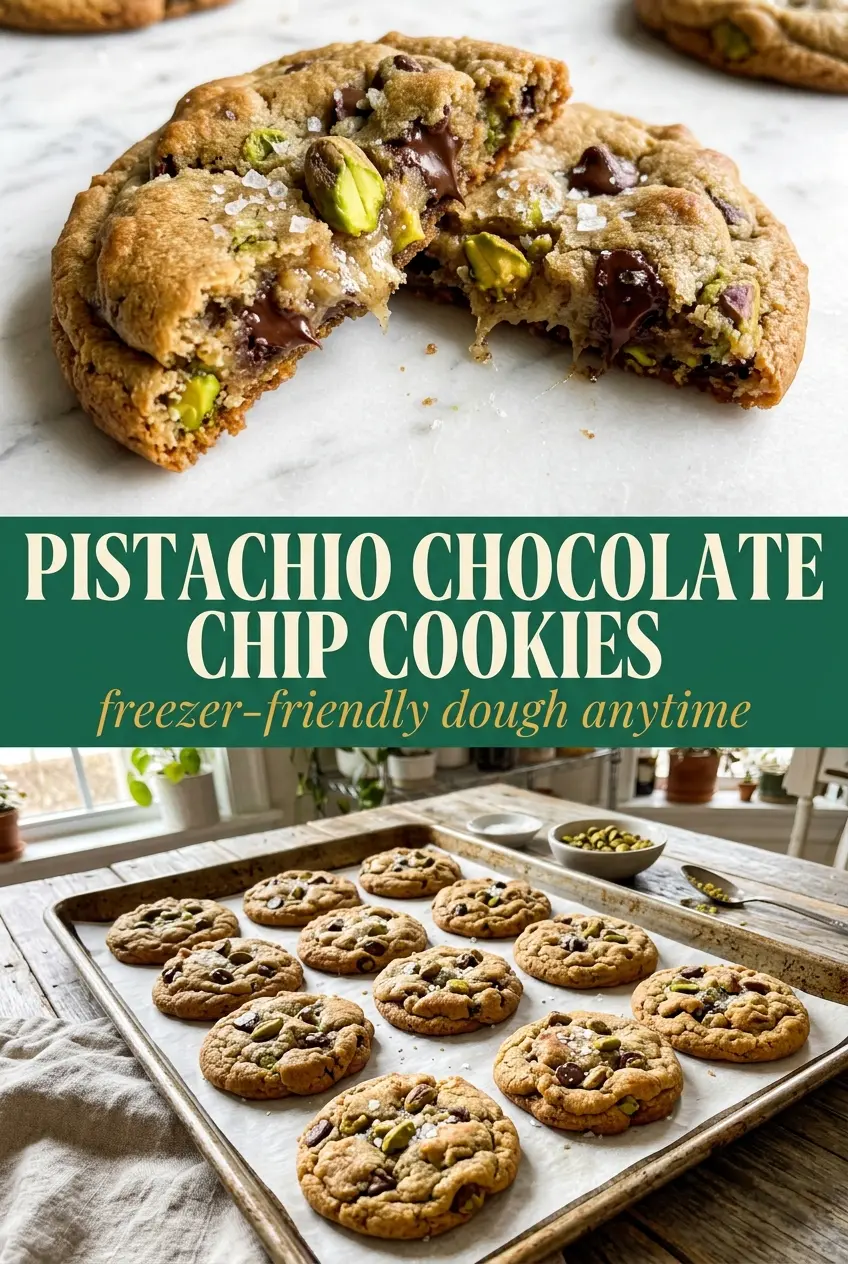
Thick, chewy salted pistachio chocolate chip cookies hit that sweet spot between bakery-style and homemade comfort. The edges bake up golden and set, the centers stay soft, and every bite gives you a little crunch from the pistachios with pools of melted chocolate running through the dough. The flaky salt on top keeps the sweetness in check and makes the nutty flavor taste deeper, not louder.
What makes these work is the balance in the dough. Brown sugar keeps the cookies tender and chewy, while the granulated sugar helps the edges crisp instead of turning them cakey. Chopped pistachios bring a toasty, almost buttery richness, and if you lightly toast them first, they taste even more pronounced once they’re baked into the cookies. The dough also holds up well in the freezer, which means you can bake a few at a time instead of committing to a full tray.
Below, I’ve included the small details that matter most here: how to keep the cookies thick, why the salt goes on before baking, and the easiest way to stash dough for later without losing that fresh-baked texture.
The cookies baked up thick and chewy, and the pistachios stayed crunchy instead of getting lost in the dough. I loved the salty finish with the melty chocolate — my husband grabbed two before they even cooled completely.
Love the thick, chewy texture and that salty pistachio finish? Save these Salted Pistachio Chocolate Chip Cookies for your next baking day.
The Trick to Keeping These Cookies Thick Instead of Spreading
The biggest problem with nut-studded chocolate chip cookies is spread. Once the butter is too warm or the dough is overmixed, the cookies flatten before the centers have a chance to set. Here, the dough is built to hold onto enough structure that you get a soft middle and browned edges without a thin, lacey cookie.
Brown sugar does a lot of the heavy lifting because it brings moisture and chew. The flour amount also matters: if you pack it too heavily, the cookies get dry; if you skimp, they spread too much. Mix the flour in just until the last streaks disappear, then stop. Overworking the dough tightens it up and can make the finished cookies tough instead of tender.
The flaky sea salt is not decoration. It wakes up the chocolate and keeps the pistachios from tasting one-note. Add it before baking so it sticks to the surface and melts just enough to season the whole bite.
What Each Ingredient Is Doing in This Dough
- Butter — Softened butter creams with the sugars to trap air, which gives the cookies a lighter texture and helps them bake up thick instead of dense. If the butter is greasy or melted, the dough will spread more in the oven.
- Brown sugar — This is what gives the cookies that chewy center and a deeper caramel note. Dark brown sugar works too, but the cookies will taste a little richer and bake up slightly softer.
- Granulated sugar — This keeps the edges from going all-soft and helps the cookies set with a little bite. You need it here for texture, not just sweetness.
- Pistachios — Chopped pistachios bring crunch and a buttery, nutty flavor that stands out against the chocolate. Lightly toast them first if you want a deeper, more fragrant result; use raw if that’s what you have.
- Chocolate chips — Standard chips work fine, but chopped chocolate gives you bigger pools of melted chocolate and a more bakery-style look. Either way, use enough chocolate that every bite has a mix of nut and sweet.
- Flaky sea salt — This finishes the cookies with a sharp little pop of salt on the surface. Table salt won’t give you the same texture or the same clean hit, so use flaky salt if you can.
Building the Dough Without Losing the Chewy Center
Cream the butter and sugars until the mixture looks pale
Start by beating the softened butter with both sugars until the mixture turns lighter in color and looks fluffy, not greasy. That step isn’t just about blending; it’s what gives the cookies their lift and helps the centers stay soft. If the butter is too warm, the mixture will look shiny and loose, and the cookies will spread faster in the oven.
Add the eggs and vanilla before the flour goes in
Beat in the eggs one at a time, then add the vanilla. The batter should look smooth and a little glossy at this stage. If the mixture looks curdled, keep mixing for a few seconds longer before moving on. Once the flour hits the bowl, you want to mix less, not more, so everything stays tender.
Fold in the pistachios and chocolate just until distributed
Stir in the flour and baking soda until there are only a few dry streaks left, then fold in the pistachios and chocolate chips. Stop as soon as everything is evenly scattered through the dough. Overmixing here makes the cookies tighter and less chewy, and it can also break up the pistachios into dust instead of leaving you with good crunchy pieces.
Bake until the edges set and the centers still look a little soft
Scoop the dough onto a baking sheet, sprinkle with flaky salt, and bake at 350°F for 11 to 13 minutes. Pull them when the edges are golden and the centers still look slightly underdone. They finish setting on the hot pan, and that carryover heat is what keeps them soft instead of dry. Let them sit on the tray for 5 minutes before moving them so they don’t fall apart.
How to Make These Cookies Fit Your Kitchen
Toast the pistachios for a deeper nutty flavor
Spread the pistachios on a dry baking sheet and toast them for a few minutes until they smell fragrant. That extra step brings out a warmer, richer flavor and keeps the nuts from tasting flat once they’re baked into the dough. Watch them closely; pistachios can go from toasted to bitter quickly.
Use chopped dark chocolate for a less sweet cookie
Swap some or all of the chips for chopped dark chocolate if you want a cookie that leans more grown-up and less sweet. The pieces melt into uneven puddles, which gives you better texture and more chocolate in each bite. This works especially well if your pistachios are salted.
Make them gluten-free with a 1:1 baking blend
A good cup-for-cup gluten-free flour blend can work here without much fuss. The cookies may spread a touch less and taste a little more tender, but the pistachios and chocolate still carry the flavor. Use a blend that includes xanthan gum if possible so the dough holds together cleanly.
Freeze the dough for bake-on-demand cookies
Scoop the dough into balls, freeze them on a tray, then move them to a freezer bag once solid. Bake straight from frozen and add a minute or two to the baking time. This gives you the same chewy center and crisp edge without thawing a full batch.
Storage and Reheating
- Refrigerator: Store baked cookies in an airtight container for up to 5 days. They’ll soften a little as they sit, but the flavor stays good.
- Freezer: Freeze baked cookies for up to 2 months, or freeze the scooped dough balls for fresh baking later. Wrap well so the pistachios don’t pick up freezer odors.
- Reheating: Warm baked cookies in a 300°F oven for 4 to 5 minutes or microwave one cookie for 8 to 10 seconds. Don’t overheat them or the chocolate turns greasy and the centers dry out.
Answers to the Questions Worth Asking
Salted Pistachio Chocolate Chip Cookies
Ingredients
Equipment
Method
- Preheat the oven to 350°F and line a sheet pan with parchment if desired, setting it aside for scooping.
- Cream the butter, brown sugar, and granulated sugar until fluffy, then beat in the eggs and vanilla extract until smooth.
- Mix in the flour and baking soda until just combined, stopping as soon as no dry streaks remain.
- Fold in the chopped pistachios and chocolate chips, distributing them evenly through the dough.
- Scoop dough onto the baking sheet and sprinkle each portion with flaky sea salt.
- Bake at 350°F for 11–13 minutes until the edges are golden while the centers still look slightly set.
- Cool on the tray for 5 minutes before transferring the cookies to a rack or serving plate.