
Ground chicken and Thai basil make a fast, fragrant stir-fry that hits the table with crisp edges, a glossy savory sauce, and that unmistakable basil finish that stays bright instead of muddy. The chicken cooks quickly enough to stay tender, while the garlic, chilies, soy sauce, fish sauce, and brown sugar build a sauce that clings without turning heavy. It’s the kind of meal that tastes like you worked harder than you did, which is exactly why it earns a repeat spot.
The key is heat and timing. A hot wok gives the chicken a little color before it starts steaming, and the basil goes in off the heat so it wilts just enough without losing its perfume. Fish sauce does more than add salt; it gives the dish depth that soy sauce alone can’t manage, and a little brown sugar rounds out the chili heat without making the stir-fry taste sweet.
Below, you’ll find the small details that keep the basil vivid, the chicken juicy, and the sauce balanced. If you’ve ever ended up with a watery stir-fry or limp herbs, this version will help you dodge both.
The basil stayed bright and the sauce clung to the chicken instead of pooling in the pan. I had it over rice and my husband went back for seconds before I even sat down.
Love this Thai basil chicken? Save it to Pinterest for a fast stir-fry with juicy chicken, garlic-chili heat, and vibrant basil.
The Secret to Keeping Thai Basil Bright Instead of Soggy
Most stir-fries go wrong in the last 30 seconds. The pan is off the heat too late, the herbs sit in the wok too long, and what should smell fresh turns dull and overcooked. Thai basil is different from Italian basil in that it holds a little more spice and anise-like aroma, but it still bruises and wilts fast. If you treat it like another vegetable, you lose the part that makes the dish memorable.
The other trap is crowding the pan. Ground chicken needs room to brown, not steam. If the skillet is overloaded or the heat is too low, the meat releases liquid and the sauce turns thin before it ever gets a chance to cling. High heat, a quick cook, and the basil added at the very end are what keep this tasting like a proper stir-fry instead of chicken in a salty sauce.
What Each Ingredient Is Actually Doing in This Dish
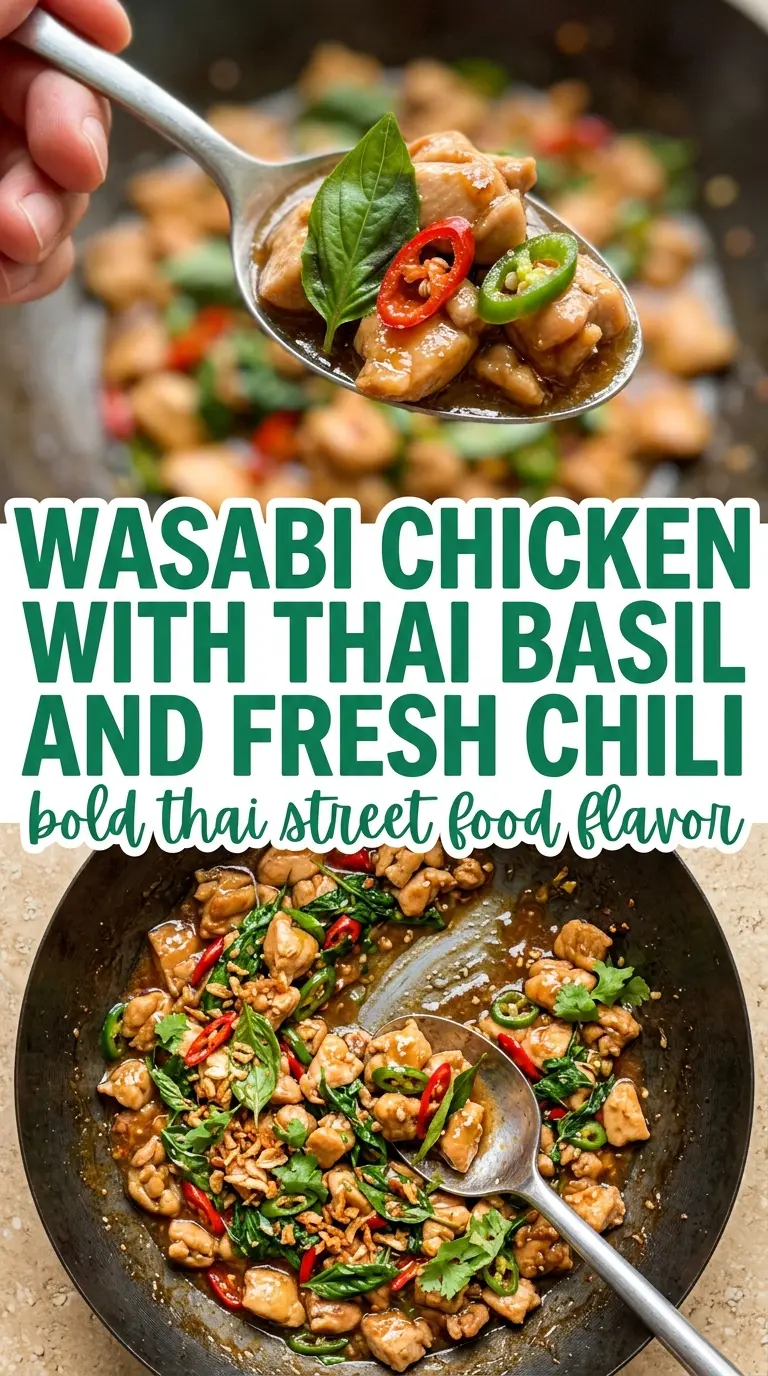
- Ground chicken — Choose 93% lean if you want enough fat for flavor without a greasy pan. If you use extra-lean chicken, the stir-fry can taste a little dry, so keep the cooking time tight and don’t let it sit in the heat after it’s browned.
- Thai basil — This is the ingredient that gives the dish its signature finish. Sweet basil can work in a pinch, but it won’t bring the same peppery-anise note; add it just off the heat so the leaves wilt from residual heat instead of collapsing in the pan.
- Fish sauce — Don’t skip it if you want the deep savory edge that makes Thai basil chicken taste layered instead of flat. If you need a substitution, use soy sauce plus a tiny splash of lime juice, but expect a cleaner, less rounded result.
- Brown sugar — This doesn’t make the dish sweet. It smooths the heat from the chilies and helps the sauce glaze the chicken. Honey can stand in, but use a little less because it reads sweeter and looser than brown sugar.
- Red chilies — Fresh chilies give a sharper, brighter heat than dried flakes. If yours are very hot, slice out some of the seeds; if you want less bite, use just one chili and let the garlic carry more of the flavor.
How to Build the Stir-Fry So the Sauce Clings and the Basil Stays Fresh
Wake Up the Garlic and Chilies First
Heat the oil until it shimmers, then add the garlic and sliced chilies and stir them for about 30 seconds. You want fragrance, not color; if the garlic starts to brown, it will taste bitter and take over the dish. This first burst in hot oil sets the whole flavor base, so don’t let it sit untouched in the pan.
Brown the Chicken Before You Sauce It
Add the ground chicken and break it up right away so it hits the hot surface instead of clumping into one big mass. Let it cook until the pieces lose their raw pink color and pick up a few golden spots, about 5 to 6 minutes. If liquid pools at the bottom, keep cooking over high heat until it evaporates; watery chicken means the heat dropped too low or the pan was crowded.
Finish the Sauce Without Overcooking the Basil
Stir in the soy sauce, fish sauce, and brown sugar, then toss everything quickly so the chicken gets coated. Pull the pan off the heat before adding the Thai basil leaves. They should wilt from the residual heat in seconds and stay vivid green, not turn dark and floppy. Serve right away, because this dish is at its best the moment the basil hits the hot chicken.
What to Change When You Need a Different Version
Make It Gluten-Free Without Losing the Savory Edge
Use tamari or a certified gluten-free soy sauce in place of regular soy sauce. Fish sauce is often gluten-free, but labels vary, so check the bottle if that matters for your kitchen. The texture and finish stay the same; only the flavor gets a little cleaner depending on the brand you use.
Make It Dairy-Free and Keep It Bright
This dish is naturally dairy-free, so there’s nothing to remove. What matters is keeping the basil and chili flavors clean, which means avoiding butter or creamy additions that would blur the stir-fry’s sharp edges. Serve it with rice or noodles and let the sauce stay light.
Use Ground Turkey or Chicken Thigh Meat
Ground turkey works well if you want a leaner option, though it can taste a little drier, so don’t overcook it. Ground chicken thigh meat gives you a juicier result and a little more richness in the pan. Either swap keeps the same timing and method.
Stretch It for a Bigger Dinner
Add a second cup of Thai basil and serve it over jasmine rice to make the meal feel fuller without changing the core recipe. If you double the chicken, use a wider pan or cook in two batches so the meat browns instead of steaming. The flavor stays balanced, and the basil still comes through.
Storage and Reheating
- Refrigerator: Store leftovers in an airtight container for up to 3 days. The basil will darken a bit, and the sauce may loosen as it sits.
- Freezer: It freezes, but the basil loses its fresh character and the texture turns softer after thawing. Freeze the cooked chicken mixture without the basil if you want the best result, then add fresh basil after reheating.
- Reheating: Reheat gently in a skillet over medium-low heat with a splash of water if needed. High heat dries the chicken out and can make the sauce look greasy instead of glossy.
Questions I Get Asked About This Recipe
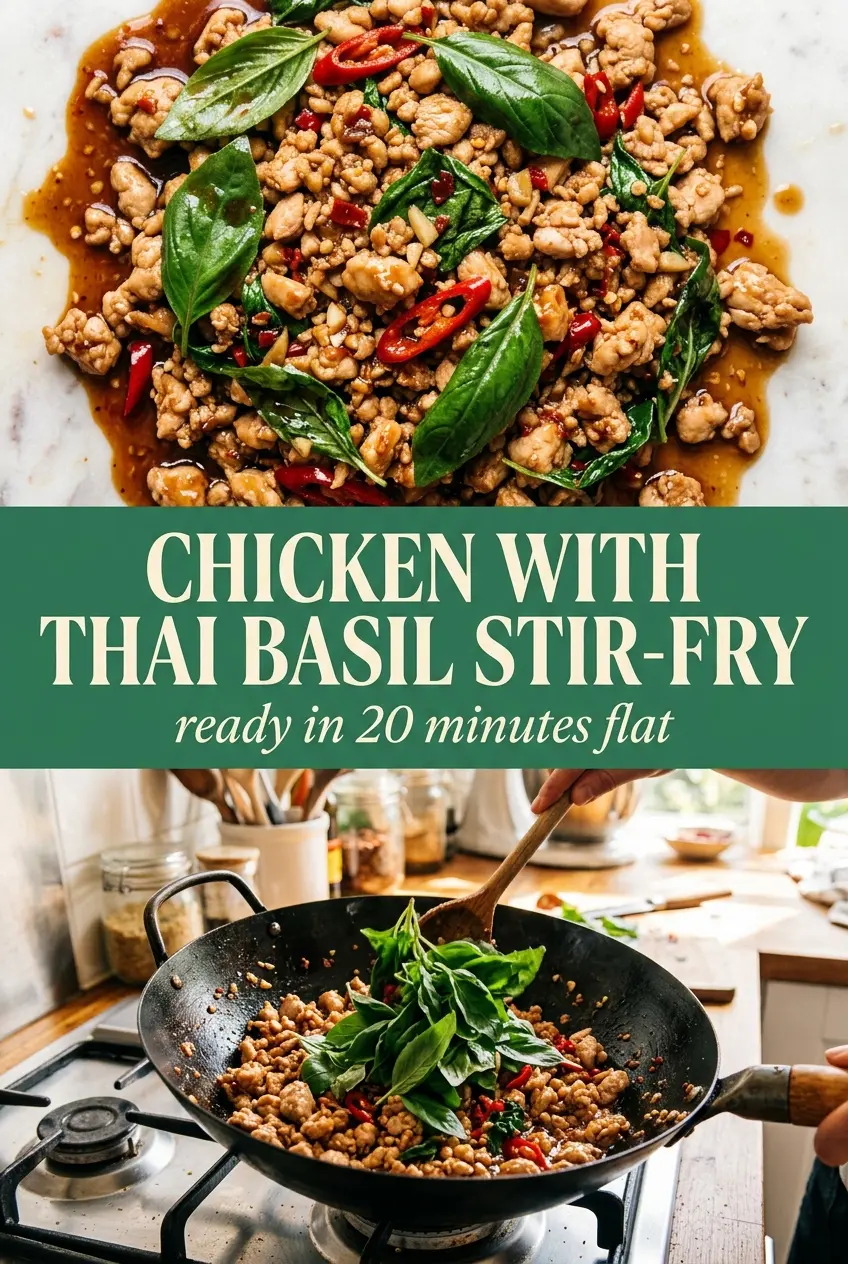
Chicken With Thai Basil
Ingredients
Equipment
Method
- Heat the vegetable oil in a wok over high heat until shimmering, indicating it’s hot enough for quick cooking.
- Add the garlic and red chilies and stir-fry for 30 seconds until fragrant, using fast, constant movement so they don’t burn.
- Add the ground chicken and break it up, then cook until browned, about 5–6 minutes, stirring often for even coloring.
- Stir in the soy sauce, fish sauce, and brown sugar and cook just until glossy and combined, about 30–60 seconds.
- Remove from the heat and toss in the Thai basil leaves until wilted, keeping the heat off to preserve their fresh, vivid aroma.
- Serve immediately while the chicken is hot and the basil is just wilted.