
Warm, creamy salmon over seasoned sushi rice hits the table with the kind of comfort that keeps this dish in regular rotation. The rice stays tangy and slightly chewy under a rich salmon layer, and the nori, sesame, and green onion on top give every bite that sushi-roll finish without any rolling at all.
What makes this version work is the balance between baked salmon and a creamy binder that holds together without turning heavy. The rice gets tossed with rice vinegar while it’s still warm so the seasoning clings evenly, and the salmon bakes first so it flakes cleanly before it’s mixed with cream cheese, mayonnaise, and sriracha. That two-bake method keeps the texture layered instead of muddy.
Below, I’ll walk through the timing that keeps the rice from drying out, the one substitution that works well if you don’t have salmon, and the best way to serve it so the top stays fresh and crisp.
The rice stayed tender, the salmon flaked perfectly, and the spicy mayo layer wasn’t greasy at all. I baked it right before dinner and the whole pan disappeared faster than I expected.
This spicy salmon sushi bake is the kind of make-ahead dinner that turns flaky salmon, creamy rice, and crunchy nori into one pan worth saving.
The Trick to Keeping Sushi Rice Distinct Under a Creamy Salmon Layer
The biggest mistake with sushi bakes is letting the bottom turn dense and gluey. That happens when the rice gets packed too tightly or the topping goes on while everything is still piping hot and steamy. Spread the rice in a thin, even layer and press it down just enough to level it. You want structure, not compression.
The second problem is a topping that leaks oil or water. Baked salmon mixed with cream cheese and mayonnaise should look plush and spoonable, not soupy. If the mixture seems loose, it usually needs a few more minutes for the salmon to cool before mixing, which gives the cream cheese a chance to hold everything together.
What Each Ingredient Is Doing in This Sushi Bake
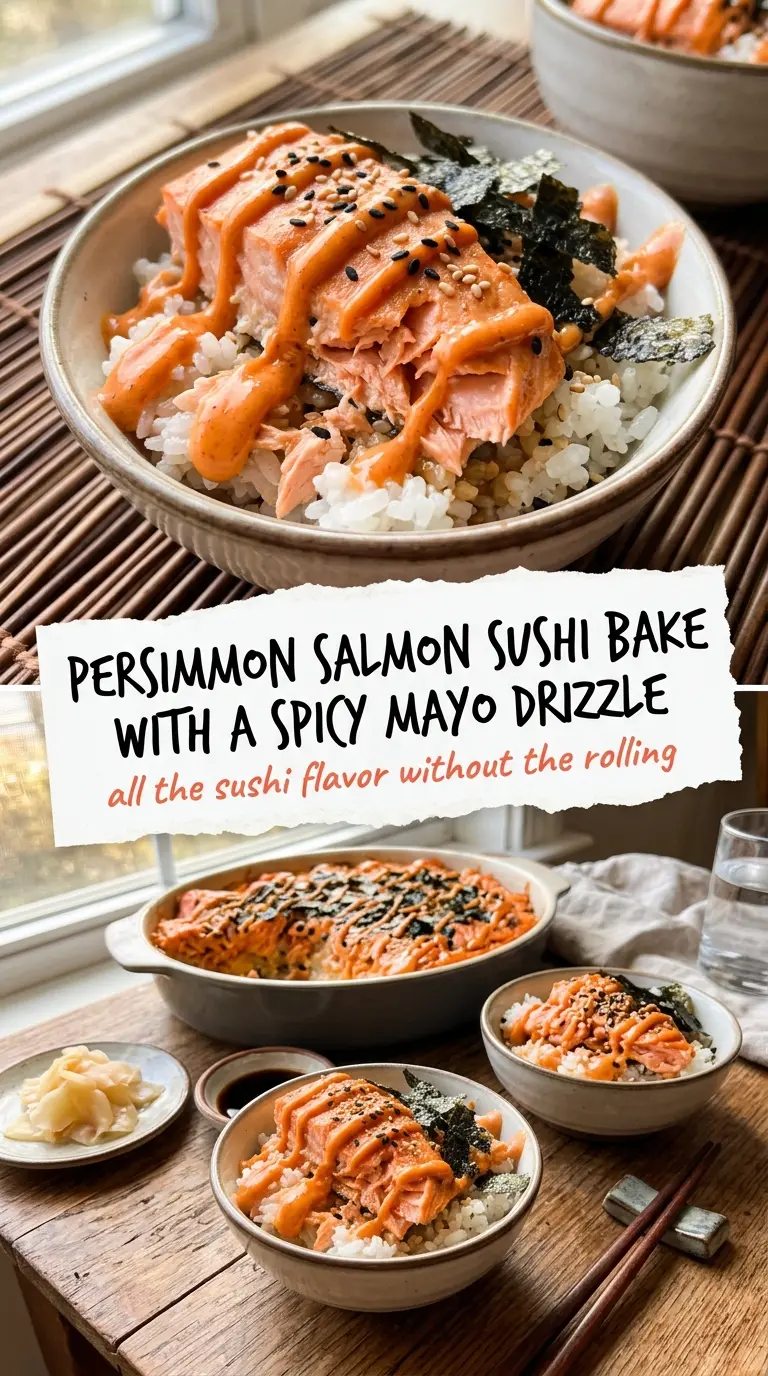
- Sushi rice — Short-grain rice gives you that sticky, tender base that holds together when scooped. Long-grain rice won’t give the same texture, so if you need a swap, use another short-grain or medium-grain rice instead.
- Rice vinegar — This is what gives the rice its sushi-style brightness. Plain vinegar tastes harsher, so if that’s all you have, use a little less and add a pinch of sugar to soften the edge.
- Salmon fillet — Fresh salmon is worth it here because it flakes into soft, juicy pieces that blend into the creamy topping. If you use frozen salmon, thaw it fully and pat it dry before baking so the filling doesn’t turn watery.
- Cream cheese and mayonnaise — These give the topping its rich, spreadable texture. Cream cheese alone can feel stiff once baked, while mayo alone can go a little oily, so together they keep the layer smooth and stable.
- Sriracha and soy sauce — Sriracha brings heat and soy sauce adds salt and depth. If you want less spice, cut the sriracha back and add a touch more mayo instead of skipping it entirely.
- Nori, sesame seeds, and green onions — These finish the dish with the flavors and crunch that make it taste like sushi rather than casserole. Add them after baking so they stay aromatic and crisp instead of going limp.
Building the Layers So the Bake Stays Creamy, Not Soggy
Seasoning the Rice
Toss the warm rice with rice vinegar while it’s still just hot enough to absorb the seasoning. The grains should glisten, not soak, and they should look separate even though they stick together when pressed. If the rice is wet before it goes into the dish, the bottom layer turns mushy after baking.
Baking and Flaking the Salmon
Bake the salmon until it flakes easily with a fork and the center just turns opaque. Overbaking dries it out before it ever gets mixed into the topping. Once it cools for a minute or two, break it into medium flakes so the filling has texture instead of turning into a paste.
Mixing the Topping
Stir the salmon with softened cream cheese, mayonnaise, and sriracha until it looks creamy and evenly coated. If the cream cheese is cold, you’ll get little white lumps that never fully disappear. Let it soften on the counter first, or the texture of the final bake will be uneven.
Final Bake and Garnish
Spread the salmon mixture over the rice and bake just until the top is heated through and lightly bubbling at the edges. You are not trying to brown it deeply. The finish is the sprinkle of nori, sesame seeds, and green onions after it comes out of the oven, when they stay fresh and sharp instead of toasty and faded.
How to Adapt This for a Different Pantry or a Bigger Crowd
Dairy-Free Version
Swap the cream cheese for a dairy-free cream cheese and use a vegan mayo. The topping will still be creamy, though it may be a little softer after baking, so let the salmon cool before mixing it in. That cooling time keeps the filling from getting loose.
Less Spicy, More Kid-Friendly
Cut the sriracha in half and add a little extra mayonnaise. You’ll still get the savory richness, but the heat fades into the background instead of taking over the whole pan.
Swap the Salmon
Cooked tuna or imitation crab both work if salmon isn’t what you have. Tuna gives a firmer, more savory result, while crab leans sweeter and closer to a California-roll style bake. Keep the same creamy binder either way.
Storage and Reheating
- Refrigerator: Store leftovers covered for up to 3 days. The rice softens a little, but the flavor holds up well.
- Freezer: The assembled bake freezes better before the final garnish. Wrap it tightly and freeze for up to 1 month; the rice may lose a little texture, but it still reheats well.
- Reheating: Warm covered in a 325°F oven until hot through. Microwaving works in a pinch, but it can make the rice rubbery and the topping greasy if you overdo it.
Answers to the Questions Worth Asking
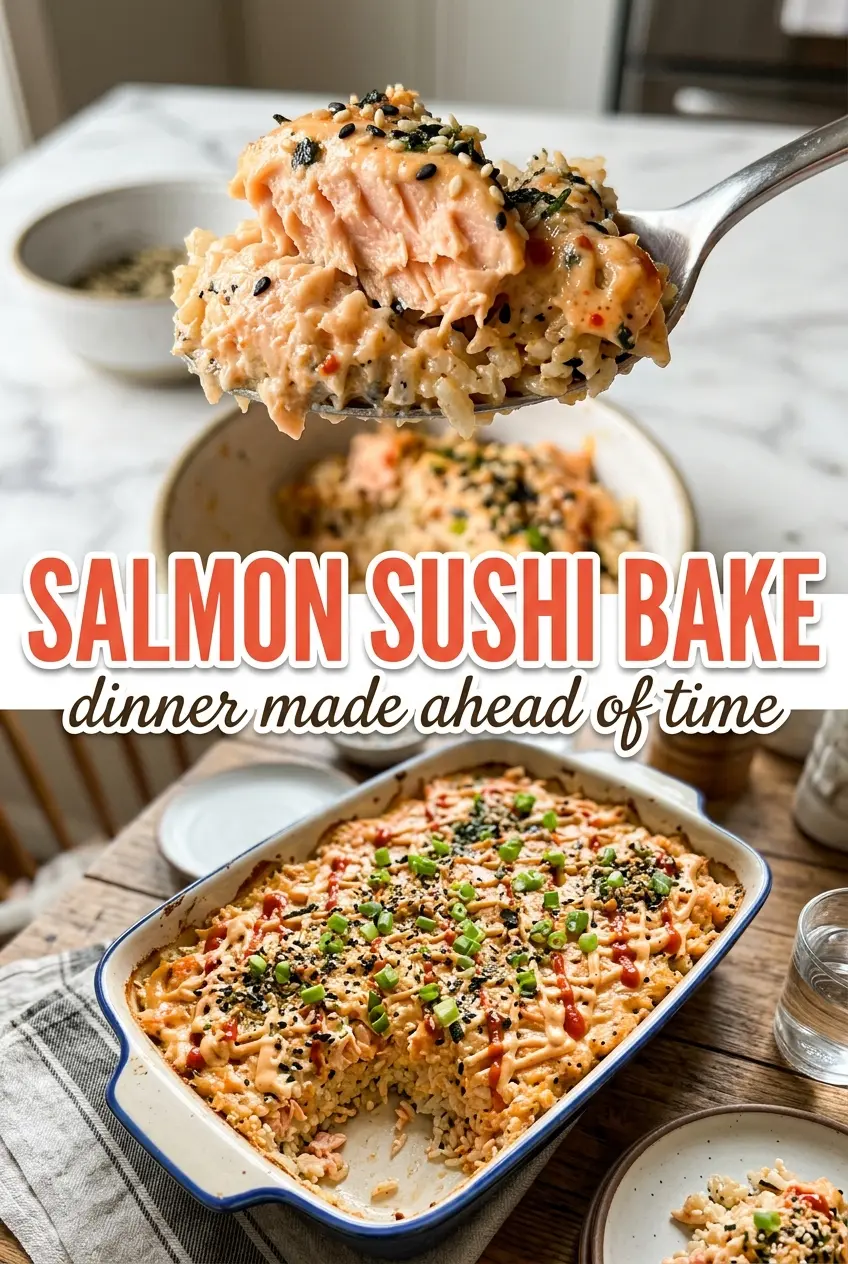
Salmon Sushi Bake
Ingredients
Equipment
Method
- Toss cooked sushi rice with rice vinegar, then spread into a greased baking dish and press into an even layer (visual cue: rice looks glossy and evenly distributed). Bake at 400°F for 12-15 minutes, until the edges look set.
- Season salmon with soy sauce, then bake at 400°F for 12-15 minutes until flaky (visual cue: salmon flakes easily with a fork). Flake the baked salmon and mix with cream cheese, mayonnaise, and sriracha until smooth and evenly orange-red.
- Spread the salmon mixture evenly over the sushi rice, covering it in an even layer (visual cue: no rice peaks showing). Bake at 375°F for 15 minutes until warmed through and lightly bubbling.
- Top with crumbled nori, sesame seeds, and sliced green onions before serving (visual cue: green onion tops stay bright).