
Soft, buttery sheet cake with a tender crumb and a bright lemon glaze is exactly the kind of bake that disappears fast from a potluck table. The lavender stays in the background where it belongs, giving the cake a light floral edge instead of tasting perfumy, while the lemon keeps every bite sharp and clean. What you end up with is a square that feels special without asking for any fancy technique.
The key here is keeping the lavender restrained and grinding it finely so it blends into the batter instead of showing up as little woody bits. Lemon zest does most of the heavy lifting for flavor, and the juice in the glaze gives the finish that tart snap a plain powdered sugar topping can’t match. Buttermilk keeps the crumb soft and gives the cake enough tang to stand up to the glaze.
Below, I’ve laid out the part that matters most when baking with lavender, plus the ingredient swap that helps if you don’t keep buttermilk around. The process is straightforward, but a few small details keep the cake tender instead of dry and make the glaze set with a nice sheen.
The lavender came through as a soft background note, and the lemon glaze set up perfectly without soaking into the cake. I also loved that the crumb stayed moist after a day on the counter.
Save this lavender and lemon sheet cake for the kind of bake that needs soft crumb, bright citrus glaze, and a floral note that stays elegant.
The Reason Lavender Stays Gentle Instead of Tasting Like Soap
Lavender is the ingredient people most often get wrong in a cake like this. Too much, or too coarse, and it takes over the whole pan with a sharp, medicinal note. Ground finely and used sparingly, it reads as floral and calming instead of perfumed. That’s the difference between a cake people remember fondly and one they only take one bite of.
Fresh lemon zest does a lot of work here because it brings aroma without adding extra liquid. The oils from the zest carry through the batter and keep the cake from tasting flat once it cools. If you skip the zest and lean only on lemon juice, the flavor comes off thinner and the crumb can start to taste more one-note than bright.
What Each Ingredient Is Actually Doing in This Dish
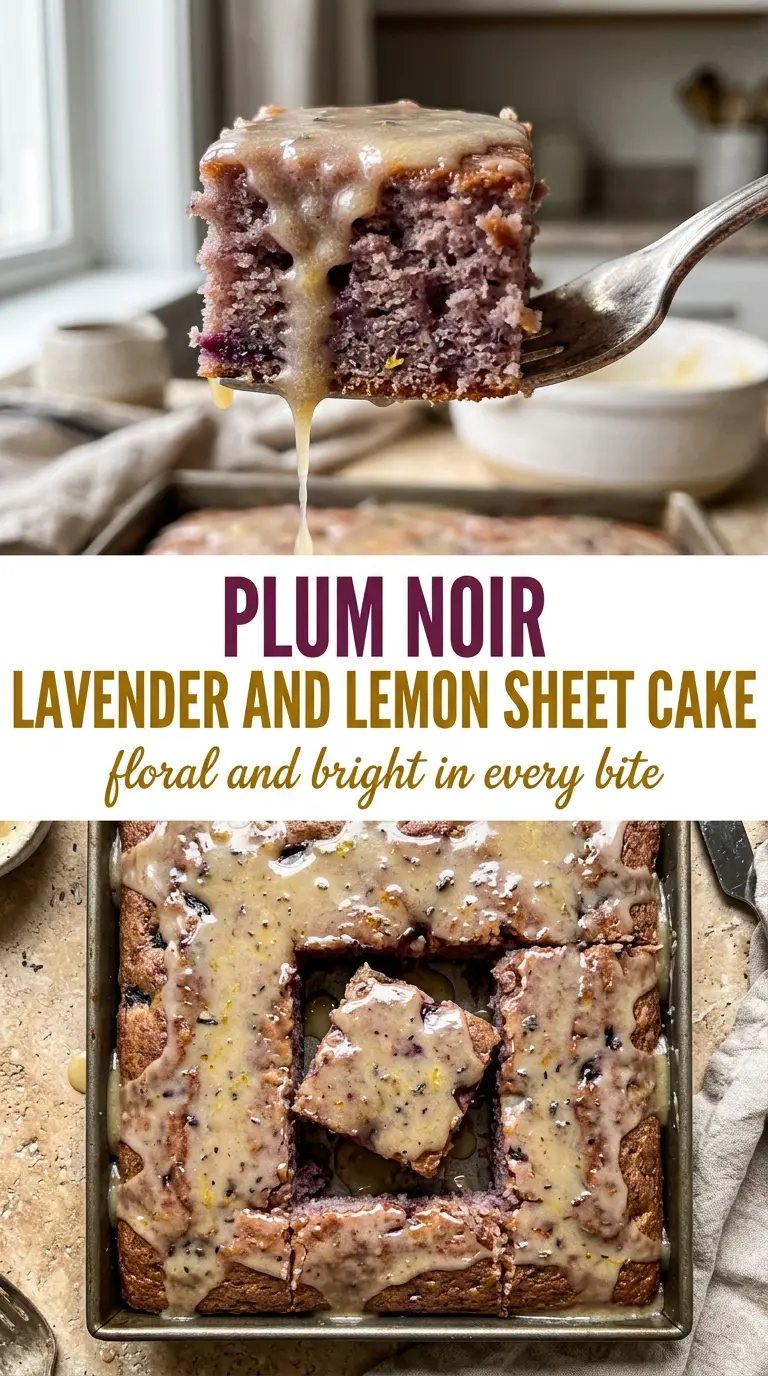
- Culinary lavender — Use dried culinary lavender, not potpourri-grade lavender from a craft shelf. Grinding it helps distribute the flavor evenly, and a little goes a long way.
- Lemon zest — This is where the bold citrus flavor comes from. Use a microplane on fresh lemons and avoid the bitter white pith underneath.
- Buttermilk — It keeps the crumb soft and gives the cake a slight tang. If you don’t have it, stir 1 tablespoon lemon juice into 1 cup whole milk and let it sit for 10 minutes.
- Butter — Softened butter traps air when you cream it with the sugar, which helps the cake rise with a light, even texture. Cold butter won’t whip properly, and melted butter changes the structure too much.
Building the Batter Without Losing the Tender Crumb
Start with a Proper Creaming
Beat the softened butter and sugar until the mixture turns pale and fluffy. That step is doing more than mixing; it’s building the air that gives the cake its lift. If the butter is too cold, the sugar won’t cut into it, and you’ll end up with a dense batter that bakes up heavy. Scrape the bowl once or twice so no streaks of butter stay trapped at the bottom.
Add the Eggs One at a Time
Beat in the eggs after the butter and sugar are light and airy. Adding them gradually helps the batter stay smooth instead of looking curdled, which can happen if the eggs are cold or all go in at once. If the mixture looks a little broken at this stage, keep going and don’t panic; it usually comes back together once the flour is added.
Alternate the Dry Ingredients and Buttermilk
Add the flour and buttermilk in alternating additions, ending with flour. That keeps the batter from tightening up and helps the cake bake with a fine, even crumb. Stir only until the flour disappears, because overmixing after the flour goes in will make the cake tough. Fold in the ground lavender and lemon zest at the same time so the flavor spreads evenly without overworking the batter.
Bake Until the Center Springs Back
Spread the batter into a greased sheet pan and bake at 350°F until the top is golden and a toothpick comes out clean. The cake should spring back lightly when you touch the center, but it shouldn’t pull away dry from the sides before it’s done. If the top browns too fast, the oven is running hot; tent loosely with foil and keep baking until the middle sets.
How to Adapt This Cake for Different Kitchens and Different Crowds
Dairy-Free Version
Swap the butter for a plant-based baking stick and use the milk-with-lemon substitute in place of buttermilk. You’ll lose a little of the dairy richness, but the cake still bakes tender and the lemon glaze keeps the flavor bright.
If You Want a Stronger Lemon Finish
Add an extra teaspoon of lemon zest to the batter and a little more lemon juice to the glaze. That gives the cake a sharper citrus edge, which works well if you’re serving it after a rich meal.
How to Make It Ahead
Bake the cake a day ahead, cool it completely, and glaze it the day you plan to serve it. That keeps the top from getting sticky and lets the lemon glaze sit cleanly on the cake instead of sinking in.
Storage and Reheating
- Refrigerator: Store covered for up to 4 days. The crumb stays soft, but the glaze will soak in a little more by day two.
- Freezer: Freeze unglaized squares wrapped tightly for up to 2 months. Thaw at room temperature, then glaze after thawing for the best texture.
- Reheating: If you want a slice warm, use short 10-second bursts in the microwave. Long heating dries out the crumb and can make the glaze sticky instead of smooth.
Answers to the Questions Worth Asking
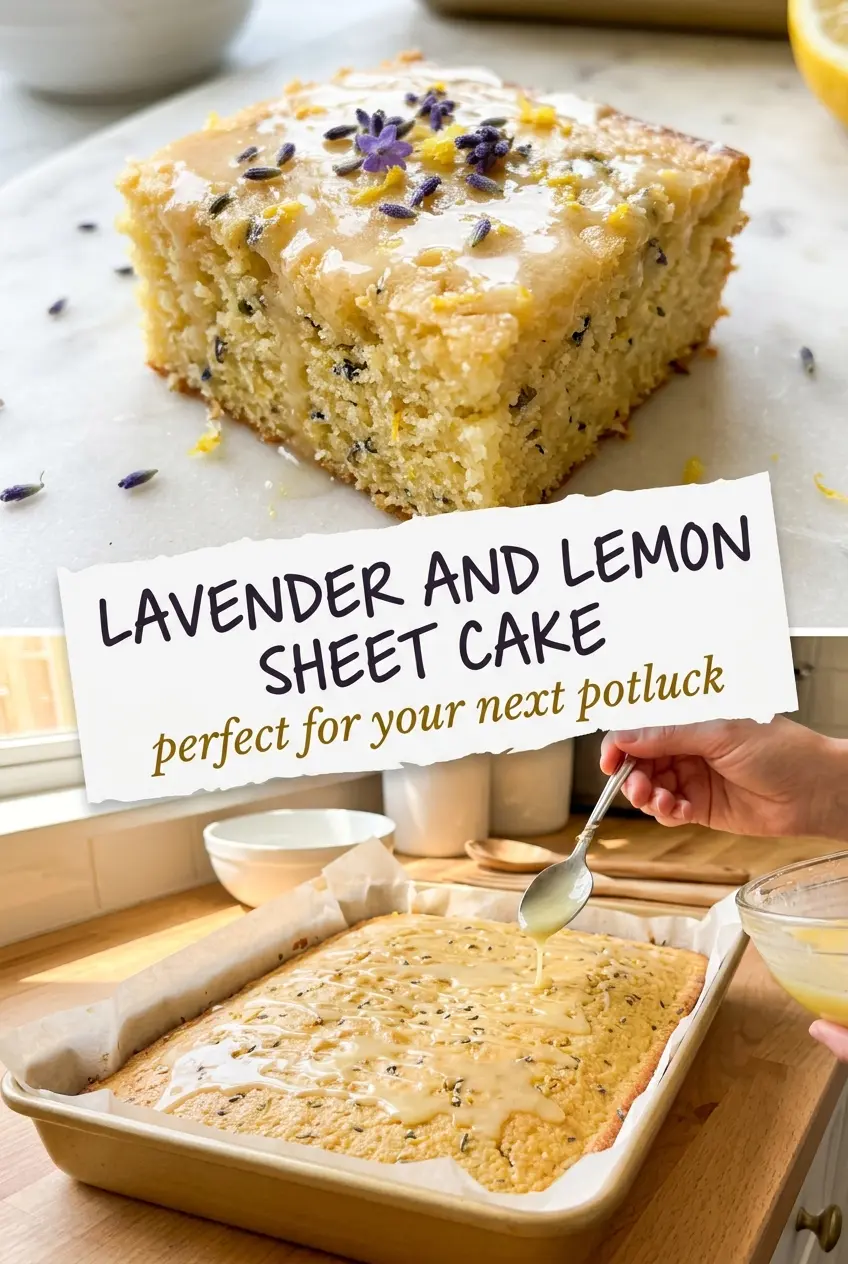
Lavender And Lemon Sheet Cake
Ingredients
Equipment
Method
- Preheat the oven to 350°F and grease a sheet pan so the cake releases cleanly after baking.
- Cream the butter and granulated sugar until fluffy, then beat in the eggs until the mixture looks smooth and light.
- Alternate adding the flour mixture (with baking powder) and the buttermilk into the batter until just combined, keeping the crumb tender.
- Stir in the ground dried culinary lavender and the lemon zest until evenly distributed through the batter.
- Pour the batter into the sheet pan and bake for 25–30 minutes at 350°F, until the top is golden and a toothpick comes out clean.
- Whisk the powdered sugar and lemon juice into a smooth glaze, then drizzle over the cooled cake.