
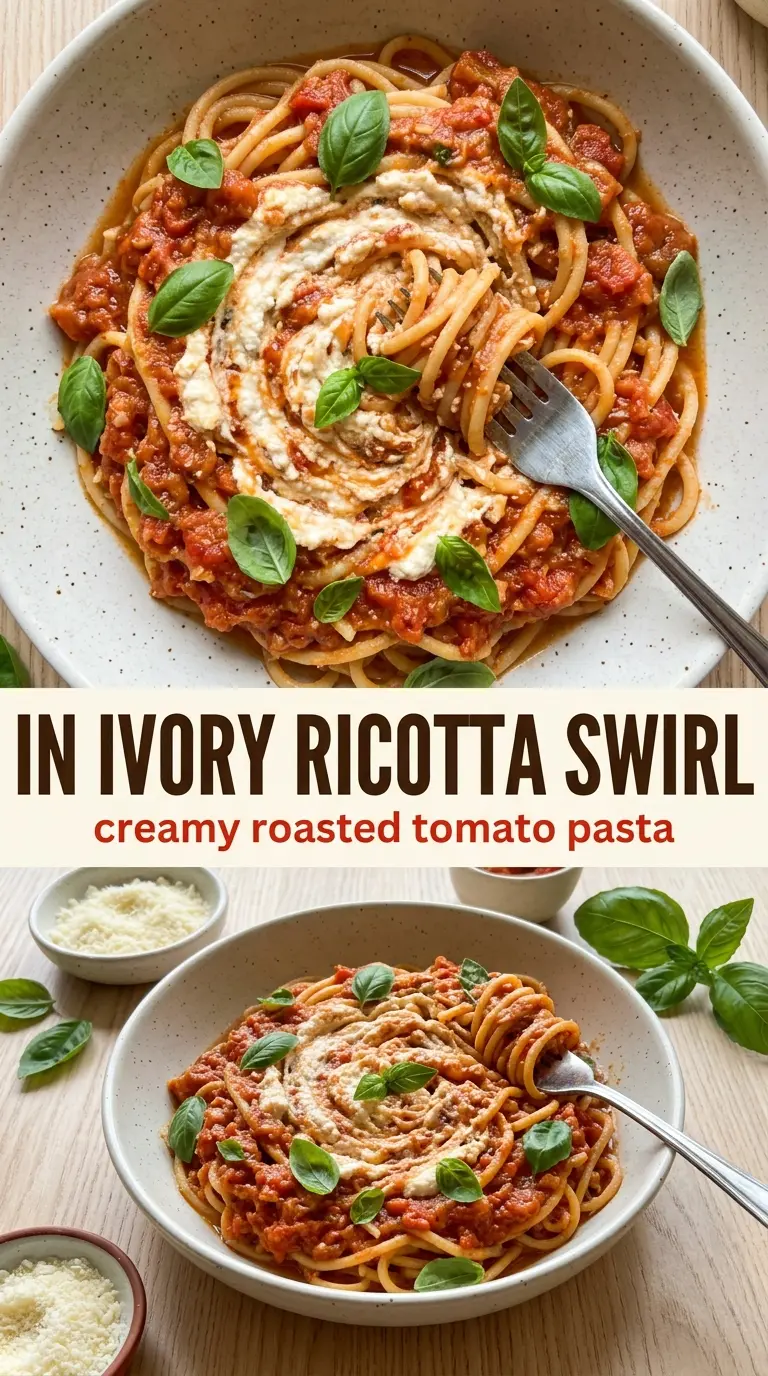
Roasted tomato and garlic ricotta pasta lands in that sweet spot between comfort food and a sauce that tastes like it took more work than it did. The tomatoes collapse into something jammy and concentrated, the garlic turns soft and mellow instead of sharp, and the ricotta gives the whole bowl a creamy finish without heaviness. It clings to the pasta in a way that makes every bite taste rounded and complete.
The key is roasting the tomatoes long enough to deepen their flavor and soften their edges, then blending them while they’re still warm with ricotta and Parmesan. Warm sauce blends smoother than cold sauce, and a little reserved pasta water at the end gives you that silky, restaurant-style coating instead of a thick paste. If your tomatoes are especially juicy, don’t panic — that extra liquid helps the sauce loosen into something luxurious once it hits the hot pasta.
Below, you’ll find the small details that matter most, from how to tell when the garlic is ready to how to adjust the sauce if your tomatoes run more watery than expected. There’s also a simple way to make the dish richer, plus a few practical variations for different diets and pantry situations.
The roasted garlic turned sweet and the ricotta made the sauce creamy without feeling heavy. I added a splash of pasta water at the end and it coated the noodles perfectly.
Save this roasted tomato and garlic ricotta pasta for the night you want a creamy sauce that starts with blistered tomatoes and ends with a silky finish.
The Reason This Sauce Stays Creamy Instead of Breaking
Ricotta can go grainy if it gets slammed with heat or mixed into a sauce that’s boiling hard. This recipe avoids that by blending the roasted tomatoes and garlic first, then adding the ricotta and Parmesan off the heat. That gives you a smooth base before the dairy goes in, which matters more here than in a tomato-only pasta.
The other thing that keeps this sauce together is the pasta water. Starchy water helps the sauce emulsify, so it coats the noodles instead of sliding off them. Add it gradually, because the goal is a glossy sauce that hugs the pasta, not a thin soup at the bottom of the bowl.
What Each Ingredient Is Actually Doing in This Dish
- Ripe tomatoes — These need to be ripe enough to soften and concentrate in the oven. If tomatoes are bland, roasting helps, but it can’t create sweetness out of nowhere, so use the best-looking tomatoes you can find.
- Whole head of garlic — Roasting the garlic whole turns it sweet, spreadable, and mild. Cutting it up first would make it scorch before the tomatoes finish, so keep the head intact and squeeze the cloves out after roasting.
- Ricotta — This is what gives the sauce its creaminess without needing heavy cream. Whole-milk ricotta gives the richest texture, but part-skim works if that’s what you have; the sauce will just be a little less plush.
- Parmesan — Parmesan adds salt, depth, and a little backbone so the sauce doesn’t taste soft and flat. Grate it finely so it melts in smoothly; pre-shredded cheese won’t blend as cleanly.
- Olive oil — It helps the tomatoes roast instead of dry out and carries the garlic flavor through the dish. Use a decent olive oil here, since it becomes part of the sauce.
Building the Roasted Sauce and Finishing the Pasta
Roasting Until the Tomatoes Collapse
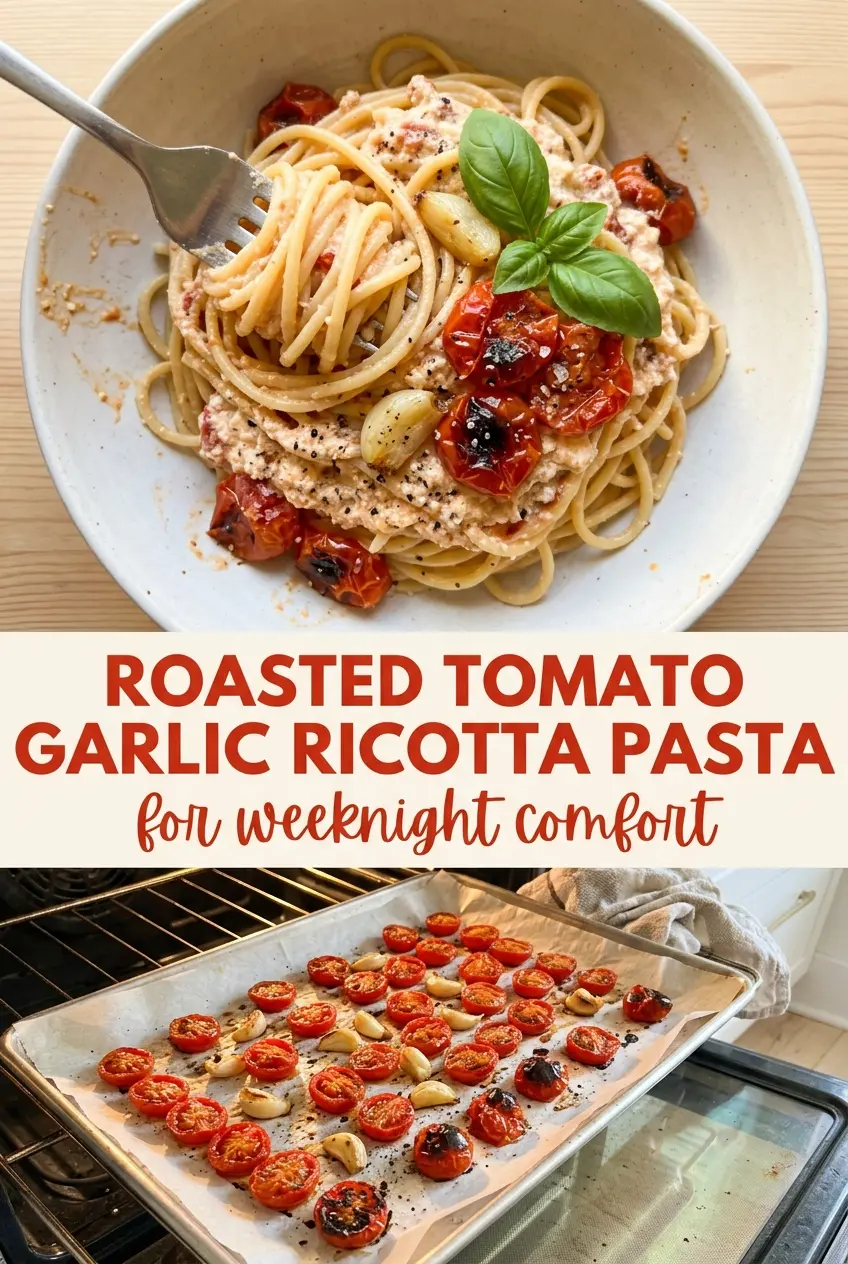
Spread the halved tomatoes cut-side up with the garlic head in the baking dish so they can roast without steaming in their own liquid. After 20 minutes, the tomatoes should look blistered and softened around the edges, and the garlic should be tender enough to squeeze. Covering for the last stretch traps steam just long enough to finish the interior without drying out the top.
Blending the Base While It’s Still Warm
Squeeze the garlic cloves from their skins and blend them with the tomatoes, ricotta, and Parmesan until the sauce looks smooth and pale orange. If it’s lumpy, the ricotta was too cold or the tomatoes weren’t blended long enough. A blender gives the silkiest result, but an immersion blender works too if you keep it moving and scrape down the sides.
Tossing the Pasta Without Letting the Sauce Tighten
Add the cooked pasta to a large pan or bowl, then toss with the sauce while it’s still warm. If the mixture looks thick or sticky, add reserved pasta water a spoonful at a time until the noodles are glossy and evenly coated. The sauce should cling, not puddle; once it sits for a minute, it will settle into the pasta even more.
How to Adapt This for Different Kitchens and Diets
Make It Gluten-Free Without Changing the Sauce
Swap in your favorite gluten-free pasta and cook it just to al dente. Gluten-free noodles can break down fast if they sit in sauce too long, so toss and serve right away for the best texture.
Make It Lighter With Less Cheese
Use 3/4 cup ricotta and 1/3 cup Parmesan if you want a looser, less rich sauce. The result is still creamy, but the tomato flavor comes forward more sharply and the finish feels a little brighter.
Add Heat Without Drowning the Tomatoes
Stir a pinch of red pepper flakes into the tomatoes before roasting, not after. That lets the heat bloom in the oil and gives the whole sauce a warmer, deeper finish instead of a raw spicy edge.
Storage and Reheating
- Refrigerator: Keep leftovers in an airtight container for up to 4 days. The sauce thickens as it chills, so it may look denser the next day.
- Freezer: The sauce freezes, but the ricotta can become a little grainy after thawing. If you freeze it, freeze the sauce separately from the pasta and whisk well after reheating.
- Reheating: Warm it gently in a skillet over low heat with a splash of water or milk. High heat is the fastest way to make the ricotta separate, so stir slowly until the sauce loosens and turns creamy again.
Answers to the Questions Worth Asking
Roasted Tomato and Garlic Ricotta Pasta
Ingredients
Equipment
Method
- Preheat the oven to 400°F. Aim for a fully heated oven so the tomatoes blister quickly.
- Place the halved tomatoes and whole garlic head in a baking dish, drizzle with olive oil, and season with salt and pepper. Spread tomatoes in a single layer for even roasting.
- Roast for 20 minutes, then cover with foil and roast another 10 minutes until the tomatoes blister and garlic softens. Look for browned, wrinkled tomato edges and soft garlic cloves.
- Cook the pasta according to package directions until al dente, then drain, reserving some pasta water. Keep the pasta slightly firm to hold up when tossed.
- Squeeze the roasted garlic cloves from their skins and blend with the tomatoes, ricotta, and Parmesan until smooth and creamy. Blend until no tomato chunks remain and the sauce looks glossy.
- Toss the sauce with the cooked pasta, adding reserved pasta water as needed, and garnish with fresh basil. Add pasta water gradually until the sauce coats the pasta and clings to each twirl.