
Roasted cherry tomato bruschetta with ricotta lands on the table with the kind of contrast that keeps people reaching back for another piece: crisp toast, cool creamy ricotta, and tomatoes that have gone jammy and sweet in the oven. The roasting step does more than soften the tomatoes. It pulls their juices forward, concentrates the garlic, and gives you a topping that tastes fuller and richer than fresh tomatoes ever could on their own.
The key is letting the tomatoes blister until they collapse at the edges, then spooning every last bit of that glossy pan juice over the ricotta. That liquid matters. It seasons the cheese and keeps each bite from tasting dry or disconnected. A good baguette also matters here; you want slices that toast up firm enough to hold the topping without turning leathery under the weight of the tomatoes.
Below, I’ve included the small detail that makes the biggest difference for blistering, plus a few smart ways to adapt this if you need to work with what’s in your kitchen.
The tomatoes came out jammy and sweet, and the ricotta stayed creamy instead of getting watery. I used the pan juices on top like you suggested and everyone kept asking why it tasted so much better than regular bruschetta.
Save this roasted cherry tomato bruschetta with ricotta for the kind of appetizer that turns blistered tomatoes and creamy toast into a real crowd-pleaser.
The Tomatoes Need Real Heat, Not Just Time in the Oven
Bruschetta can fall flat when the tomatoes soften before they brown. You end up with a watery topping that tastes cooked, but not concentrated. The trick here is giving the cherry tomatoes enough direct heat to blister their skins and collapse their centers while keeping the juices in the pan instead of losing them to a crowded sheet.
That’s why the lowest oven rack matters. It puts the tomatoes closer to the heating element, which helps them caramelize before they simply steam. If the pan is packed too tightly, the tomatoes will sit in their own liquid and turn soft without that jammy edge, so spread them out in a single layer with a little breathing room.
What Each Ingredient Is Actually Doing in This Dish
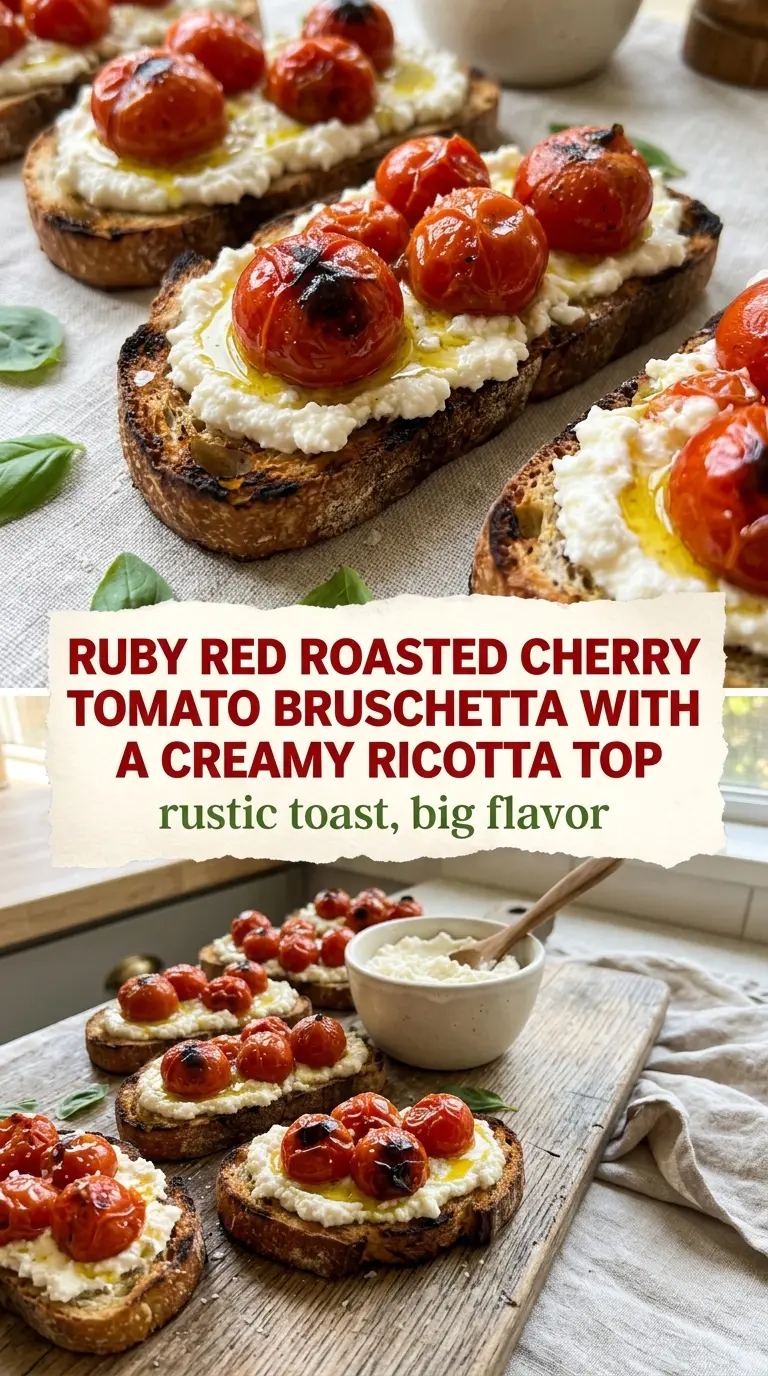
- Cherry tomatoes — Smaller tomatoes roast fast and split open in the oven, which gives you sweet flesh and a built-in sauce. Larger tomatoes can work, but they release more liquid and take longer to concentrate.
- Olive oil — This carries the heat, helps the garlic toast lightly in the pan, and gives the finished bruschetta a glossy finish. Use a decent extra-virgin oil here because it’s one of the few ingredients you’ll taste in every bite.
- Garlic — Minced garlic roasts with the tomatoes and turns mellow instead of sharp. If you want a stronger garlic bite, rub a cut clove over the toasted bread too, but don’t add extra raw garlic to the ricotta or it can overpower the dish.
- Ricotta — This is the creamy base that balances the acidity of the tomatoes. Whole-milk ricotta gives the best texture; part-skim works, but it can taste drier and a little grainy unless you stir it well before spreading.
- Basil — Add it at the end so it stays fragrant and bright. If basil isn’t in good shape, use chopped parsley with a tiny pinch of lemon zest to keep the topping from feeling heavy.
Build the Toast, Then Let the Tomatoes Do the Rest
Roasting the Tomatoes Until They Collapse
Toss the tomatoes with two tablespoons of olive oil and the minced garlic, then spread them out on a baking sheet. Roast at 400°F until the skins blister and the tomatoes start to slump, usually 20 to 25 minutes. If they’re still holding their shape tightly, they need more time; the goal is a soft, wrinkled tomato with juices pooling around it. Use the lowest oven rack if you want deeper caramelization instead of just soft tomatoes.
Toasting the Bread for a Strong Base
Slices of baguette need to be crisp enough to support the topping without going soggy the minute the tomatoes hit them. Toast them until the edges feel firm and the surface has some color, not just dryness. If the bread is pale, it will absorb the ricotta and tomato juice too quickly and lose its structure. A slightly thicker slice holds up better than a paper-thin cut.
Spreading the Ricotta While the Toast Is Warm
Spread the ricotta generously over each slice while the toast is still warm, but not scorching hot. Warm bread softens the cheese just enough so it settles into the surface and tastes creamy, not cold and separate. If your ricotta looks loose or wet, stir it first and drain off any excess liquid so it doesn’t slide off the toast.
Finishing With the Pan Juices and Basil
Spoon the tomatoes and every bit of their roasting liquid over the ricotta, then drizzle with the remaining olive oil. That juice is where the garlic, salt, and tomato sweetness all come together, so don’t leave it behind on the tray. Finish with torn basil and flaky salt right before serving so the herbs stay bright and the salt gives you a little crunch on top.
Three Smart Ways to Change the Flavor Without Losing the Balance
Make It Dairy-Free
Swap the ricotta for a thick dairy-free spread or almond-based ricotta-style cheese. You want something mild and creamy, not tangy and loose, because the tomatoes already bring plenty of acidity. The topping will taste a little lighter and less rich, but the tomato-basil combination still lands well.
Use Heirloom Tomatoes When Cherry Tomatoes Aren’t Available
Chop larger tomatoes into bite-size pieces and roast them a little longer so some of the moisture cooks off. They won’t get the same concentrated pop as cherry tomatoes, but you’ll still get a sweet-savory topping if the pan isn’t crowded. Drain off any extra liquid before spooning them over the ricotta.
Turn It Into a Gluten-Free Appetizer
Serve the roasted tomatoes over toasted gluten-free bread or crostini instead of baguette slices. Choose a loaf with some structure, since softer gluten-free breads can break under the weight of the ricotta and tomatoes. Toasting it well gives you the crisp edge this recipe needs.
Storage and Reheating
- Refrigerator: Store the roasted tomatoes separately in an airtight container for up to 4 days. The toast and ricotta should be assembled fresh so the bread doesn’t soften.
- Freezer: The roasted tomatoes can be frozen, but the ricotta and assembled bruschetta don’t freeze well. Freeze the tomato mixture in a small container, then thaw it in the fridge before reheating.
- Reheating: Warm the tomatoes in a skillet or in a low oven until just heated through. Don’t microwave them too long or they’ll turn watery and lose the roasted edges that make this dish work.
Answers to the Questions Worth Asking
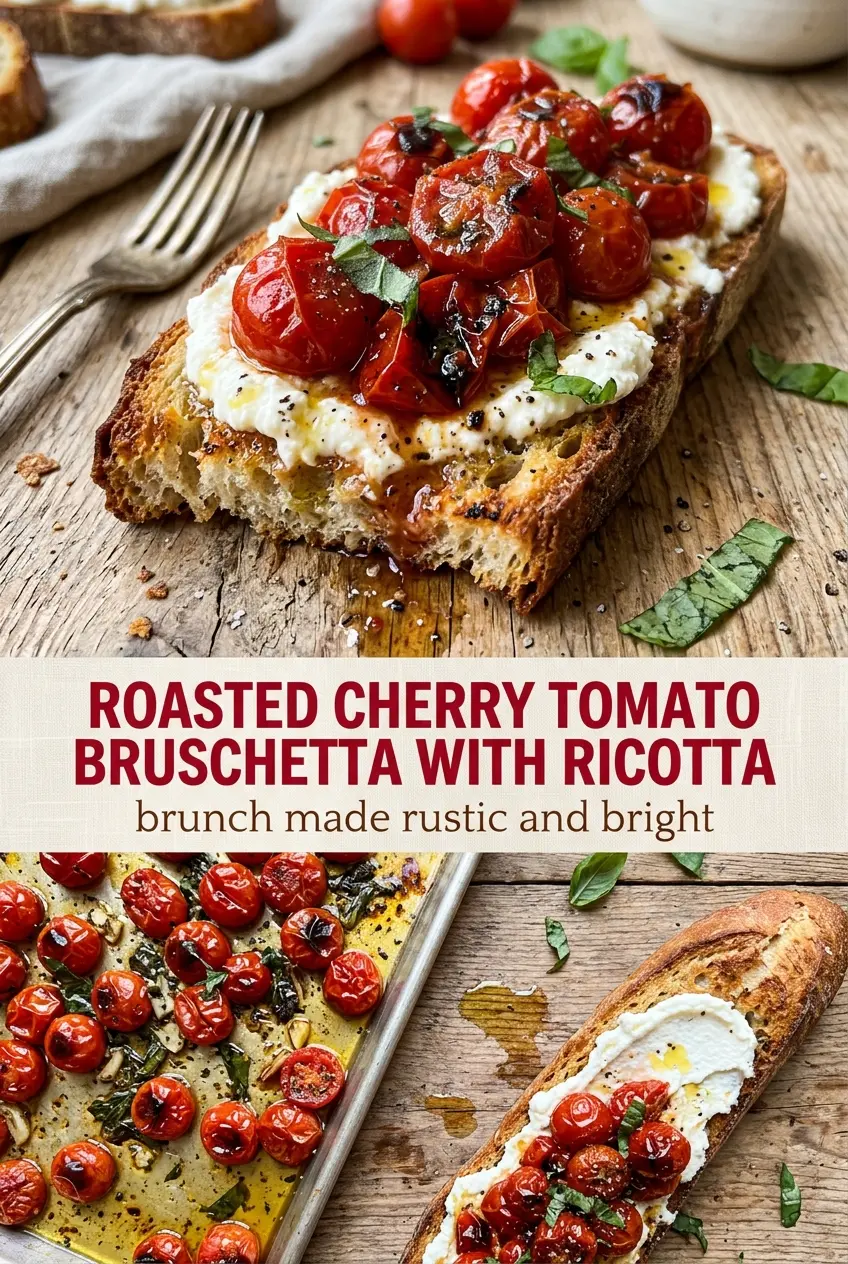
Roasted Cherry Tomato Bruschetta With Ricotta
Ingredients
Equipment
Method
- Preheat the oven to 400°F and set the oven rack to the lowest position for best blistering and caramelization.
- Toss the cherry tomatoes with 2 tablespoons olive oil and the minced garlic on a sheet pan until evenly coated.
- Roast for 20 to 25 minutes at 400°F, until the tomatoes blister and begin to collapse.
- Spread the ricotta cheese generously over each slice of toasted baguette.
- Spoon the roasted tomatoes and their juices over the ricotta.
- Drizzle with the remaining olive oil, scatter with torn basil, and finish with flaky salt to taste.