
Roasted acorn squash turns silky and sweet in the oven, and the quinoa filling gives it the kind of sturdy, nutty bite that keeps each half from feeling like a side dish. The cranberries bring little bursts of tartness, the pecans toast up for crunch, and the melted cheese on top pulls everything together into something that eats like a full meal.
What makes this version work is the balance. The quinoa cooks in broth instead of water, so it starts with a deeper savory base. The onion, garlic, and sage get cooked first, which softens their edge and keeps the filling from tasting flat. You also roast the squash cut-side down first, which traps steam and gives you tender flesh without turning the edges leathery.
Below, I’ve included the small details that matter most: how to tell when the squash is done, why the filling should be a little underseasoned before it goes into the shells, and the easiest way to turn this into a make-ahead lunch you’ll actually want to eat.
The squash came out tender but not mushy, and the pecans on top stayed crunchy even after reheating the leftovers for lunch the next day.
Save this quinoa stuffed acorn squash for a cozy meal-prep lunch with sweet cranberries, toasty pecans, and a golden cheese top.
The Reason the Squash Stays Tender Instead of Turning Watery
Acorn squash can go from perfectly soft to bland and soggy fast if it sits cut-side up the whole time. Roasting it cut-side down for the first part of the bake traps steam against the flesh and helps it cook evenly before the filling goes in. That gives you squash that yields cleanly to a fork without collapsing into a puddle.
The other place this kind of dish goes wrong is the filling. If the quinoa is too wet, the stuffing turns heavy and slides around inside the squash. Fluff it after cooking, then let the steam escape for a minute before mixing in the onion mixture, cranberries, and pecans. The filling should look a little loose in the bowl; it tightens up once it bakes with the cheese on top.
What Each Ingredient Is Actually Doing in This Dish
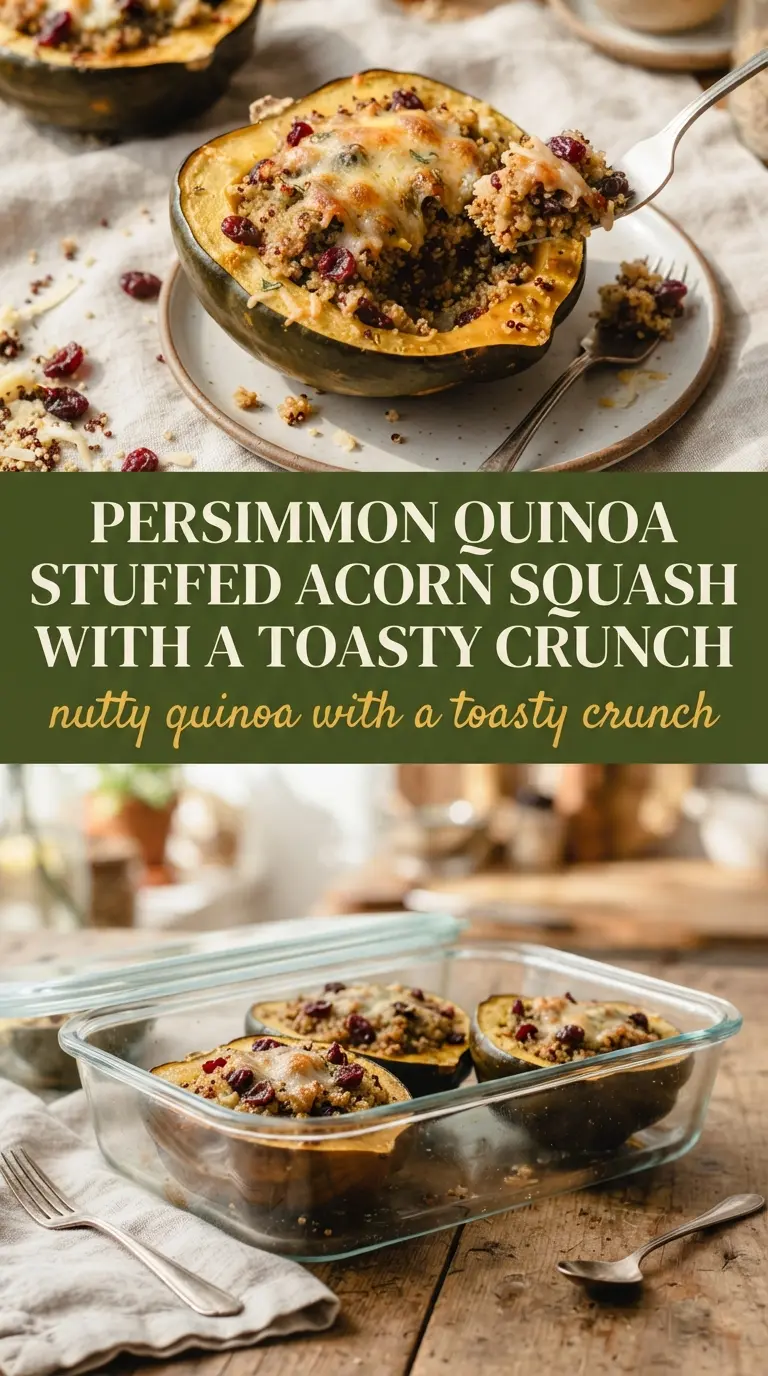
- Acorn squash — This is the edible bowl and the sweet part of the meal. Look for squash with firm skin and a heavy feel for its size. If you substitute butternut, you’ll get a sweeter, denser result and a different shape, so you’ll need to roast it in a way that matches its cut surfaces.
- Quinoa — It gives the filling structure without turning it heavy. Rinse it first so it cooks up clean-tasting instead of slightly bitter. If you use rice, the texture will be softer and less nutty, but it still works if that’s what you have.
- Vegetable broth — This seasons the quinoa from the inside out. Water works in a pinch, but the dish tastes flatter. Use a broth you like to sip, because the quinoa absorbs every bit of it.
- Dried cranberries and pecans — These are what keep each bite interesting. The cranberries add sharp sweetness, and the pecans bring crunch that survives baking. Toasting the pecans briefly in a dry pan before adding them gives even better flavor, but it’s optional if you’re short on time.
- Gruyère or cheddar — Gruyère melts with a nuttier edge, while cheddar gives you a sharper, more familiar finish. Either one is fine. Shred it yourself if you can, because pre-shredded cheese doesn’t melt as smoothly.
- Sage, onion, and garlic — This is the savory backbone. Sage belongs here because it echoes the squash without making the dish taste piney. If your sage is old and dusty, use less; stale herbs go flat fast.
Building the Filling and Roasting the Squash in the Right Order
Cook the Quinoa First
Start the quinoa in broth so it has time to absorb flavor while you handle the squash. When it’s done, the grains should look open and lightly curled, with no puddle of liquid left in the pan. If you see moisture at the bottom, keep it covered off the heat for a few minutes, then fluff it again so the filling doesn’t turn pasty later.
Roast the Squash Cut-Side Down
Brush the squash with oil and season it well, then place it cut-side down on the baking sheet. That contact with the pan helps the flesh soften evenly while the outer edges caramelize a little at the rims. If your squash is still hard near the neck after 30 minutes, give it a few more minutes before flipping it — undercooked squash is the one mistake that makes the whole dish feel unfinished.
Build the Filling While the Squash Roasts
Cook the onion until it turns soft and translucent, then add the garlic and sage just long enough to smell fragrant. Stir that mixture into the quinoa with the cranberries and half the pecans. At this stage the filling should taste a touch more seasoned than you think it needs, because the squash itself is mild and will soften the salt once everything bakes together.
Fill, Top, and Finish Until Golden
Flip the squash over and divide the filling between the halves, packing it in gently without smashing the grains. Sprinkle the cheese and the remaining pecans over the top, then bake until the cheese is melted and the nuts look toasted at the edges. If you wait for the cheese to brown heavily, the squash underneath can dry out, so pull it when the tops are golden and the filling is hot through.
Three Ways to Make This Recipe Fit Your Table
Make It Dairy-Free Without Losing the Finish
Skip the Gruyère or cheddar and top the squash with a spoonful of olive oil and extra pecans instead. You’ll lose the stretchy, browned top, but the dish still eats as a full meal because the nuts and cranberries carry the texture contrast.
Swap in Farro or Rice When You’re Out of Quinoa
Farro gives you a chewier bite and a more rustic feel, while rice makes the filling softer and less nutty. Either one works, but you’ll need to cook it according to its own timing and drain off any excess liquid before mixing it with the vegetables.
Turn It Into a Heartier Main Dish
Add cooked white beans, chickpeas, or crumbled sausage to the quinoa mixture before stuffing the squash. Beans keep it vegetarian and make the filling more substantial, while sausage brings extra salt and richness, so cut back slightly on the cheese if you go that route.
Storage and Reheating
- Refrigerator: Store in airtight containers for up to 4 days. The squash softens a little as it sits, but the flavor holds up well.
- Freezer: It freezes best without the cheese topping. Wrap tightly and freeze for up to 2 months, then thaw in the fridge before reheating.
- Reheating: Rewarm in a 350°F oven until hot in the center, about 15 to 20 minutes. The microwave works for lunch, but use medium power so the squash doesn’t turn rubbery before the filling is heated through.
Answers to the Questions Worth Asking
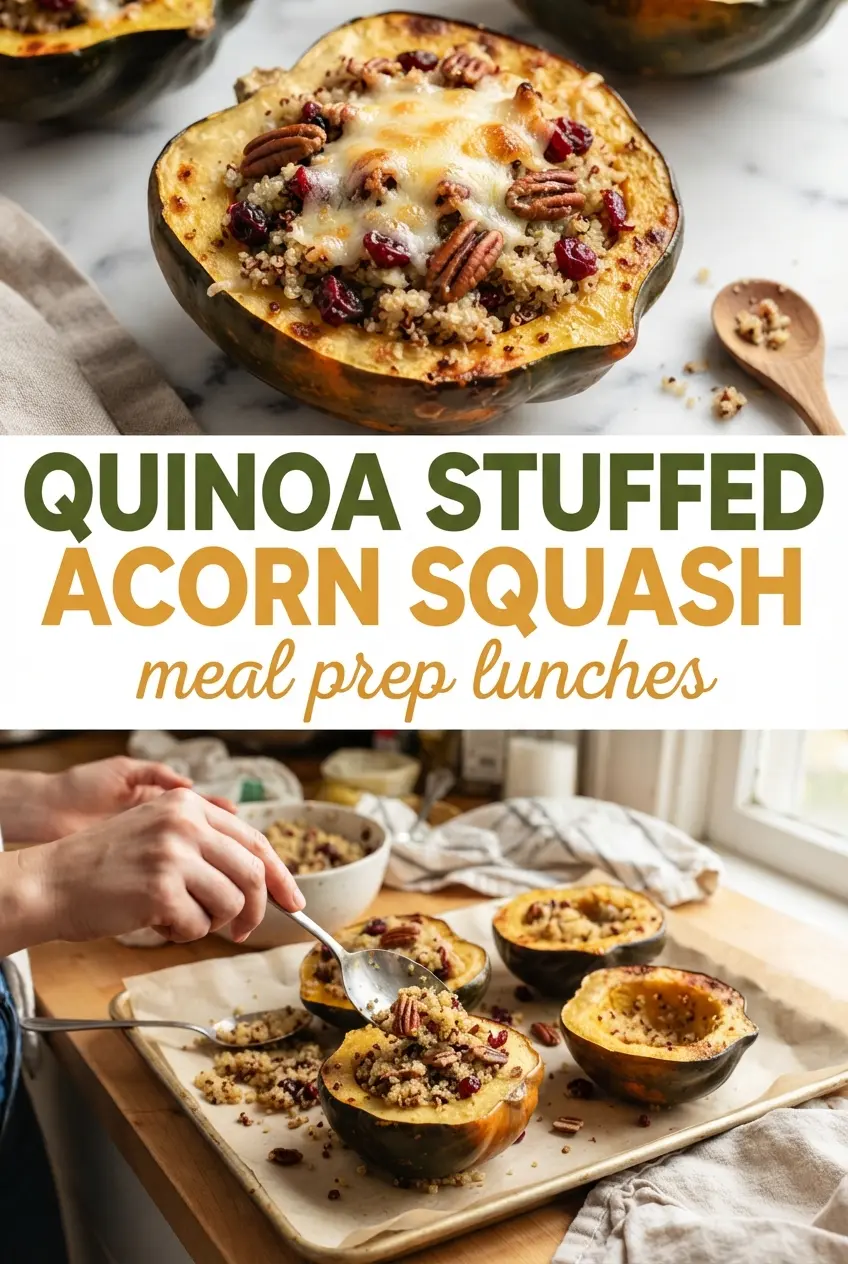
Quinoa Stuffed Acorn Squash
Ingredients
Equipment
Method
- Simmer rinsed quinoa in vegetable broth until tender, about 15 minutes, then fluff with a fork for light texture.
- Preheat the oven to 400°F, then place the acorn squash halves on a sheet pan and brush with olive oil and season with salt and pepper.
- Roast the squash cut-side down at 400°F for 30 minutes until the flesh starts to soften and turn sweet.
- In a skillet, cook diced yellow onion with a little olive oil for 5 minutes until softened.
- Add minced garlic and dried sage and stir for about 30 seconds until fragrant, then fold the mixture into the cooked quinoa.
- Stir in dried cranberries and half the chopped pecans, reserving the rest for topping.
- Flip the roasted squash so cut-side up, fill each half with the quinoa mixture, and top with shredded Gruyère or cheddar.
- Sprinkle the remaining pecans over the tops, then bake at 400°F for 12 minutes until toasty and golden.
- Garnish with fresh parsley just before serving for a fresh color contrast.