
Deep orange pumpkin bread under a buttery streusel topping is the kind of loaf that disappears a slice at a time. The crumb stays soft and moist without turning heavy, and the topping gives every cut a little crunch and a sweet, bakery-style finish. It’s the contrast that makes this version stand out: tender pumpkin bread below, crisp crumbs on top, and enough cinnamon running through both layers to make the whole kitchen smell like you meant to bake something memorable.
The batter comes together fast because pumpkin puree brings moisture on its own, so you don’t need to work the flour hard or chase a perfectly smooth mixture. The streusel is handled separately with cold butter, which matters more than people think. Warm butter melts into a paste before the loaf bakes, and you lose those nubby crumbs that give the top its texture. A light hand with the batter and a loose foil tent near the end are the two details that keep this loaf tender and the topping crisp instead of scorched.
Below, I’ll walk through the small choices that keep the crumb soft, the streusel crumbly, and the loaf evenly baked from edge to center. If you’ve ever had pumpkin bread sink, dry out, or come out gummy in the middle, this one will give you a cleaner result.
The streusel stayed crisp even the next day, and the loaf baked up super moist with no gummy center. I covered it loosely with foil near the end like you suggested, and the top browned evenly instead of burning.
Love the crisp brown sugar streusel and moist pumpkin crumb? Save this Pumpkin Streusel Bread for the next time you want a cozy loaf with a bakery-style top.
The Reason Pumpkin Bread Turns Heavy Before the Streusel Ever Matters
A lot of pumpkin breads end up dense because the batter gets stirred like cake batter. It doesn’t need that. Once the wet and dry ingredients are combined, stop as soon as you no longer see streaks of flour. Overmixing builds too much gluten, and that gives you a tight, rubbery loaf instead of the soft, tender crumb you want.
The other problem is the topping. If the butter softens too much, the streusel melts into the batter instead of staying in crumbly pieces. Cold butter holds the mixture together just long enough to bake into crisp bits on top. That’s what gives this loaf its best texture.
- Pumpkin puree — Use plain pumpkin puree, not pumpkin pie filling. Pie filling already has sugar and spices mixed in, which throws off both the texture and the balance of the loaf.
- Vegetable oil — Oil keeps the crumb moist for days. Melted butter can work, but the bread will bake up a little firmer and less plush.
- Brown sugar in the streusel — This adds a deeper caramel note and helps the topping bake into crisp clusters instead of a dry sandy layer.
- Cold butter — This is non-negotiable for the streusel. Cut it in with your fingers until the mixture looks like damp crumbs with a few pea-sized pieces left behind.
What Each Ingredient Is Doing in This Loaf
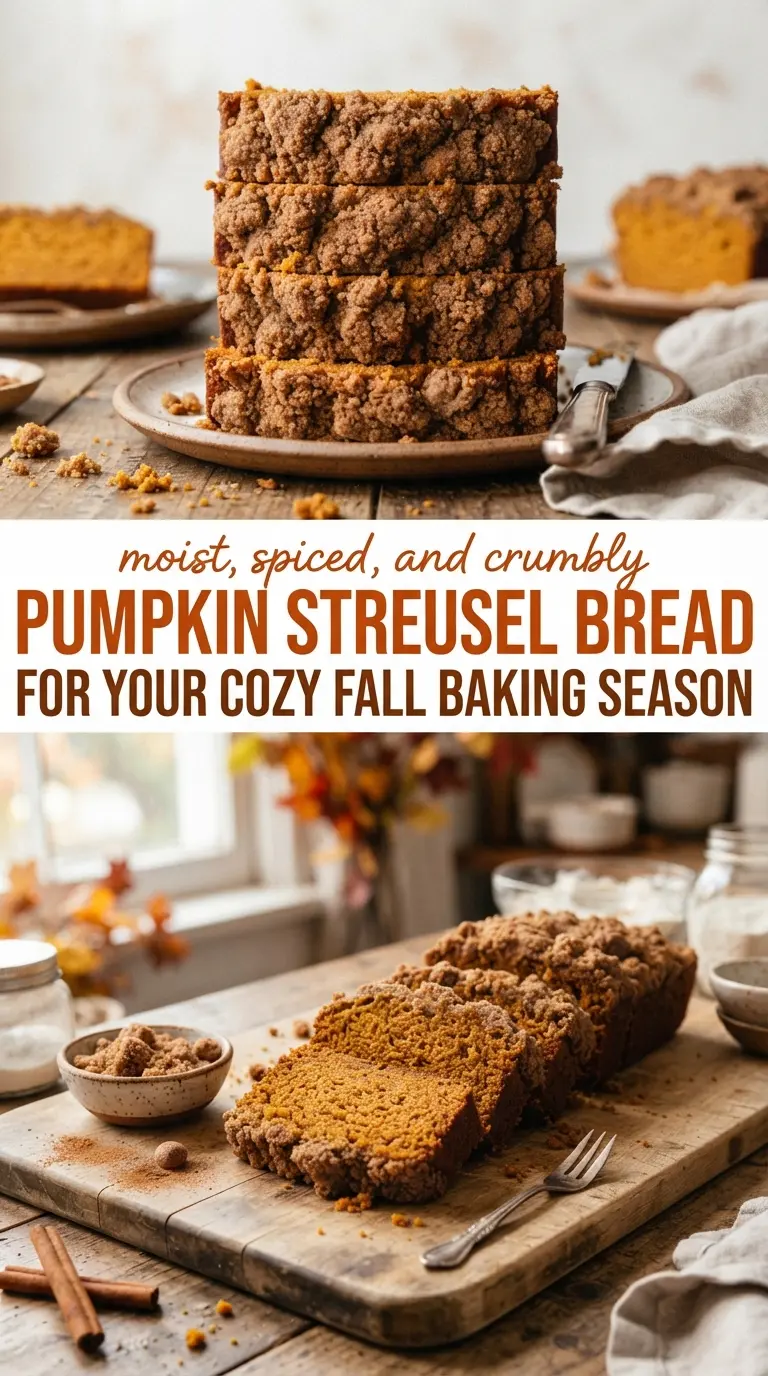
Flour gives the loaf its structure, but too much mixing after it goes in makes the bread tough. The baking soda lifts the batter and helps it rise properly with the acidity and moisture in the pumpkin. Cinnamon carries through both the bread and the streusel, so you taste warmth in every bite instead of only on the surface.
The pumpkin puree is doing more than adding flavor. It brings moisture, color, and body, which is why this loaf stays soft without needing sour cream or yogurt. The eggs help it set, and the sugar sweetens the bread while also keeping the crumb tender. For the streusel, the flour, brown sugar, and butter combine into a topping that bakes into crisp crumbs rather than sinking into the loaf.
Building the Loaf Without Losing the Streusel
Mix the dry ingredients first
Whisk the flour, baking soda, and cinnamon together so the leavening and spice are evenly distributed. If you skip this and dump everything in at once, you’ll get little pockets of soda or bland spots in the crumb. This takes less than a minute and prevents the most common uneven-bake problem in quick breads.
Combine the wet ingredients until smooth
Stir the pumpkin puree, sugar, oil, and eggs until the mixture looks glossy and even. The eggs should disappear completely, and the sugar should start to dissolve into the pumpkin. If the mixture looks grainy or separated, keep whisking before adding the flour so the batter doesn’t turn patchy.
Fold, don’t beat
Add the dry ingredients to the wet mixture and fold just until the flour streaks disappear. A few small streaks are better than overmixing, because the batter finishes combining as it bakes. That light hand is what keeps the loaf tender instead of chewy.
Crumb the streusel by hand
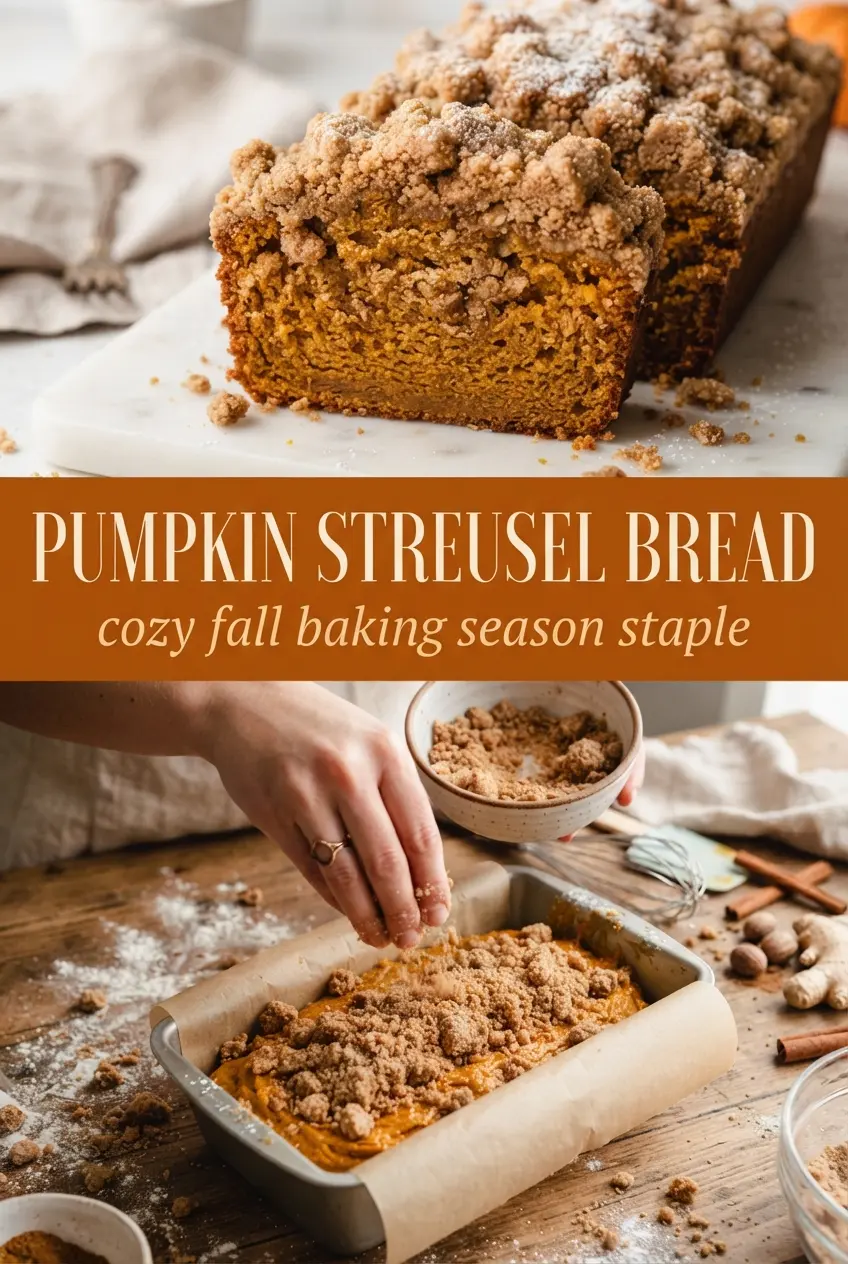
Work the flour, brown sugar, and cold butter together with your fingertips until the mixture forms clumps. You want crumbs, not a paste. If the butter starts to warm and smear, stop and chill the bowl for a few minutes before continuing. Spoon the topping over the batter without pressing it in so it stays on the surface and bakes into a crisp layer.
Bake until the center is set
Bake at 350°F until a toothpick comes out clean from the center, usually 55 to 65 minutes. If the top darkens too quickly, lay foil loosely over the loaf during the last stretch of baking. The middle should spring back lightly when touched, and the streusel should be golden with deeper brown edges, not dark and dry.
How to Change This Pumpkin Streusel Bread Without Ruining the Top
Make it dairy-free
The loaf itself is already dairy-free with oil, so the only adjustment is the streusel if you use a butter-heavy variation. Swap in a plant-based butter that stays solid when cold, and keep it chilled before crumbling. The texture will be slightly softer than a classic butter streusel, but it still bakes into a good crunchy topping.
Make it a little more warmly spiced
Add a pinch of nutmeg, cloves, or ginger to the dry ingredients if you want a deeper spice note. Keep the cinnamon as the lead flavor so the loaf still tastes balanced and not like pie filling. Too many spices can crowd out the pumpkin, and this bread is better when the pumpkin stays front and center.
Turn it into muffins
Portion the batter into a lined muffin tin and top each one with a little streusel. The bake time drops a lot, and the main thing to watch is the center set, because muffins go from moist to overbaked fast. You’ll get more crisp topping per serving, which is one of the nicest things about this recipe.
Storage and Reheating
- Refrigerator: Store tightly wrapped at room temperature for 2 days or in the refrigerator for up to 5 days. The streusel softens a bit after the first day, but the loaf stays moist.
- Freezer: This freezes well. Wrap the cooled loaf or individual slices tightly, then freeze for up to 3 months. Thaw at room temperature while still wrapped so condensation doesn’t make the top soggy.
- Reheating: Warm slices in a 300°F oven for a few minutes or toast them lightly. Microwaving works in a pinch, but it softens the streusel and makes the texture less interesting.
Answers to the Questions Worth Asking
Pumpkin Streusel Bread
Ingredients
Equipment
Method
- Preheat the oven to 350°F and grease a 9x5-inch loaf pan. Set the pan aside for filling.
- Whisk together the flour, baking soda, and cinnamon until evenly combined. The mixture should look uniform in color.
- In another bowl, mix the pumpkin puree, sugar, vegetable oil, and eggs until smooth. Stir until no streaks of egg remain.
- Fold the pumpkin mixture into the dry ingredients until just combined. Stop mixing as soon as the flour disappears to keep the crumb tender.
- Pour the batter into the greased loaf pan and level the top with a light shake. Make sure the corners are filled.
- Mix the flour, brown sugar, and cold butter with your fingers until crumbly. Keep working until you see sandy crumbs and small buttery bits.
- Sprinkle the streusel evenly over the batter. Cover the surface fully so the top bakes crisp.
- Bake for 55-65 minutes at 350°F until a toothpick comes out clean. If the streusel browns too quickly, cover loosely with foil during the last part of baking.