
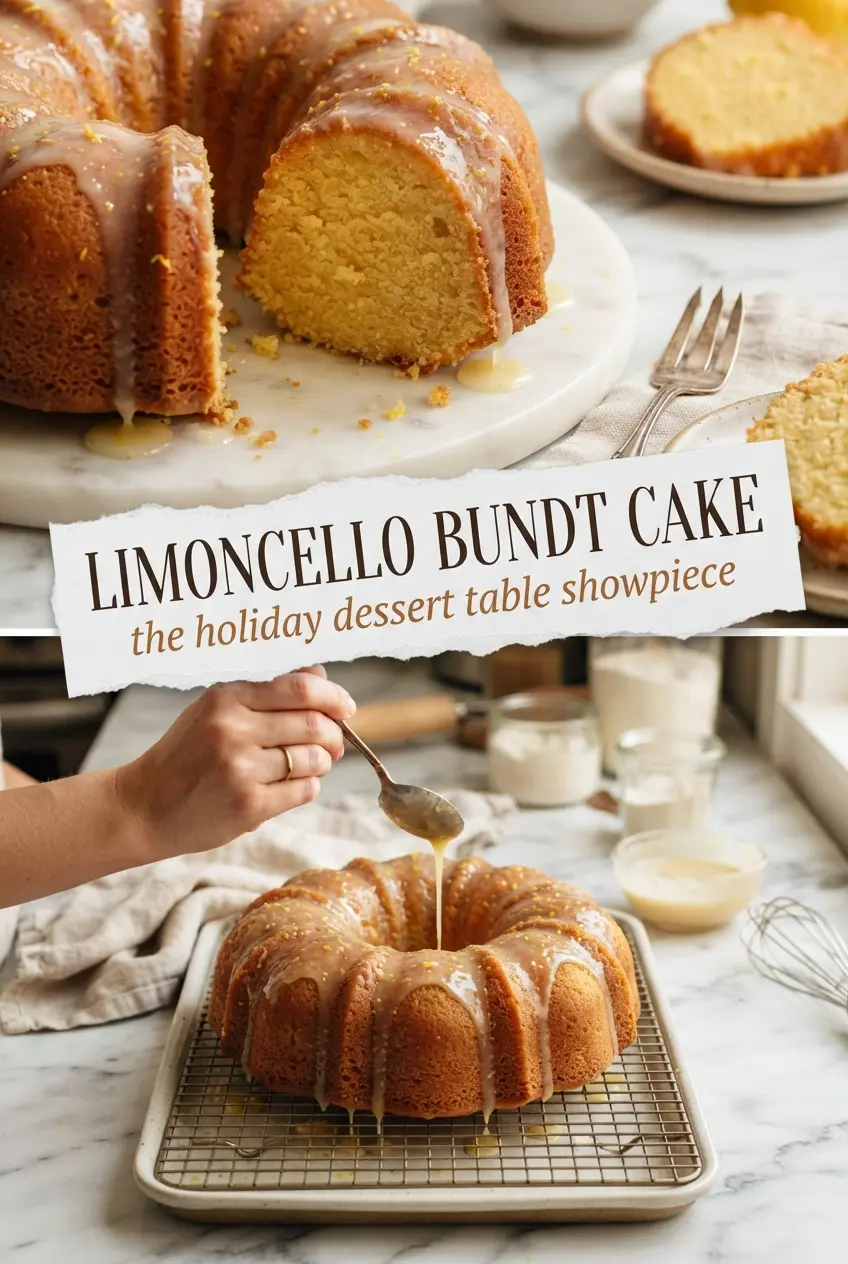
Limoncello bundt cake has that rare combination of tender crumb, bright citrus, and a glossy finish that clings to every ridge of the pan. The cake stays soft without feeling heavy, and the limoncello gives it a clean, perfumed lemon note that tastes elegant instead of sharp. It’s the kind of cake people slice once, then quietly come back for a second piece.
What makes this version work is the balance between the butter-rich batter and the acid-sweet glaze. The cake itself is built like a classic butter cake, which means creaming the butter and sugar long enough to trap air matters. Then the limoncello and lemon zest go in after the base is established, so the citrus stays bright instead of disappearing into the batter. The glaze uses powdered sugar, honey, and limoncello, which gives it a softer set and a little shine instead of a chalky crust.
Below, you’ll find the few details that matter most for a bundt cake that releases cleanly, bakes evenly, and keeps its delicate citrus flavor intact. The pan prep is worth paying attention to here, and so is the cooling time before glazing.
The glaze set up beautifully and the cake came out of the pan in one piece, which never happens for me with bundt cakes. The lemon flavor is balanced and the crumb stayed moist for three days.
Save this limoncello bundt cake for the days when you want a lemon dessert with a soft crumb and a glossy honey glaze.
The Secret to a Bundt Cake That Releases Cleanly
Most bundt cake problems start before the batter even goes in the pan. A pan with flour tucked into every groove sounds like enough, but bundt cakes fail when the butter-and-sugar coating in the details isn’t thorough enough. If the cake catches in one deep curve, the whole unmolding can tear, even when the cake itself is baked perfectly.
The other thing that trips people up is pulling the cake too early. A bundt needs time to firm up in the pan after baking, or it can slump and stick. Fifteen minutes is the sweet spot here: long enough for the structure to set, short enough that the sugars don’t glue themselves to the pan.
- Greasing the pan: Use softened butter or a baking spray with flour and work it into every ridge, corner, and center tube. Miss one spot and that’s usually where the cake tears.
- Cooling in the pan: Let the cake rest for 15 minutes before inverting. That brief rest helps the crumb tighten without turning the cake into one solid mass in the pan.
- Glazing timing: Wait until the cake is fully cool before adding the glaze. Warm cake will melt it straight off the sides instead of letting it settle into a glossy coating.
What Each Ingredient Is Actually Doing in This Cake

- All-purpose flour — This gives the cake its tender but sturdy crumb. Cake flour will make it a little softer, but all-purpose holds the structure better for a bundt shape.
- Baking powder — This is the lift. It helps the cake rise evenly in the pan so the center doesn’t stay dense.
- Butter — Use real butter here. It brings flavor and that fine, even crumb you want in a cake like this; margarine won’t bake up the same way.
- Sugar — Creaming it with butter traps air, which is part of what keeps the cake light. Don’t rush that step or the cake will eat heavier than it should.
- Eggs — They bind the batter and add richness. Room-temperature eggs blend in more smoothly and help keep the batter from curdling when the milk goes in.
- Milk — This loosens the batter just enough for a soft crumb. Whole milk is best, but 2% works if that’s what you have.
- Limoncello — This is the signature flavor, so don’t replace it with extra lemon juice unless you want a sharper, less rounded taste. The liqueur adds citrus perfume without thinning the batter too much.
- Lemon zest — Zest carries the bright oil from the peel, which is much more aromatic than juice alone. Fresh zest matters here; dried or bottled lemon flavor won’t give the same lift.
- Powdered sugar, honey, and limoncello for the glaze — Powdered sugar gives the glaze body, honey softens the sweetness, and limoncello keeps the citrus note alive. Honey also helps the glaze cling instead of running off the cake completely.
Building the Batter Without Losing the Citrus
Start with a Properly Creamed Base
Beat the butter and sugar until the mixture looks paler and a little fluffy, not just combined. That step builds the air that gives the cake a soft crumb. If the butter is too cold, the sugar will stay gritty and the batter won’t emulsify properly, so the finished cake can turn out tight.
Add the Eggs One at a Time
Drop in one egg, let it disappear, then add the next. This keeps the batter smooth and prevents it from breaking. If the mixture looks slightly curdled after an egg goes in, it usually needs another minute of mixing, not more flour.
Alternate the Dry Ingredients and Milk
Add the flour mixture and milk in turns, beginning and ending with the dry ingredients. That keeps the batter from getting overworked and helps the cake bake with an even texture. Stir only until the flour streaks disappear; overmixing at this point can make the crumb tough.
Fold in the Limoncello and Zest Last
The limoncello and lemon zest go in at the end so the citrus stays fragrant. Stir just until everything is evenly distributed. If you add them too early, the aroma can fade while the batter sits and mixes.
Bake Until the Top Springs Back
Pour the batter into the prepared bundt pan and bake until a toothpick comes out clean and the top springs back lightly when pressed. The cake should smell buttery and citrusy before you even open the oven. If the top browns too quickly, tent loosely with foil for the last part of baking so the center can finish without over-darkening the crust.
Three Ways to Make This Cake Fit the Table
Dairy-Free Version
Use a high-quality plant butter in place of the dairy butter and an unsweetened non-dairy milk. The cake will still bake up tender, but it won’t have quite the same rich finish or buttery aroma, so the lemon and limoncello become even more important.
Make It a Little Brighter
Add a little extra lemon zest to the batter if you want the citrus to read more sharply. Keep the limoncello amount the same, though, or the batter can get too loose and lose some of that classic bundt cake texture.
No-Liquor Alternative
Swap the limoncello in the batter and glaze for fresh lemon juice mixed with a little extra milk in the cake and more lemon juice in the glaze. The flavor turns sharper and less floral, which is good if you want the cake to feel more classic lemon than lemon-laced dessert.
Storage and Reheating
- Refrigerator: Store covered for up to 4 days. The crumb stays moist, though the glaze will soften slightly as it sits.
- Freezer: Freeze the unglazed cake tightly wrapped for up to 2 months. Thaw at room temperature before glazing so the topping stays glossy instead of weeping.
- Reheating: Cake is best served at room temperature, not warm. If you want a just-baked feel, microwave a slice for 8 to 10 seconds, but don’t heat it long enough to melt the glaze.
Answers to the Questions Worth Asking
Limoncello Bundt Cake
Ingredients
Equipment
Method
- Preheat the oven to 350°F, then grease a bundt pan thoroughly in every groove to prevent sticking.
- Whisk together the flour and baking powder in a bowl until evenly combined.
- Cream the butter and sugar until light and fluffy, then beat in the eggs one at a time.
- Alternate adding the dry ingredients and milk, then stir in the limoncello and lemon zest until the batter is smooth.
- Pour the batter into the bundt pan and bake for 50-55 minutes at 350°F, until a toothpick comes out clean.
- Cool in the pan for 15 minutes, then invert onto a wire rack to cool completely.
- Whisk the powdered sugar with honey and limoncello until smooth, then drizzle generously over the cooled cake to let it drip into the ridges.