
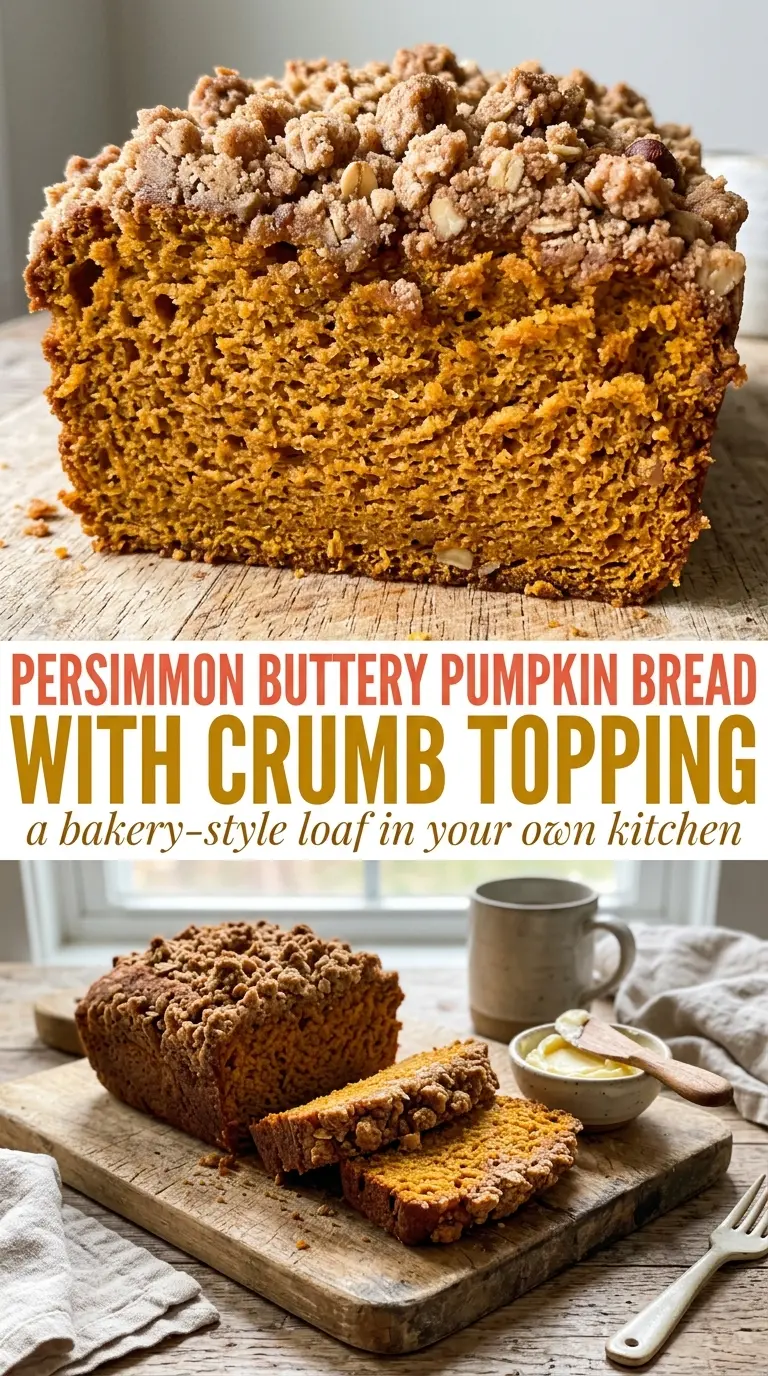
Soft pumpkin bread with a buttery crumb topping earns its place on the counter fast. The loaf stays tender and moist in the middle, while the top bakes into a sweet, sandy layer that cracks when you slice through it. That contrast is the whole point here: plush pumpkin crumb below, crisp streusel above.
This version works because the batter stays simple and the crumb topping starts with cold butter. Pumpkin puree brings moisture and color, while the oil keeps the loaf soft for days. The crumb topping doesn’t need complicated ratios either; flour, brown sugar, cinnamon, and butter are enough if you work the butter in until the mixture holds together in clumps instead of turning into paste.
Below you’ll find the trick that keeps the topping from sliding off, plus the small baking cues that tell you when the center is done without drying out the edges.
The crumb topping stayed put and baked into these big buttery pockets on top instead of sliding off the loaf. I sliced it while it was still a little warm and the center was perfectly soft, not gummy.
Keep this pumpkin bread with crumb topping handy for the days when you want a soft, spiced loaf with a buttery bakery-style finish.
The Difference Between a Tender Loaf and a Dense One
Pumpkin bread gets heavy when the batter is overmixed or the flour is packed too tightly. Once the wet ingredients hit the dry, stir only until the flour disappears. A few streaks are better than a beaten batter, because overworking it develops the gluten and turns a soft quick bread into something tight and bready.
The other place this recipe can go wrong is the crumb topping. If the butter is too warm, the topping melts into the loaf instead of staying in distinct clumps. Cold butter, rubbed in with your fingertips, gives you those little buttery bits that bake into a crisp top. Pressing the topping lightly into the batter helps it cling without sinking.
What Each Ingredient Is Actually Doing in This Loaf
- Pumpkin puree — This gives the bread its moisture, color, and mellow pumpkin flavor. Use plain pumpkin puree, not pumpkin pie filling, which already contains sugar and spices and will throw off the balance.
- Vegetable oil — Oil keeps the crumb soft for days in a way butter doesn’t quite match. Melted butter will work in a pinch, but the loaf will bake up a little firmer and less plush.
- Eggs — They hold the batter together and help it rise without making it cakey. Room-temperature eggs blend faster and keep the batter smoother.
- Cinnamon and nutmeg — These spices do the heavy lifting in the flavor, and fresh cinnamon makes a noticeable difference here. If your nutmeg has been sitting around for years, a fresh grating brings more warmth than the dusty jar version.
- Cold butter for the crumb topping — This is what gives the top its texture. If the butter softens too much while mixing, chill the topping for a few minutes before sprinkling it over the loaf.
- Brown sugar in the topping — It melts into the butter and flour to create that sandy, caramel-like crumble. Light or dark brown sugar both work; dark just brings a deeper molasses note.
Building the Batter and Keeping the Crumb on Top
Mix the Dry Ingredients First
Whisk the flour, baking soda, cinnamon, and nutmeg together until the spices look evenly distributed. This keeps you from biting into a pocket of baking soda or a streak of cinnamon. A quick whisk also aerates the flour a little, which helps the loaf rise evenly instead of doming hard in the middle.
Stir the Wet Ingredients Until Smooth
Beat the pumpkin puree, oil, eggs, and sugar until the mixture looks thick and glossy. You don’t need to whip air into it; you just want the sugar to start dissolving and the eggs to disappear into the puree. If the mixture looks streaky, keep mixing for another few seconds before bringing in the flour.
Fold, Don’t Beat
Once the dry ingredients go in, fold just until the flour disappears. The batter should look thick and spoonable, not elastic. If you see a few small lumps, leave them alone. That’s a better sign than an overmixed batter, which bakes up tough and can tunnel down the center.
Make the Crumb in Clumps
Rub the flour, brown sugar, cinnamon, and cold butter together with your fingers until the mixture forms uneven crumbs, some fine and some pea-sized. Those different sizes bake into a topping with more texture. If it turns into a smooth dough, the butter is too warm, so stop and chill it before continuing.
Bake Until the Center Just Sets
Scatter the crumb over the batter and press it in lightly so it sticks. Bake at 350°F until a toothpick comes out mostly clean, with a few moist crumbs attached and no raw batter. The loaf should feel set at the edges and still have a soft spring in the center; if the top browns too quickly, lay a loose piece of foil over it for the last stretch of baking.
How to Adapt This for Different Kitchens and Diets
Make It Dairy-Free Without Losing the Crumb
The loaf itself is already dairy-free if you use oil, so the main change is the topping. Keep the butter in the crumb if dairy is fine for the people eating it, or swap in a firm plant-based butter. Choose one that stays solid when cold; soft tub spreads melt too fast and the topping loses its shape.
Use Whole Wheat Flour for a Heavier, Earthier Loaf
You can replace up to half the all-purpose flour with whole wheat flour for a nuttier flavor. The bread will bake up a little denser and drier, so don’t push it all the way to 100 percent unless you want a much firmer crumb. If you do use more whole wheat, check for doneness a few minutes early.
Turn It Into Mini Loaves or Muffins
This batter works well in smaller pans, which is handy for gifting or freezing. Mini loaves and muffins bake faster, so start checking early; the crumb topping should be set and lightly crisp, not deep brown. Smaller portions also give you more edge-to-center ratio, which is a win if you love the topping.
Storage and Reheating
- Refrigerator: Store covered for up to 5 days. The crumb topping softens a little after day one, but the loaf stays moist.
- Freezer: Freeze the whole loaf or individual slices wrapped tightly, then tucked into a freezer bag for up to 3 months. Thaw at room temperature so the topping doesn’t turn soggy from trapped steam.
- Reheating: Warm slices in a 300°F oven for about 8 minutes or toast them lightly. The microwave works in a pinch, but it softens the crumb topping and makes the texture more damp than bakery-fresh.
Answers to the Questions Worth Asking
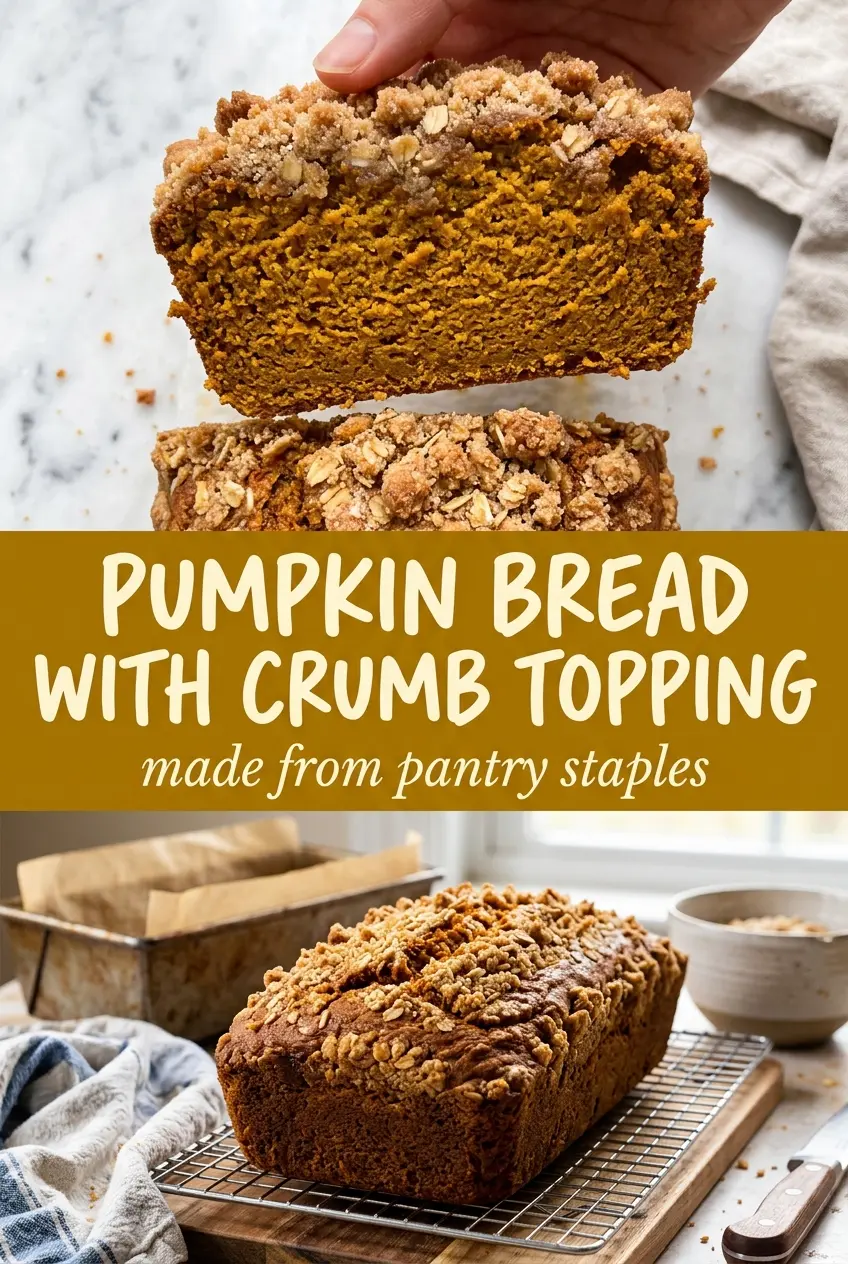
Pumpkin Bread With Crumb Topping
Ingredients
Equipment
Method
- Whisk all-purpose flour, baking soda, cinnamon, and nutmeg together until evenly combined with no dry streaks.
- Beat pumpkin puree, vegetable oil, eggs, and granulated sugar until smooth, then fold into the dry ingredients just until incorporated.
- Pour the batter into a greased loaf pan and spread into an even layer.
- Mix flour for crumb topping, brown sugar for crumb topping, cold butter, and cinnamon for crumb topping with your fingers until crumbly.
- Sprinkle the crumb topping evenly over the batter, then press gently so it clings to the surface.
- Bake at 350°F for 55-60 minutes until a toothpick comes out mostly clean with only a few moist crumbs.
- Cool the loaf in the pan briefly before slicing for clean, crumb-stable pieces.