
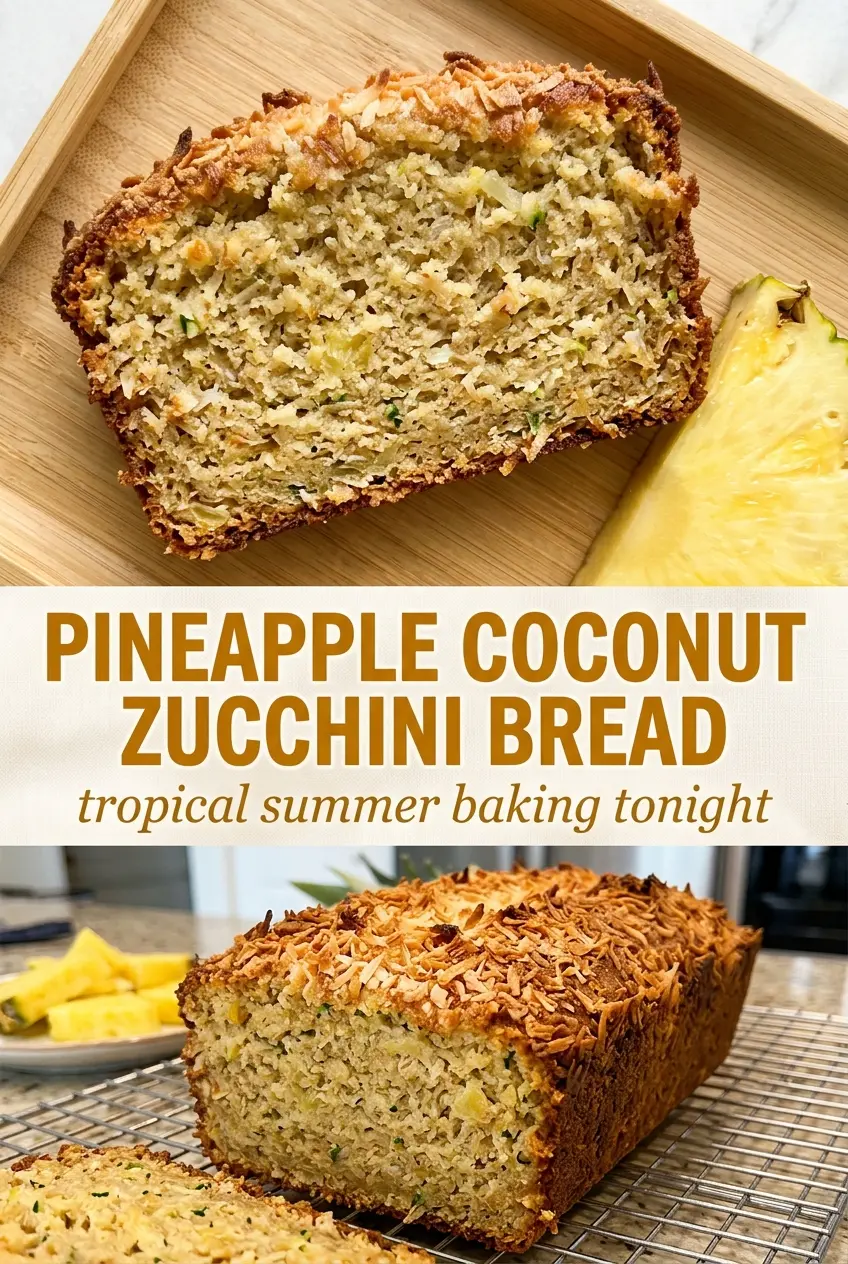
Pineapple coconut zucchini bread bakes into a tender, fragrant loaf with a moist crumb and a toasted coconut top that gives each slice a little crunch. The zucchini disappears into the batter, but it quietly keeps the texture soft for days, while the pineapple adds just enough sweetness and brightness to keep the bread from tasting heavy.
What makes this version work is the balance of moisture. Zucchini brings body, pineapple brings juice, and both need a little control before they go into the bowl. If the pineapple is too wet, the loaf turns dense and gummy instead of plush. Squeezing the zucchini dry and draining the pineapple well gives you a batter that bakes up evenly and slices cleanly.
Below, I’ll walk through the small details that matter most, including how to keep the coconut on top from scorching before the center is baked through, plus the easiest way to store the extra loaf if you’re baking ahead.
The pineapple flavor comes through without making the loaf soggy, and the coconut topping toasted up beautifully. I followed the tip about draining everything well, and both loaves baked evenly with a soft crumb.
Pineapple coconut zucchini bread stays moist for days, so save this loaf for the weekend bake when you want slices that toast up beautifully all week.
The Moisture Balance That Keeps This Loaf from Turning Dense
Pineapple zucchini bread sounds like it should be simple, but this kind of loaf fails in one predictable way: too much hidden liquid. Zucchini holds water in its shreds, pineapple brings its own juice, and both keep releasing moisture as the bread bakes. If you dump them in without prepping them, the center stays damp long after the top looks done.
The fix is straightforward. Squeeze the zucchini dry after shredding it, and drain the crushed pineapple until it no longer gives up liquid when pressed. That doesn’t mean the loaf will be dry — it still bakes up plush from the eggs, oil, and fruit — but it does mean the crumb sets instead of collapsing into a heavy, gummy middle.
The coconut on top also matters here. It gives you a toasted edge that tells you when the loaf is close, but it can darken before the center finishes. That’s why the toothpick test matters more than the coconut color alone.
What Each Ingredient Is Actually Doing in This Loaf
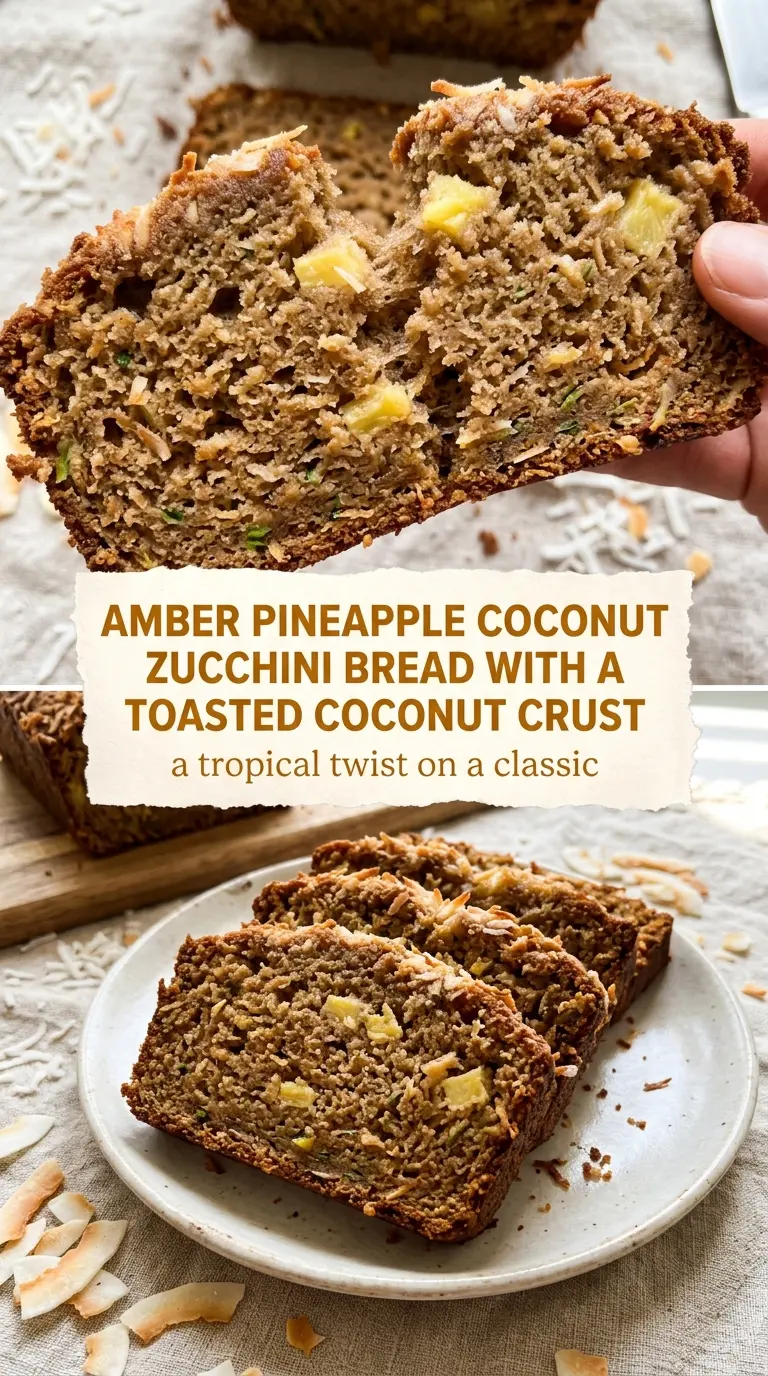
- Zucchini — This is the quiet structure in the loaf. It melts into the crumb and keeps the bread soft without making it taste vegetal, but only if it’s squeezed dry first. If you skip that step, the batter loosens too much and the center bakes up leaden.
- Crushed pineapple — Pineapple brings sweetness and a little tang, which keeps the loaf from tasting flat. Drain it well, then press it again in a fine mesh strainer or with your hands over the sink. Canned pineapple works best here because fresh pineapple can be fibrous and less predictable in texture.
- Vegetable oil — Oil gives this bread a softer, more tender crumb than melted butter would. It stays moist longer, which matters in a fruit bread like this. Neutral oil is the right choice because it doesn’t compete with the pineapple or coconut.
- Shredded coconut — Half goes into the batter for body and flavor, and the rest on top bakes into a crisp, golden layer. Sweetened coconut gives the most pronounced toasted flavor; unsweetened coconut works too, but the top will be less caramelized.
- All-purpose flour — This keeps the loaf sturdy enough to hold all that fruit without becoming cakey. Spoon and level it instead of packing it into the cup, or the bread turns dry before the middle is set.
Building the Batter Without Beating the Life Out of It
Whisk the wet ingredients first
Beat the eggs, oil, and sugar until the mixture looks glossy and a little thickened. You’re not trying to aerate it like cake batter, just dissolve the sugar enough that it blends smoothly with the fruit. If the sugar stays gritty here, the crumb can bake unevenly.
Fold in the zucchini and pineapple gently
Stir the zucchini and drained pineapple into the wet mixture until they’re evenly distributed. The batter will look loose and a little shaggy at this point, and that’s normal. The biggest mistake here is overmixing once the fruit goes in, because that breaks down the shreds and makes the loaf denser than it should be.
Bring the dry ingredients in last
Whisk the flour, baking soda, and salt in a separate bowl, then fold them into the wet mixture just until no dry streaks remain. Stop as soon as the flour disappears. Overmixing develops too much gluten and gives you a tight, chewy loaf instead of a soft one.
Finish with the coconut topping
Divide the batter between the loaf pans, then scatter the remaining coconut over the top so it covers the surface in a thin layer. It will toast as the bread bakes and turn deep golden at the edges. If you pile it too thickly in one spot, that patch can darken before the loaf is fully baked.
Bake until the center sets cleanly
Bake at 350°F until the tops are golden and a toothpick comes out clean or with just a few moist crumbs. Start checking near the 50-minute mark. If the coconut is getting too dark before the center is done, lay a loose piece of foil over the pans for the last stretch of baking.
Three Ways to Adjust the Loaf Without Losing What Makes It Work
Dairy-Free as Written
This loaf is already dairy-free, so there’s nothing to change. The oil keeps the crumb tender without butter, and that’s part of why it stays soft for several days.
Make It Slightly Less Sweet
Reduce the sugar by 1/4 cup if you want the pineapple to stand out more and the coconut topping to taste less dessert-like. The loaf will still bake correctly, though the crumb will be a touch less plush and the top will color a little less deeply.
Turn It Into Muffins
Portion the batter into lined muffin tins and bake until the tops spring back and a tester comes out clean. The texture stays moist, but the coconut topping browns faster, so start checking much earlier than you would with loaf pans.
Storage and Reheating
- Refrigerator: Store tightly wrapped for up to 5 days. The loaf stays moist, but the coconut top softens a little after day one.
- Freezer: Wrap cooled loaves or slices well and freeze for up to 3 months. Thaw at room temperature while still wrapped so the crumb doesn’t dry out.
- Reheating: Toast slices lightly or warm them in a 300°F oven for a few minutes. High heat can dry out the edges before the center warms, so go low and slow.
Questions I Get Asked About This Recipe
Pineapple Coconut Zucchini Bread
Ingredients
Equipment
Method
- Preheat the oven to 350°F and grease two loaf pans.
- Drain the crushed pineapple thoroughly and press out excess juice before using.
- Whisk the eggs, vegetable oil, and sugar together until smooth and combined.
- Stir in the shredded zucchini and crushed pineapple until the batter looks evenly mixed.
- Whisk the all-purpose flour, baking soda, and salt together in a separate bowl.
- Fold the flour mixture into the wet mixture, then add 3/4 cup of the shredded coconut until just combined.
- Divide the batter evenly between the two loaf pans and sprinkle the remaining shredded coconut on top.
- Bake at 350°F for 50 to 55 minutes, until the coconut topping turns golden and a toothpick comes out clean.