
The bananas should look past their prime before they go anywhere near the mixing bowl: soft, heavily speckled, and easy to mash with a fork. When they’re still firm, the batter takes more effort to bring together and the finished loaf doesn’t have the same deep banana flavor. These are the bananas I save for one bowl banana bread, especially when I want a straightforward loaf without pulling out a mixer.
Everything comes together in one large bowl, but the order still matters. Stir the wet ingredients together first, then fold in the flour, baking soda, and salt only until the last dry streak disappears. That light touch keeps the crumb tender instead of chewy, and there’s no second bowl to wash. The loaf bakes until a toothpick comes out clean or with a few moist crumbs, then gets a short rest in the pan before moving to a rack. Once it’s cool enough to slice, the center is soft and fragrant, with a gently browned top.
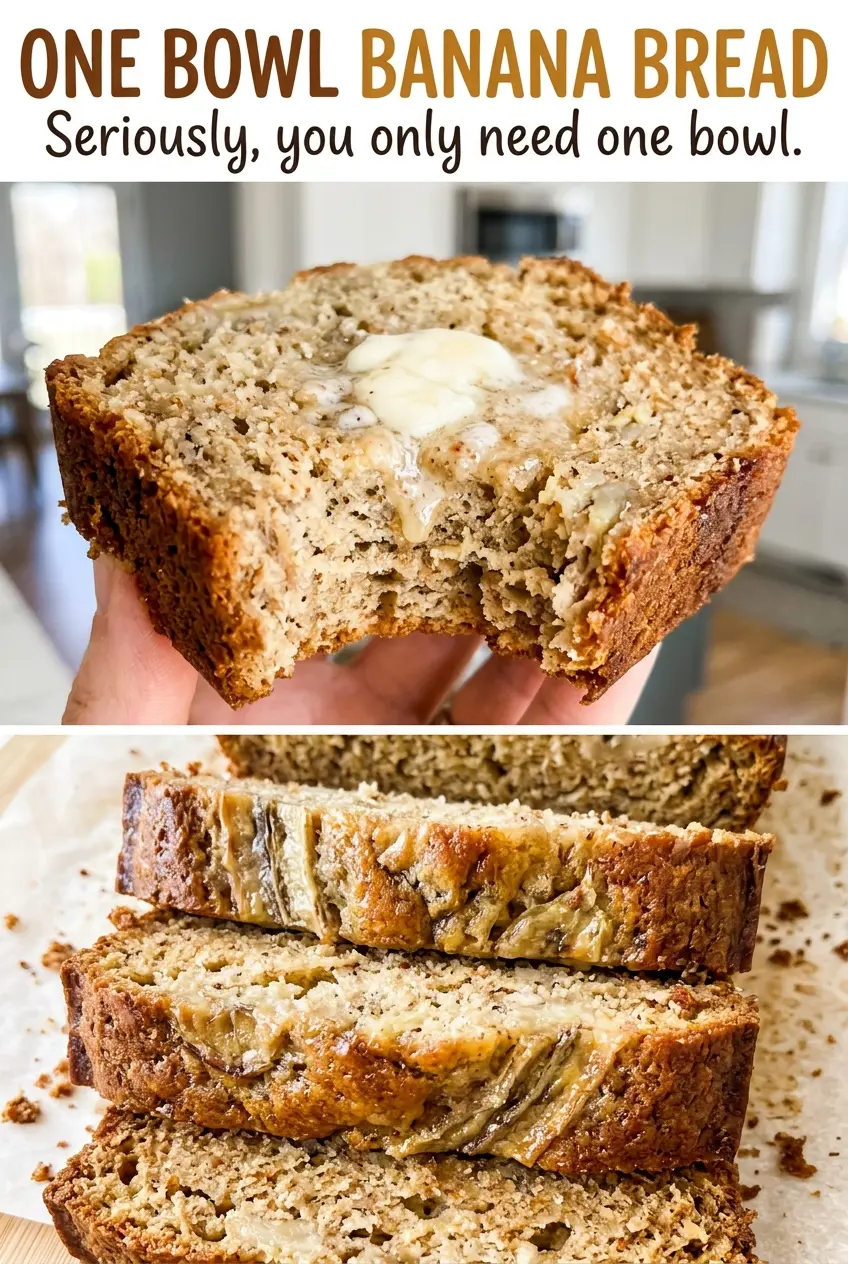
Kitchen Note
Let the loaf sit in its pan for the full 10 minutes before turning it out. It’s delicate while hot, and that short rest gives it a chance to release without breaking along the sides.
Save this one bowl banana bread for the next time ripe bananas pile up—one bowl, a tender crumb, and a golden top.
Why One-Bowl Banana Bread Gets Tough When You Keep Stirring
When flour meets moisture, stirring starts developing gluten. That’s useful in bread dough, but it can make a quick bread dense and chewy if you keep working the batter after the flour goes in. A few gentle folds are enough; the batter doesn’t need to look perfectly smooth.
Bananas bring plenty of moisture, so the batter will look thick and a little lumpy even when it’s ready for the pan. Don’t try to beat every banana fleck out of it. Stop once no dry flour remains, then scrape the batter into the greased pan. That small distinction—combined rather than smooth—is what keeps this loaf tender without adding another bowl or a complicated mixing step.
The one-bowl method also means the dry ingredients go directly into the banana mixture. Sprinkle them around the bowl rather than dropping the baking soda in one concentrated spot, then fold carefully so the leavener and salt are distributed through the batter.
What the Bananas and Butter Bring to This Loaf
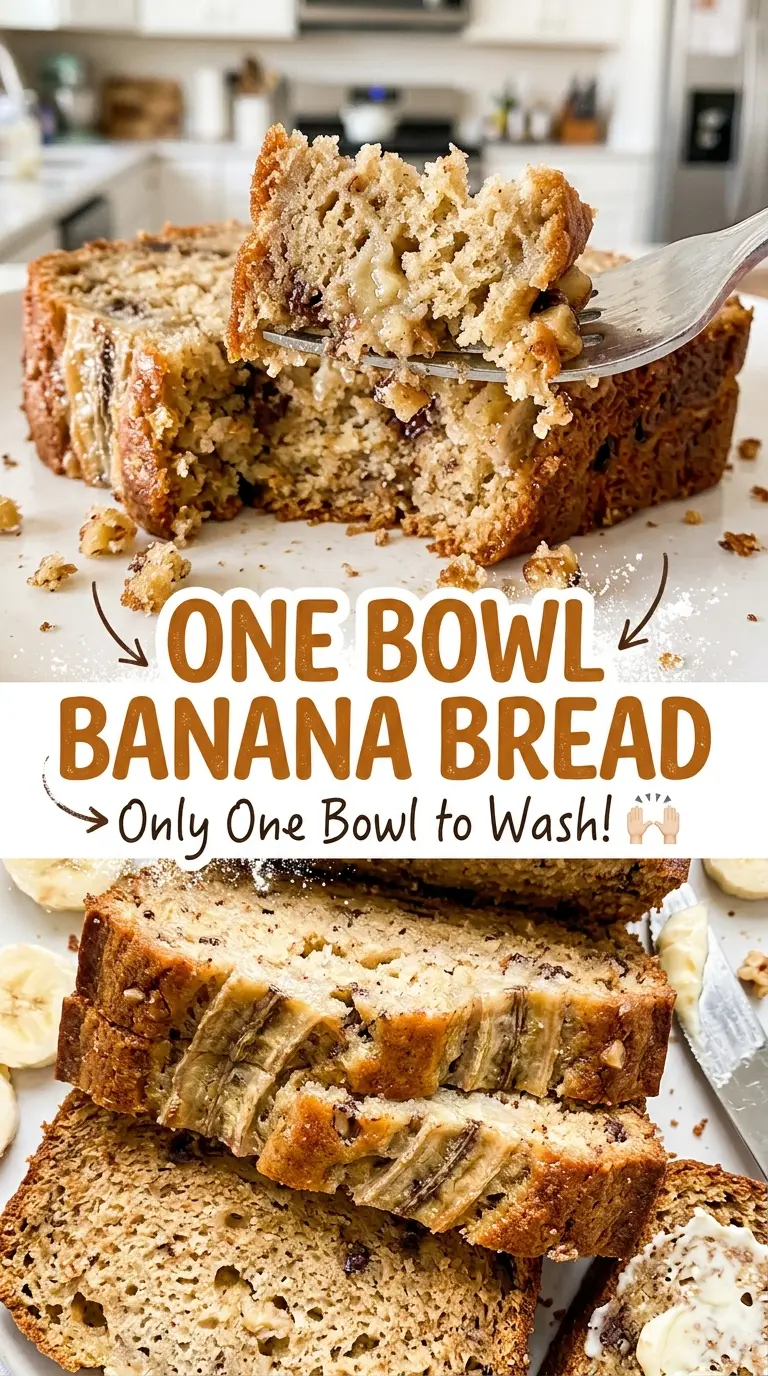
- Very ripe bananas — They bring the banana flavor, moisture, and sweetness that give this loaf its character. Choose fruit that mashes easily with a fork; the exact number of bananas can vary in size, so the mashed volume is a useful guide. A fork is all you need, and a few small lumps are fine.
- Melted butter — Butter adds richness and a familiar buttery aroma. Let it cool slightly before mixing so it doesn’t feel hot against the eggs. Unsalted butter keeps the salt level in the batter controlled.
- Granulated sugar — It sweetens the loaf and helps the top brown as it bakes. Keep it with the other wet ingredients so it disperses throughout the banana mixture before the flour is added.
- Eggs — The eggs help hold the loaf together and give the crumb structure. Use large eggs, as smaller or larger ones shift the liquid balance in a recipe this size.
- All-purpose flour — It gives the loaf its structure. Spoon flour into a measuring cup and level it rather than packing it down; too much flour can leave the crumb dry. Folding it in gently matters more than finding a specialty brand.
- Baking soda — This is the leavener that helps the loaf rise. Check that it’s fresh, since old baking soda can leave the bread squat and heavy.
- Vanilla and salt — Vanilla rounds out the banana and butter, while salt keeps the sweetness from tasting flat. Both are small additions, but the loaf tastes less balanced when either is left out.
From Fork-Mashed Bananas to a Clean-Tested Center
Get the Pan Ready Before Mixing
Heat the oven to 350°F and grease a 9×5-inch loaf pan before you start the batter. Having the pan ready means you can transfer the mixture as soon as it’s combined. Grease the corners and sides, where a quick bread is most likely to cling. Set the pan aside while you mix.
Build the Banana Mixture in One Bowl
Mash the bananas with a fork in a large bowl, then stir in the melted butter, sugar, eggs, and vanilla. Aim for a combined mixture rather than a perfectly smooth puree; small banana pieces will soften as the bread bakes. If the butter is still hot, give it a little longer to cool before adding it. The mixture should look glossy and evenly blended before the dry ingredients go in.
Fold Just Until the Flour Disappears
Add the flour, baking soda, and salt to the bowl. Use a folding motion to bring the dry ingredients into the banana mixture, scraping along the bottom so flour doesn’t hide underneath. Stop when you can no longer see dry flour; a few small lumps are better than an overworked batter. Scrape it into the prepared pan without lingering over the mixing.
Bake Until the Center Tests Clean
Bake for 55 to 65 minutes. The top should look set, and a toothpick inserted in the center should come out clean or with a few moist crumbs; wet batter means the middle needs more time. Once it tests done, cool the loaf in the pan for 10 minutes, then turn it onto a wire rack. Let it cool before slicing so the soft center has time to settle.
Two Easy Ways to Change the Banana Texture
Leave a Few Bigger Banana Pieces
For a more rustic slice, stop mashing while a few small pieces of banana remain, then continue with the same batter and bake. Those pieces make the banana texture more noticeable in the finished crumb. Keep them small enough to distribute through the loaf rather than leaving large chunks.
Mash the Bananas Until Nearly Smooth
If you prefer a more even banana flavor from slice to slice, mash the fruit thoroughly with the fork before stirring in the remaining wet ingredients. The loaf will have a more uniform crumb and fewer distinct banana pockets. You don’t need a blender or extra dish; just spend a little longer with the fork.
Storage and Reheating
- Room temperature: Keep the fully cooled loaf covered for up to 2 days.
- Refrigerator: Store it covered for up to 5 days. The crumb may feel a little firmer when chilled.
- Freezer: Wrap the cooled loaf or individual slices tightly and freeze for up to 3 months. Thaw before serving for the softest texture.
- Reheating: Warm an individual slice briefly in the microwave until just warm. Long heating can dry the crumb, so use short bursts rather than heating it for a long stretch.
Questions That Come Up While Baking Banana Bread
One Bowl Banana Bread
Ingredients
Equipment
Method
- Preheat the oven to 350°F.
- Grease a 9x5-inch loaf pan.
- In a large bowl, mash the bananas with a fork.
- Stir in the melted butter, sugar, eggs, and vanilla until combined.
- Add the flour, baking soda, and salt to the bowl.
- Fold just until no dry flour remains.
- Scrape the batter into the prepared pan and bake for 55 to 65 minutes, until a toothpick inserted in the center comes out clean or with a few moist crumbs.
- Cool the bread in the pan for 10 minutes.
- Turn it out onto a wire rack to cool before slicing.