
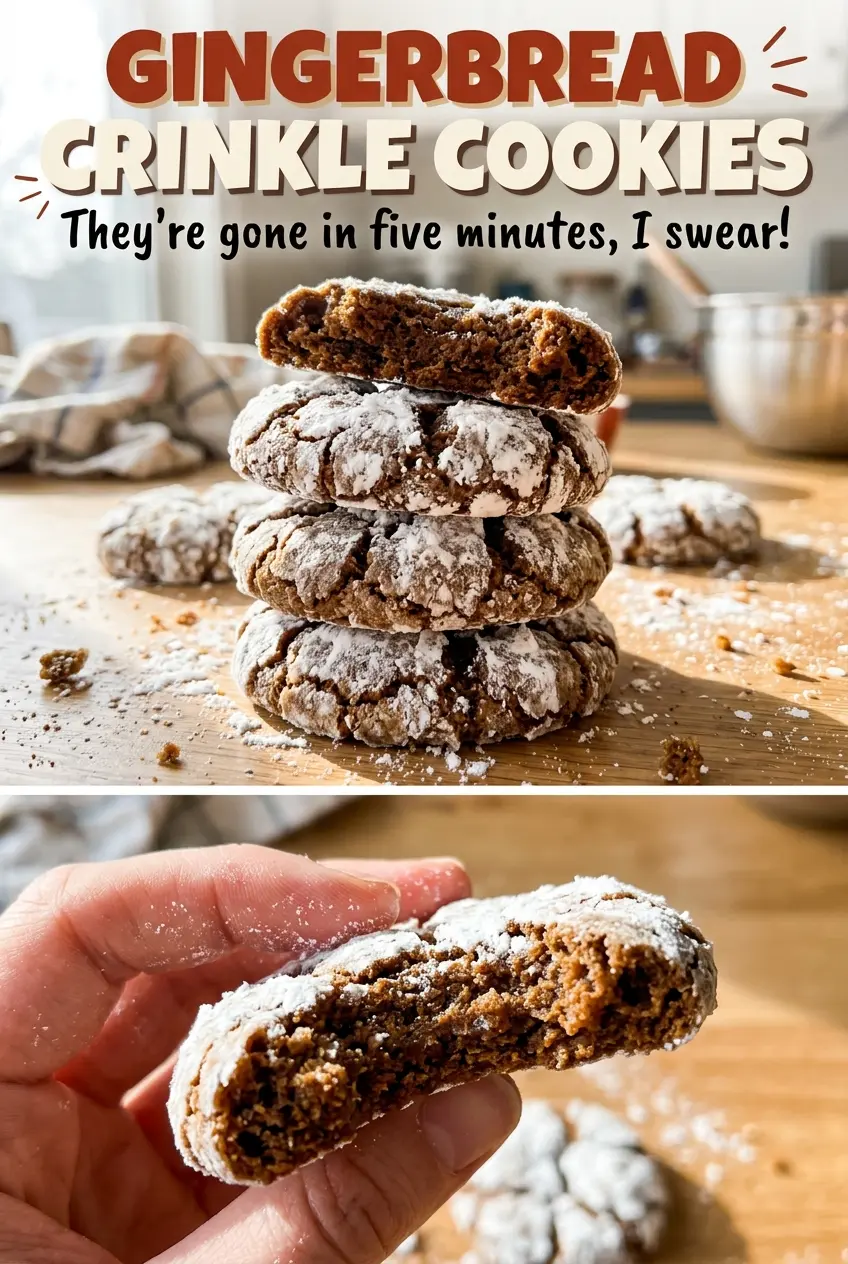
The first tray tells you what these cookies are about: the dough puffs in the oven, then opens into deep cracks while the centers stay soft. Gingerbread crinkle cookies should look a little unfinished when they come out; those tender centers settle as the cookies cool, while the edges hold their shape.
Unsulphured molasses gives the dough its deep gingerbread character, and light brown sugar keeps the sweetness mellow. I chill the dough before rolling it so the portions are easier to handle and keep their shape on the baking sheet. A full coating of confectioners’ sugar gives each cookie that snowy, crackled top, with warm ginger and cinnamon underneath.
Kitchen Note
Let the baking sheet cool completely before the next batch goes on. A warm sheet starts softening the dough before it reaches the oven, which can make the cookies spread too soon.
Save these gingerbread crinkle cookies for a batch with soft centers, warm spice, and snowy cracked tops.
Why Chilling Matters More Than a Thick Sugar Coating
Molasses makes this dough soft and a little sticky, even after the flour is mixed in. Rolling it while it’s warm can be messy, and soft dough is more likely to spread before the outside has time to crack. Chilling firms the butter and gives the flour time to absorb moisture, so the dough is easier to portion into neat balls.
Give it the full hour in the refrigerator. The dough should feel firmer when you scoop it, but it doesn’t need to be hard or dry. If you rush straight to rolling, extra flour on your hands won’t solve the problem; it can change the balance of the dough. A measured chill does the job without altering the gingerbread texture. Once the balls are coated and baking, the dough can expand and split in the oven instead of flattening into smooth, thin rounds.
What Molasses, Butter, and Spice Do in These Crinkles

- Unsulphured molasses — This brings the dark, rounded gingerbread flavor and adds moisture to the dough. A standard grocery-store bottle works well; choose unsulphured rather than blackstrap, which tastes more intense and can overwhelm the spices.
- Light brown sugar — Its moisture helps the cookies stay tender, while the mild caramel note sits comfortably beside the molasses. Pack it into the measuring cup so the amount is consistent.
- Softened butter — Butter gives the cookies their rich taste and helps the sugar cream into a fluffy base. It should yield to a fingertip without looking oily or melted; premium butter isn’t necessary here.
- Ground ginger, cinnamon, and cloves — Ginger leads, cinnamon rounds it out, and a little clove adds a deeper, sharper note. Fresh, fragrant spices make a difference; if the jars have been open for years and smell faint, the cookies will taste muted.
- All-purpose flour and baking soda — Flour gives the dough enough structure to hold its crinkle, while baking soda helps the cookies puff. Regular all-purpose flour is the right choice; specialty flour isn’t needed.
- Confectioners’ sugar — This coating stays pale against the dark dough and makes the cracks easy to see. Break up any lumps before rolling so the surface coats evenly.
Mixing and Baking Gingerbread Crinkle Cookies Without Losing the Crackle
Whisk the Dry Ingredients Evenly
Heat the oven to 350°F and line a large baking sheet with parchment paper. Whisk the flour, baking soda, ginger, cinnamon, cloves, and salt together in a medium bowl so the leavener and spices don’t sit in concentrated pockets. Take a moment to break up any lumps in the flour or spices. Set the bowl aside while you work on the butter mixture.
Cream the Butter and Build the Molasses Base
Beat the softened butter and packed light brown sugar with an electric mixer on medium speed for about 2 minutes, until the mixture looks light and fluffy. If the butter is too cold, it won’t blend smoothly; if it’s melted, the mixture won’t cream properly. Beat in the egg and molasses until smooth, scraping down the sides of the bowl as needed. Add the flour mixture on low and stop as soon as no dry streaks remain, since extended mixing can make the cookies tougher.
Chill Until the Dough Is Easy to Portion
Cover the bowl and refrigerate the dough for 1 hour. This pause gives the dough enough firmness to roll without fighting a sticky surface. When you scoop it, the portions should hold their shape instead of slumping immediately in your hand. Keep the dough covered while it chills so the surface doesn’t dry out.
Coat, Space, and Bake Until the Edges Set
Scoop the dough into 1-tablespoon portions and roll each one into a ball. Coat every ball in confectioners’ sugar, then arrange 12 balls about 2 inches apart on the prepared baking sheet. Bake at 350°F for 10 to 12 minutes, watching for puffed cookies with visible cracks and set edges; the centers should still look soft. Cool the cookies on the baking sheet for 5 minutes, then transfer them to a wire rack.
Two Easy Changes for Different Gingerbread Crinkles
Make Them Dairy-Free
Replace the unsalted butter with the same amount of unsalted dairy-free baking sticks, softened before mixing. Choose a stick-style product rather than a soft tub spread, which has more water and can make the dough spread differently. The cookies keep their gingerbread spice, though the buttery flavor will be less pronounced.
Use Dark Brown Sugar for a Deeper Note
Swap the packed light brown sugar for the same amount of packed dark brown sugar. Its stronger molasses flavor makes the cookies taste a little darker and richer, while keeping the same soft-centered crinkle-cookie style.
Storage and Reheating
- Refrigerator: Refrigeration isn’t needed. Keep the cookies in an airtight container at room temperature for up to 5 days; the sugar coating may soften as they sit.
- Freezer: Freeze baked, cooled cookies in an airtight container for up to 2 months, separating layers with parchment. The powdered-sugar coating may look less fresh after thawing.
- Reheating: These cookies are best at room temperature and don’t need reheating. If you warm them, keep it brief so the centers don’t dry out and the sugar coating doesn’t melt.
Questions That Come Up While Baking Gingerbread Crinkles
Gingerbread Crinkle Cookies
Ingredients
Equipment
Method
- Heat the oven to 350°F and line a large baking sheet with parchment paper.
- In a medium bowl, whisk together the flour, baking soda, ginger, cinnamon, cloves, and salt.
- In a large bowl, beat the butter and brown sugar with an electric mixer on medium speed until light and fluffy, about 2 minutes.
- Beat in the egg and molasses until smooth, scraping down the sides of the bowl as needed.
- Add the flour mixture and mix on low just until no dry streaks remain.
- Cover the bowl and chill the dough for 1 hour.
- Scoop the dough into 1-tablespoon portions and roll into balls.
- Roll each ball in the confectioners’ sugar to coat.
- Arrange 12 balls about 2 inches apart on the prepared baking sheet.
- Bake at 350°F for 10 to 12 minutes, until the cookies are puffed and cracked and the edges are set; the centers will still look soft.
- Cool on the baking sheet for 5 minutes, then transfer to a wire rack.
- Repeat with the remaining dough on the cooled baking sheet.