
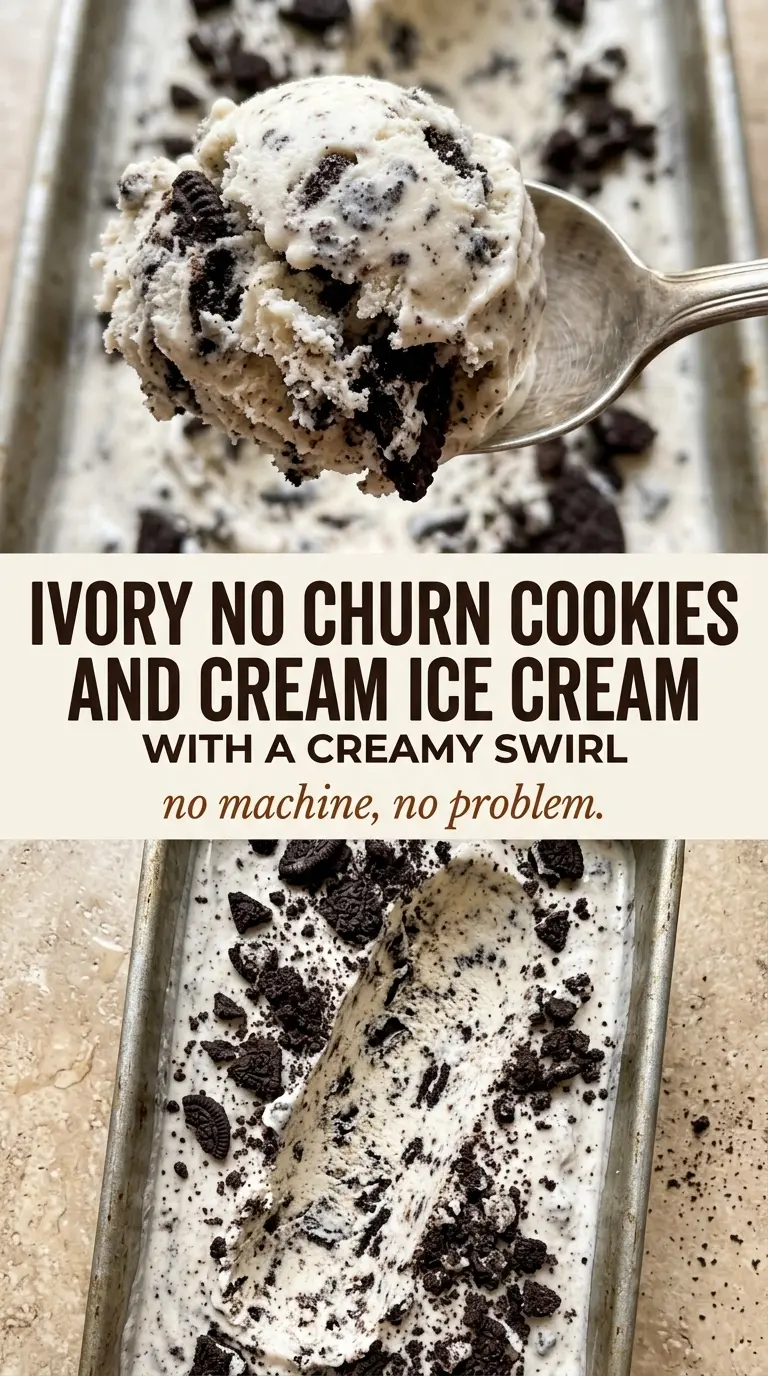
Cookies-and-cream ice cream hits hard when it’s done right: a plush, scoopable base, dark cookie crumbs running through every bite, and just enough vanilla to keep the whole thing from tasting flat. The no-churn version earns its place because it gives you that creamy texture without a machine, and the result is closer to old-school ice cream shop scoops than the icy shortcuts people usually settle for at home.
The trick is in the balance. Sweetened condensed milk keeps the base smooth and prevents the freezer from turning it icy, while whipped cream gives it lift and body. Fold the two together gently and you hold onto all that air; stir too hard and you knock it out, which leaves you with a denser, less creamy freeze. The cookies matter too. Crushed too fine, they disappear into the base. Left in rough pieces, they stay bold and give you that classic cookies-and-cream crunch.
Below, I’ll walk you through the texture cues that matter most, the cookie crush that works best, and a few smart ways to adapt this for different flavors and make-ahead timing.
The base stayed unbelievably creamy, and the cookie pieces were still crunchy after freezing overnight. I used coarse crumbs like you suggested and it tasted like a proper ice cream shop pint.
Creamy no-churn cookies and cream ice cream with the perfect cookie crunch is worth keeping in the freezer.
The Secret to a Creamy No-Churn Base That Doesn’t Freeze Hard
No-churn ice cream lives or dies on the whip. You want stiff peaks from the cream, not soft foam and not butter. Stiff peaks give the base enough structure to stay airy in the freezer, which is what keeps each scoop soft instead of dense and icy. The other half of the equation is folding, not stirring. Folding keeps the air in the cream instead of flattening it out.
The condensed milk does the freezer work here. It brings sweetness, yes, but more importantly it lowers the freezing point enough that the finished ice cream stays scoopable. If your finished base ever turns grainy, it usually means the whipped cream was overworked or the mixture was beaten instead of folded. Both mistakes show up later as a heavier freeze.
What the Four Ingredients Are Doing in This Ice Cream
- Heavy whipping cream — This is the structure and the volume. Use a cream that whips easily and stop at stiff peaks, when the whisk leaves sharp ridges that hold their shape. If you overwhip it, the texture turns grainy before it ever hits the freezer.
- Sweetened condensed milk — This keeps the ice cream soft and sweet without an ice cream maker. There’s no real substitute that behaves the same way, because it brings both sugar and milk solids in a concentrated form. If you want to cut sweetness, do it with a slightly less sugary cookie rather than reducing the condensed milk.
- Vanilla extract — Vanilla rounds out the dairy and keeps the cookies tasting like cookies-and-cream instead of just cold cream with chocolate bits. A standard pure vanilla is enough here; this isn’t the place for expensive vanilla bean paste unless you want the flecks and a stronger perfume.
- Chocolate sandwich cookies — These give you the signature flavor and the dark crunch. Crush them roughly so you get pieces, crumbs, and some larger chunks; that mix is what makes each spoonful interesting. If the cookies are pulverized, they disappear into the base and you lose the contrast.
Folding, Freezing, and Keeping the Cookie Pieces Distinct
Whip the cream to actual stiff peaks
Beat the heavy cream until the peaks stand straight up when you lift the whisk. If the cream is still floppy, the base will melt into itself and freeze denser than it should. If it starts to look clumpy or dull, you’ve gone too far and the texture will feel sandy once frozen. Stop the mixer as soon as the peaks hold their shape cleanly.
Bring the condensed milk and vanilla together first
Whisk the condensed milk with the vanilla in a separate bowl until the vanilla is evenly distributed. That small step matters because it keeps you from overmixing later, when the whipped cream is already delicate. A smooth base at this stage folds faster and loses less air.
Fold in the cream without flattening it
Add the whipped cream in two or three additions and use a broad spatula to fold from the bottom up. You’re looking for a uniform pale mixture with no streaks, but not a beaten one. If you stir in circles, the cream collapses and the ice cream firms up heavy. Slow, broad folds keep the texture light.
Add the cookies last so they stay bold
Fold in the crushed cookies after the base is fully combined. Save a handful for the top, where they’ll stay a little firmer and give you a better first bite. If you mix them in too early or too aggressively, the dark crumbs streak the base and the bigger pieces break down before freezing.
Freeze until the center is firm, not rock hard
Scrape the mixture into a loaf pan or airtight container and smooth the surface. Cover it well, then freeze for at least 6 hours, though overnight gives the best sliceable scoop. If your freezer runs cold, let the container sit on the counter for 5 to 10 minutes before scooping so you don’t chip the spoon or tear the top into shards.
Three Smart Ways to Change It Without Losing the Texture
Dairy-Free Version
Use a full-fat coconut whipping cream and a dairy-free sweetened condensed milk substitute. The texture will still be creamy, but it picks up a faint coconut note, so use cookies with a strong chocolate flavor. This works best when the coconut flavor is welcome rather than something you’re trying to hide.
Mint Cookies and Cream
Swap the vanilla for mint extract, but use it sparingly because mint takes over fast. The result tastes brighter and colder, with the same creamy body and cookie crunch. A few chopped chocolate mint cookies work too, but reduce the extract so the flavor doesn’t turn sharp.
Gluten-Free Cookies and Cream
Use gluten-free chocolate sandwich cookies and crush them the same way you would the original version. The base itself is already gluten-free, so this swap is straightforward and keeps the texture almost identical. Check the cookie brand for a crisp cookie that holds up after freezing instead of turning chalky.
Storage and Reheating
- Refrigerator: Not recommended. This ice cream melts quickly and won’t hold texture in the fridge.
- Freezer: Store in an airtight container for up to 2 weeks. Press parchment or plastic wrap directly on the surface if you want to limit ice crystals.
- Reheating: Not applicable. For the best scoop, let the container sit at room temperature for 5 to 10 minutes before serving, especially if it was frozen in a deep loaf pan.
Questions I Get Asked About This Recipe
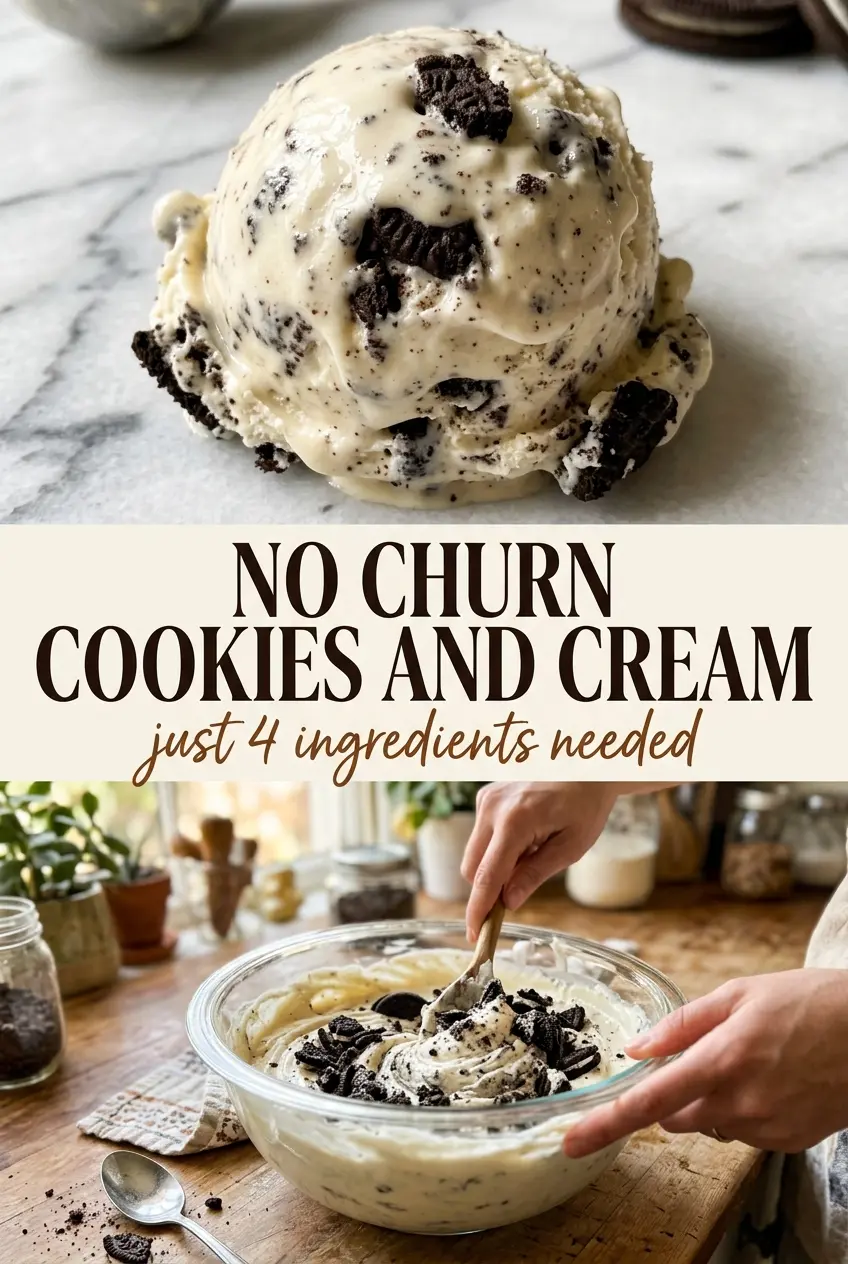
No Churn Cookies And Cream Ice Cream
Ingredients
Equipment
Method
- Whip the heavy whipping cream in a large bowl with a stand mixer until stiff peaks form, using high speed for about 5–7 minutes and stopping as soon as peaks hold their shape (no graininess).
- Whisk the sweetened condensed milk and vanilla extract in a separate bowl until smooth and evenly combined, about 1–2 minutes.
- Gently fold the whipped cream into the condensed milk mixture until fully combined and no streaks remain, using slow strokes to keep it airy.
- Fold in the crushed chocolate sandwich cookies, reserving a small handful for topping, so the batter stays thick with visible cookie pieces.
- Pour the mixture into a loaf pan or airtight container and smooth the top for even freezing.
- Sprinkle the reserved crushed cookies over the surface to create a crunchy topping layer.
- Cover and freeze for at least 6 hours or overnight until firm, letting the surface set completely before slicing or scooping.
- Scoop and serve straight from the freezer, letting it sit 2–3 minutes if you want softer texture.