
Soft, buttery tea cakes with blueberries tucked into every bite and a faint floral note from lavender have a way of disappearing fast. The crumb stays tender instead of turning dry and muffin-like, and the honey brushed on at the end gives the tops a gentle shine without making them sticky. They feel elegant on the table, but they bake up with the kind of simple method that works in a regular kitchen.
The balance matters here. Too much lavender tastes perfumey and loud, so this version keeps it restrained and grounds it before it goes into the batter so the flavor spreads evenly. Buttermilk keeps the crumb light and adds a little tang that plays well with the berries, while the butter and sugar base gives the cakes a fine, soft texture instead of a dense one. Tossing the blueberries with a little flour is worth the extra minute because it helps them stay suspended instead of sinking into the bottom.
Below you’ll find the small details that keep these tea cakes tender, along with the best way to handle the lavender so it tastes delicate instead of harsh. I’ve also included the storage notes, because these hold up nicely for a couple of days and are just as good the next morning with tea or coffee.
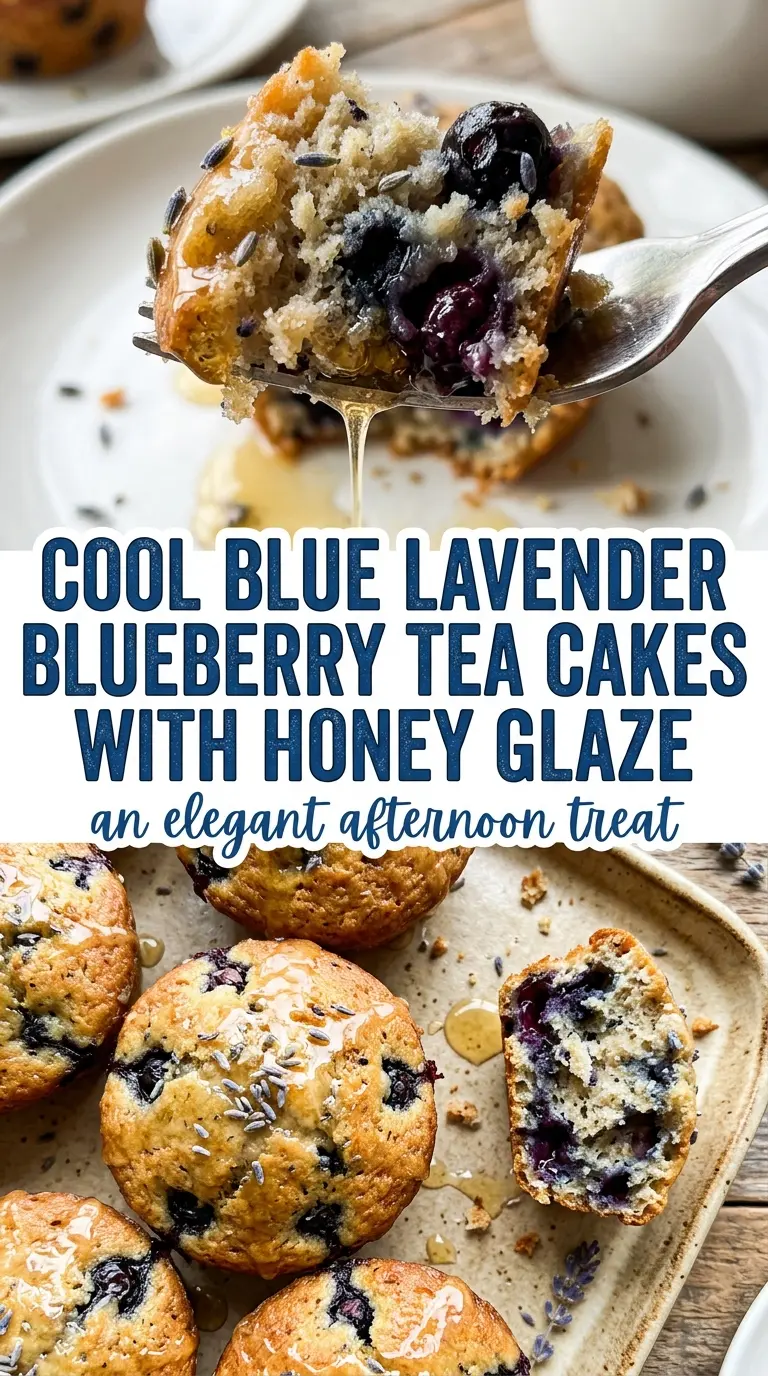
The honey glaze gave these a lovely finish and the lavender stayed subtle instead of tasting like soap. I baked them in mini loaf pans and they came out so tender, with the blueberries staying evenly distributed.
Sweet floral lavender blueberry tea cakes with a honey glaze are the kind of bake you’ll want to keep for afternoon tea and brunch trays.
The Lavender Mistake That Can Ruin These Cakes
Lavender is the ingredient that can turn these from delicate to overwhelming in a hurry. The problem isn’t just amount; it’s extraction. Whole buds left too coarse can hit the tongue like little bursts of perfume, while overmixing can spread that flavor unevenly and make some bites taste stronger than others. Grinding the dried culinary lavender first helps distribute it through the batter so the flavor reads as soft and floral instead of sharp.
The other common failure is chasing a dark, bakery-style top and baking the cakes too long. These are best when the crumb is set and springy, but still tender underneath. Pull them as soon as a tester comes out clean or with a few moist crumbs, because the honey glaze will add the finishing look without needing extra oven time.
What Each Ingredient Is Doing in This Dish
- Flour — All-purpose flour gives the cakes enough structure to hold the blueberries without turning heavy. A lower-protein cake flour would make them a little more tender, but also more fragile, so all-purpose is the safer pick here.
- Butter — This is where the rich, soft crumb starts. Use softened butter, not melted, because the creamed butter traps air with the sugar and gives the tea cakes their lift.
- Buttermilk — The acidity keeps the crumb light and balances the sweetness. If you don’t have it, stir 1 tablespoon lemon juice or vinegar into enough milk to make 1 cup, then let it sit for 5 minutes before using.
- Dried culinary lavender — Culinary lavender is worth using here; ornamental lavender can taste harsh and musty. Grind it finely before adding so the flavor disperses evenly through the batter.
- Blueberries — Fresh berries hold their shape best and give the cleanest pockets of juice. If you use frozen blueberries, don’t thaw them first, and toss them with a spoonful of flour so they don’t bleed too much into the batter.
- Honey — The warm honey brushed over the top adds shine and a soft sweetness that doesn’t compete with the lavender. Thin it slightly with a teaspoon of warm water if it starts to seize when brushed on.
Mixing the Batter Without Tearing It Apart
Creaming the Butter and Sugar
Start by beating the softened butter and sugar until the mixture looks pale and fluffy, not just blended. That change in color tells you enough air has been worked in to help the cakes rise. If the butter is too cold, you’ll get a grainy paste instead of a light base, and the finished cakes will bake up dense.
Adding the Eggs One at a Time
Beat in the eggs one by one so the batter stays smooth and emulsified. If the mixture looks a little curdled after the second egg, it usually means the eggs or butter were too cold, but it comes back together once the flour goes in. Scrape the bowl well so there aren’t streaks of unmixed butter hiding at the bottom.
Bringing in the Flour and Buttermilk
Alternate the dry ingredients and buttermilk, beginning and ending with the flour mixture. This keeps the batter from overworking and helps it stay tender. Mix only until the flour disappears, because a beaten, stretchy batter bakes up tougher and can lose that soft tea cake crumb.
Folding in Lavender and Blueberries
Stir in the ground lavender first so it gets distributed before the berries go in. Then fold in the blueberries with a light hand, using just enough motion to spread them through the batter. If you stir hard here, the berries can burst and streak the batter purple before baking.
Baking and Finishing with Honey
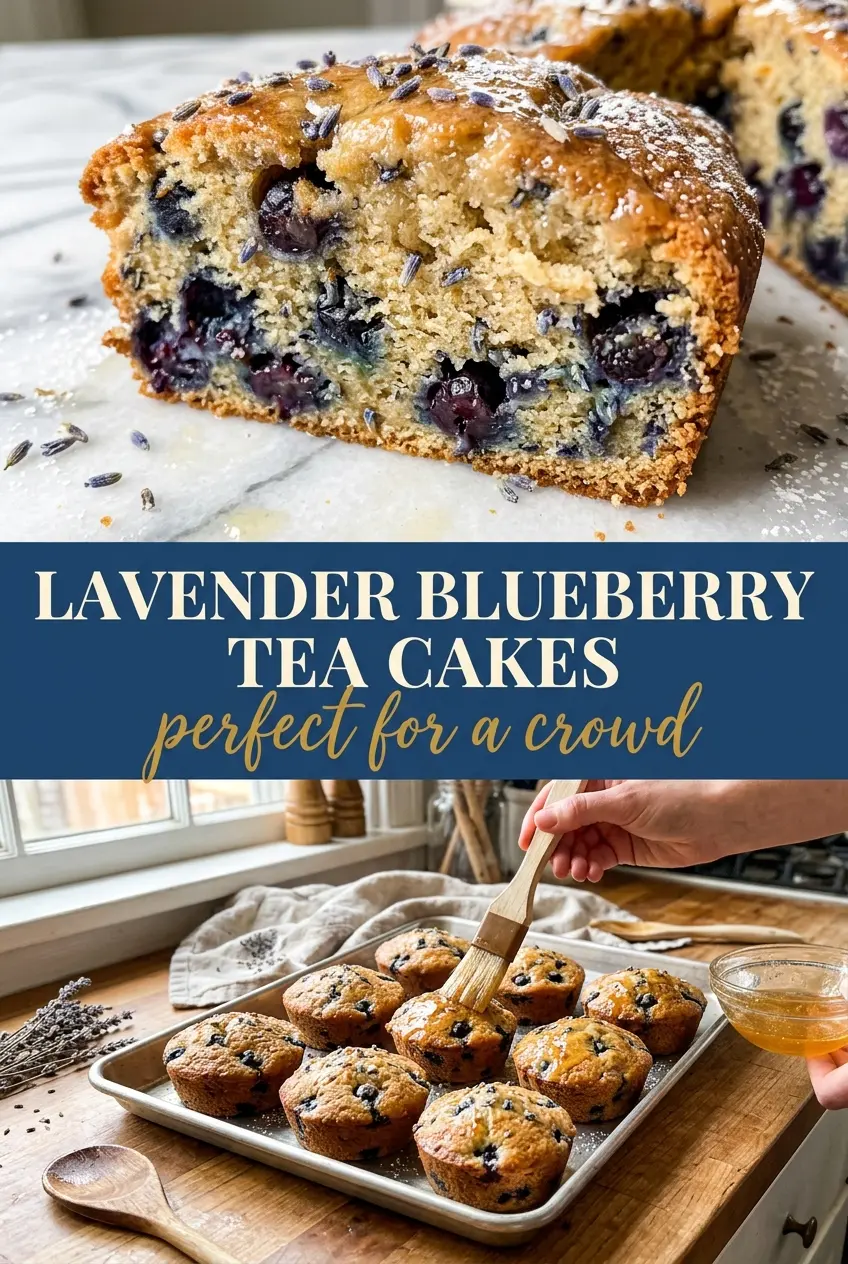
Divide the batter evenly and bake until the tops are golden and the centers spring back when touched. A toothpick should come out clean or with a few damp crumbs, not wet batter. Let the cakes cool before brushing on the warm honey, or it will run off instead of settling into that glossy finish.
Three Ways to Make These Tea Cakes Work for Your Table
Mini Loaf Pan Version
Use mini loaf pans if you want neat slices instead of individual cakes. The bake time may run a little longer, and the center should still spring back gently when pressed. This shape gives you a softer middle and a more bakery-style presentation.
Gluten-Free Adaptation
A good 1:1 gluten-free baking blend can work here, but the cakes may be a touch more delicate. Let the batter rest for 10 minutes before baking so the flour can hydrate, and expect a softer crumb that needs a careful hand when unmolding.
Lemon-Lavender Twist
Add 1 to 2 teaspoons of finely grated lemon zest to the batter for a brighter finish. The citrus lifts the blueberries and makes the lavender read a little fresher, but too much zest will crowd out the floral note, so keep it restrained.
Storage and Reheating
- Refrigerator: Store in an airtight container for up to 4 days. The crumb stays moist, though the honey glaze will soften a little.
- Freezer: They freeze well without the honey glaze. Wrap tightly and freeze for up to 2 months, then thaw at room temperature before glazing.
- Reheating: Warm briefly in a 300°F oven for 5 to 8 minutes. Microwaving makes the crumb rubbery and can push the blueberries into a jammy, wet spot.
Questions I Get Asked About This Recipe
Lavender Blueberry Tea Cakes
Ingredients
Equipment
Method
- Preheat the oven to 350°F and prepare a muffin tin or mini loaf pans.
- Set the pans aside so the batter can be portioned right after mixing.
- Cream the butter and sugar until fluffy, then beat in the eggs until smooth.
- Alternate adding the flour, baking powder, and buttermilk into the batter, mixing until smooth.
- Stir in the ground lavender until evenly distributed.
- Gently fold in the blueberries, taking care not to overmix.
- Divide the batter among the pans and bake for 20–25 minutes, until golden and a toothpick comes out clean.
- Remove from the oven and let the tea cakes cool before glazing.
- Warm the honey slightly and brush it over the cooled tea cakes.