
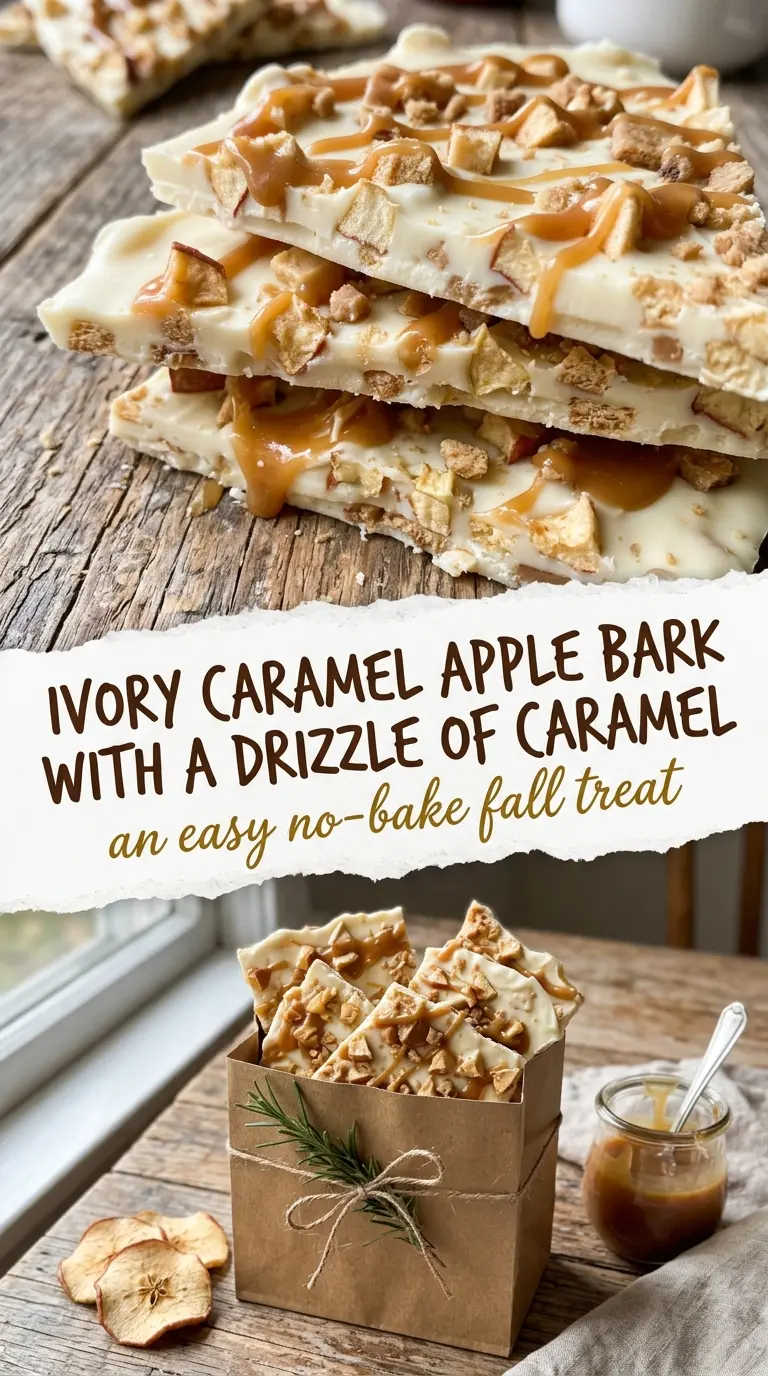
Caramel apple bark has that snap-and-melt contrast that makes it disappear fast: creamy white chocolate on the bottom, ribbons of caramel running through the top, and little bursts of tart apple in every bite. It looks like something from a candy counter, but it comes together with a handful of ingredients and zero baking.
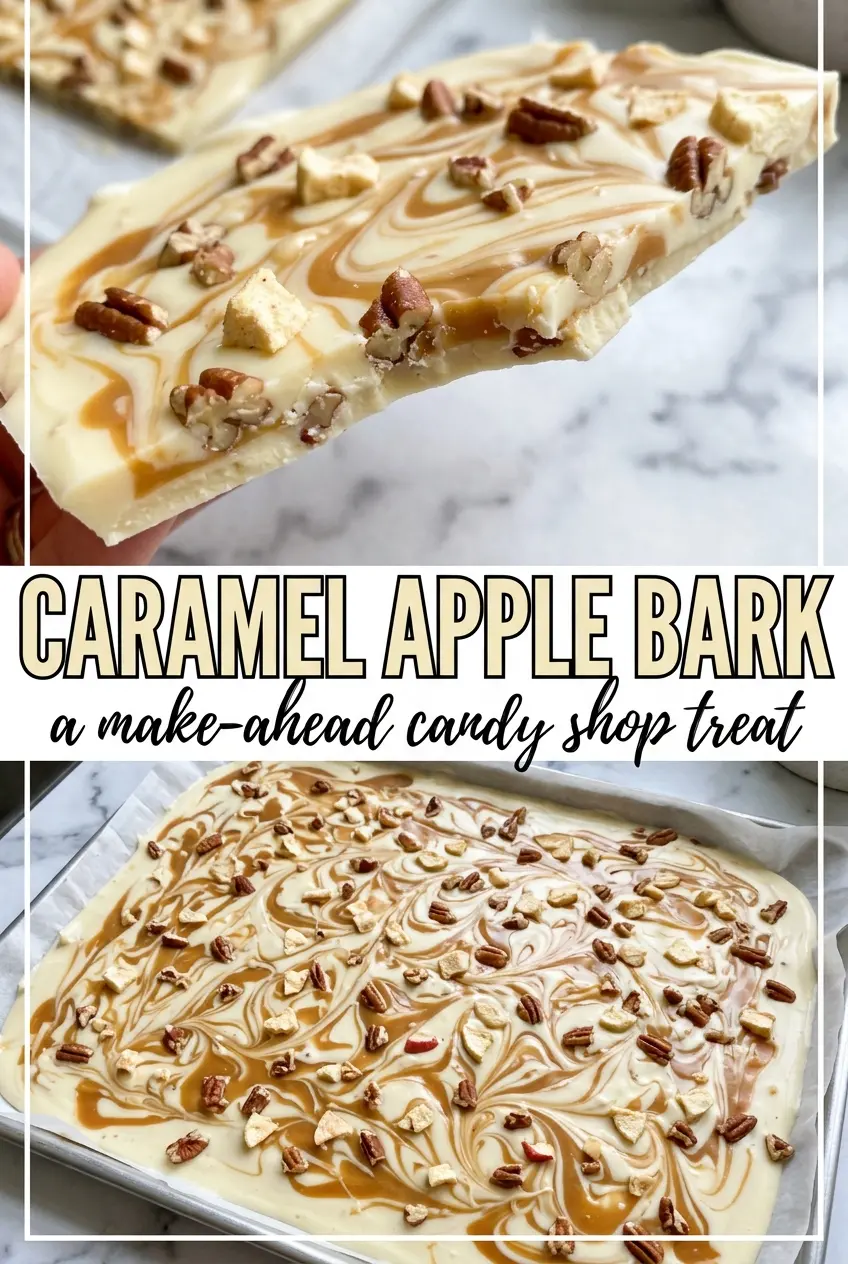
The trick is keeping the white chocolate warm enough to swirl, but not so hot that the caramel sinks without leaving those pretty marbled streaks. Freeze-dried apple pieces earn their place here because they stay crisp instead of turning chewy or wet, which is exactly what keeps the bark from feeling soft in the wrong way. A pinch of cinnamon and flaky salt pull the whole thing into caramel-apple territory instead of just sweet white chocolate.
Below, I’ll show you the small timing detail that keeps the layers distinct, plus a couple of smart swaps if you want to change up the chocolate or make the bark more dessert-board friendly.
The caramel swirled beautifully and the apple stayed crisp, even after it sat out for a bit. I broke it into chunks for a party and every piece had that perfect sweet-salty crunch.
Caramel apple bark with white chocolate, cinnamon, and flaky salt is the kind of no-bake treat that looks fancy without any fuss.
The Reason the Caramel Swirl Stays Pretty Instead of Sinking
Most bark goes sideways when the topping and base are at opposite temperatures. If the chocolate cools too much before you add the caramel, the caramel just sits in heavy blobs. If the chocolate is too hot, the swirl disappears into the base and you lose that marbled look.
The sweet spot is melted, spreadable chocolate that still feels fluid when you drag a knife through it. That gives the caramel just enough resistance to ribbon across the top instead of vanishing. You also want to drizzle, not pour. Thin streams give you control and keep the bark looking hand-finished instead of muddy.
- White chocolate melts differently than dark chocolate. It can seize or scorch faster, which is why short microwave bursts matter here. Stir after every burst even if it looks partly solid; the residual heat finishes the job.
- Freeze-dried apples are the texture insurance. Fresh apple pieces would release moisture and soften the bark. Freeze-dried pieces stay crisp and intensify the apple flavor without making the chocolate tacky.
- Flaky salt is not just decoration. It sharpens the caramel and keeps the bark from reading as one-note sweet. Table salt works in a pinch, but you’ll lose the crunch and those little salty pops.
What Each Ingredient Is Actually Doing in This Bark
- White chocolate chips form the base and give the bark its creamy, snappy structure. If you can find a brand with cocoa butter listed high on the ingredient list, use it. Compound coating will work, but it tastes flatter and can wax up on the tongue.
- Caramel sauce adds the sticky ribbons that make each piece taste like caramel apples without the mess of dipping fruit. A thicker sauce holds the swirl better than a thin ice cream topping. If yours is cold and stiff, warm it just enough to drizzle cleanly.
- Freeze-dried apple pieces bring tartness and crunch. Crush them lightly so you get a mix of fine bits and larger flakes instead of powder. That range keeps the bark interesting in every bite.
- Cinnamon deepens the apple-caramel flavor and keeps the white chocolate from tasting flat. A little goes a long way. Too much and it starts to take over the whole batch.
- Flaky sea salt finishes the bark and breaks up the sweetness. Don’t skip it unless you’re serving this to someone who truly hates salt with dessert, because it’s what makes the caramel taste fuller.
The 10 Minutes That Decide the Texture
Melting the Chocolate Without Overheating It
Put the white chocolate chips in a microwave-safe bowl and heat in 30-second bursts, stirring between each round. Stop when a few small pieces are still visible; the bowl’s heat will melt them the rest of the way. If you keep microwaving until it looks fully smooth, it can go grainy or thick. You want glossy and fluid, not hot and tight.
Spreading the Base in One Even Layer
Line a baking sheet with parchment and spread the chocolate into a fairly even rectangle. Don’t leave it too thin, or the bark will break into dusty shards instead of clean pieces. Don’t leave it too thick, either, or the center can stay soft longer than the edges. Aim for a layer you can see clearly but can’t easily see through.
Swirling Before the Chocolate Sets
Drizzle half the caramel over the chocolate, then drag a butter knife through it in loose S-shapes. Work quickly here. Once the chocolate starts to lose its sheen, the caramel won’t marble as nicely and you’ll get streaks instead of swirls. After that, scatter the crushed apples and cinnamon over the top, then finish with the rest of the caramel and the salt.
Chilling Until It Breaks Cleanly
Refrigerate the bark until it’s fully set and no longer tacky on top. If you try to break it early, the chocolate flexes and the caramel smears. Once it’s firm, lift the slab off the parchment and break it into irregular pieces with your hands for the best rustic look.
How to Adapt This for a Bigger Batch or a Different Diet
Dairy-Free Swap
Use dairy-free white chocolate and a caramel sauce made without cream or butter. The bark will still set and snap, but the flavor will be a little less rich and a touch sweeter, so keep the flaky salt in place.
Chocolate Swap for a Less Sweet Finish
Use chopped semisweet chocolate instead of white chocolate if you want a deeper, less sugary bark. It changes the whole dessert from candy-shop sweet to more grown-up and balanced, but the caramel and apple still read clearly.
Nutty Version
Add chopped toasted pecans or walnuts with the apple pieces. You’ll get more crunch and a little buttery depth that plays well with caramel, but the bark will taste less clean and more like a candy-bar style treat.
Storage and Reheating
- Refrigerator: Store in an airtight container for up to 1 week. The bark may lose a little snap if it sits out too long because of the caramel.
- Freezer: It freezes well for up to 2 months. Layer pieces between parchment so they don’t stick together, then thaw in the fridge to avoid condensation on the chocolate.
- Reheating: No reheating needed. If the bark feels too hard straight from the fridge, let it sit at room temperature for 5 to 10 minutes. Don’t microwave it or the caramel will smear and the chocolate can bloom.
Answers to the Questions Worth Asking
Caramel Apple Bark
Ingredients
Equipment
Method
- Line a sheet pan with parchment paper, leaving a smooth surface so the bark sets evenly.
- Melt white chocolate chips in the microwave using 30-second bursts, stirring between each burst until smooth.
- Spread the melted white chocolate evenly onto the lined sheet pan to form a thin, consistent layer.
- Drizzle half the caramel sauce over the chocolate and swirl gently with a knife while the chocolate is still warm.
- Sprinkle crushed freeze-dried apple pieces and cinnamon over the top so they adhere to the chocolate.
- Drizzle the remaining caramel sauce over the bark and finish with a sprinkle of flaky sea salt.
- Refrigerate for at least 1 hour until set, so the chocolate firms up and the caramel ribbons hold their shape.
- Break the bark into rustic pieces and serve once fully firm.