
Sticky honey BBQ chicken over fluffy rice earns its place in the dinner rotation because it hits that sweet-salty spot without asking for much effort. The chicken stays tender, the sauce turns glossy and clingy instead of watery, and every bite soaks into the rice underneath. It feels like the kind of skillet meal you’d order at a casual spot, except it comes together with ingredients you probably already keep around.
The part that makes this work is the balance in the sauce. BBQ sauce brings body and smoke, honey adds shine and a little caramelized edge, and soy sauce keeps the sweetness from flattening out. Let the sauce simmer uncovered long enough to reduce, because that’s what turns it from thin and pourable into a sticky glaze that coats the chicken instead of pooling on the plate.
Below, I’ll walk through the tiny details that matter most: how to keep the chicken from drying out, why the sauce should go in only after the chicken has taken on color, and what to do if you want to stretch this into a bigger meal with vegetables on the side.
The sauce thickened up just like the picture and the chicken stayed juicy instead of getting dry. I served it over leftover rice and my husband went back for seconds before I even sat down.
Save this honey BBQ chicken rice for the nights when you want a sticky skillet dinner that comes together fast and doesn’t leave a pile of dishes behind.
The Trick to Keeping the Glaze Sticky Instead of Watery
The biggest mistake with honey BBQ chicken is adding the sauce too early and letting it boil hard the whole time. That gives you chicken with pale edges and a sauce that tastes thin instead of glossy. You want the meat to pick up some color first, then let the sauce finish the job over medium-low heat so it can reduce gently.
Uncovered simmering matters here. If you cover the pan, the steam has nowhere to go and the sauce stays loose. If the heat is too high, the honey can scorch before the BBQ sauce has time to tighten up. The sweet spot is a lazy bubble around the chicken and a sauce that clings to the spoon.
What Each Ingredient Is Actually Doing in This Dish
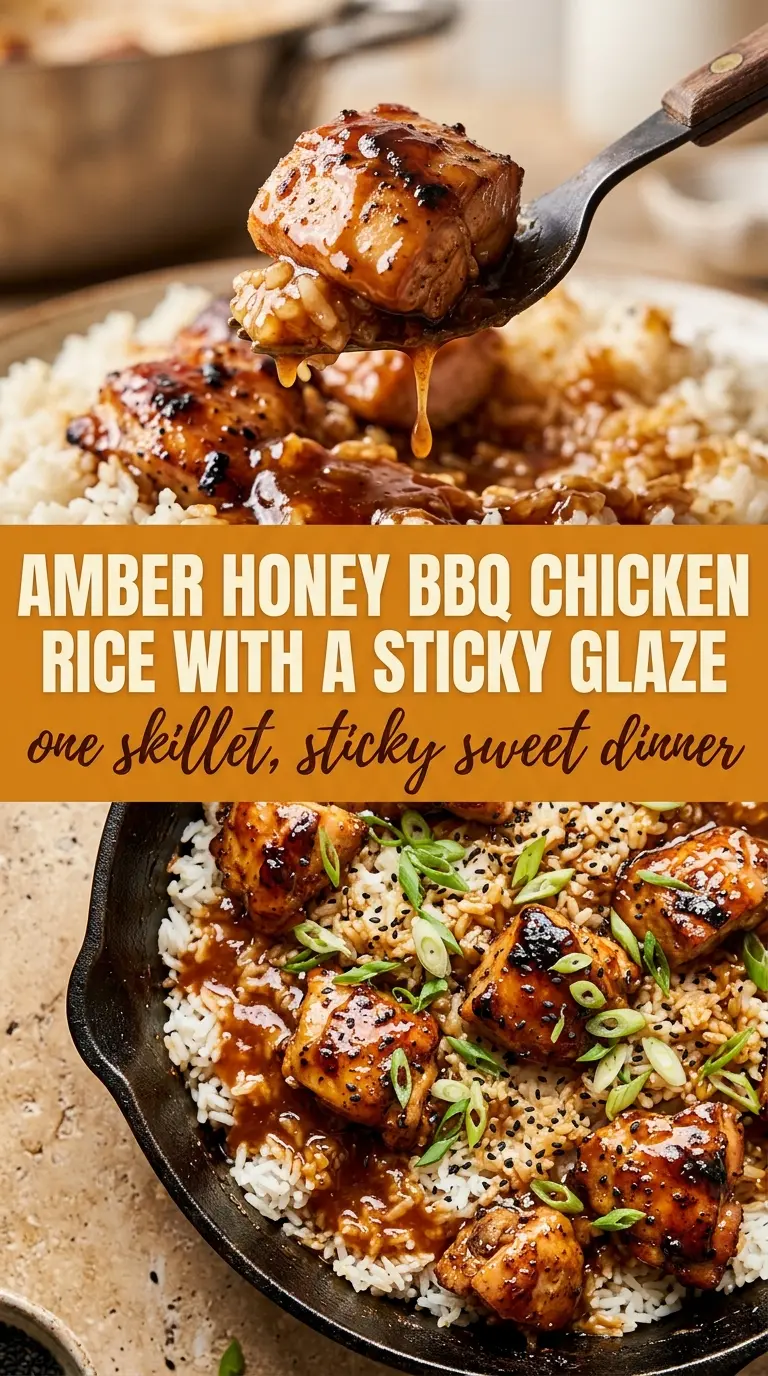
- Chicken breast — Cubing it evenly matters more than the cut itself. Smaller pieces cook fast and soak up the glaze well, but if you cut them unevenly, the little pieces dry out before the larger ones are done.
- BBQ sauce — This is the base of the glaze, so use one you’d actually eat on its own. A thinner sauce will reduce a little faster, while a thicker sauce makes the finished dish clingier.
- Honey — It adds shine and helps the sauce turn sticky as it cools slightly in the pan. If you use less honey, the sauce will be more tangy and less lacquered.
- Soy sauce — This keeps the glaze from tasting flat. If you need a gluten-free version, tamari works the same way and gives the same salty depth.
- White rice — Plain rice is the right move because it catches the sauce without competing with it. Warm rice is worth the extra minute, since cold rice can mute the glaze and make the whole bowl feel less cohesive.
Cooking the Chicken, Then Letting the Sauce Do Its Work
Getting Color on the Chicken First
Heat the olive oil in a large skillet over medium-high heat and add the chicken in a single layer. You want it to sizzle the moment it hits the pan; if it just sits there and steams, the skillet is crowded or not hot enough. Let the pieces sit long enough to pick up golden edges before stirring, because that browning is what gives the finished dish depth.
Building the Glaze in the Pan
Whisk the BBQ sauce, honey, soy sauce, and garlic together, then pour it over the chicken and lower the heat. The sauce should bubble gently, not roar. Stir every so often so the sugars don’t catch on the bottom, and watch for the moment it starts to look shiny and slightly thicker around the edges of the pan.
Knowing When It’s Done
After about 5 to 6 minutes, the chicken should be fully cooked and the sauce should coat it in a sticky layer. If the sauce still runs like syrup, give it another minute uncovered. If it tightens too fast, pull the pan off the heat and stir in a spoonful of water to loosen it just enough to spoon over the rice.
Turn It Into a Bigger Dinner With Vegetables
Add steamed broccoli, snap peas, or sautéed bell peppers alongside the rice and chicken. The sweet glaze pairs best with something green or crisp, and the vegetables help balance the richness without changing the core recipe.
Make It Gluten-Free Without Losing the Sauce
Swap the soy sauce for tamari or a certified gluten-free soy sauce. The sauce still gets the same salty backbone, and the texture stays just as glossy once it reduces.
Use Thighs for a Richer, Softer Bite
Boneless chicken thighs work well if you want a juicier finish and a little more richness under the sweet glaze. They need about the same cook time once cut into pieces, though they’ll release a little more fat into the pan.
Storage and Reheating
- Refrigerator: Keep leftovers in an airtight container for up to 4 days. The sauce will thicken as it chills, which is normal.
- Freezer: It freezes well for up to 2 months if you store the chicken and rice separately. Freeze the chicken with extra sauce so it reheats moist instead of dry.
- Reheating: Warm the chicken gently in a skillet over low heat with a splash of water to loosen the glaze, or microwave it in short bursts. High heat dries out the chicken and makes the honey in the sauce catch on the pan.
Questions I Get Asked About This Recipe
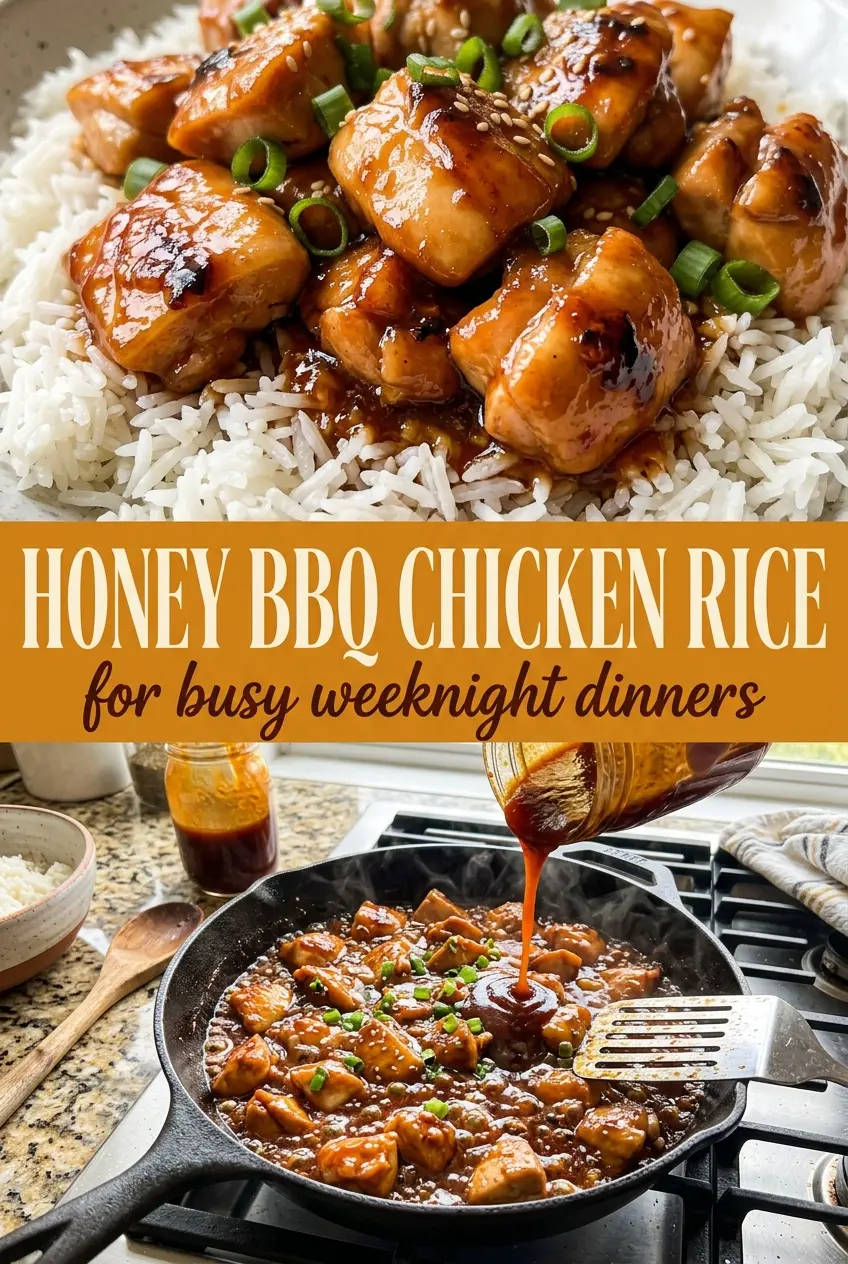
Honey BBQ Chicken Rice
Ingredients
Equipment
Method
- Heat the olive oil in a large cast iron skillet over medium-high heat until shimmering.
- Add the cubed chicken and cook, stirring occasionally, until golden and mostly cooked through, about 6-7 minutes.
- Whisk together the BBQ sauce, honey, soy sauce, and minced garlic in a bowl.
- Pour the sauce over the chicken and reduce heat to medium-low.
- Simmer uncovered for 5-6 minutes, stirring occasionally, until the sauce thickens into a sticky glaze and the chicken is fully cooked.
- Spoon the glazed chicken over the cooked white rice.
- Top with sliced green onions before serving.