
Juicy chicken thighs, sticky pineapple, and charred bell peppers belong on the same pan. The oven turns the teriyaki glaze glossy and concentrated while the pineapple gives off just enough juice to help everything caramelize instead of drying out. What you get is sweet, savory, and a little smoky around the edges, with the kind of sauce that clings to the chicken instead of sliding off onto the tray.
The trick is keeping the ingredients in a single layer and giving the pan enough heat to roast, not steam. Chicken thighs handle that high temperature better than breasts, which means you get tender meat even after the sauce reduces. A quick honey boost helps the teriyaki brown faster, and the pineapple edges pick up a little char without turning mushy.
Below you’ll find the part that matters most: how to keep the pan from overcrowding, when to broil for those sticky edges, and a few smart swaps if you’re working with what you’ve got in the fridge.
The pineapple caramelized beautifully and the chicken stayed juicy all the way through. I broiled it for the last 2 minutes like suggested and the edges got sticky in the best way.
Save this Hawaiian Chicken Sheet Pan for a sticky-sweet dinner with caramelized pineapple and barely any cleanup.
The Reason Sheet Pan Chicken Stays Juicy Instead of Drying Out
Most sheet pan chicken fails for one of two reasons: the pan gets crowded, or the chicken is too lean for the heat. Both problems push the food toward steaming instead of roasting. Chicken thighs solve most of that on their own because the extra fat keeps the meat tender while the outside gets bronzed and sticky.
The other thing that matters here is the glaze. Teriyaki sauce already brings salt and sweetness, but it needs a little honey to turn lacquered in the oven. If you skip the honey, you still get flavor, but you lose that shiny, clingy finish that makes this dish feel complete.
What Each Ingredient Is Actually Doing in This Dish
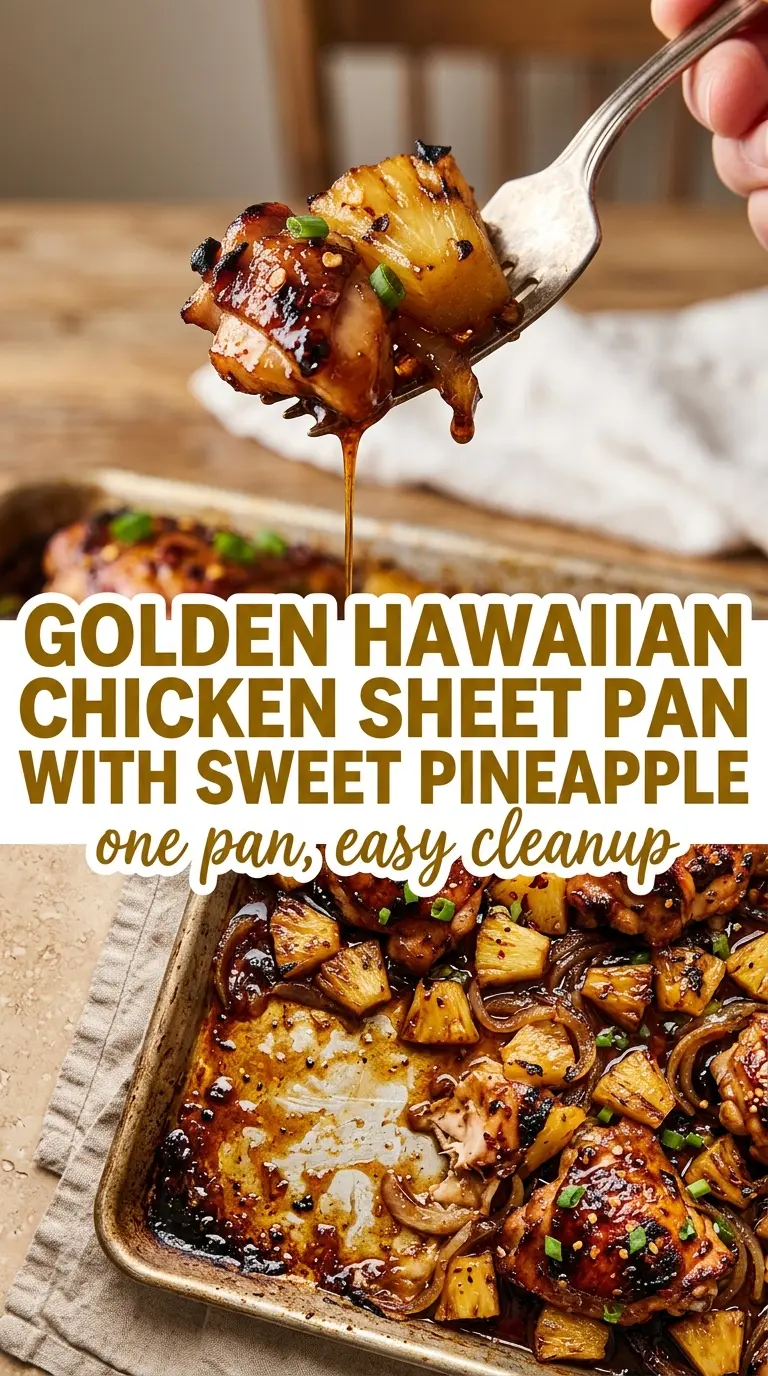
- Chicken thighs — These hold up to a hot oven and stay juicy even after a full roast. Boneless thighs are easiest here, but bone-in works if you add a few minutes and check the thickest piece.
- Pineapple chunks — Fresh pineapple caramelizes best, but canned pineapple in juice works if you drain it well. Syrupy or heavily packed fruit can make the pan wet, which softens the edges instead of browning them.
- Teriyaki sauce — This is the backbone of the dish, so use one you actually like. If yours is thin, a quick simmer isn’t necessary here; the oven will reduce it, but a thicker sauce clings better from the start.
- Honey — This pushes the glaze toward sticky instead of just salty-sweet. Maple syrup can stand in, but it tastes a little rounder and less classic.
- Bell pepper — Red bell pepper brings sweetness and color without fighting the pineapple. Slice it a little thicker than you think so it softens without disappearing.
The 10 Minutes That Keep It Roasting, Not Steaming
Coating the Pan Evenly
Toss everything together right on the sheet pan or in a bowl first, then spread it out in one layer. If the chicken pieces overlap or the pineapple piles up, the juices collect and the food starts braising in its own liquid. Leave little gaps where you can see the pan underneath. That space is what gives you browned edges instead of pale, soft chicken.
Roasting at High Heat
Put the pan into a fully heated 425°F oven and let the heat do the work. The chicken should sizzle as soon as it hits the rack, and the sauce will bubble around the edges while the pineapple takes on deep golden spots. If your oven runs cool, add a few extra minutes, but don’t keep opening the door. Each peek drops the temperature and slows the browning.
Finishing with a Quick Broil
The last 2 minutes under the broiler are where the glaze turns sticky and the edges darken a shade or two. Watch it closely, because honey and pineapple can go from bronzed to bitter fast. Pull the pan as soon as you see charred spots on the pepper edges and the sauce looks glossy rather than wet. Sprinkle the scallions on after roasting so they stay fresh and sharp.
How to Adapt This for a Smaller Pantry or a Different Diet
Make It Gluten-Free
Use a certified gluten-free teriyaki sauce. That’s the only ingredient that usually needs attention, and it’s the difference between a safe dinner and one that looks right but isn’t. The texture and caramelization stay the same.
Use Chicken Breasts Instead of Thighs
Chicken breasts work, but they need a little more attention. Cut them into even pieces so they cook at the same pace, and pull the pan the moment the center hits 165°F. They won’t taste as rich as thighs, but they still pick up the sticky glaze well.
Swap the Pineapple When You Don’t Have It
Mango gives you a similar sweet edge, though it softens faster and won’t hold its shape quite as well. Peach works too, especially in a pinch, but it leans softer and a little more jammy. Either swap changes the flavor from tropical and bright to more mellow.
Make It Dairy-Free
This dish is naturally dairy-free as written, which is handy when you’re cooking for a mixed table. Keep an eye on the teriyaki label if you’re using a bottled version, since a few brands sneak in unexpected additives. The rest stays unchanged.
Storage and Reheating
- Refrigerator: Store leftovers in an airtight container for up to 4 days. The pineapple softens a bit, but the flavor holds well.
- Freezer: It freezes fairly well for up to 2 months. Cool it completely first, then pack it in a freezer-safe container; the peppers will be softer after thawing, but the chicken and sauce still reheat nicely.
- Reheating: Warm it in a 350°F oven or in a skillet over medium-low heat until hot. The microwave works in a pinch, but it tends to make the pineapple watery and the chicken rubbery if you blast it too long.
Questions I Get Asked About This Recipe
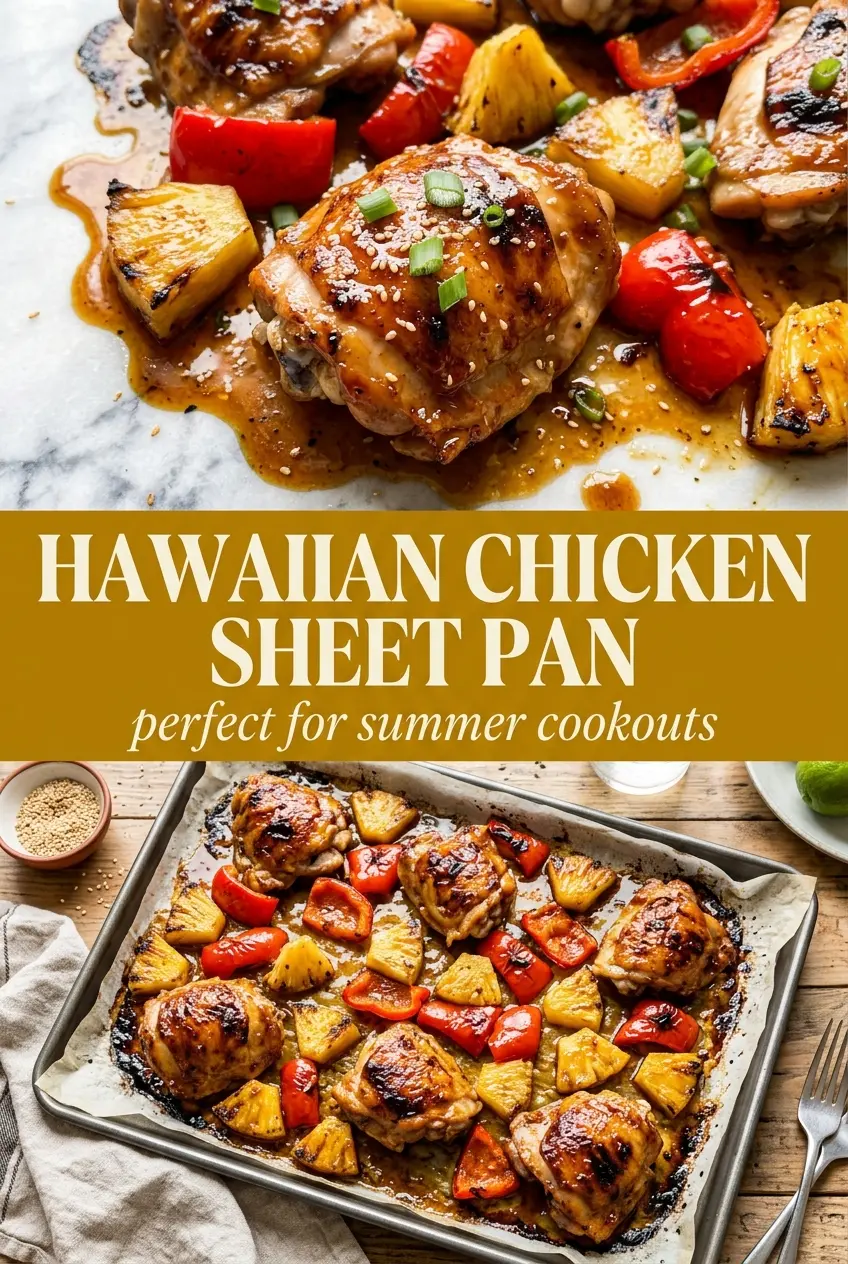
Hawaiian Chicken Sheet Pan
Ingredients
Equipment
Method
- Preheat oven to 425°F. Toss chicken thighs, pineapple chunks, and red bell pepper with teriyaki sauce, honey, and olive oil on a sheet pan.
- Spread everything in an even layer on the sheet pan so it cooks and caramelizes instead of steaming.
- Roast 25–30 minutes at 425°F, flipping halfway, until chicken is cooked through and edges are caramelized. Visual cue: the pineapple should look glossy and browned at the edges.
- Broil for the last 2 minutes at high heat if you want extra sticky, charred edges. Watch closely so the glaze doesn’t burn.
- Top with sliced scallions before serving. Visual cue: scallions should look fresh and bright against the caramelized glaze.