
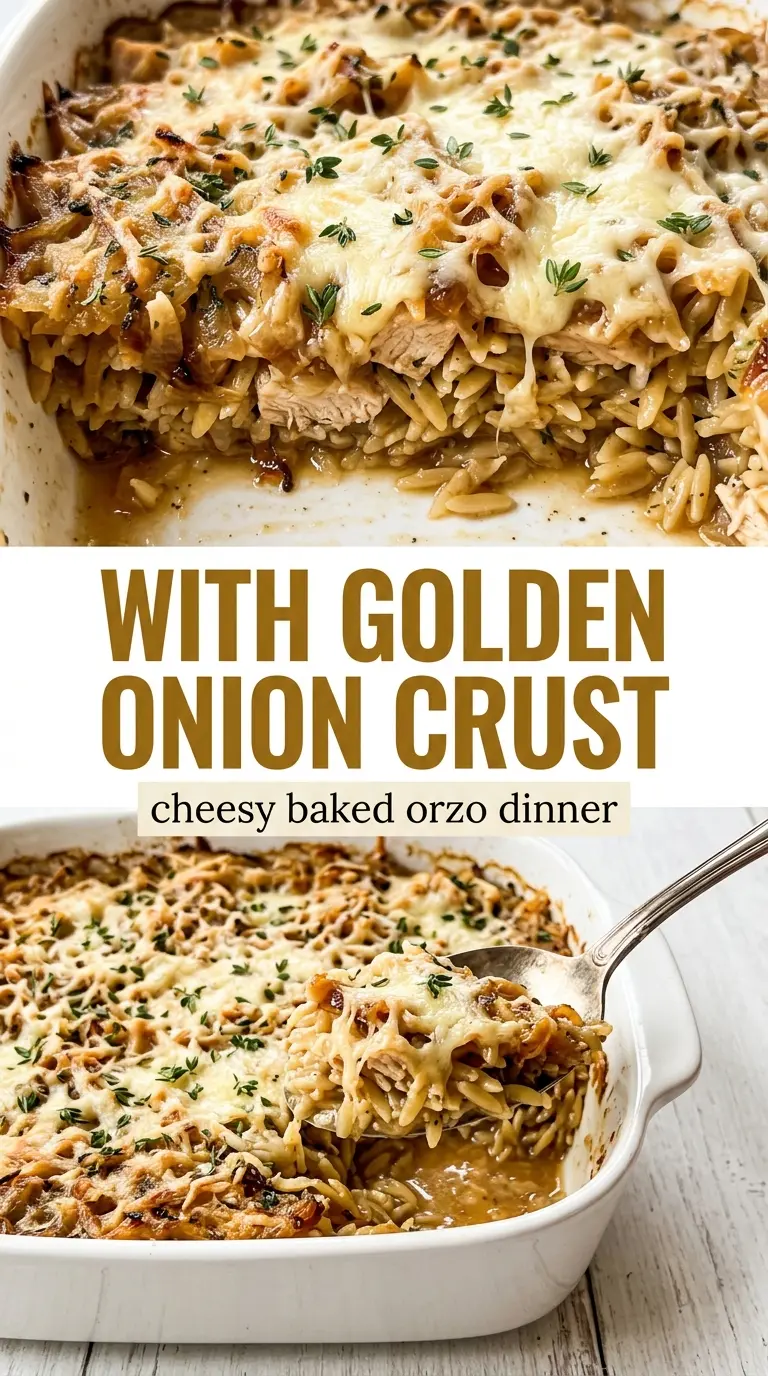
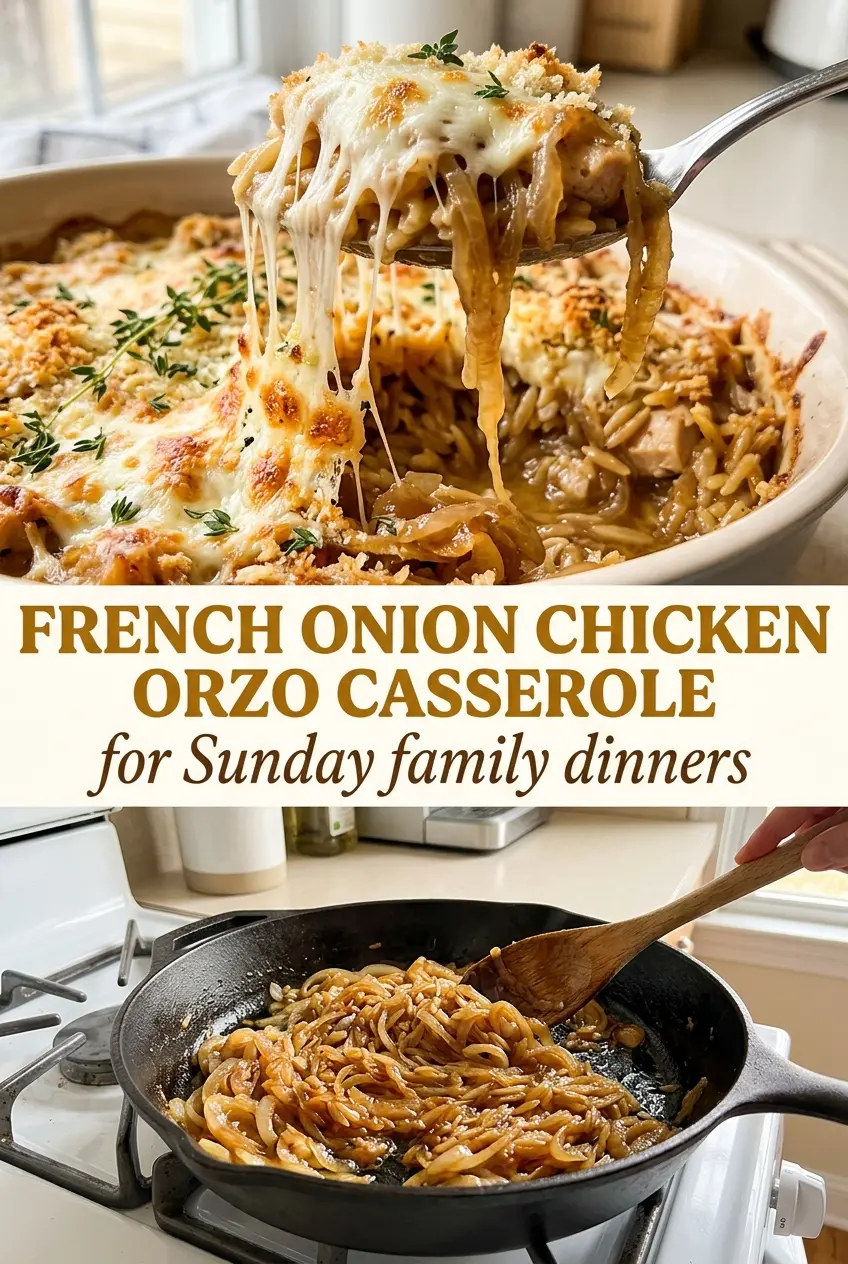
French onion chicken orzo casserole gives you the best part of French onion soup in a dinner that actually eats like a meal. The onions go deep and sweet, the orzo cooks right in the savory broth, and the cheese bakes into a golden top that cracks a little when you spoon through it. It lands in that sweet spot where it feels cozy and substantial without turning heavy or bland.
The part that makes this version worth keeping is the way the onions are handled. They need time to fully caramelize before anything else goes in, because that slow browning is what gives the whole casserole its backbone. Toasting the orzo in the pan for a minute or two also matters more than people expect; it keeps the pasta from going soft and flat once the broth and cream hit it.
Below you’ll find the timing that keeps the orzo tender instead of mushy, plus the little ingredient choices that make this casserole taste like it came from a much longer recipe.
The onions cooked down into this deep, sweet layer and the orzo stayed perfectly tender instead of turning to mush. My husband went back for seconds before I even sat down.
Save this French Onion Chicken Orzo Casserole for the nights when you want caramelized onions, tender orzo, and a bubbly cheese top in one pan.
The Part That Makes This Casserole Taste Like It Took All Day
The difference between a good French onion casserole and one that tastes flat comes down to the onions. Pale onions taste like onions. Deep golden onions taste sweet, savory, and layered, and they carry the whole dish. If you rush this stage, the casserole can still be edible, but it won’t have that French onion depth people are after.
The other place this dish can go wrong is the pasta. Orzo cooks fast, and once it goes in the broth it keeps absorbing liquid as it sits. That means the timing matters. You want it tender with a little bite left before the cheese goes in, because the oven finish will finish the job.
What Each Ingredient Is Actually Doing in This Dish
- Onions — Yellow onions work best here because they break down evenly and turn sweet without getting stringy. White onions can work in a pinch, but they don’t deepen quite as nicely.
- Butter and olive oil — The butter gives you flavor, and the oil keeps the butter from browning too fast while the onions cook. You need both for a steady caramelization.
- Orzo — This small pasta behaves more like rice than a typical noodle in a casserole, which is why it soaks up the broth and cream so well. Don’t swap in a larger pasta unless you also change the liquid and cooking time.
- Shredded cooked chicken — Rotisserie chicken is perfect here because it’s already seasoned and tender. Freshly cooked chicken works too, but shred it into small pieces so it blends into the casserole instead of sitting in chunks.
- Heavy cream — This gives the sauce body and a silky finish. Half-and-half will work if that’s what you have, but the casserole will be a little looser and less rich.
- Mozzarella and Parmesan — Mozzarella gives you the pull, and Parmesan brings the sharp, salty edge that keeps the dish from tasting one-note. If you only use mozzarella, the topping can taste soft and bland.
Building the Base Without Letting the Orzo Overcook
Caramelizing the onions properly
Melt the butter and olive oil over medium heat, then add the sliced onions with the sugar. Stir them now and then, but don’t keep them moving constantly or they won’t brown; they’ll steam. After 20 to 25 minutes, they should be deep golden, soft enough to almost melt, and smell sweet instead of sharp. If the pan looks dry before the onions are done, add a small splash of water and scrape up the browned bits so nothing scorches.
Toasting the orzo before the liquid goes in
Stir in the orzo and let it sit in the hot pan for about 2 minutes. You’re looking for a faint nutty smell and a lightly coated sheen on the pasta. That quick toast helps the orzo hold its shape later. If you skip it, the casserole can still work, but the texture will be softer and less distinct.
Cooking the filling to the right tenderness
Add the chicken, thyme, broth, and cream, then bring the mixture to a simmer before covering. Keep the heat low enough that you see small bubbles, not a hard boil, because rough boiling can split the cream and overcook the orzo edges before the center is done. After 8 to 10 minutes, the liquid should be mostly absorbed and the orzo should still have a slight chew. If the pan looks dry before the pasta is tender, add a splash of broth.
Finishing with cheese and heat
Stir in most of the mozzarella and Parmesan, then scatter the rest over the top before baking. The goal is a casserole that bubbles at the edges and turns golden on top, not one that dries out under heat. Bake at 375°F for 10 to 15 minutes. If you want a deeper crust, slide it under the broiler for a minute at the end, but stay close because cheese goes from browned to burnt fast.
How to Adapt This for Different Kitchens and Different Eaters
Make It Gluten-Free
Use a gluten-free orzo-style pasta and watch the simmer time closely, since some GF pastas soften faster than wheat versions. The sauce and topping work the same way, but the texture may be a touch more delicate.
Dairy-Free Version
Swap in plant-based butter, unsweetened oat or cashew cream, and a good meltable dairy-free cheese. You won’t get the same sharp finish from Parmesan, so add a little extra thyme and a pinch of salt to keep the flavor from going soft.
Use What Chicken You Have
Leftover roast chicken, poached chicken, or rotisserie all work. Dark meat gives the casserole more richness, while breast meat keeps it lighter. Just keep the pieces small so every scoop has chicken without turning chunky.
Make It Ahead
You can caramelize the onions and cook the chicken a day in advance, then assemble and bake later. If you fully cook the casserole ahead, add a splash of broth before reheating so the orzo doesn’t seize up and turn dry.
Storage and Reheating
- Refrigerator: Store covered for up to 4 days. The orzo will absorb more sauce as it sits, so the casserole gets thicker.
- Freezer: It freezes well for up to 2 months, though the cream sauce may separate slightly after thawing. Freeze in portions for the best texture.
- Reheating: Reheat covered in a 325°F oven with a splash of broth or cream until hot. The biggest mistake is blasting it in the microwave without added liquid, which dries out the pasta and tightens the cheese.
Questions I Get Asked About This Recipe
French Onion Chicken Orzo Casserole
Ingredients
Equipment
Method
- Melt the butter and olive oil in a large oven-safe skillet over medium heat, stirring once so the butter foams evenly.
- Add the sliced onions and sugar, cooking for 20 to 25 minutes until deep golden brown, stirring occasionally so the onions color evenly.
- Stir in the uncooked orzo and toast for 2 minutes so the grains smell nutty and lightly dry.
- Add the shredded chicken and dried thyme, then pour in the chicken broth and heavy cream, scraping up any browned bits from the pan.
- Bring the mixture to a simmer, cover, and cook for 8 to 10 minutes until the orzo is tender, checking that it stays gently bubbling.
- Stir in the mozzarella and Parmesan, top with remaining cheese so the surface is fully covered, and spread into an even layer.
- Bake at 375°F for 10 to 15 minutes until bubbly and golden, watching for browned spots on the cheese crust.