
Blistered cherry tomatoes and soft baked feta turn into a sauce that tastes like you spent a lot more effort than you did. The tomatoes collapse into something sweet and jammy, the feta melts into a salty cream, and the pasta grabs onto every bit of it. It’s the kind of dinner that lands on the table fast but still feels like you built it with care.
What makes this version work is the order. The tomatoes go in whole so they can burst and release their juices instead of drying out, and the feta bakes right in the middle where it softens without disappearing. A little garlic in the pan gives the sauce backbone, and a splash of reserved pasta water helps everything emulsify into a glossy coating instead of a thick lump.
Below, I’ve laid out the few details that matter most — how to get the tomatoes properly blistered, what kind of pasta clings best to the sauce, and the easiest way to adjust the dish if your feta is extra salty or your tomatoes are smaller than usual.
The tomatoes got jammy and the feta melted into the smoothest sauce without any extra cream. I stirred in a little pasta water at the end and it coated every noodle perfectly — my husband went back for seconds before I even sat down.
Save this cherry tomato and feta baked pasta for the nights when you want a creamy, one-pan sauce that clings to every bite.
The Reason This Pasta Turns Creamy Instead of Grainy
The biggest mistake people make with baked feta pasta is treating the feta like a melting cheese. It doesn’t behave like mozzarella or cheddar. It softens, loosens, and blends with the tomato juices, but only if the tomatoes have enough time in the oven to burst and create a real sauce base. Pull it too early and you’ll get separate chunks of feta sitting in a shallow puddle.
This dish also needs enough salt awareness to avoid crossing the line. Feta already brings plenty of salt, so I season the tomatoes lightly at the start and then taste again after everything comes together. If the sauce tastes flat, it usually needs a small pinch of salt or a little more pasta water, not more cheese.
What Each Ingredient Is Actually Doing in This Dish
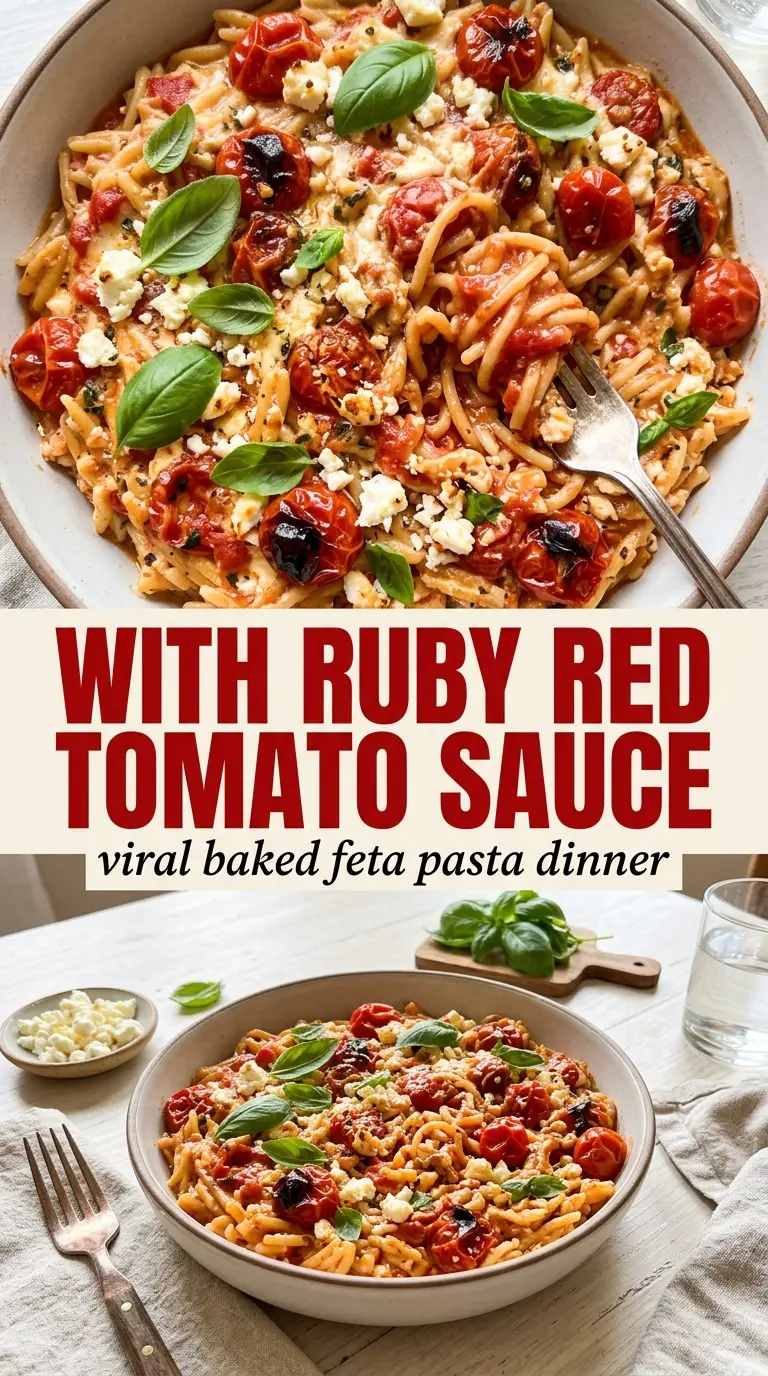
- Cherry tomatoes — Small tomatoes are important here because they blister fast and collapse into sauce at the same rate as the feta softens. Grape tomatoes work too, but larger tomatoes release too much water too slowly.
- Feta — Use a block if you can. Crumbled feta dries out faster and gives you a less cohesive sauce. A full-fat sheep’s milk feta melts into the smoothest finish, but a good supermarket block will still work.
- Olive oil — This helps the tomatoes roast instead of steaming and gives the sauce body at the end. Don’t skimp here; the oil becomes part of the sauce, not just a pan lubricant.
- Pasta water — This is the bridge that turns mashed tomatoes and feta into something silky. The starch helps the sauce cling to the noodles, so reserve more than you think you’ll need.
- Fresh basil — Add it at the end so it stays bright and fragrant. Dried basil won’t give the same finish and tends to disappear into the sauce.
How to Roast the Pan So the Sauce Builds Itself
Let the tomatoes do the work first
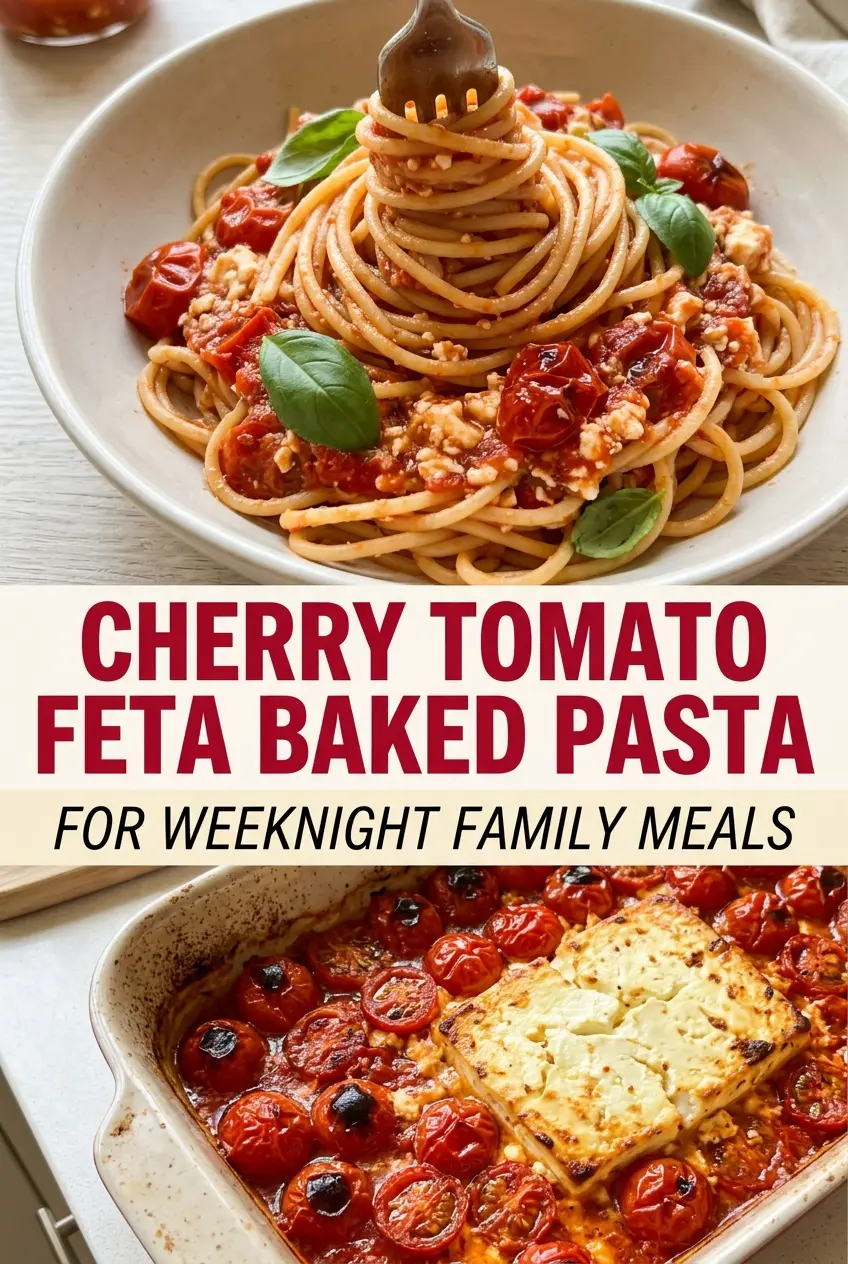
Spread the cherry tomatoes in a baking dish with enough room for some movement. If they’re packed too tightly, they steam and stay stubborn instead of blistering. The oven should leave you with split skins, wrinkled edges, and a glossy puddle of juices collecting around the pan.
Set the feta right in the center
Nestle the feta block into the tomatoes and add the garlic where it can perfume the whole dish without burning in a bare corner of the pan. The cheese should come out soft and spoonable, not browned and stiff. If your garlic is finely minced, keep it tucked into the tomato juices so it doesn’t scorch before the tomatoes are ready.
Mash, loosen, and toss while everything is hot
Once the pasta is drained, break the baked feta and tomatoes together with a spoon until the sauce looks creamy and streaked with red. Add the pasta straight in while the sauce is hot, then splash in reserved pasta water a little at a time. If the sauce seems thick and clumpy, it just needs more water and tossing; that starch is what makes it turn glossy instead of greasy.
Three Smart Ways to Adjust This Pasta
Gluten-Free Dinner That Still Clings Well
Use your favorite gluten-free pasta, but cook it just until tender with a little bite left. Gluten-free noodles can turn soft fast, and they’ll keep cooking once they hit the hot sauce. A shape with ridges or tubes holds onto the feta-tomato sauce better than plain spaghetti.
Dairy-Free Version With a Different Finish
Swap the feta for a dairy-free feta-style block that softens in the oven, not a soft spread. You won’t get the exact same tang, but the tomatoes still do the heavy lifting and bring enough richness on their own. Add a little extra olive oil and a squeeze of lemon at the end to brighten the sauce.
How to Stretch It for More People
Double the tomatoes and pasta, but keep the feta proportion close to the original so the sauce still tastes balanced. Use a larger baking dish so the tomatoes stay in a single layer as much as possible. Crowding the pan leads to watery tomatoes and a thinner sauce.
Storage and Reheating
- Refrigerator: Store leftovers in an airtight container for up to 4 days. The sauce will thicken as it chills and the pasta will absorb more of it.
- Freezer: Freezing isn’t ideal for this dish. The feta-tomato sauce can turn a little grainy after thawing, and the pasta softens too much.
- Reheating: Warm it gently on the stove or in the microwave with a splash of water to loosen the sauce. High heat dries out the pasta and makes the feta more crumbly instead of creamy.
The Questions People Ask Before They Make This
Cherry Tomato and Feta Baked Pasta
Ingredients
Equipment
Method
- Preheat the oven to 400°F and set a baking dish or sheet pan inside to warm.
- Add the cherry tomatoes to a baking dish, drizzle with olive oil, and season with salt and pepper.
- Nestle the block of feta into the center of the dish and tuck in the minced garlic around it.
- Bake uncovered for 30 minutes at 400°F, until the tomatoes are blistered and the feta is soft with a lightly golden top.
- Cook the pasta according to package directions, then drain and reserve a small splash of pasta water.
- Mash the baked tomatoes and feta together into a sauce, toss with the cooked pasta (adding a little reserved pasta water if needed) until glossy, then garnish with torn basil.