
Roasted cauliflower turns silky and mellow in the bowl, with a nutty depth that plain boiled cauliflower never gets close to. The edges caramelize first, then the whole pot blends into a smooth, ivory soup that tastes richer than the ingredient list suggests.
The trick is giving the cauliflower time in a hot oven before it ever meets the broth. That roasted flavor carries the soup, and it keeps the finished texture from tasting flat or watery. A quick sauté of onion and garlic builds the base, but the real payoff comes from blending the cauliflower completely smooth and finishing with cream at the end, after the heat has dropped a little.
Below you’ll find the small details that matter most: how dark to roast the cauliflower, when to blend for the smoothest texture, and how to keep the soup tasting balanced instead of heavy.
The cauliflower got those deep golden edges and the soup blended out completely smooth. I loved that it still tasted light, but the cream gave it a nice finish without overpowering the roasted flavor.
Save this creamy roasted cauliflower soup for the nights when you want something velvety, roasted, and comforting without a long ingredient list.
The Reason Roasted Cauliflower Soup Tastes Full, Not Flat
Cauliflower soup can go bland fast if the vegetable goes straight into broth and gets cooked only until tender. Roasting changes that. The dry heat pulls out moisture, browns the edges, and gives you the nutty, almost sweet flavor that makes the finished soup taste layered instead of one-note.
The other mistake is treating the broth like the star. It isn’t. The broth is there to loosen the roasted cauliflower after blending, not to define the flavor. If the pot tastes a little bold before you blend, that’s a good sign. The cream softens the edges at the end, but it shouldn’t be doing all the work.
What Each Ingredient Is Actually Doing in This Dish
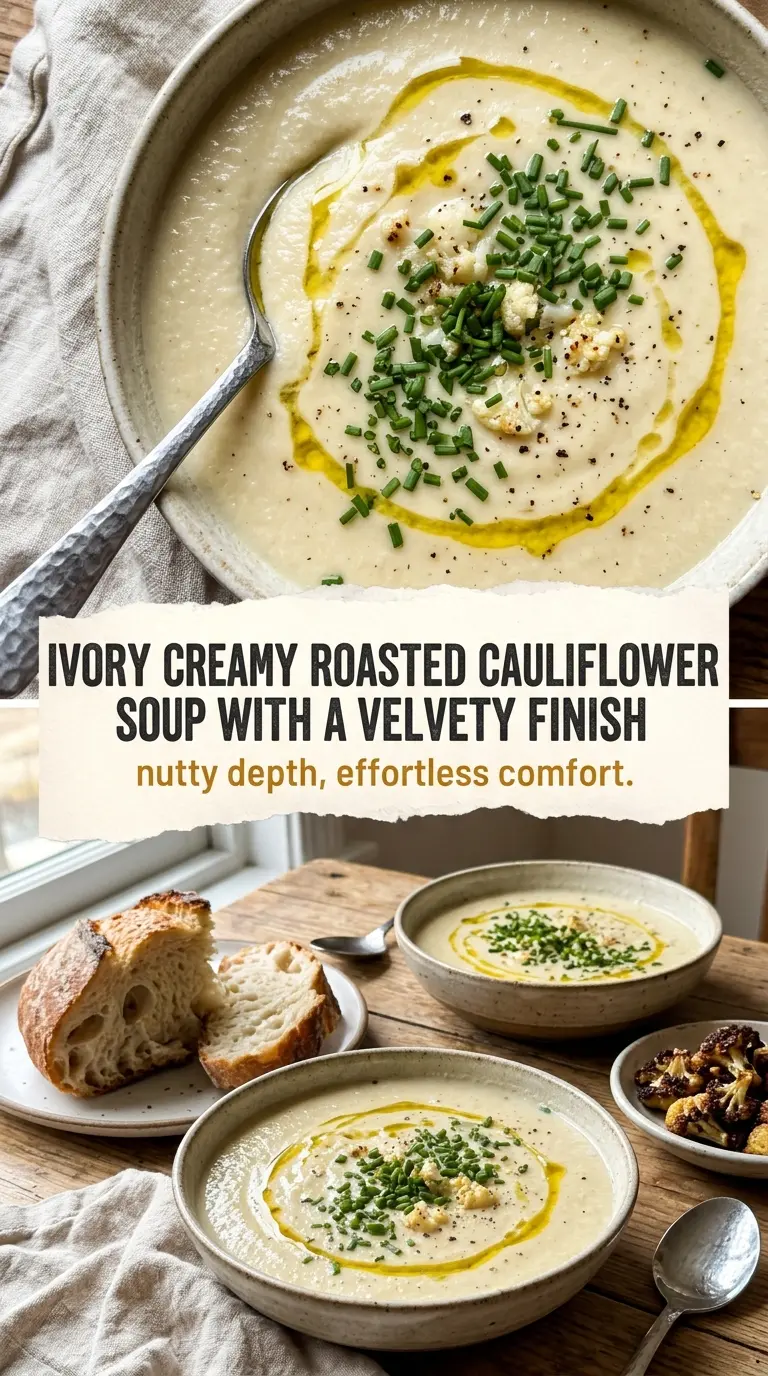
- Roasted cauliflower — This is the flavor base, and it needs real color. Pale florets will make a pale soup in the wrong way: mild, watery, and a little dull. Deep golden spots on the edges are what you want.
- Onion and garlic — These build sweetness under the cauliflower. Cook them until soft and fragrant, not browned hard, or they’ll fight the delicate finish of the soup.
- Vegetable broth — Use one you actually like the taste of. A thin, overly salty broth will show up after blending. If yours is strong and dark, use the lower end of the amount and add more only if the soup needs thinning.
- Heavy cream — This gives the soup its velvet finish. Half-and-half works in a pinch, but the body won’t be quite as lush. Add it after blending, when the soup is off the heat or on very low heat, so it stays smooth.
- Chives — Don’t skip the garnish if you want the bowl to feel finished. Their mild onion bite cuts through the richness and keeps each spoonful from tasting too soft.
Building the Blend Without Losing That Roasted Flavor
Roasting Until the Edges Turn Deep Gold
Spread the cauliflower in a single layer and give it enough room to brown instead of steam. At 425°F, the florets should pick up deep golden spots and a few darker edges before they come out. If the pan looks crowded, use two pans. A crowded pan traps moisture, and the cauliflower turns soft without developing the flavor this soup depends on.
Softening the Aromatics Without Browning Them Hard
Cook the onion in a little oil until it turns translucent and sweet, then add the garlic just long enough to smell it bloom. Garlic burns fast, and once it does, the whole pot tastes sharp. Keep the heat moderate and let the onion do most of the work. You want a gentle base, not a browned one.
Blending to a Silky Finish
Add the roasted cauliflower and broth, simmer until everything is fully tender, then blend until there are no visible grains or chunks left. An immersion blender makes this easy in the pot, but a countertop blender gives the smoothest texture if you work in batches and vent the lid carefully. If the soup seems too thick, thin it with a splash of broth. If it looks thin, keep blending; cauliflower thickens slightly as it breaks down.
Finishing With Cream at the End
Stir the cream in after blending, when the soup is no longer at a hard simmer. High heat can make the texture feel a little split or greasy, especially if the broth was very hot. Warm it through gently, taste, then adjust the salt and pepper. The soup should taste rounded and clean, with the roasted cauliflower still leading the way.
What to Change When You Want a Different Bowl
Make it dairy-free
Swap the heavy cream for full-fat coconut milk or an unsweetened dairy-free cream. Coconut milk gives the soup a slightly sweeter, rounder finish, while oat-based cream keeps the flavor closer to the original. Add it at the end just like dairy cream so the texture stays smooth.
Make it lighter without losing body
Use half-and-half instead of heavy cream, or leave the cream out and finish with a spoonful of olive oil. The soup won’t be as rich, but the roasted cauliflower still gives it enough structure to feel satisfying. Add a little extra broth only if the texture gets too thick.
Add more depth for a heartier version
A small potato or a few florets of roasted garlic can make the soup even more substantial. The potato gives you a denser, slightly thicker body, while roasted garlic leans the flavor deeper and sweeter. Don’t add too much or the cauliflower gets buried.
Keep it naturally gluten-free
This soup is already gluten-free as long as your broth is certified gluten-free. The texture comes from the cauliflower itself, not from flour, so you don’t need a thickener. That keeps the soup clean and smooth instead of pasty.
Storage and Reheating
- Refrigerator: Store in an airtight container for up to 4 days. It may thicken as it chills.
- Freezer: It freezes well for up to 2 months. Cool it completely first and leave a little room in the container for expansion.
- Reheating: Warm it slowly on the stove over low heat, stirring often. If it looks too thick, add a splash of broth or water. High heat can make the cream separate a little, so go gently.
Questions I Get Asked About This Recipe
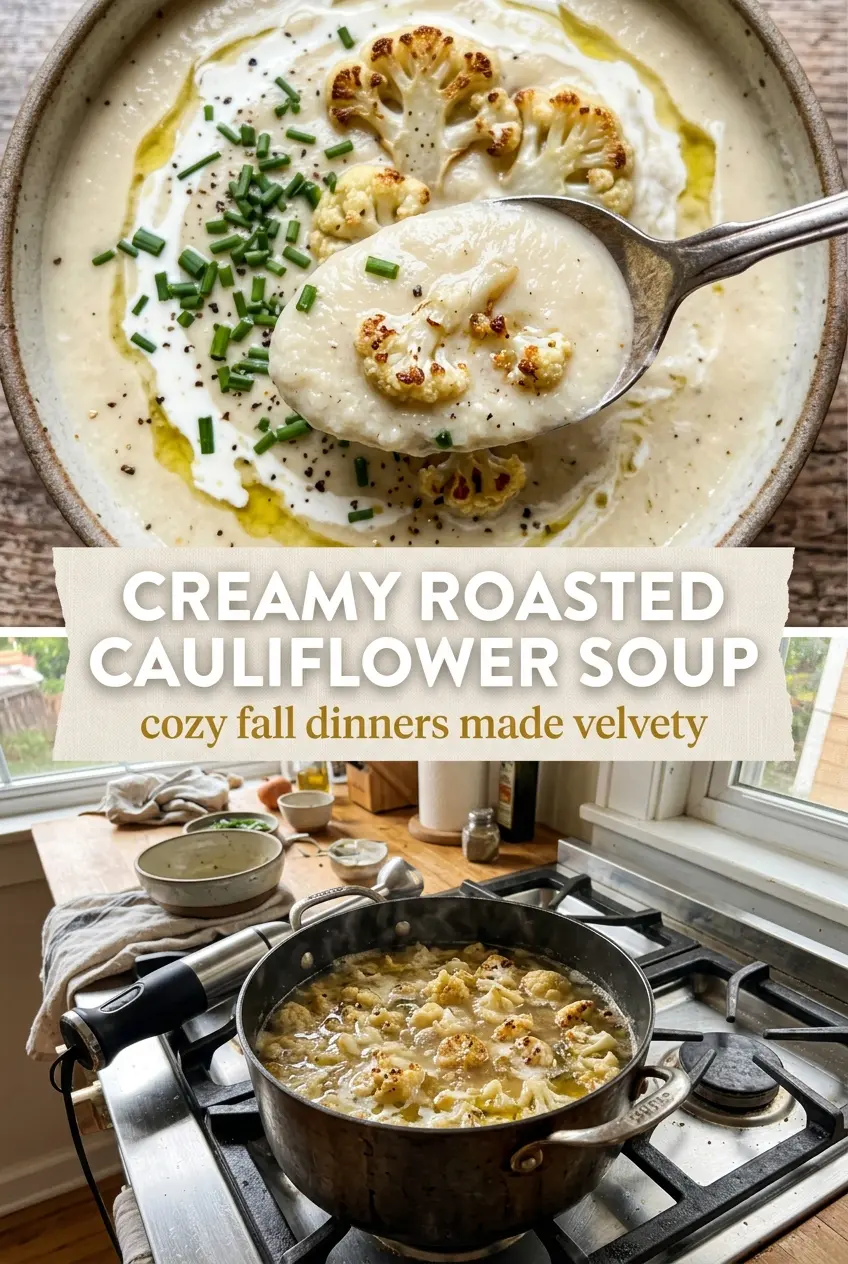
Creamy Roasted Cauliflower Soup
Ingredients
Equipment
Method
- Preheat the oven to 425°F. Spread a sheet pan so the florets can roast evenly.
- Toss the cauliflower florets with olive oil. Roast for 25 to 30 minutes until deeply golden, with browned edges visible.
- In a large pot or Dutch oven, sauté the onion and garlic until softened. Cook until the onion turns translucent and fragrant.
- Add the roasted cauliflower and vegetable broth, then bring to a simmer. Simmer for 15 minutes until the cauliflower is very tender.
- Blend the soup until completely smooth using an immersion blender. Blend until no cauliflower bits remain and the texture looks silky.
- Stir in the heavy cream, season with salt and pepper, and heat gently. Garnish with chives before serving, and for texture reserve a few roasted florets to scatter on top.