
Browned sausage, pillowy cheese ravioli, and a creamy tomato broth make this soup the kind of dinner people ask for again before the bowls are even empty. It eats like a full meal, but it still feels light enough to ladle into a big pot on a weeknight. The broth turns rich without going heavy, and the ravioli gives every spoonful a soft, satisfying bite that makes this feel a little more special than a standard soup.
What makes this version work is timing. The sausage builds the base, the tomatoes and broth loosen up all those browned bits, and the ravioli goes in late so it stays intact instead of soaking until it bursts. Cream and Parmesan finish the broth at the end, which keeps the dairy smooth and gives the soup that rounded, savory finish people expect from a good bowl of creamy pasta soup.
Below, I’ll walk through the part that matters most: when to add the ravioli, how to keep the cream from turning grainy, and what to change if you want a lighter broth or a little more heat.
The ravioli stayed whole and the broth turned creamy without separating. I used fresh ravioli and it was perfect in the time listed — my husband went back for a second bowl and said it tasted like restaurant soup.
Save this creamy ravioli soup for the nights when you want a rich one-pot dinner with tender pasta and almost no cleanup.
The Trick to Keeping Ravioli Intact in Soup
The biggest mistake in ravioli soup is treating the pasta like it needs the same long simmer as the broth. It doesn’t. Ravioli is delicate, especially fresh ravioli, and once it sits in bubbling liquid too long, the seams soften and the filling starts leaking out. You want the soup base fully developed first, then the ravioli added close to the end so it cooks through while still holding its shape.
The other issue is boiling the cream after it goes in. Cream doesn’t need a hard boil to thicken here, and high heat is what can make the broth separate or turn greasy. A gentle simmer is enough to bring everything together, especially once the Parmesan melts in and gives the soup a little body.
- Italian sausage — This brings the seasoning and fat that make the broth taste cooked from the start. Mild or hot both work; hot sausage gives the soup more edge without needing extra red pepper flakes.
- Diced tomatoes — They add acidity that keeps the cream from tasting flat. Fire-roasted tomatoes work if you want a deeper, slightly smoky broth.
- Chicken broth — Use a broth you’d actually drink. This is the main liquid, so a thin or overly salty broth will show up in the finished soup.
- Heavy cream — This is what makes the broth silky. Half-and-half can work in a pinch, but the soup will be a little lighter and less plush.
- Cheese ravioli — Fresh ravioli cooks faster and stays tender; frozen ravioli is fine, but it needs a minute or two longer. Don’t thaw it first or it can get gummy on the edges.
- Parmesan — Grated Parmesan melts into the broth and sharpens the flavor. Use the real stuff if you can, and grate it finely so it disappears into the soup instead of clumping.
- Spinach — It wilts down fast and adds color without changing the character of the soup. Kale can replace it, but it needs more time to soften.
Building the Broth Before the Ravioli Goes In
Brown the sausage first
Cook the sausage in a large pot over medium heat and break it into small crumbles as it browns. You want real color here, not just pale cooked meat, because those browned bits at the bottom carry most of the flavor for the soup. If the sausage releases a lot of fat, leave a little in the pot; that fat is part of the base. Drain off only the excess if the pot looks greasy.
Soften the onion and garlic in the drippings
Add the onion to the sausage and cook it until it turns translucent and soft at the edges, about four minutes. Stir in the garlic for the last minute so it smells fragrant but doesn’t scorch. If the garlic turns brown, it gets bitter fast and you’ll taste that in the broth. This is the point where the pot should smell savory and a little sweet, not sharp.
Simmer the broth before adding pasta
Stir in the tomatoes and chicken broth, scraping the bottom of the pot so all the browned bits dissolve into the liquid. Bring it to a steady simmer, not a rolling boil. That’s enough heat to blend the flavors without reducing the broth too quickly. If your soup tastes a little flat at this stage, don’t fix it with cream yet — let the sausage and tomatoes cook together first.
Cook the ravioli late, then finish gently
Add the ravioli and cook it just until tender, following the package timing for fresh or frozen pasta. The soup should stay at a gentle simmer so the ravioli cooks through without splitting. Once the pasta is done, stir in the cream, Parmesan, and spinach, then keep the heat low until the spinach wilts and the broth looks glossy. If you boil after adding the dairy, the texture can turn grainy instead of smooth.
How to Adapt This for Different Pans, Tastes, and Diets
Use frozen ravioli without changing the soup base
Frozen ravioli works well here, but it needs a little more time than fresh. Add it straight from the freezer and keep the soup at a simmer until the pasta is tender, then move on to the cream and spinach. Thawing first can make the pasta surface sticky and more likely to tear.
Make it lighter with half-and-half
Half-and-half can replace the heavy cream if you want a lighter broth. The soup won’t be as rich or as thick, but it still tastes good as long as the heat stays low once the dairy goes in. Don’t try to compensate by boiling it longer; that’s how the texture breaks.
Turn it into a spicy sausage soup
Hot Italian sausage gives this soup more kick right from the start, but you can push it further with a pinch of red pepper flakes when the garlic goes in. That keeps the heat layered into the broth instead of sitting on the surface. It’s a better move than adding hot sauce at the end, which can muddy the creamy flavor.
Make it gluten-free with GF ravioli
Use a gluten-free cheese ravioli and check the broth label to confirm it’s gluten-free too. The cooking method stays the same, but gluten-free pasta can soften faster and break sooner, so start checking it early. Once it’s tender, move quickly to the cream and cheese so it doesn’t sit too long in the hot liquid.
Storage and Reheating
- Refrigerator: Store for up to 3 days. The ravioli will keep absorbing broth, so the soup thickens as it sits.
- Freezer: Not my first choice. Creamy soup with ravioli can get grainy and the pasta turns soft after thawing.
- Reheating: Warm it gently on the stove over low heat, stirring often. If it gets too thick, add a splash of broth or water. Don’t boil it, or the ravioli can split and the cream can separate.
Questions I Get Asked About This Recipe
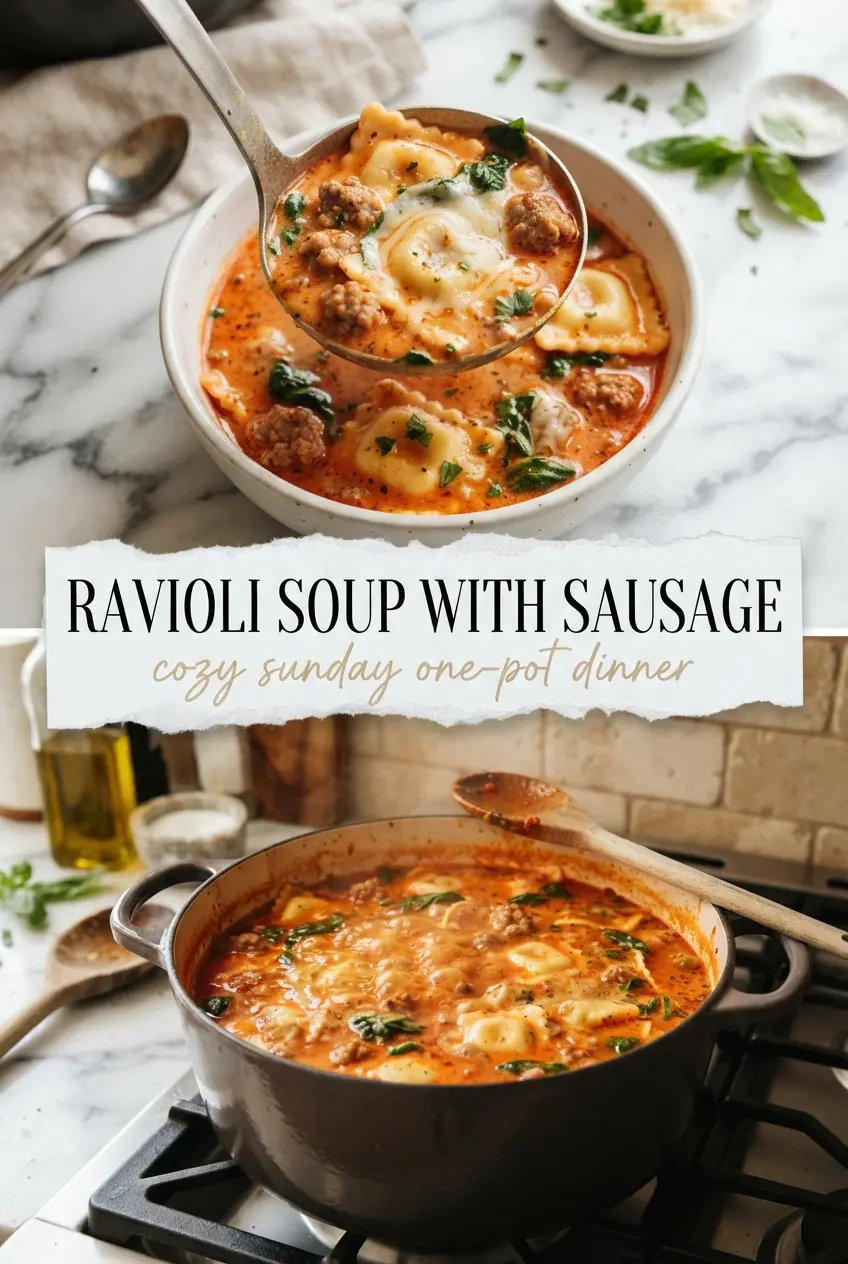
Creamy Ravioli Soup with Sausage
Ingredients
Equipment
Method
- Heat a Dutch oven over medium-high heat and brown the Italian sausage, breaking it up as it cooks until no longer pink, about 6–8 minutes. Keep stirring so it browns evenly and releases its drippings.
- Add the diced onion and minced garlic to the pot and cook until softened, about 4 minutes. Stir frequently and scrape up any browned bits.
- Add the diced tomatoes and chicken broth, then bring the mixture to a simmer, 5–7 minutes. You should see steady bubbling across the surface.
- Add the cheese ravioli and cook until tender according to package directions. Start checking at the low end of the time so the ravioli stays intact.
- Stir in the heavy cream and grated Parmesan, then simmer gently until the Parmesan melts and the soup looks creamy, about 3–4 minutes. Keep the heat at a low simmer to prevent scorching.
- Add the fresh spinach and simmer until it wilts, about 1–2 minutes. Stir just until the leaves turn bright green and tender.
- Season with salt and pepper to taste before serving. Taste after the spinach wilts so the final flavor is balanced.