
Shredded zucchini gives this loaf its soft, tender crumb without making it heavy, and the cinnamon-scented batter bakes up into a slice that stays moist for days. The best zucchini bread doesn’t taste like vegetables; it tastes like a bakery-style quick bread with a fine, even crumb and a golden top that cracks just enough when you cut into it.
What makes this version work is the balance of moisture and structure. Zucchini brings a lot of water to the bowl, so squeezing it dry first keeps the batter from turning gummy. A straightforward mix of oil, eggs, and vanilla gives the bread richness without weighing it down, while the baking soda and baking powder work together to lift the loaf through the center so it bakes up tall instead of dense.
Below, I’ve included the small details that matter most: how dry the zucchini should be, what to look for when the loaf is done, and a few practical ways to adapt it if you want to bake one pan now and freeze the other for later.
The zucchini was squeezed dry enough that the loaf baked up with a perfect crumb, and the cinnamon came through without overpowering it. I froze one loaf and the slices thawed beautifully for breakfast all week.
Love the soft, cinnamon-kissed crumb in this zucchini bread? Save it to Pinterest for the days when you’ve got extra zucchini and want a loaf that stays moist for days.
The Zucchini Step That Decides Whether the Loaf Is Tender or Gummy
Zucchini bread fails for one simple reason: too much hidden water. Grated zucchini looks harmless in the bowl, but if it goes in wet, it loosens the batter enough that the center bakes up dense and a little slick instead of soft and cake-like. Squeezing it dry is not an optional extra here. It’s the difference between a clean slice and one that collapses under the knife.
The other trap is overmixing once the flour goes in. Quick bread batter should look a little rough when you stop stirring, with streaks disappearing as you fold. If you beat it smooth, the loaf turns tighter and more bread-like. Stop as soon as the flour disappears and let the oven finish the job.
What Each Ingredient Is Actually Doing in This Loaf
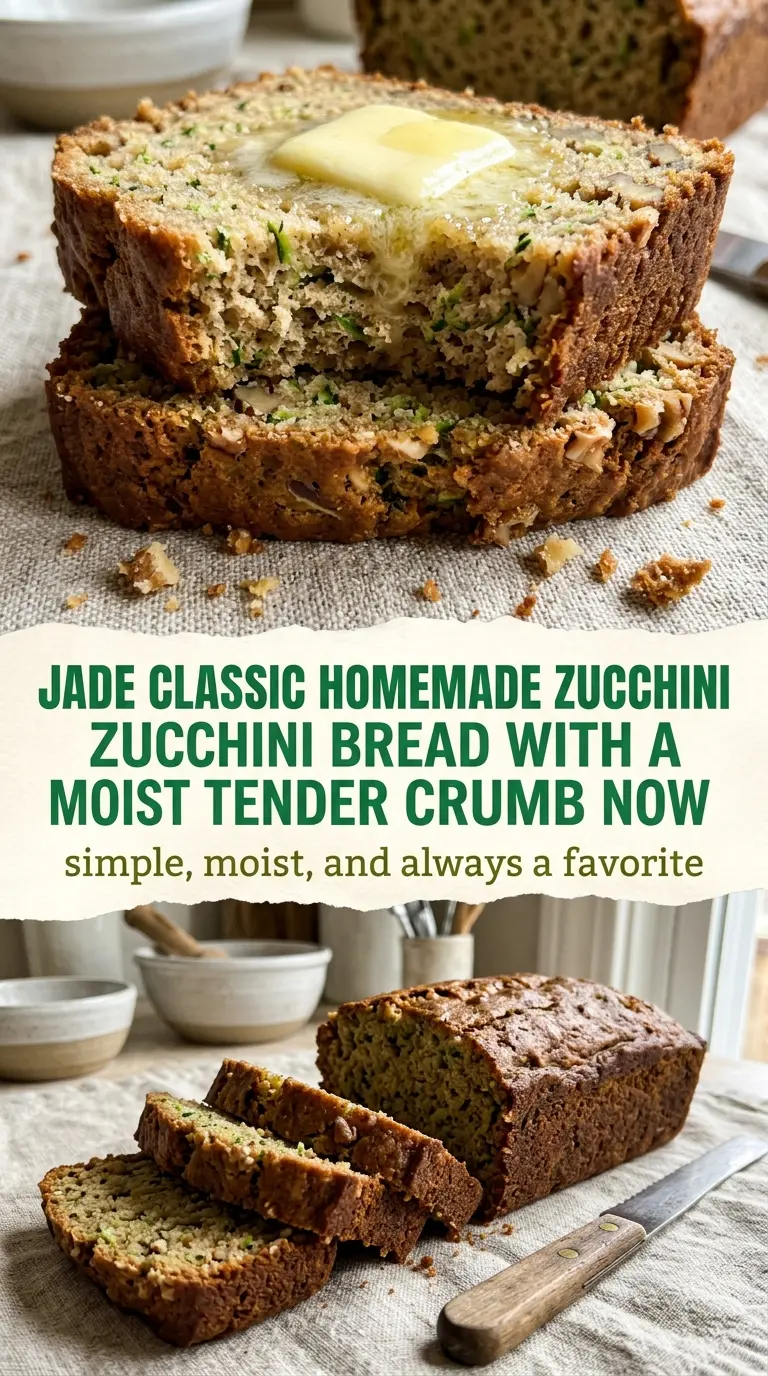
- Zucchini — This is the moisture source, but it only works when it’s squeezed dry. Leave too much water in the shreds and the loaf bakes up heavy. A clean kitchen towel or cheesecloth gives you the best control.
- Vegetable oil — Oil keeps the crumb soft even after the bread cools. Butter can work, but it firms up more as it sits, which changes the texture. Neutral oil keeps the zucchini and cinnamon flavors front and center.
- Eggs — The eggs bind the batter and help the loaf rise with a tender, even crumb. Room-temperature eggs mix in more smoothly, but cold eggs won’t ruin the bread if that’s what you have.
- All-purpose flour — This gives the loaf its structure. I wouldn’t swap in a 1:1 replacement unless you know how that blend behaves, because zucchini bread already starts with a wet batter and needs dependable flour strength to set properly.
- Baking soda and baking powder — The combo gives the bread lift without making it taste alkaline. The soda reacts with the batter’s moisture, while the powder adds extra insurance so the center rises before the edges dry out.
- Cinnamon — It doesn’t dominate, but it warms the whole loaf. If yours tastes flat, the cinnamon is often stale. Fresh spice makes a bigger difference here than people expect.
How to Mix the Batter Without Overworking It
Whisk the wet ingredients until they look unified
Start with the eggs, oil, sugar, and vanilla in a large bowl and whisk until the mixture looks glossy and a little thickened. You’re not trying to whip in a lot of air; you just want the sugar to start dissolving so the batter bakes evenly. If the oil still sits in streaks, keep whisking before the zucchini goes in.
Fold in the zucchini before the flour
Stir the squeezed zucchini into the wet mixture until it’s evenly distributed. This keeps the shreds from clumping later and helps you see how much moisture they’re bringing to the bowl. If you skipped the drying step and the mixture looks loose or watery at this point, stop and squeeze the zucchini again before moving on.
Stop as soon as the flour disappears
Whisk the dry ingredients in a separate bowl, then fold them into the wet mixture until you no longer see dry flour. The batter should look thick and spoonable, not smooth and loose. Overmixing develops the gluten and gives you a tougher loaf, which is the opposite of what zucchini bread should be.
Bake until the center springs back
Divide the batter between two greased loaf pans and bake at 350°F until a toothpick comes out clean from the center, usually 50 to 60 minutes. Look for a deep golden top with a crack running down the middle and edges that pull slightly from the pan. If the top browns early but the center is still wet, tent the loaves loosely with foil and keep baking.
How to Adapt This for Different Pans, Diets, and Leftovers
Bake It as One Tall Loaf Instead of Two Smaller Ones
You can bake the batter in one larger loaf pan, but it will need a longer bake time and a little extra patience in the center. The top may brown before the middle finishes, so foil becomes useful here. This version slices more thickly and stays moist, but it also takes longer to cool all the way through.
Make It Dairy-Free Without Changing the Texture
This recipe is naturally dairy-free as written, which is one reason it stays so tender. The oil carries the richness that butter would usually provide, and the zucchini adds moisture without any milk or yogurt. That means you don’t need a workaround here — the recipe already fits.
Turn It Into Muffins for Faster Baking
The same batter works well in muffin tins, and the bake time drops dramatically. Fill the cups about three-quarters full and start checking early for a set top and clean toothpick. Muffins trade the loaf’s soft center for more browned edges, which is a nice swap if you want grab-and-go portions.
Storage and Reheating
- Refrigerator: Store tightly wrapped for up to 5 days. The crumb stays moist, but the cinnamon flavor softens a bit after the first day.
- Freezer: This bread freezes well. Wrap whole loaves or individual slices tightly, then place them in a freezer bag for up to 3 months.
- Reheating: Thaw at room temperature, then warm slices in a toaster oven or microwave just until heated through. The common mistake is overheating, which dries out the edges before the center warms.
Answers to the Questions Worth Asking
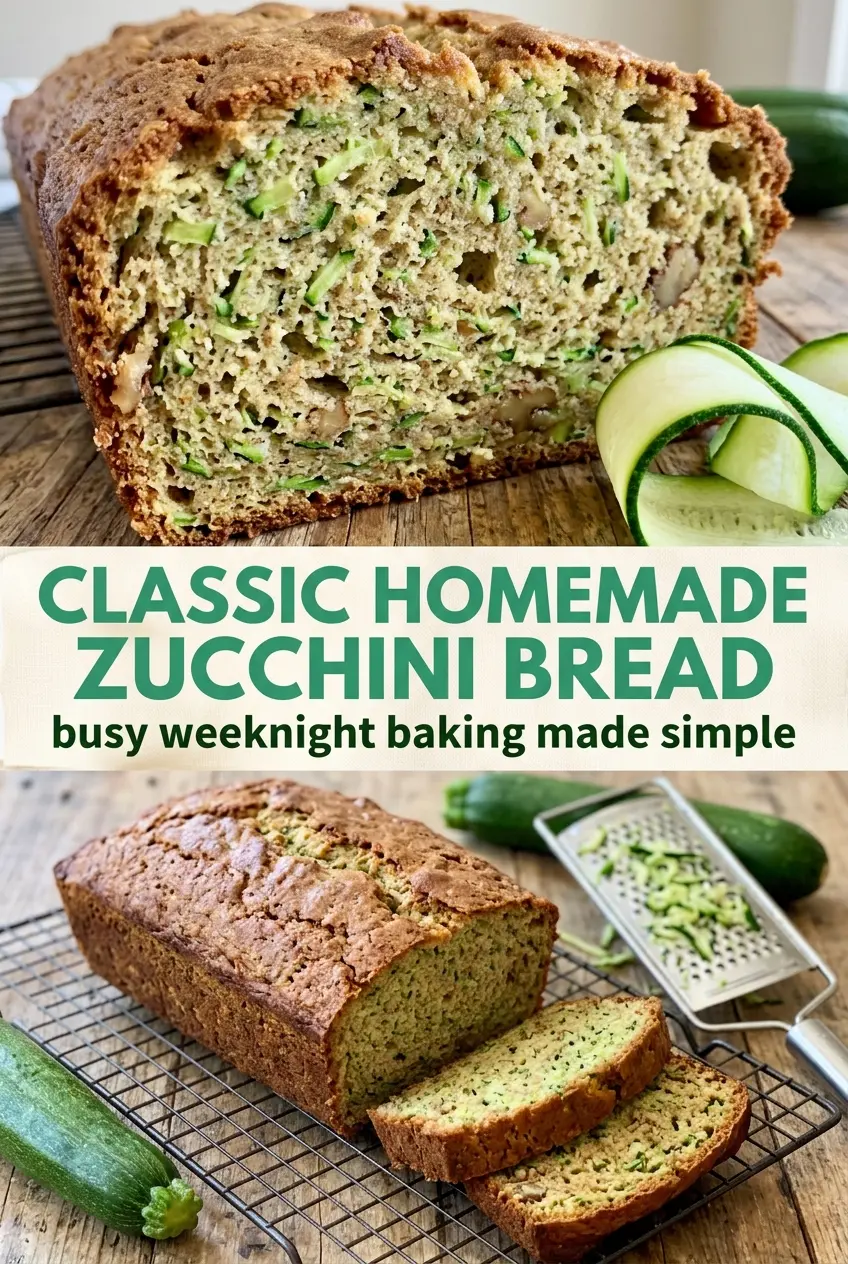
Classic Homemade Zucchini Bread
Ingredients
Equipment
Method
- Preheat the oven to 350°F and grease two loaf pans.
- In a large bowl, whisk together the eggs, vegetable oil, sugar, and vanilla extract until smooth.
- Stir in the shredded zucchini until evenly combined and the batter looks speckled throughout.
- In a separate bowl, whisk together the all-purpose flour, baking soda, baking powder, cinnamon, and salt.
- Fold the dry ingredients into the wet mixture until just combined, with no visible dry streaks.
- Divide the batter between the pans and bake for 50 to 60 minutes, until a toothpick comes out clean.