
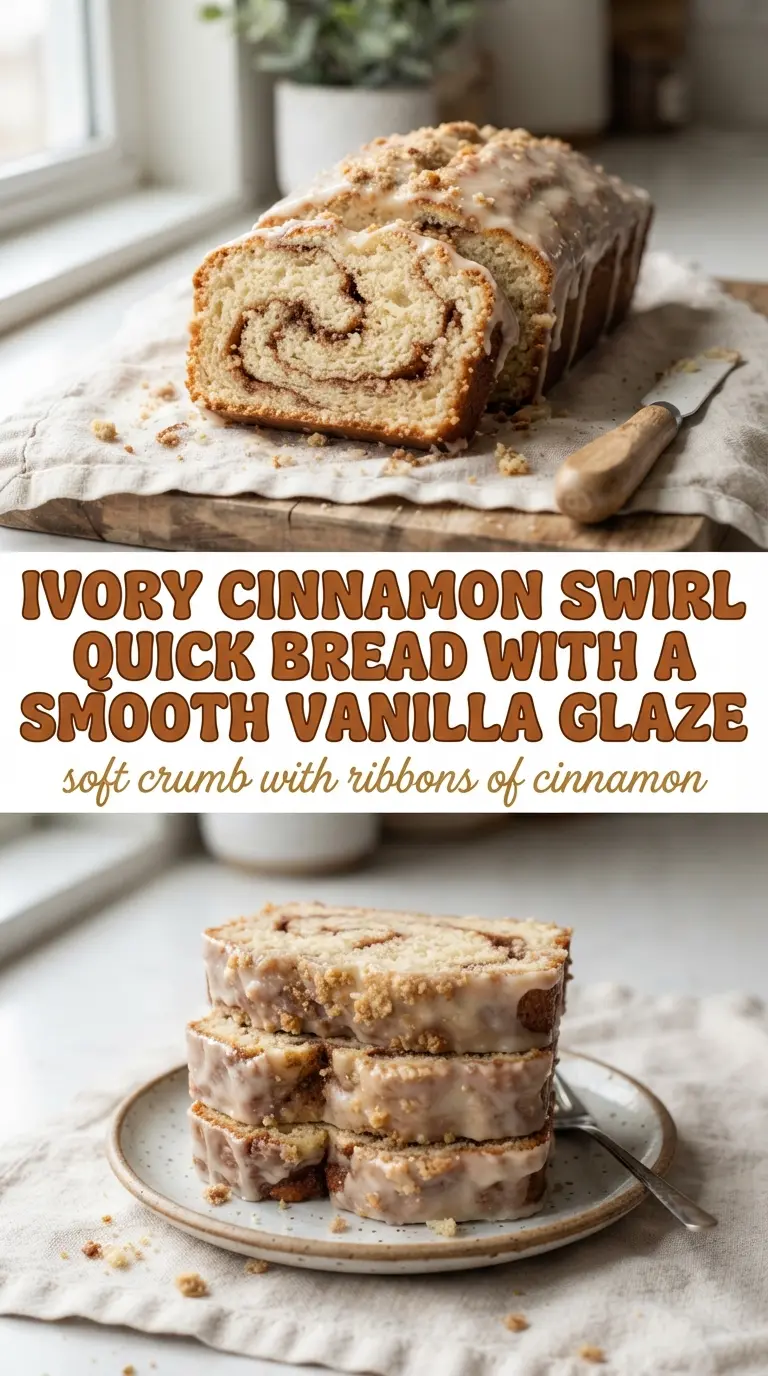
Soft, tender slices with a warm ribbon of cinnamon sugar running through the middle make this quick bread disappear fast. The crumb stays moist without turning heavy, and the vanilla glaze on top gives each slice just enough sweetness to feel finished. It’s the kind of loaf that works for breakfast, an afternoon snack, or sliced thick and eaten warm from the pan.
What makes this version reliable is the balance between a buttery batter and a simple swirl that doesn’t sink to the bottom. The batter is mixed just until combined, which keeps the loaf light, and the cinnamon sugar gets layered instead of dumped in all at once so you get a visible spiral in every slice. A light hand with the final swirl matters too; too much knife work blends the filling into the bread instead of leaving those pretty streaks.
Below, you’ll find the small details that keep the loaf from turning dense or gummy, plus a few ways to adjust it if you want to change the glaze or make it work with what you have on hand.
The swirl stayed right in the middle and the loaf baked up with a soft, even crumb. I used the full 55 minutes, and the glaze set beautifully without soaking in too much.
Love a loaf with a cinnamon ribbon and vanilla glaze? Save this Cinnamon Swirl Quick Bread for the day you want a bakery-style slice with no yeast and no waiting.
The Swirl That Stays Visible Instead of Disappearing
The biggest mistake with cinnamon swirl bread is overmixing the filling into the batter. Once that happens, you don’t get a clear ribbon; you get a muddy, speckled loaf with less contrast and a heavier crumb. Layering half the batter, then half the swirl, then repeating gives the cinnamon sugar a chance to stay distinct in the center of the loaf.
The other place people go wrong is with the knife. A few gentle passes are enough. If you drag it through the batter too many times, the swirl blends out and the top can collapse in spots where the batter gets overworked. You want a loose figure-eight motion that just nudges the layers together.
- Don’t over-swirl. Two or three passes are plenty. The loaf should still look streaked before it goes into the oven.
- Use a 9×5-inch pan. A smaller pan can make the center bake up dense before the middle sets.
- Watch the edges. They should pull slightly from the pan and the center should spring back when lightly pressed.
What the Butter, Buttermilk, and Cinnamon Sugar Are Doing Here
The butter gives the loaf its soft, rich crumb, and it needs to be softened so it can trap air when beaten with the sugar. That step gives the bread lift before the baking powder even starts working. Cold butter won’t cream properly, and melted butter changes the texture into something flatter and more muffin-like.
Buttermilk matters here because it adds tang and tenderness at the same time. If you don’t have it, use 1 cup milk mixed with 1 tablespoon lemon juice or vinegar and let it sit for 5 minutes. It won’t taste exactly the same, but it will still give you the acid the batter needs for a soft crumb.
- All-purpose flour keeps the loaf sturdy enough to hold the swirl without turning dry. Cake flour is too soft for this structure.
- Baking powder is the only leavener here, so don’t use old baking powder. If it’s been open for years, the loaf will bake up flat.
- Brown sugar and cinnamon create the ribbon and add moisture. Granulated sugar won’t give the same soft, caramel-like swirl.
- Powdered sugar glaze is best whisked with just enough milk to drizzle. Too much liquid makes it run off the loaf instead of setting on top.
Mixing the Batter, Layering the Swirl, and Baking It Through
Beat the Butter Until It Turns Pale
Start with softened butter and sugar, and beat them until the mixture looks lighter in color and a little fluffy around the edges. That usually takes a couple of minutes, not seconds. If the butter is too cold, it will stay lumpy; if it’s melted, you’ll lose the structure that helps the loaf rise evenly.
Fold the Dry Ingredients in Gently
Add the flour mixture in the end and mix only until you stop seeing dry streaks. The batter should look thick and smooth, not stretchy. Overmixing builds too much gluten, which is how quick bread turns tight and tough instead of tender.
Layer for a Clean Cinnamon Ribbon
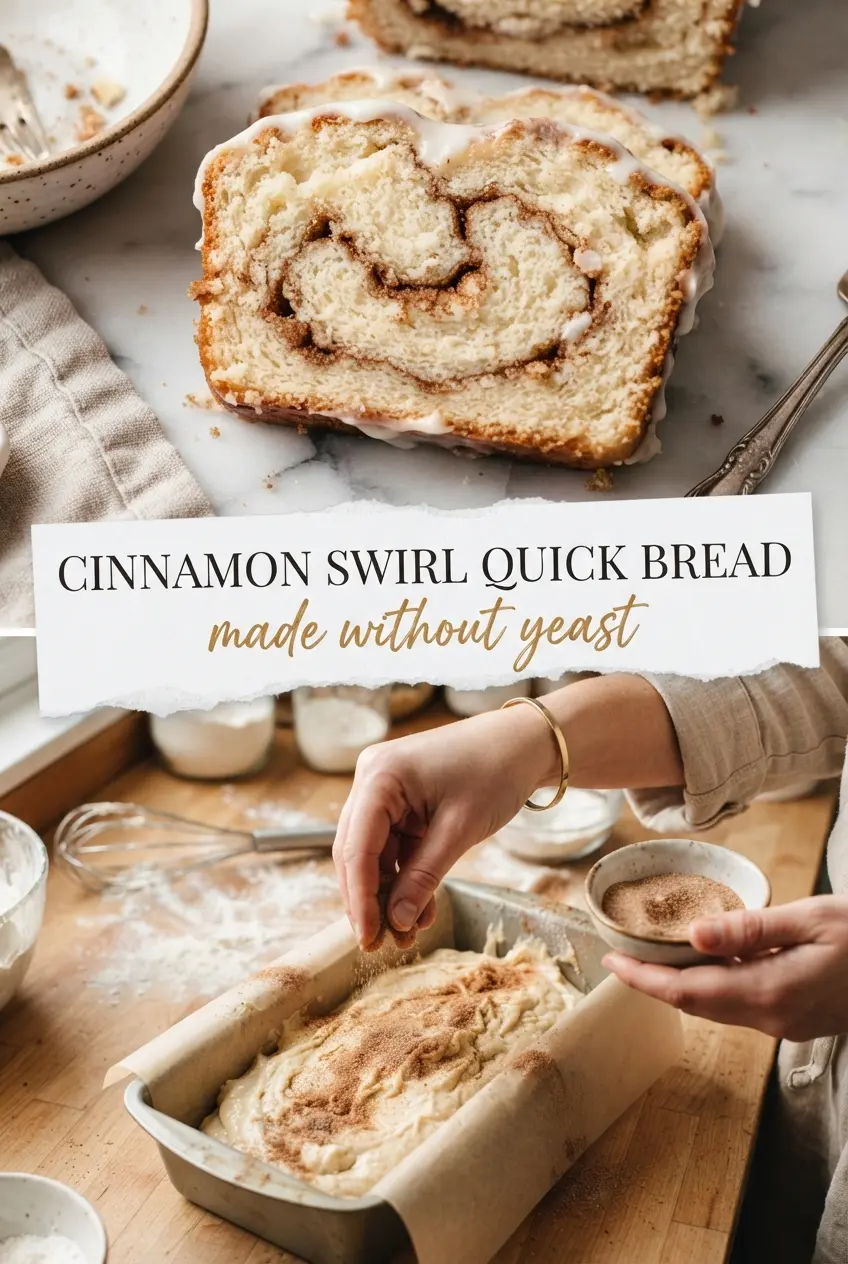
Spoon half the batter into the loaf pan and spread it to the corners. Sprinkle on half the cinnamon sugar, then repeat with the remaining batter and swirl. Use a knife to draw just a few light lines through the top layer so the filling sinks in without disappearing.
Bake Until the Center Springs Back
Bake at 350°F for 50 to 55 minutes. The top should be deep golden and a toothpick inserted in the center should come out with a few moist crumbs, not wet batter. If the top browns too fast, tent it loosely with foil for the last 10 minutes.
Cool Before Adding the Glaze
Let the loaf rest in the pan for 15 minutes before turning it out. If you glaze it while it’s piping hot, the glaze melts straight into the crust. Once the loaf is warm rather than hot, drizzle the glaze over the top so it sets into a thin, glossy finish.
How to Change the Loaf Without Losing the Swirl
Dairy-Free Version
Use a neutral dairy-free butter substitute and replace the buttermilk with a non-dairy milk plus 1 tablespoon lemon juice. The loaf will still bake up tender, though the flavor will be a little less rich and a touch less tangy.
Less Sweet, More Breakfast-Style
Cut the glaze in half or skip it entirely. The cinnamon swirl still gives enough sweetness for a morning slice, and the loaf tastes more like coffee cake than dessert.
Add-ins That Won’t Weigh It Down
A handful of finely chopped pecans or walnuts works well if you want a little crunch. Keep the amount small, though, or the nuts will interrupt the swirl and make the loaf harder to slice cleanly.
Storage and Reheating
- Refrigerator: Store covered for up to 4 days. The crumb firms up a bit in the fridge, but the flavor stays good.
- Freezer: Freeze the unsliced loaf or individual slices wrapped well for up to 2 months. Thaw at room temperature still wrapped so the bread doesn’t dry out.
- Reheating: Warm slices in the microwave for 10 to 15 seconds or in a low oven. Don’t overheat them, or the glaze will melt off and the crumb can turn rubbery.
Answers to the Questions Worth Asking
Cinnamon Swirl Quick Bread
Ingredients
Equipment
Method
- Preheat the oven to 350°F and grease a 9x5-inch loaf pan.
- Whisk the flour, baking powder, and salt until evenly combined, with no visible streaks of baking powder.
- Beat the butter and granulated sugar until fluffy, then add the eggs, buttermilk, and vanilla extract and mix until smooth.
- Fold in the dry ingredients until just combined, stopping as soon as no dry flour remains.
- Layer half the batter in the pan and sprinkle on half the swirl mixture so it forms a thin, even layer.
- Add the remaining batter and sprinkle with the rest of the swirl mixture, keeping the cinnamon sugar visible on top in patches.
- Use a knife to swirl lightly through the batter a few times to create marbled cinnamon ribbons without over-mixing.
- Bake for 50 to 55 minutes until the loaf is deep golden and a toothpick in the center comes out mostly clean.
- Cool for 15 minutes in the pan before glazing, so the glaze stays glossy instead of soaking in.
- Whisk powdered sugar, milk, and vanilla extract until smooth, thick, and pourable, then drizzle over the warm loaf.