
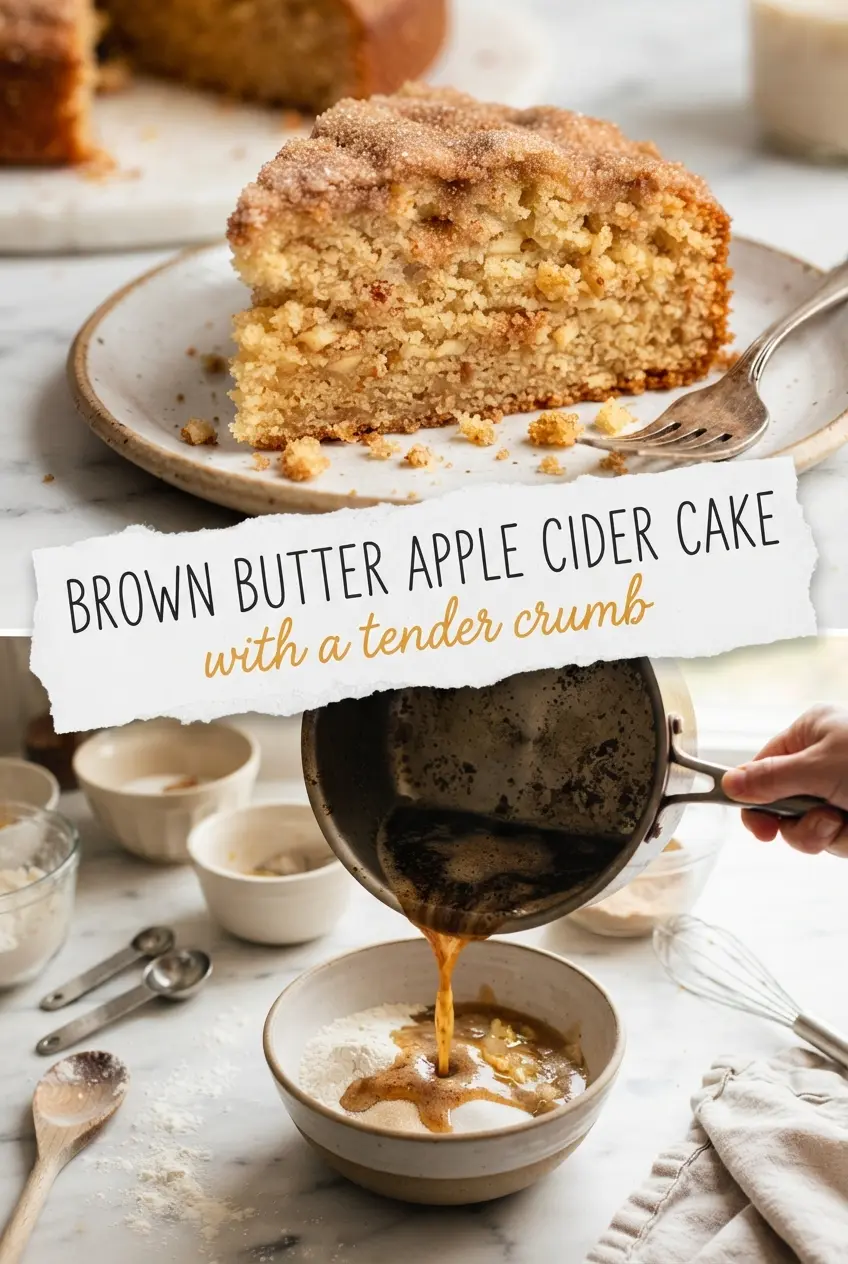
Nutty brown butter and reduced apple cider give this cake a deeper, warmer flavor than the usual apple dessert, and the crumb stays tender instead of turning dense. The top bakes into a thin cinnamon-sugar crust that cracks just enough under a fork, which is exactly what you want when a simple cake needs to feel a little special.
The part that matters most is treating the brown butter like an ingredient that needs to cool, not just a fat you can dump into the bowl. Once it’s browned, it should be chilled until opaque and soft so it creams properly with the sugar. The cider gets reduced first too, which concentrates the apple flavor without adding extra liquid that would throw off the texture.
Below, I’ll walk through the two small steps that make the biggest difference: how to stop the butter from staying greasy, and how to keep the cake light even with all that rich flavor going on.
The browned butter was the part I was nervous about, but chilling it until it turned opaque made the cake come out fluffy instead of greasy. The cinnamon sugar on top baked into the prettiest little crust.
Save this brown butter apple cider cake for when you want a tender, apple-forward cake with that nutty browned-butter crumb.
The Difference Between a Deep Apple Cake and a Heavy One
Apple cider cake can go wrong in a few predictable ways. The flavor tastes flat if you pour in cider straight from the bottle, and the texture turns muddy if the butter is still warm and greasy when it hits the sugar. That’s why this version starts with reduction and chilling. Each of those steps concentrates flavor while protecting the crumb.
The cider reduction does more than add apple taste. It keeps the batter from becoming too loose, which matters because sour cream already brings moisture to the bowl. Brown butter adds depth, but only after it cools to a soft, opaque state can it trap air with the sugar. If you skip that cooling step, the cake can bake up dense and a little oily instead of plush.
- Reduced apple cider — Cutting the cider down to half a cup concentrates the apple flavor and takes out the excess water. A quick simmer is enough; just don’t walk away, because once the pan starts looking syrupy, it can over-reduce fast.
- Brown butter — This is where the toasty, nutty flavor comes from. You can brown it in any saucepan, but the cooling step matters more than the browning itself. Wait until it turns opaque and soft before beating it with the sugar so the batter can hold air.
- Sour cream — This keeps the cake tender and gives it a subtle tang that balances the sweetness. Full-fat sour cream gives the best texture, but plain Greek yogurt works in a pinch and will still keep the crumb moist.
- Light brown sugar — The molasses in brown sugar plays nicely with the cider and brown butter. Dark brown sugar works too, but it will push the cake a little deeper and richer, with a stronger caramel note.
Building the Batter Without Losing the Air You Just Added
Reducing the Cider
Pour the apple cider into a small saucepan and simmer it until you have 1/2 cup left. You want bubbles that look active but not wild, and the liquid should smell more like cooked apples than fresh cider. If you reduce it too far, the flavor gets harsh and the quantity won’t match the batter.
Browning and Cooling the Butter
Cook the butter over medium heat until the milk solids turn golden and smell nutty, then pour it into a bowl right away so it stops darkening. Let it chill until it’s opaque and soft, not melted. If it’s still warm and glossy, it won’t cream properly with the sugar and the cake will bake up tighter than it should.
Mixing the Batter
Beat the cooled brown butter with the brown sugar until it looks lighter and a little fluffy, then add the eggs one at a time. Stir in the sour cream and vanilla, then fold in the dry ingredients and reduced cider just until the flour disappears. Stop there. Overmixing at this point is the fastest way to toughen a cake that should be soft and fine-crumbed.
Baking to the Right Finish
Scrape the batter into the prepared pan, scatter the cinnamon sugar over the top, and bake until the center springs back and a tester comes out with a few moist crumbs. The top should be set and lightly crackled, with a warm cinnamon smell that tells you the sugar has baked into a thin crust. Let it cool before slicing so the crumb has time to set cleanly.
Three Ways to Make This Cake Fit What You Need
Make it dairy-free
Use a plant-based butter that browns well and swap the sour cream for a thick dairy-free yogurt. The cake will still be tender, though the browned-butter flavor will be a little softer and less nutty than the original.
Turn it gluten-free
Use a 1:1 gluten-free baking flour that already includes xanthan gum. The cake should still rise well, but it may need a few extra minutes in the oven and will slice best after it cools completely.
Add a stronger apple finish
Fold in a small handful of finely diced tart apples or serve the cake with warm apple slices on the side. That gives you a brighter fruit note without making the batter wet or heavy.
Storage and Reheating
- Refrigerator: Store covered for 4 days. The crumb stays moist, though the cinnamon-sugar top softens a bit by day two.
- Freezer: This cake freezes well. Wrap slices tightly and freeze for up to 2 months, then thaw at room temperature still wrapped so condensation doesn’t make the top soggy.
- Reheating: Warm individual slices in a low oven or short burst in the microwave. Too much heat dries out the crumb, so just take the chill off and bring back the butter and cinnamon aroma.
Answers to the Questions Worth Asking
Brown Butter Apple Cider Cake
Ingredients
Equipment
Method
- Simmer the apple cider in a saucepan until reduced to 1/2 cup, then cool completely.
- Chill the reduced cider if needed to speed cooling, aiming for room temperature before mixing.
- Brown the butter in a saucepan over medium heat until golden with nutty-smelling flecks, then pour into a bowl.
- Chill the browned butter for 20 minutes until opaque and soft, so it creams smoothly when mixed.
- Preheat the oven to 350°F and grease a 9-inch round or square pan.
- Whisk the all-purpose flour, baking powder, baking soda, ground cinnamon, and salt in a bowl until evenly combined.
- Beat the cooled brown butter with the packed light brown sugar, then beat in the eggs, sour cream, and vanilla extract until smooth.
- Fold in the dry ingredients and the cooled cider until just combined, with no dry streaks.
- Stir together the granulated sugar and ground cinnamon, sprinkle over the batter, and bake for 35 minutes until set and golden.