
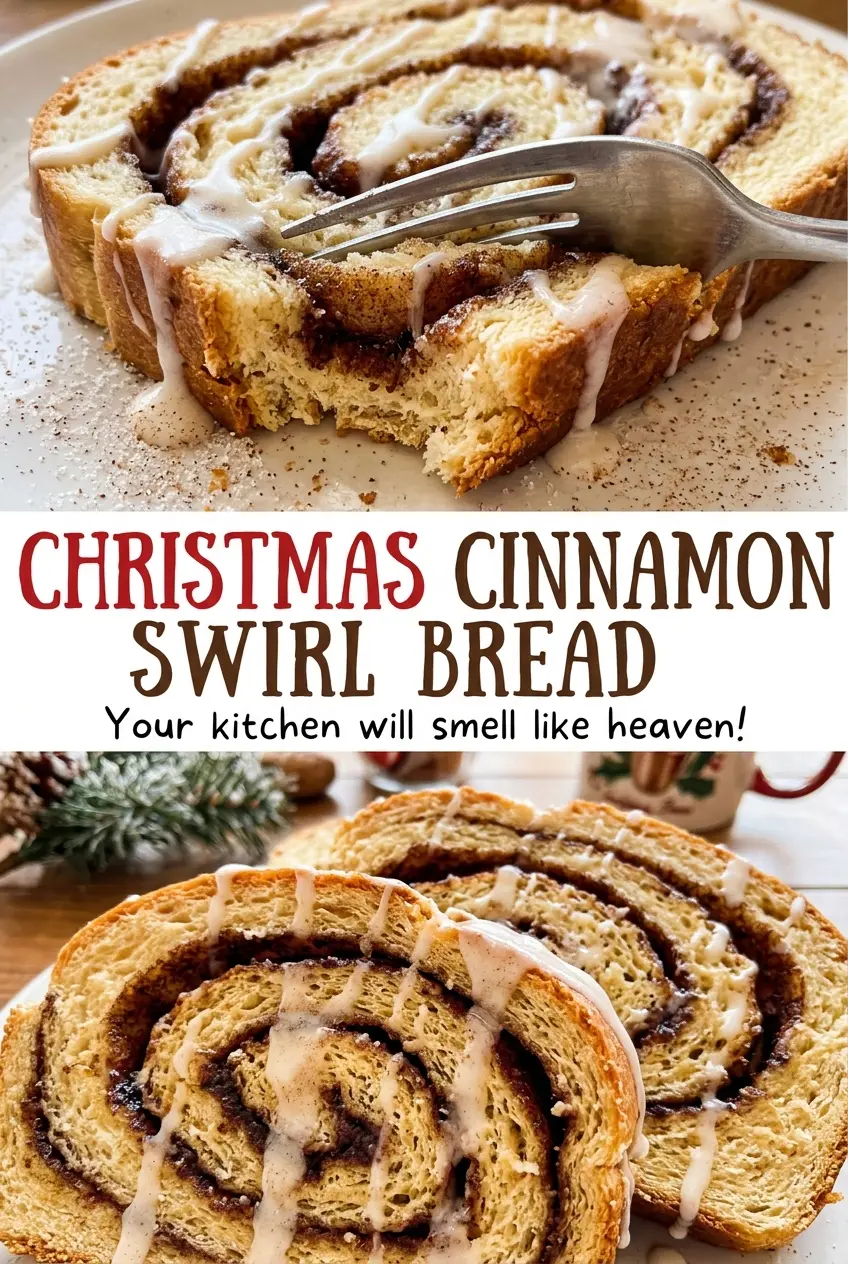
As the loaf rises, the cinnamon scent starts to come through before there’s anything to see but a smooth dome of dough. The first slice is the real reveal: a soft spiral tucked inside a golden crust, with enough cinnamon sugar to taste warm and fragrant without making the bread cloying. I make this Christmas cinnamon swirl bread when I want a homemade loaf that feels special but still uses a straightforward yeast dough.
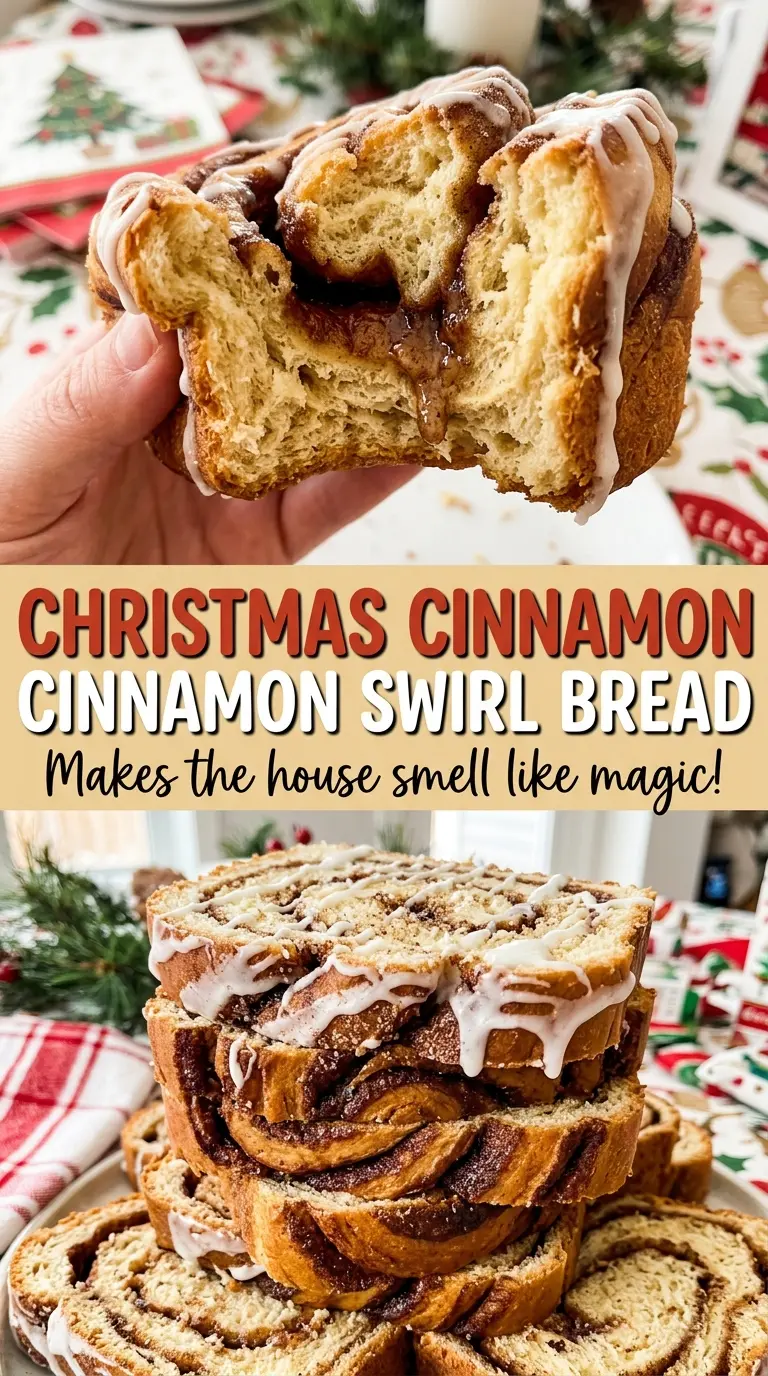
The filling includes a little flour along with the brown sugar and cinnamon. That small addition helps keep the buttery mixture from turning into a runny syrup as the loaf bakes, so the swirl stays more distinct instead of pooling at the bottom. Give the dough time to rise fully, roll it snugly, and let the baked loaf cool before slicing; the result is tender bread with a cinnamon ribbon that holds together neatly.
Kitchen Note
Leave the half-inch border around the dough clear of filling. That bare edge gives you dough to pinch closed, so the cinnamon mixture is less likely to squeeze out as you roll the loaf.
Save this Christmas cinnamon swirl bread for a soft, golden loaf with a tidy cinnamon ribbon in every slice.
Why Flour Belongs in the Cinnamon Swirl, Not Just the Dough
A cinnamon-sugar filling can look dry when you first mix it, then turn syrupy once the butter melts in the oven. Here, the spoonful of flour in the filling helps absorb some of that moisture. It doesn’t make the swirl taste like flour; it helps the brown sugar and cinnamon stay in place instead of collecting as a sticky layer beneath the bread.
The dough also needs enough time to rise before shaping. A properly risen dough feels airy and stretches more readily, which makes it easier to roll into an even rectangle without tearing. Rushing that first rise can leave you with a tighter, heavier loaf. I watch for the dough to double rather than relying on the clock alone, since a cool kitchen can slow yeast activity.
When you spread the filling, aim for an even layer, then roll from a short edge to make a compact loaf. That gives the cinnamon mixture a chance to form a spiral through the crumb instead of gathering in one thick stripe. It’s a small balance: enough filling for clear cinnamon flavor, without a slick, overly wet center.
What Keeps This Loaf Soft Without Turning the Swirl Greasy
- Whole milk — It gives the dough a richer, softer crumb than water. Two-percent milk works in the same amount, though the loaf won’t be quite as rich; whole milk is a good place to use what you already have rather than seek out a specialty brand.
- Active dry yeast — This is what makes the dough rise and gives it a light texture. Use yeast that’s within its date and keep the proofing step in the method; instant yeast won’t always give the same visible foamy cue.
- Egg — The egg adds richness and helps give the dough structure. Bring it to room temperature so it blends smoothly with the milk and butter. There isn’t a simple one-for-one swap that keeps the same soft, enriched crumb.
- Unsalted butter — The melted, cooled butter enriches the dough, while the softened butter spreads across the dough for the filling. Unsalted butter keeps the dough’s salt level predictable; a fresh package is fine, and there’s no need for a premium brand.
- All-purpose flour — It makes a tender loaf that’s still sturdy enough to hold its spiral. Spoon and level the flour if you tend to pack it into the measuring cup, since too much flour can leave the dough stiff and harder to knead.
- Brown sugar and cinnamon — Packed light brown sugar brings moisture and a gentle molasses note, while ground cinnamon gives the filling its familiar warmth. Use cinnamon that still smells fragrant when you open the jar; an old, faintly scented one makes a flatter-tasting swirl.
From Foamy Yeast to a Clean, Even Cinnamon Spiral
Wake Up the Yeast and Mix the Dough
Warm the milk to 105–110°F, stir in the granulated sugar and active dry yeast, and leave it for 5–10 minutes. Look for foam on the surface before you continue; if it stays flat, the yeast may not be active. Stir in the room-temperature egg and melted, cooled butter, then add the flour and salt until the mixture looks shaggy. The dough won’t be smooth in the bowl yet.
Knead Until Smooth, Then Let It Rise
Turn the dough onto a lightly floured surface and knead for 8–10 minutes. It should change from rough and tacky to smooth and elastic, without needing a heavily floured work surface. Put it in a lightly greased bowl, cover it, and let it rise in a warm place for 1–1 1/2 hours, until doubled in size. If the dough still looks dense and hasn’t doubled, give it more time rather than shaping it early.
Spread the Filling and Roll the Loaf
Mix the brown sugar, cinnamon, and flour in a small bowl. Grease a 9×5-inch loaf pan, then roll the dough on a lightly floured surface into an 8×16-inch rectangle. Spread the softened butter over the dough and distribute the filling evenly, keeping the edge clear as noted above. Starting at a short edge, roll tightly into an 8-inch-long loaf, pinch the seam and ends closed, and set it seam-side down in the pan.
Proof, Bake, and Cool Before Slicing
Cover the pan and let the loaf rise for 45–75 minutes, until the center sits about 1 inch above the rim; heat the oven to 350°F during this rise. Bake for 35–40 minutes, loosely tenting the top with foil if it browns too quickly. The loaf is ready when it’s golden and the center reaches about 190°F. Cool it in the pan for 10 minutes, turn it onto a wire rack, and wait until it’s completely cool before slicing so the swirl doesn’t smear.
Simple Swaps That Change the Loaf Without Losing Its Swirl
Use dark brown sugar for a deeper swirl
Replace the light brown sugar with the same amount of packed dark brown sugar. Its stronger molasses flavor makes the cinnamon filling taste deeper and a little less delicate, while the loaf keeps the same shape and method.
Make the loaf dairy-free
Use unsweetened oat milk in place of the whole milk and dairy-free baking sticks in place of both portions of butter, keeping the same amounts. Choose a firm baking-style stick rather than a soft tub spread. The loaf will still be tender, though it may have a less buttery flavor; the egg remains in the dough.
Storage and Reheating
- Refrigerator: Skip the fridge; it can make bread stale faster. Once fully cool, wrap the loaf and keep it at room temperature for 2–3 days.
- Freezer: Freeze the cooled loaf whole or in slices, wrapped airtight, for up to 3 months. Slices are convenient when you want just a piece or two.
- Reheating: Toast individual slices until warm, or let frozen slices thaw before serving. Avoid microwaving for too long, since it can make the bread gummy.
The Questions That Come Up While This Loaf Rises and Bakes
Christmas Cinnamon Swirl Bread
Ingredients
Equipment
Method
- Warm the milk to 105–110°F, then stir in the granulated sugar and yeast. Let stand for 5–10 minutes until foamy.
- Stir in the egg and melted butter.
- Mix in the all-purpose flour and salt until a shaggy dough forms.
- Turn the dough onto a lightly floured surface and knead for 8–10 minutes, until smooth and elastic.
- Put the dough in a lightly greased bowl, cover, and let rise in a warm place for 1–1 1/2 hours, until doubled in size.
- Mix the brown sugar, cinnamon, and flour in a small bowl.
- Grease a 9x5-inch loaf pan.
- Roll the dough on a lightly floured surface into an 8x16-inch rectangle.
- Spread the softened butter over the dough.
- Sprinkle the filling evenly on top, leaving a 1/2-inch border along the edges.
- Starting at a short edge, roll the dough tightly into an 8-inch-long loaf, pinch the seam and ends closed, and place it seam-side down in the pan.
- Cover the pan and let the dough rise for 45–75 minutes, until the center is about 1 inch above the rim.
- Heat the oven to 350°F during the rise.
- Bake for 35–40 minutes, tenting loosely with foil if the top browns too quickly, until the loaf is golden and the center reaches about 190°F.
- Let the bread cool in the pan for 10 minutes.
- Turn it out onto a wire rack and cool completely before slicing.